Gas Water Heater Installation in Rancho Cordova, CA
Natural gas delivers fast water-heater recovery — a 40-gallon gas tank can recover in roughly 40 minutes versus 80 or more for a comparable electric resistance unit. In a Sacramento County home with a family drawing on the tank through the morning rush, that recovery rate is what keeps everyone in hot water. Gas remains the dominant choice in Rancho Cordova precisely because the infrastructure is already there in most homes, and the operating cost sits well below resistance electric on the energy comparison.
- Same-day appointments available
- Installed to California code
- Upfront, itemized estimates
- Clean work area & haul-away
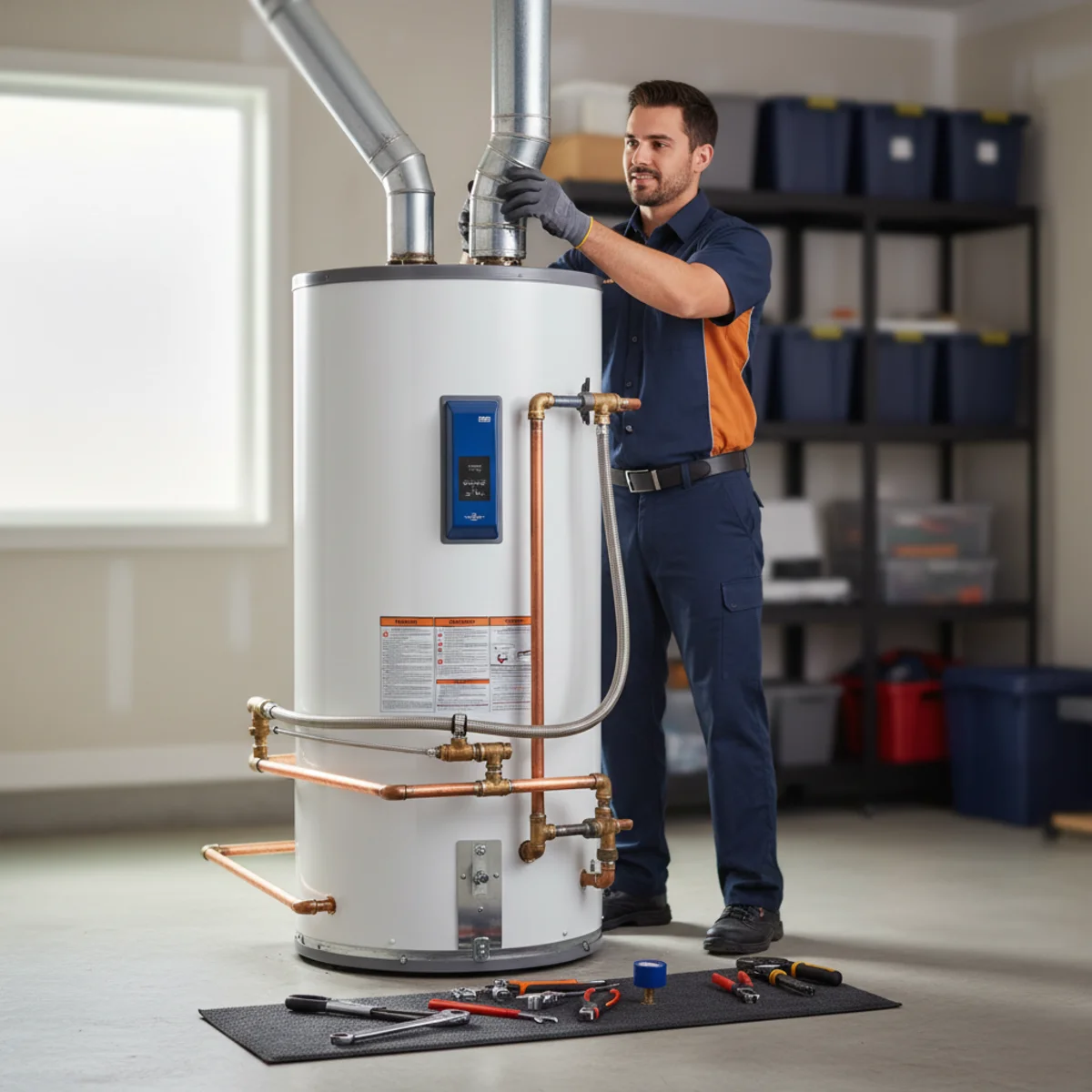
Natural gas delivers fast water-heater recovery — a 40-gallon gas tank can recover in roughly 40 minutes versus 80 or more for a comparable electric resistance unit. In a Sacramento County home with a family drawing on the tank through the morning rush, that recovery rate is what keeps everyone in hot water. Gas remains the dominant choice in Rancho Cordova precisely because the infrastructure is already there in most homes, and the operating cost sits well below resistance electric on the energy comparison.
What separates a correct gas water heater installation from a rushed one comes down to three systems: venting, combustion air, and gas-line sizing. B-vent connectors have to pitch correctly upward to the flue, joints have to be secure, and the draft hood has to seat flush. Combustion air — the air the burner needs to fire completely — has to reach the unit, especially in tightly sealed modern garages or utility rooms. And the gas supply line has to carry the BTU load without a pressure drop that causes weak or intermittent ignition.
We cover the full range of gas tank sizes and configurations — standard draft, power-vent, and direct-vent — for homes and small commercial applications across Sacramento County. For homeowners weighing a gas tank against a gas tankless, tankless water heater installation lays out the real cost and infrastructure comparison. For permit and code questions, see permit and code upgrades.
Quick Answer
Water Heater RC Pros installs gas tank water heaters in Rancho Cordova, CA — sized for your household, vented correctly, with combustion air verified and code upgrades included. Gas units offer the fastest recovery rate of any tank type and competitive operating costs. We provide permit guidance, install to California code, and haul away the old unit. Call (201) 277-9344 for an upfront estimate.
When to call
Signs You Need Gas Water Heater Installation
Not sure if it's time? These are the situations where gas water heater installation in Rancho Cordova makes sense.
- Your current gas tank is past 10 years old and recovery is noticeably slower than it used to be.
- The pilot light keeps going out, or the burner cycles on and off erratically.
- You're getting rusty or discolored hot water — a sign the tank liner is failing.
- There's a sulfur or rotten-egg smell from the hot water side only.
- You hear loud sediment rumbling from the bottom of the tank during heating cycles.
- The unit is leaking from the base, around fittings, or from the T&P relief valve.
- You're converting from electric to gas and need the first installation in the home.
What's included
What Our Gas Water Heater Installation Service Covers
Gas-line inspection and sizing
We confirm your existing supply line delivers adequate BTUs to the new unit at full fire, accounting for total pipe length, diameter, and any elevation changes. If the line is marginal, we tell you before we start.
Venting system installation
Correct B-vent or direct-vent connector with proper rise, no more than the allowed number of elbows, secured joints, and a clearance-compliant exterior termination — exactly what Sacramento County inspectors look for.
Combustion air verification
We assess the room volume and ventilation openings to confirm the burner has adequate combustion air. Sealed garages and tight utility rooms frequently need additional air provisions that code requires.
California code upgrades
Thermal expansion tank on closed systems, seismic strapping per California code, drain pan with a properly routed line, and a correct T&P discharge line — included in every installation.
Recovery-rate right-sizing
We size the unit by first-hour rating for your household's peak demand, not just nominal gallons, so recovery matches the morning load your family actually puts on the system.
Old-unit removal and haul-away
We drain, disconnect, and remove the old gas unit, cap the old flue cleanly, and recycle the tank — your space left clean and ready.
Choose with confidence
Gas, Electric, or Tankless? How They Compare
The right fuel type depends on what your home already has, how much hot water you need, and what you're willing to spend up front versus over time.
| Type | Best for | Up-front cost range | Operating cost | Rancho Cordova fit | Key watch-out |
|---|---|---|---|---|---|
| Gas storage tank | Larger households, high simultaneous demand, homes with existing gas service | Lower to mid range | Typically lower than electric in this region | High — most existing venting and gas lines are compatible | Hard-water sediment shortens tank life; annual flushing recommended |
| Electric storage tank | Homes without gas service or small households with modest demand | Lower up front, sometimes subsidized | Higher operating cost; depends on SMUD rate structure | Moderate — slower recovery may require a larger tank | Verify panel capacity and circuit size before sizing up |
| Gas tankless (on-demand) | Continuous hot water, space savings, long service life | Higher up front | Lower per gallon heated; no standby loss | High if gas line is already adequate; many older homes need upsizing | Older Rancho Cordova homes often need a larger gas line and new venting run |
Why it's done right
Why Proper Gas Water Heater Installation Matters
Safety
Gas venting that back-drafts — particularly in negative-pressure homes with powerful exhaust fans — allows combustion gases including carbon monoxide to enter living space. We test draft under realistic operating conditions, not just at rest, and verify combustion air to ensure complete, safe combustion.
Code compliance
Gas appliance installation in California requires a permit. The inspection covers venting slope and joints, combustion air, gas-line pressure test, expansion tank, seismic strapping, and T&P discharge routing. A code-compliant install protects your homeowner's insurance and your resale value. We install to current California code — confirm permit requirements with your local building department.
Recovery rate and performance
The right-sized gas unit with a properly delivering gas supply recovers the tank in roughly half the time of a comparable electric unit. That first-hour rating is what determines whether your family runs out of hot water on a busy morning — size it wrong and the upgrade disappoints from day one.
Long-term durability
Rancho Cordova's hard water attacks the tank's glass liner and anode rod. A correct temperature setting, a fresh anode rod at install, and annual sediment flushing extend a gas tank's service life significantly. We leave every install with a maintenance plan matched to local water conditions.
How we work
Our Gas Water Heater Installation Process
Assess the existing system
We inspect the current unit, gas supply line, flue and vent path, combustion air source, and water pressure to identify what the new install needs before we quote.
Size the replacement
First-hour rating calculation based on your household size, usage pattern, and peak morning demand — matched to available gas supply BTU delivery.
Clear, itemized estimate
We quote unit, labor, code upgrades, and any gas-line or venting work as separate line items so you know exactly what you're agreeing to.
Remove the old unit
Gas shutoff at the unit, pilot out, tank drained and disconnected. Old unit removed without spilling sediment. Old flue capped cleanly.
Install and connect
Set the new unit, connect gas supply with a new flex connector, run or verify venting to current slope and clearance requirements, connect water lines with new flex connectors and a fresh shut-off valve.
Code upgrades and test
Install expansion tank, seismic strapping, drain pan, and T&P discharge line. Gas-pressure test on the new connection, leak check all fittings, light the pilot, and verify ignition and burner operation.
Walkthrough
We show you the gas shutoff, explain temperature adjustment, and cover the maintenance schedule — annual flushing in particular for Rancho Cordova's sediment load.
Your Install Day, Step by Step
A transparent walkthrough of how the day actually goes — no mystery, no all-day waits.
On arrival
Walkthrough and scope confirm
We review the space, gas and water supply, venting, and code upgrade needs with you, then confirm the itemized estimate before any work begins.
First 30 minutes
Safe shutdown and drain
Gas valve to off or pilot, cold-water inlet closed, and the old tank drained through a hose to a floor drain or outside — no sediment left across your floor.
First hour
Disconnect and haul old unit
Gas flex disconnected, water lines capped, old tank removed from the space and loaded for recycling — area prepped and clean.
Mid-install
Code rough-in and set
Seismic strap anchors set, drain pan positioned and drain line routed, expansion tank installed on the cold-water inlet, and the new unit set in place.
Connection phase
Gas, water, and vent hook-up
New gas flex with a proper union, leak-tested connections on both supply lines, and the vent connector fitted with correct slope and secure joints.
Before lighting
Pressure and leak test
Cold-water system pressurized and checked for leaks at every joint; gas line soap-tested at the flex and valve; T&P valve operation verified; expansion-tank charge confirmed.
Before we leave
Light-off, temperature set, and walkthrough
Pilot lit or electronic ignition verified, temperature set to 120 °F as recommended, recovery confirmed, and a plain-English walkthrough covering shut-offs, maintenance, and any permit or inspection next steps.
Transparent pricing
What Affects Your Gas Water Heater Installation Cost
We don't post fixed prices online because every home is different — but here's exactly what moves the number, so your estimate is never a mystery.
Tank size and BTU input
A 40-gallon 36,000-BTU unit is the baseline. Stepping up to 50 gallons or a high-recovery 70,000-BTU model increases both materials and, sometimes, the gas-line requirement.
Gas line condition and sizing
If your existing gas line is undersized for a higher-BTU unit, or if corrosion or an improper connection requires repair, that work is factored separately into the estimate.
Venting
Reusing a sound atmospheric vent connector costs less. Power-vent or direct-vent replacements that route a new flue through a wall or up through a roof add materials and labor.
Code upgrades
California requires a thermal expansion tank on closed systems, seismic strapping, a drain pan with a routed discharge, and a correct T&P relief line. These are added where your home doesn't already have them.
Access and location
An open garage install is the easiest. A tight closet, a utility room with low clearance, or a mobile-home setup takes longer.
Old-unit removal
Draining, disconnecting, and hauling away a corroded or sediment-heavy tank takes more time than a clean, lightly used unit.
Local know-how
Rancho Cordova Considerations
The local details competitors treat as an afterthought — and we don't.
Sacramento County gas water heater installations are permitted work, and the inspection includes a gas-pressure test on the new line connection. We've seen rushed installs where the flue connector wasn't properly secured or the draft hood wasn't seated — those jobs fail inspection or, worse, create a draft problem that isn't caught until there's a CO alarm. A code-conscious install from the start avoids all of that. Venting service details how we evaluate and correct vent runs.
Rancho Cordova homes — particularly in the Mather area and along the Folsom Boulevard corridor — tend to have garage installs with the water heater elevated on a raised platform (required by California code for gas ignition sources in garages). That elevation affects the flue path, the gas-line stub location, and the seismic-strap configuration. We've completed enough Sacramento County garage installs to know what the inspector expects to see, and we build it in from the start rather than retrofitting code items after the unit is in.
Hard water is a real factor in gas tank longevity here. The anode rod is the sacrificial metal that protects the glass liner from corrosion — it dissolves gradually so the liner doesn't. In hard water, it depletes faster. We check anode condition on every tank we work on and recommend a replacement cycle appropriate to local water quality. Pair annual water heater flushing with anode monitoring and you get the full manufacturer-rated life from the tank.
Future-Proofing Your Hot Water
A new water heater is a 10-plus-year decision. Here's how we help you buy ahead of where California is heading.
California energy code keeps tightening
The state's appliance efficiency standards raise the minimum energy factor periodically. Installing a unit that already meets or exceeds the current threshold means you're ahead of the next code cycle rather than replacing a non-compliant unit early.
Gas-line sizing opens the door to tankless later
If a gas-line upsize is part of this install, you're also creating the infrastructure headroom for a tankless conversion down the road — no repeat trench work needed.
Rebates can offset the cost — but check current details
SMUD, PG&E, and federal programs have periodically offered incentives on high-efficiency gas and heat-pump units. Amounts, eligibility windows, and program availability change frequently. Confirm current rebate details with your utility or the ENERGY STAR database before you buy — we'll point you to the right programs, but program rules are set by the utilities, not by us.
Related Water Heater Services
Water Heater Venting Service
Safe flue draft, combustion air, and back-draft protection for gas water heaters — inspected and corrected to California code.
Learn moreWater Heater Permit & Code Upgrades
Permit guidance and every required code upgrade — expansion tank, seismic strapping, drain pan, and proper T&P discharge — installed to Sacramento County standards.
Learn moreWater Heater Installation
New tank or tankless, sized right and installed to California code — permits, code upgrades, and old-unit haul-away handled.
Learn moreTankless Water Heater Installation
Endless hot water and freed-up wall space — tankless installed right, with gas-line and venting sized to match.
Learn moreAreas We Serve for Gas Water Heater Installation
Questions, answered
Gas Water Heater Installation FAQs
First-hour rating (FHR) is the number that matters — it's the hot water a tank delivers in the first hour of heavy use. For a family of four, a 40-gallon gas tank with a high recovery rate often outperforms a 50-gallon tank with a lower BTU burner. We calculate FHR for your household so you're not just buying by gallons.
Yes, if you have natural gas service to the property. A first-time gas water heater installation requires running a new gas stub to the water heater location, installing a proper flue vent, and meeting combustion air requirements. We assess feasibility and cost as part of the estimate process.
A thermal expansion tank absorbs the pressure that builds when water heats up in a closed plumbing system — one with a pressure-reducing valve or backflow preventer. California code requires one on closed systems, and most Rancho Cordova homes qualify. We install it as part of every job.
Typically 8–12 years. Rancho Cordova's hard water shortens that range without annual flushing and periodic anode rod replacement. Units installed correctly to code, flushed annually, and maintained tend toward the upper end.
Yes — replacement water heater installation in California requires a permit in virtually all jurisdictions. The permit protects you: the inspection confirms the installation is safe and code-compliant. We install to California code and permit guidance is available.
Standard-draft units rely on natural convection to pull combustion gases up through a B-vent flue — they need a vertical vent path. Power-vent units use an electric blower to push exhaust through PVC or CPVC pipe, allowing horizontal venting through a wall. Power-vent works well where a traditional flue run is difficult. We evaluate your space and recommend the configuration that fits.
Often, yes — for a standard tank-for-tank gas swap with a unit in stock. Same-day appointments are available; active leaks and total failures get priority scheduling. Call early in the day at (201) 277-9344 for the best availability.
Helpful Water Heater Guides
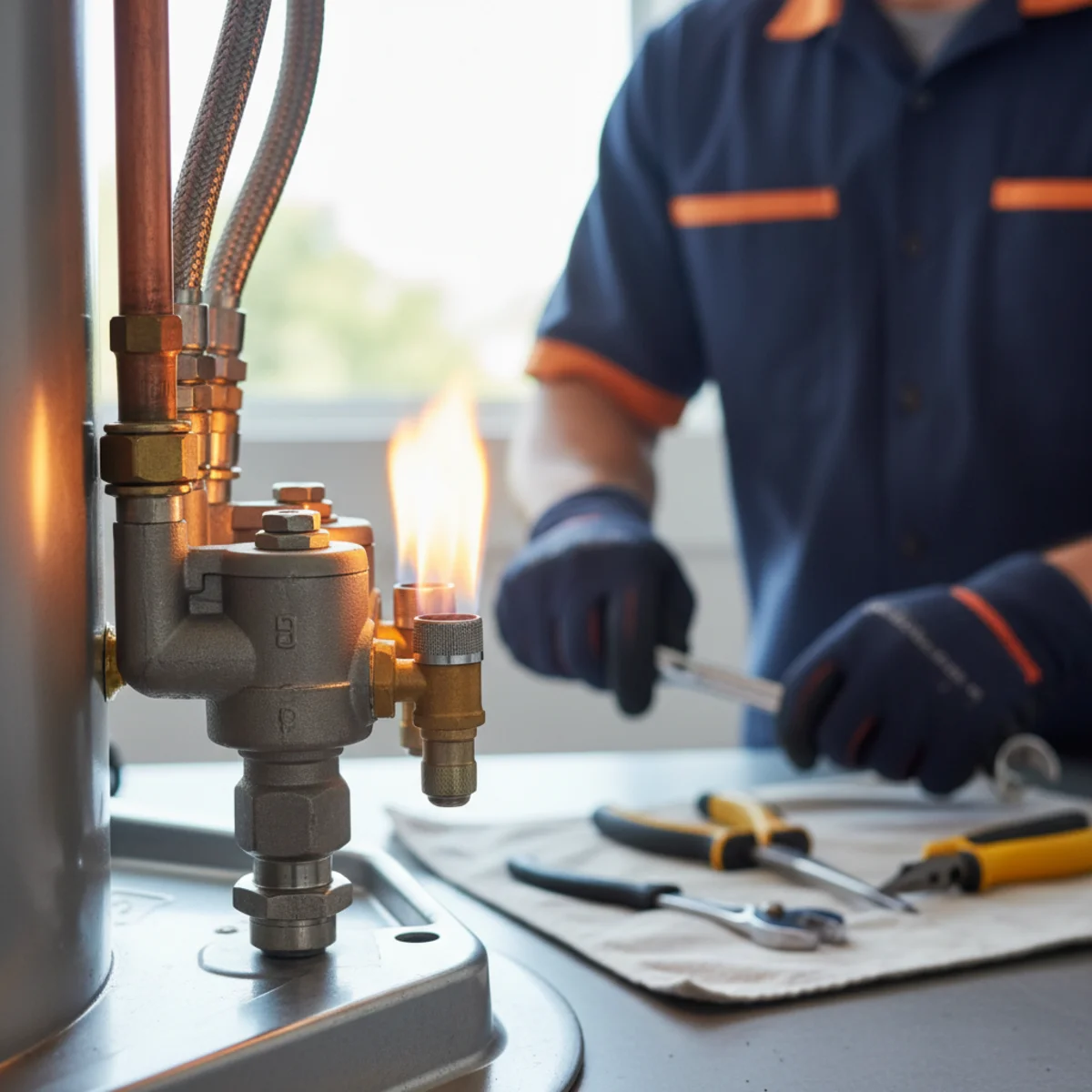
Water Heater Pilot Light Keeps Going Out? Causes and Fixes
A pilot light that won't stay lit usually points to a failing thermocouple, a dirty pilot orifice, or a gas supply issue. Here's how to diagnose it.
February 14, 2026
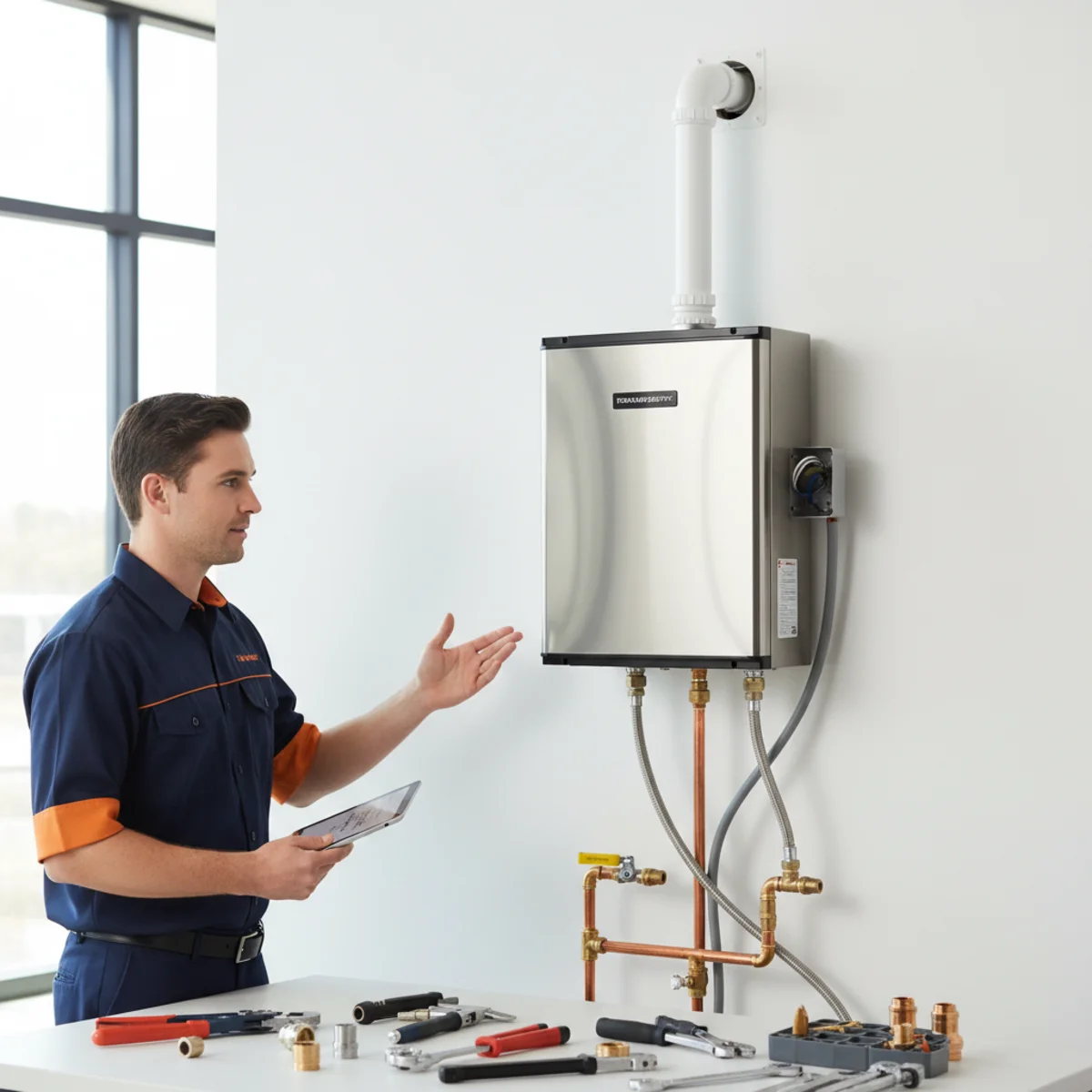
Tankless Water Heater Installation Requirements
A tankless water heater has real infrastructure requirements — gas line size, venting, electrical, and permits. Know what you're getting into before you buy.
January 10, 2026
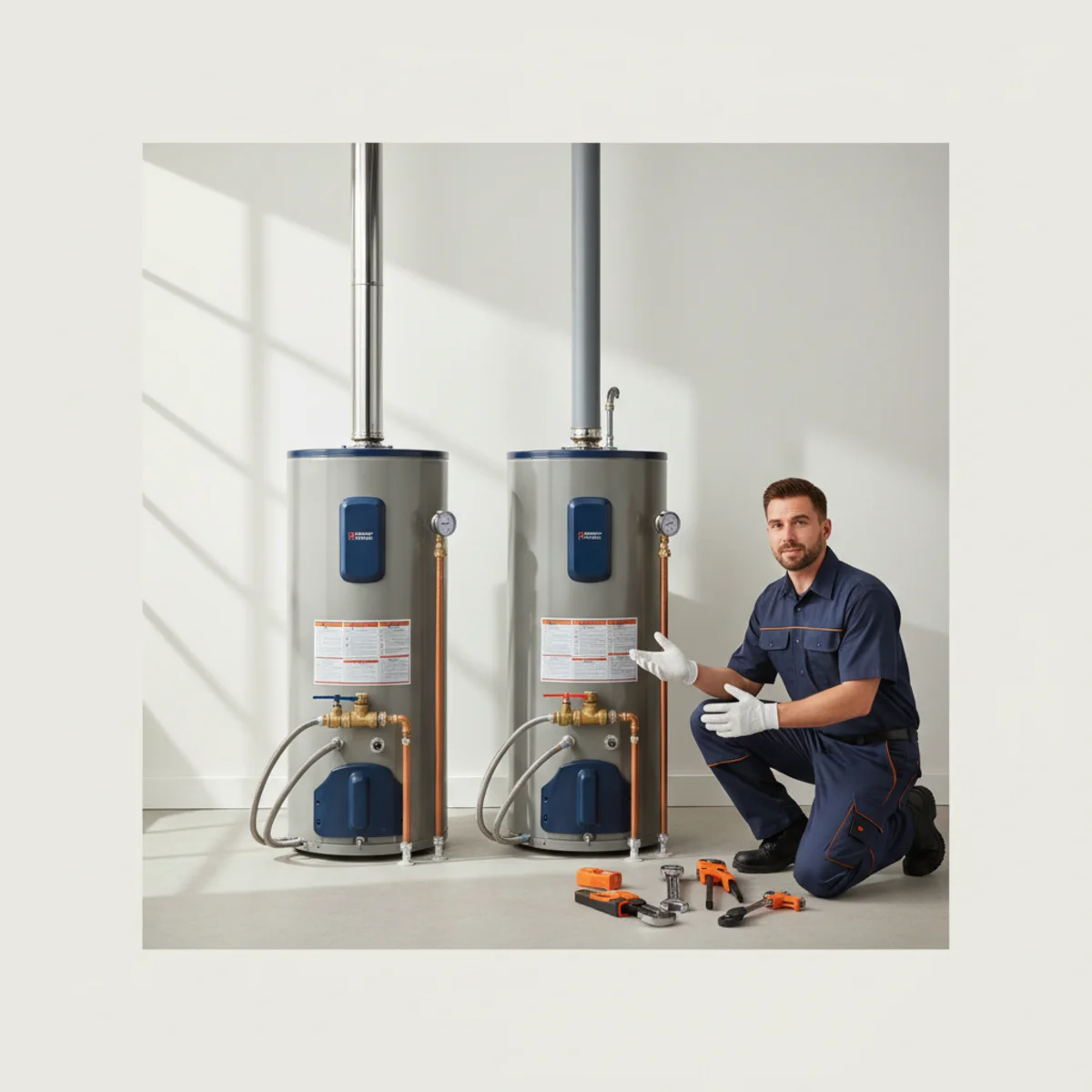
Gas vs Electric Water Heater: Which Should You Choose?
Gas heats water faster and costs less to run most months. Electric skips the venting entirely. Here's how to decide which one belongs in your home.
September 25, 2025
Our Standards on Every Job
- Installed to current California Plumbing Code
- Sacramento County permit guidance on every job
- Upfront, written estimates — no surprises
- Code upgrades included: expansion tank, seismic strapping, drain pan, T&P discharge
- Warranty-backed equipment options
- Clean, protected work areas and old-unit haul-away
Licensing and insurance information available on request. Programs and code requirements change — we confirm current details before you buy.
Local & Official Resources
Helpful third-party references for Rancho Cordova and Sacramento County homeowners. Programs and code change — confirm current details on the official sites before you buy.
- Sacramento County Building Permits & InspectionPermits, inspections, and code for water heater work in the county.
- SMUD — Rebates & IncentivesThe local electric utility's heat-pump and efficiency rebate programs.
- PG&E — Rebates & EfficiencyGas and electric rebate programs serving parts of the area.
- California Energy Commission — Appliance StandardsState efficiency standards that affect new water heaters.
- U.S. DOE — Water Heating (Energy Saver)Independent guidance on types, sizing, and efficiency.
- California Building Standards CommissionThe California Plumbing Code is part of Title 24.
Schedule Gas Water Heater Installation in Rancho Cordova
Talk to a local water heater pro who will give you a straight answer and an upfront estimate. For an active leak or no hot water, call now — same-day help is available.
3173 Fitzgerald Rd, Rancho Cordova, CA 95742
Have this ready for your estimate
- Locate the current unit's model label — note the capacity in gallons, BTU input, and the manufacture date stamped on the serial number.
- Find the main gas shut-off for the water heater and the main cold-water inlet valve so they're accessible on install day.
- Measure the available space around the unit, including ceiling height and clearance to combustibles — photo the space.
- Check whether you already have an expansion tank, a drain pan, and seismic straps in place.
- Note your peak hot-water demand — number of simultaneous showers, whether a dishwasher or washing machine runs at the same time.
Request a Free Estimate
Tell us what's going on — we'll follow up fast.
Same-Day Water Heater Help
Need Hot Water Back Today?
Same-day water heater help across Rancho Cordova and nearby Sacramento County. Talk to a local pro now — no pressure, just a straight answer.