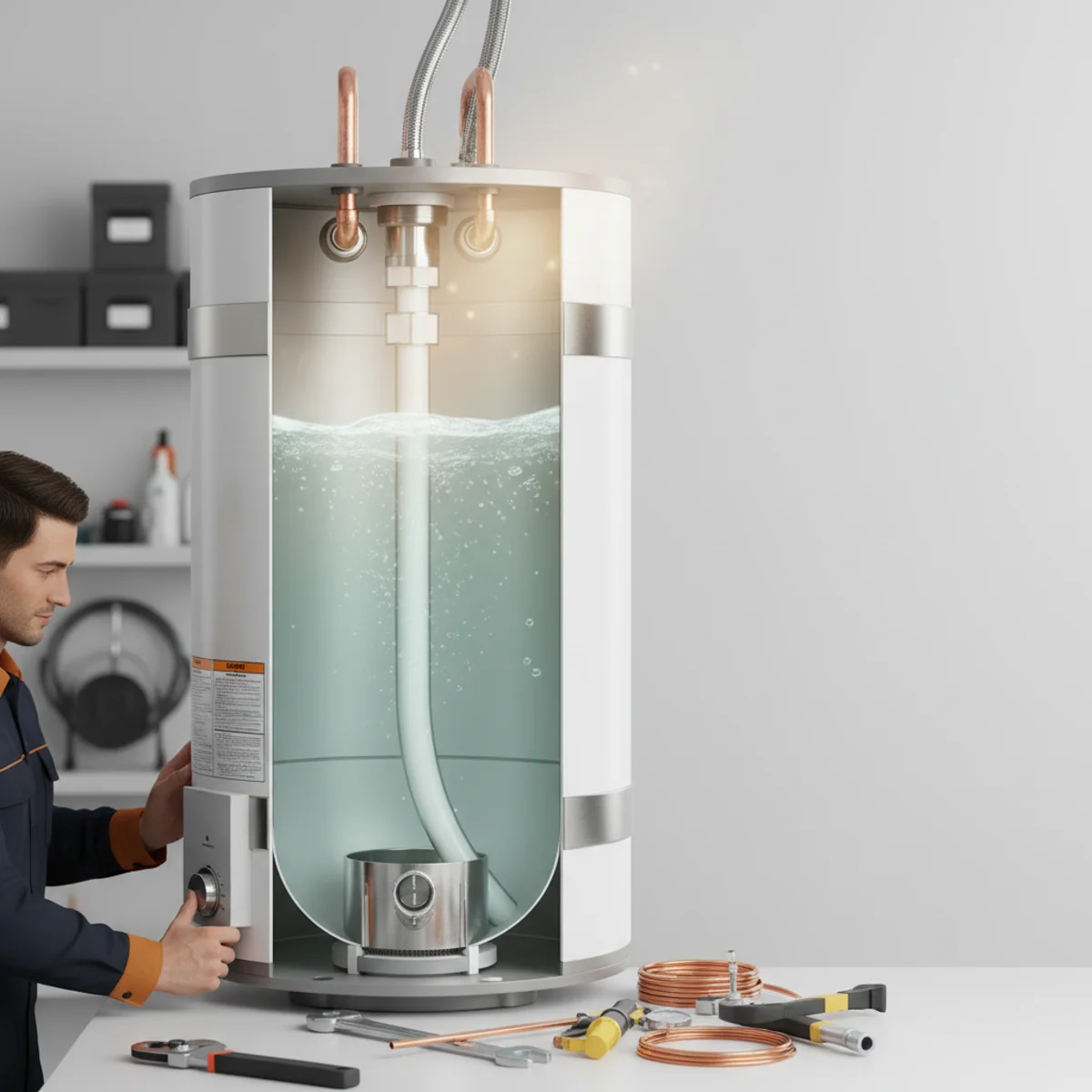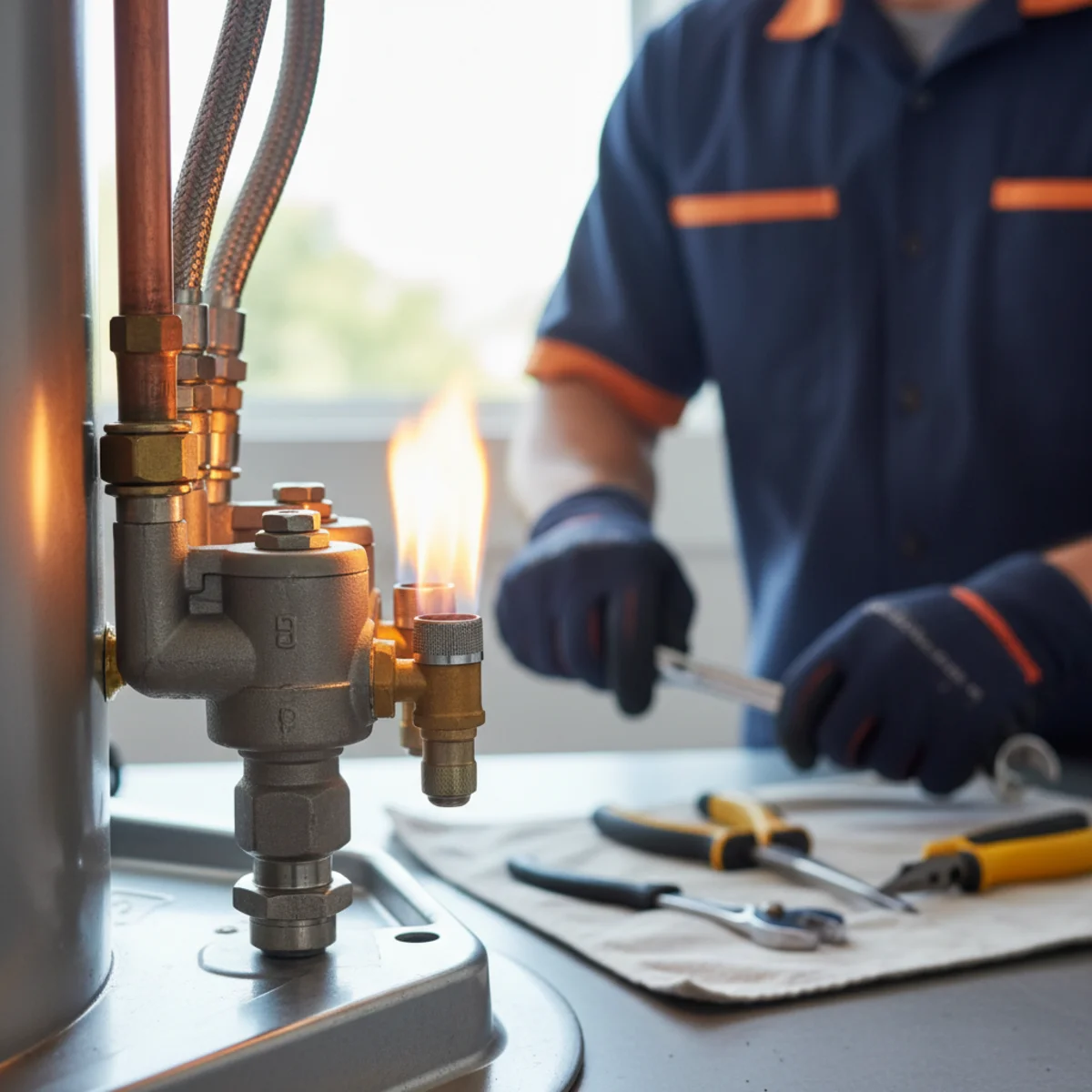
You relight your water heater pilot, hold the button for 60 seconds like the manual says, release — and within a day it's out again. Cold shower, frustration, and the same cycle repeats. This is one of the most common service calls we handle.
A pilot light that won't stay lit is almost always a component issue, not a mystery. The fix is usually one of three things: a failing thermocouple (the most common), a dirty or obstructed pilot orifice, or an upstream gas supply problem. Identifying which one saves time and money.
This guide walks through each cause, how to tell them apart, and when a DIY fix is appropriate versus when it's time to call a licensed technician. In Rancho Cordova, where our mild climate keeps natural gas usage lower than colder regions — meaning gas supply pressure can fluctuate seasonally in some neighborhoods — even the supply side is worth checking.
The Most Likely Cause: Thermocouple Failure
The thermocouple is a safety device. It's a thin metal probe positioned directly in the pilot flame, generating a small millivolt electrical signal as long as it's heated. That signal tells the gas valve to stay open. When the pilot goes out, the thermocouple cools, the signal drops, and the gas valve closes — by design.
If the thermocouple is faulty — weak signal even when heated — the gas valve closes prematurely, even while the pilot is still lit. The result looks identical to a draft or gas issue from the outside: the pilot goes out shortly after you release the button.
Testing a thermocouple requires a multimeter and costs nothing but time. A functional thermocouple in a heated pilot flame should read 25–30 millivolts. Below 20 millivolts and it won't reliably hold the gas valve open. Replacement thermocouples are $10–$25 at any hardware store and are usually a straightforward swap — the probe threads off and the lead clips or screws into the gas valve.
This is often a safe DIY repair. But if you're not comfortable working around gas components, or if the repair requires disassembling the gas valve assembly, call a licensed plumber.
- Pilot stays lit while you hold the button, goes out after releasing = thermocouple suspect.
- Pilot goes out within seconds of releasing = thermocouple likely faulty.
- Test with a multimeter: less than 20 mV when heated = replace it.
- Replacement thermocouple: $10–$25, usually DIY-accessible.
Dirty or Clogged Pilot Orifice
Dust, debris, and spider webs accumulate in the pilot tube and orifice over time. A partially clogged pilot produces a weak, yellow-orange flame instead of a strong blue flame. A weak flame doesn't adequately heat the thermocouple, which causes it to read low millivoltage — mimicking a faulty thermocouple.
The fix is cleaning the pilot orifice with compressed air. Don't use a wire or pin — you'll enlarge the orifice and create a different problem. A blast of compressed air from a can is usually sufficient. Clean the area around the pilot assembly while you're there.
In Rancho Cordova garages — where dust accumulates heavily in summer — this is a surprisingly common issue. Annual maintenance can prevent it.
Draft and Combustion Air Issues
Water heaters in garages and utility closets need a steady supply of combustion air. If the space is sealed too tightly, or if a nearby exhaust fan (bath fan, range hood, attic fan) creates negative pressure in the house, the pilot can be starved of oxygen or blown out by a backdraft.
California code requires that water heater installations have adequate combustion air. For garage installs — which are common in Rancho Cordova homes — this typically means louvered vents in the garage door or wall. If yours is a tightly sealed garage and the pilot keeps going out coincidentally with fan use, inadequate combustion air is likely.
A draft hood that's damaged or incorrectly sized can also cause recirculation of combustion gases that extinguishes the pilot. This is a venting issue that requires a plumber to assess and correct properly.
Gas Supply Problems
Low gas supply pressure is less common but worth checking if other diagnostics come up clean. You can verify your gas supply is functioning by checking whether other gas appliances (range, furnace, dryer) operate normally. If they also seem weak or intermittent, contact your gas utility.
A failing gas valve on the water heater itself is another possibility, though less common. Gas valves are not field-repairable — they're replaced as a unit. On a water heater that's 10+ years old, a failing gas valve sometimes warrants a discussion about whether replacement is more cost-effective than the repair.
When to Call for Professional Repair
Replace the thermocouple yourself if you're comfortable with it and the repair is straightforward. Call a licensed plumber for: gas valve replacement, venting corrections, combustion air modifications, or any time you smell gas that isn't clearing after the pilot relights.
Never ignore a gas smell. If you smell gas and the pilot is out, don't relight anything — leave the area, leave the door open, and call your gas utility or 911. If the smell is faint and only occurs during relighting, that's normal (a small amount of unburned gas venting while igniting).
Our water heater repair team handles thermocouple replacement, gas valve assessment, and venting corrections throughout Rancho Cordova. If it's time to consider a new gas water heater installation, we'll give you a straight comparison of repair cost versus replacement cost. Contact us or visit our service area page for details.
Talk to a Local Rancho Cordova Water Heater Pro
Whether you need a repair today or you're planning an upgrade, we'll give you a straight answer and an upfront estimate.
Frequently Asked Questions
Most water heaters require 30–60 seconds of holding the button after the pilot lights. This gives the thermocouple time to heat up and generate enough voltage to hold the gas valve open. If the pilot goes out immediately after 60 seconds, the thermocouple is likely failing.
Yes, for most modern water heaters with a piezo igniter and a manual pilot button. Follow the label instructions on your unit. If you smell gas before relighting, wait 5 minutes with the area ventilated before attempting to relight. If you're uncomfortable working with gas, call a plumber — it's a minor service call.
DIY: $10–$25 for the part. Professional service call: typically $100–$200 including labor, depending on access and unit age. Call us at (201) 277-9344 for a specific estimate.
If the fix is a $15 thermocouple, repair makes sense even on an older unit. If the gas valve is failing, the cost of that replacement on a 12-year-old unit may approach or exceed the cost of a new water heater. We'll give you both numbers so you can make an informed call.
Water heaters don't have air filters, but dust and debris around the pilot assembly can restrict the pilot flame. If the unit is in a dusty garage, annual cleaning of the pilot area prevents this. A strong yellow-orange pilot flame (instead of blue) is the sign.
Written by the Water Heater RC Pros team
Practical, local guidance from Rancho Cordova water-heater installers — written for homeowners and kept current with California code. Have a question about your unit? Call (201) 277-9344.