Water Heater Venting Service in Rancho Cordova, CA
A gas water heater that doesn't vent properly isn't just inefficient — it's dangerous. Combustion gases, including carbon monoxide, need a clear path out of the building every single time the burner fires. When the flue is blocked, undersized, or sloped the wrong direction, those gases can spill back into your garage or living space. That's called back-drafting, and it's a silent hazard that an annual visual check will not always catch.
- Same-day appointments available
- Installed to California code
- Upfront, itemized estimates
- Clean work area & haul-away
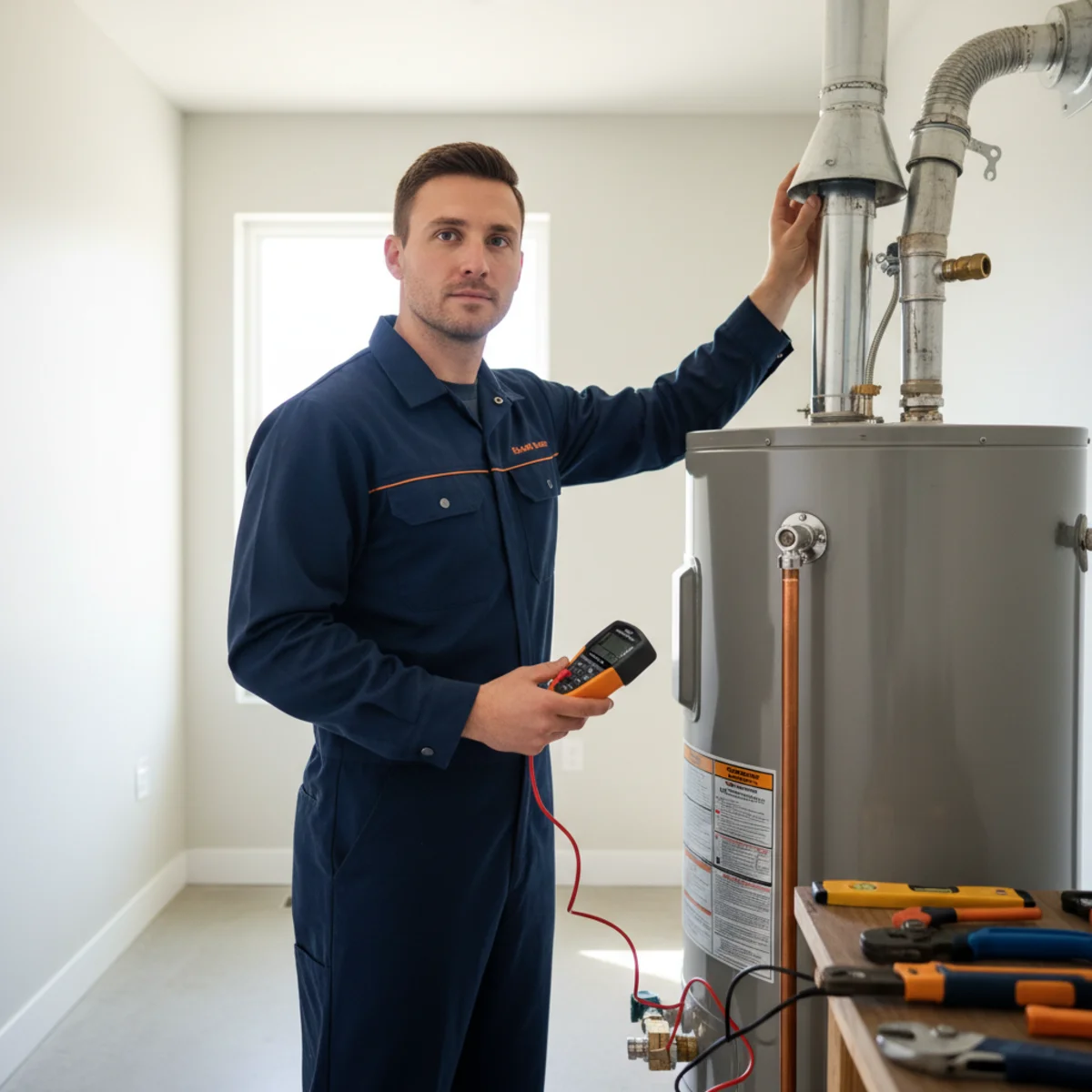
A gas water heater that doesn't vent properly isn't just inefficient — it's dangerous. Combustion gases, including carbon monoxide, need a clear path out of the building every single time the burner fires. When the flue is blocked, undersized, or sloped the wrong direction, those gases can spill back into your garage or living space. That's called back-drafting, and it's a silent hazard that an annual visual check will not always catch.
Venting problems are more common in Rancho Cordova than most homeowners realize. Garage installs — where the majority of local units sit — often share a single vent connector with a furnace or get modified by previous trades who didn't sweat the details. Over time, joints corrode, duct tape fails, and connector sections settle out of slope. The draft hood — the metal collar that sits on top of the tank and protects the burner from downdrafts — can also get dislodged or left off entirely after a service call.
Whether you're seeing soot stains on the flue collar, smelling exhaust near the unit, or getting flagged by Sacramento County on a permit inspection, we can diagnose and correct the venting on your gas water heater. We cover atmospheric draft, natural-draft systems, and power-vent setups. If you're switching to a tankless or high-efficiency unit that needs direct-vent concentric piping, see our gas water heater installation page for what's involved in that upgrade.
Quick Answer
Water heater venting service covers the full flue path on gas units: draft hood inspection, vent connector slope and clearance, back-draft testing, and combustion air verification. Poor venting can spill carbon monoxide and will fail a permit inspection. We diagnose and correct atmospheric and power-vent systems in Rancho Cordova and the surrounding Sacramento County area, then retest to confirm safe draft. Call (201) 277-9344 for an upfront estimate.
When to call
Signs You Need Water Heater Venting Service
Not sure if it's time? These are the situations where water heater venting service in Rancho Cordova makes sense.
- Soot or rust stains on or above the draft hood.
- Smell of exhaust or combustion gases near the water heater.
- Carbon monoxide detector alarms close to the water heater or furnace.
- Vent connector visibly sagging, disconnected, or pulling apart at the joints.
- Failed Sacramento County permit inspection citing venting deficiencies.
- Power-vent fan running but unit not recovering — motor or backdraft damper fault.
- Condensation streaks running down the outside of the flue pipe.
- Pilot light that won't stay lit, or burner that cuts out shortly after ignition.
What's included
What Our Water Heater Venting Service Service Covers
Draft hood and flue collar inspection
We check that the draft hood is seated correctly, undamaged, and free of blockage — it's the first line of defense against back-drafting on atmospheric units.
Vent connector slope and clearance
Every horizontal run needs a minimum upward pitch toward the flue, proper clearance to combustibles, and secure joints. We measure, correct, and re-support sagging sections.
Back-draft spillage test
We test under worst-case depressurization — exhaust fans running, house in negative pressure — to confirm combustion gases are drafting out, not spilling into the room.
Combustion air evaluation
Gas units need adequate combustion air in the equipment room. We calculate whether your garage or utility closet has sufficient air supply and whether code-required openings are present and unobstructed.
Power-vent motor and damper check
For power-vent and direct-vent units, we test the blower motor, inspect the intake and exhaust terminations outside the structure, and verify the backdraft damper seats properly.
Code-compliant corrections
Vent connector replaced, re-sloped, re-supported, or re-joined as needed — using approved materials and configurations that pass Sacramento County inspection.
Why it's done right
Why Proper Water Heater Venting Service Matters
Carbon monoxide safety
CO is colorless and odorless. A back-drafting water heater can introduce dangerous concentrations into a garage or adjacent room long before any detector trips. Correct venting and a working draft hood are your primary mechanical defense. This is the one aspect of a water heater installation that has zero margin for error.
Code compliance
California requires proper vent connector slope, minimum upward pitch, approved materials, and adequate combustion air. A water heater replacement triggers inspection, and venting deficiencies are among the most common reasons for a failed re-inspection in Sacramento County. Getting it right the first time saves a return trip. Code requirements change — confirm current details before scheduling.
Appliance longevity
When combustion gases spill back around the burner assembly, they accelerate corrosion on the flue collar, draft hood, and upper tank. Fixing a venting problem often adds years to a unit's service life and protects the parts you haven't had to replace yet.
Efficiency and recovery
A properly drafted flue pulls heat and combustion gases cleanly away from the burner. A partially blocked or back-pressured flue forces the burner to work harder, drives up gas consumption, and cuts the recovery rate — the gallons per hour your unit can reheat. Efficient venting is direct money on your gas bill.
How we work
Our Water Heater Venting Service Process
Visual inspection
We examine the draft hood, vent connector, and all joints from the unit to where the flue exits the building — looking for corrosion, disconnections, wrong-pitch runs, and missing or incorrect-material sections.
Back-draft spillage test
With the burner firing and the building depressurized (exhaust fans on), we hold a smoke pen near the draft hood to confirm gases are moving up and out, not spilling into the room.
Combustion air check
We measure the equipment space and verify that code-required combustion air openings — high and low — are present, correctly sized, and unobstructed.
Estimate and explanation
We explain exactly what we found, what the code requires, and give you an upfront itemized estimate for any corrections before touching anything.
Correct the deficiencies
Replace damaged connector sections, re-slope and re-support horizontal runs, reinstall or replace the draft hood, and ensure all joints are properly connected and secured.
Retest after correction
Once corrections are complete, we re-run the spillage test to confirm draft is clean and the unit is safe to operate.
Documentation
We leave a written summary of what was found and corrected — useful for your permit file, insurance records, or the next inspector.
Transparent pricing
What Affects Your Water Heater Venting Service Cost
We don't post fixed prices online because every home is different — but here's exactly what moves the number, so your estimate is never a mystery.
Vent connector type
Standard B-vent costs less than stainless-lined direct-vent or the polypropylene flue pipe that sealed-combustion and condensing units require. The unit you're installing — or upgrading to — dictates the vent type; there's no mixing.
Run length and number of elbows
Every elbow and every foot of horizontal run reduces draft. Code limits both, and longer runs or complex routes cost more in material and time — and may require a power-vent solution to maintain safe draft.
Combustion air provision
Gas water heaters need adequate fresh air for complete combustion. In tight utility rooms or heavily weatherized homes, we may need to add a dedicated combustion-air duct or louvered vent opening to code.
Shared flue separation
If your water heater shares a chimney or flue with a furnace, the sizing and liner requirements are more involved than a dedicated vent run. Sacramento County inspectors check combined appliance loads.
Penetration patching
Routing a new vent through an exterior wall or roof requires a code-compliant penetration, a weather collar, and proper firestop. That adds materials and occasionally requires a separate trade for the roof work.
Existing vent condition
Corroded B-vent sections, improper slope, or missing support clamps on existing vent runs need to be replaced rather than reused. The cost depends on how much of the existing run is salvageable.
Local know-how
Rancho Cordova Considerations
The local details competitors treat as an afterthought — and we don't.
Most water heaters in Rancho Cordova sit in attached garages, and garage venting has a quirk that catches people off guard: the garage air supply is often depressurized when you run the home's central exhaust fans or a bath fan wired to the same zone. That negative pressure pulls combustion gases back down through the draft hood instead of up through the flue — exactly the condition our back-draft spillage test checks for. If your home is tightly weatherized, it's worth confirming that the equipment room has the code-required combustion air makeup.
Sacramento County permit inspections catch a lot of field-modified vent runs. A previous owner or contractor may have offset the vent connector with an extra elbow, used dryer duct instead of listed B-vent, or capped off a combustion air opening to keep rodents out. Any of those will stop an inspection. If you're pulling a permit for a replacement or code upgrade, we inspect the full vent path as part of the job so there are no surprises when the inspector arrives. Code requirements and permit fees are set by the county and change periodically — confirm current details before you schedule.
If you're upgrading to a condensing tankless unit, keep in mind that the old B-vent flue can't be reused. Those units require Category III or IV stainless flue or plastic PVC/CPVC depending on the model, and they typically terminate through an exterior side wall rather than up through the roof. We cover the full venting scope on tankless water heater installations and can help you evaluate whether your current garage layout supports the new termination requirements.
Related Water Heater Services
Gas Water Heater Installation
Fast recovery, lower operating cost — gas water heater installed with correct venting, combustion air, and code upgrades.
Learn moreWater Heater Permit & Code Upgrades
Permit guidance and every required code upgrade — expansion tank, seismic strapping, drain pan, and proper T&P discharge — installed to Sacramento County standards.
Learn moreWater Heater Installation
New tank or tankless, sized right and installed to California code — permits, code upgrades, and old-unit haul-away handled.
Learn moreTankless Water Heater Installation
Endless hot water and freed-up wall space — tankless installed right, with gas-line and venting sized to match.
Learn moreAreas We Serve for Water Heater Venting Service
Questions, answered
Water Heater Venting Service FAQs
The clearest signs are soot or rust stains on or above the draft hood, a persistent exhaust smell near the unit, or a CO detector alarm near the garage. You can hold a lit stick of incense near the draft hood while the burner is firing — if smoke is pulled down into the room instead of up into the flue, you have a spillage problem. Don't rely on a visual alone; call us for a proper back-draft test.
A draft hood is the sheet-metal fitting that sits on top of an atmospheric gas water heater and connects it to the vent connector. It dilutes flue gases, protects the burner from downdrafts, and provides the interface between the appliance and the venting system. It's not optional — running without one or with a damaged one is a code violation and a safety hazard.
The material (listed Type B double-wall vent or single-wall metal of the correct gauge), slope, clearance from combustibles, and termination height are all code-defined. DIY connector repairs are common, and so are the failed inspections that follow. If you're doing permitted work, the vent is inspected. If you're unsure whether your current setup is correct, let us check it — that's a straightforward service call.
Atmospheric (natural draft) units use a draft hood and rely on the buoyancy of hot gases to pull them up through the flue — no fan required. Power-vent units have a blower on the exhaust that forces gases out through PVC piping, allowing horizontal termination through a side wall. Direct-vent units are sealed-combustion: they pull all combustion air from outside through a concentric intake pipe and exhaust through a separate pipe, making them ideal for tight closets and installations where indoor combustion air is limited.
Common reasons: the vent connector wasn't sloped upward at the required minimum pitch per foot of horizontal run, joints weren't secured, a combustion air opening was blocked, or the wrong vent material was used. We can review the installation and correct whatever the inspector flagged before the re-inspection.
California requires CO detectors in homes with attached garages and any fuel-burning appliance. Even a correctly vented water heater can spill CO if a flue joint fails or the home depressurizes unexpectedly. A working detector is your backup when the mechanical venting system has a problem.
A simple reconnect of a pulled-apart joint is much less involved than replacing a full vent run with new B-vent material or rerouting for a new unit type. We give you an upfront, itemized estimate once we've seen the setup. Call (201) 277-9344 to schedule a diagnostic.
Helpful Water Heater Guides
Condensing vs Non-Condensing Tankless Water Heaters
Condensing and non-condensing tankless units look similar but differ in efficiency and venting requirements. Here's what that means for your Rancho Cordova home.
March 10, 2026
What Temperature Should Your Water Heater Be Set To?
The right water heater temperature isn't one-size-fits-all. Here's how to balance scalding risk, Legionella prevention, and energy savings for your household.
May 1, 2026
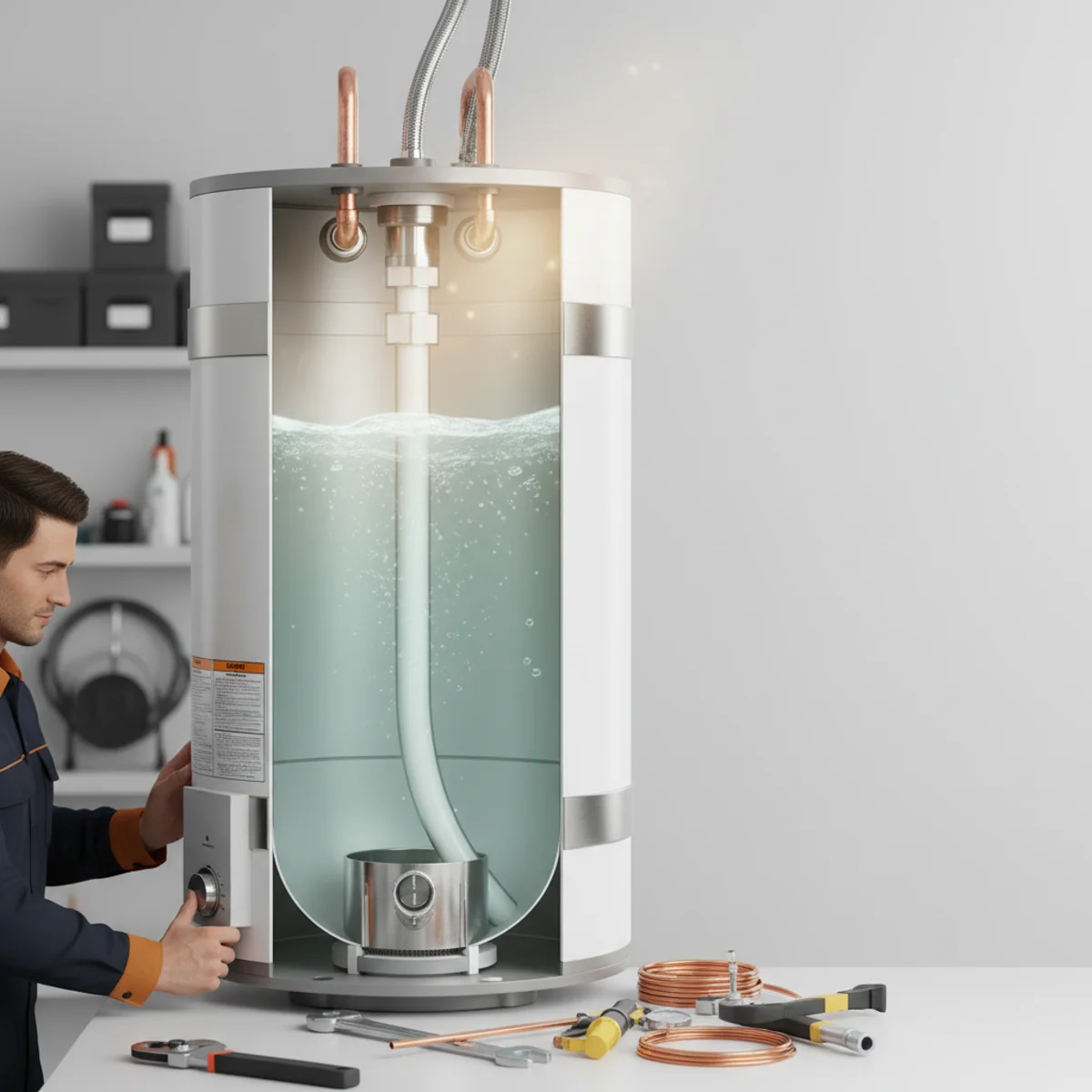
Lukewarm Water? Your Dip Tube Might Be Failing
If your water heater seems fine but showers go lukewarm fast, a failing dip tube is the overlooked culprit most homeowners never check. Here's what it is and what to do.
April 18, 2026
Our Standards on Every Job
- Installed to current California Plumbing Code
- Sacramento County permit guidance on every job
- Upfront, written estimates — no surprises
- Code upgrades included: expansion tank, seismic strapping, drain pan, T&P discharge
- Warranty-backed equipment options
- Clean, protected work areas and old-unit haul-away
Licensing and insurance information available on request. Programs and code requirements change — we confirm current details before you buy.
Local & Official Resources
Helpful third-party references for Rancho Cordova and Sacramento County homeowners. Programs and code change — confirm current details on the official sites before you buy.
- Sacramento County Building Permits & InspectionPermits, inspections, and code for water heater work in the county.
- SMUD — Rebates & IncentivesThe local electric utility's heat-pump and efficiency rebate programs.
- PG&E — Rebates & EfficiencyGas and electric rebate programs serving parts of the area.
- California Energy Commission — Appliance StandardsState efficiency standards that affect new water heaters.
- U.S. DOE — Water Heating (Energy Saver)Independent guidance on types, sizing, and efficiency.
- California Building Standards CommissionThe California Plumbing Code is part of Title 24.
Schedule Water Heater Venting Service in Rancho Cordova
Talk to a local water heater pro who will give you a straight answer and an upfront estimate. For an active leak or no hot water, call now — same-day help is available.
3173 Fitzgerald Rd, Rancho Cordova, CA 95742
Have this ready for your estimate
- Identify your water heater's fuel type and venting category — the data label lists "Type B," "direct vent," or "power vent."
- Note where the vent currently exits — through the roof, through the wall, or into a shared chimney flue.
- Count the number of elbows in the existing vent run and measure the horizontal distance from the unit to the flue exit.
- Check whether the utility room or closet has a combustion-air opening; if the room feels very tight or air-sealed, let us know.
- If you're also upgrading to a condensing tankless unit, confirm the intended vent termination location on the exterior wall in advance.
Request a Free Estimate
Tell us what's going on — we'll follow up fast.
Same-Day Water Heater Help
Need Hot Water Back Today?
Same-day water heater help across Rancho Cordova and nearby Sacramento County. Talk to a local pro now — no pressure, just a straight answer.