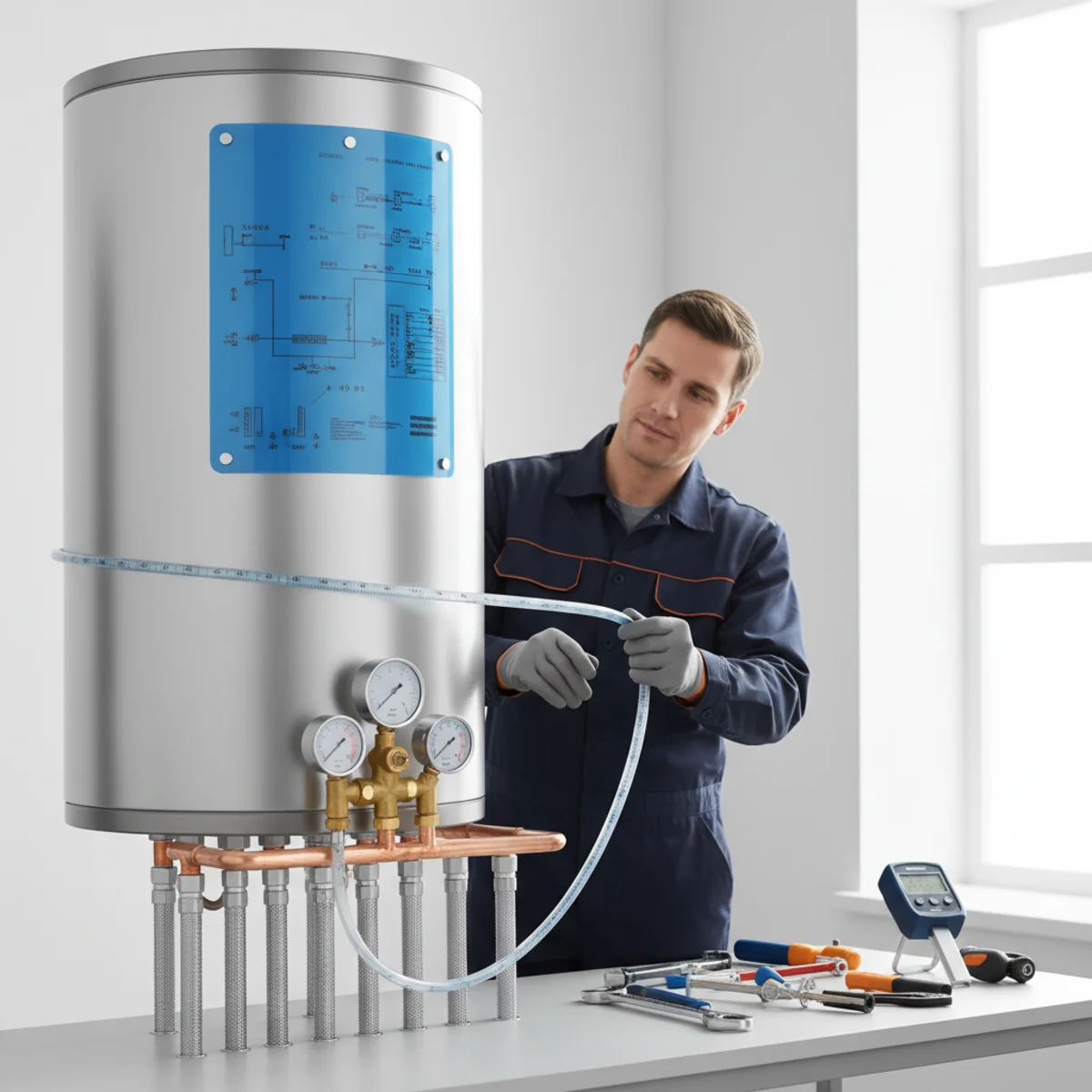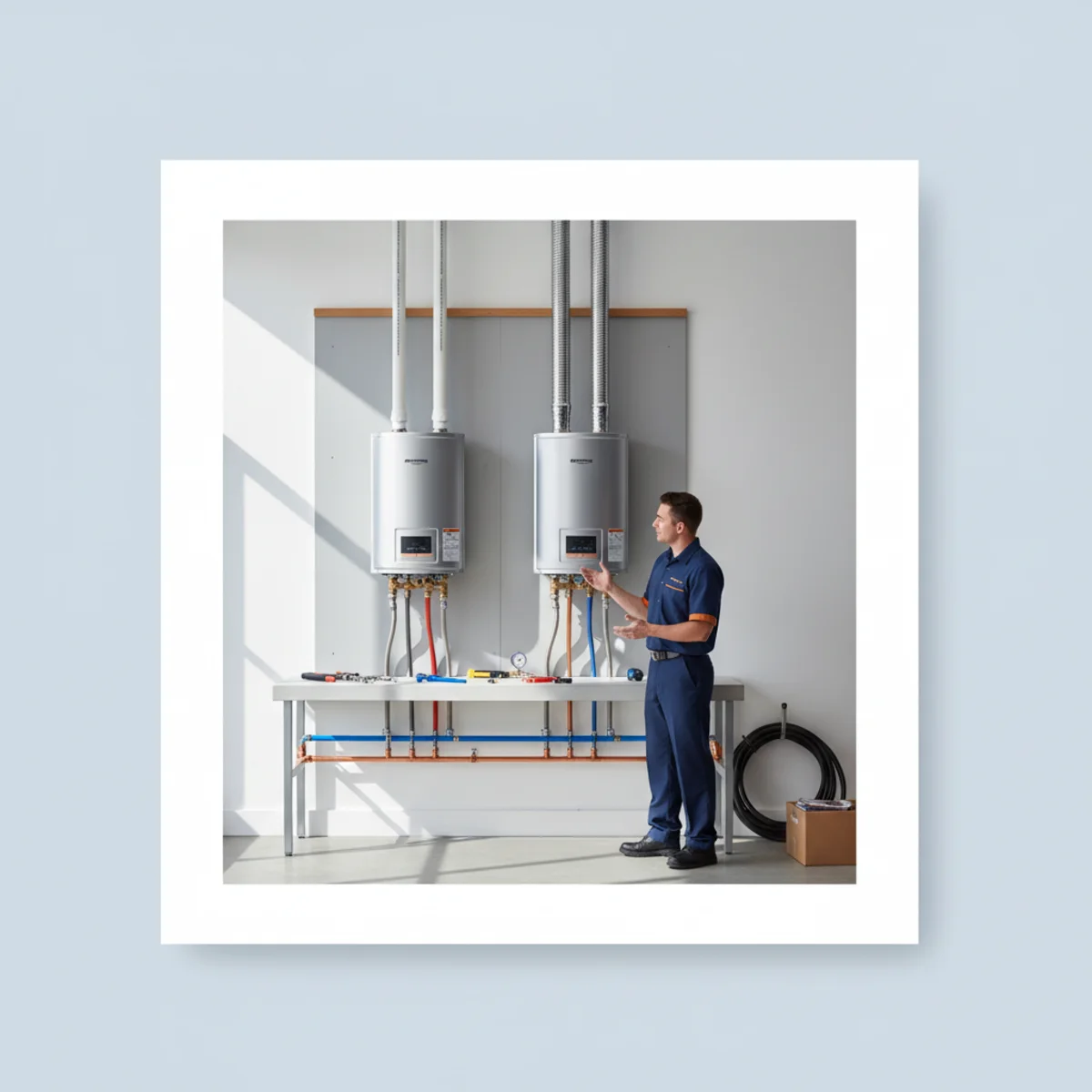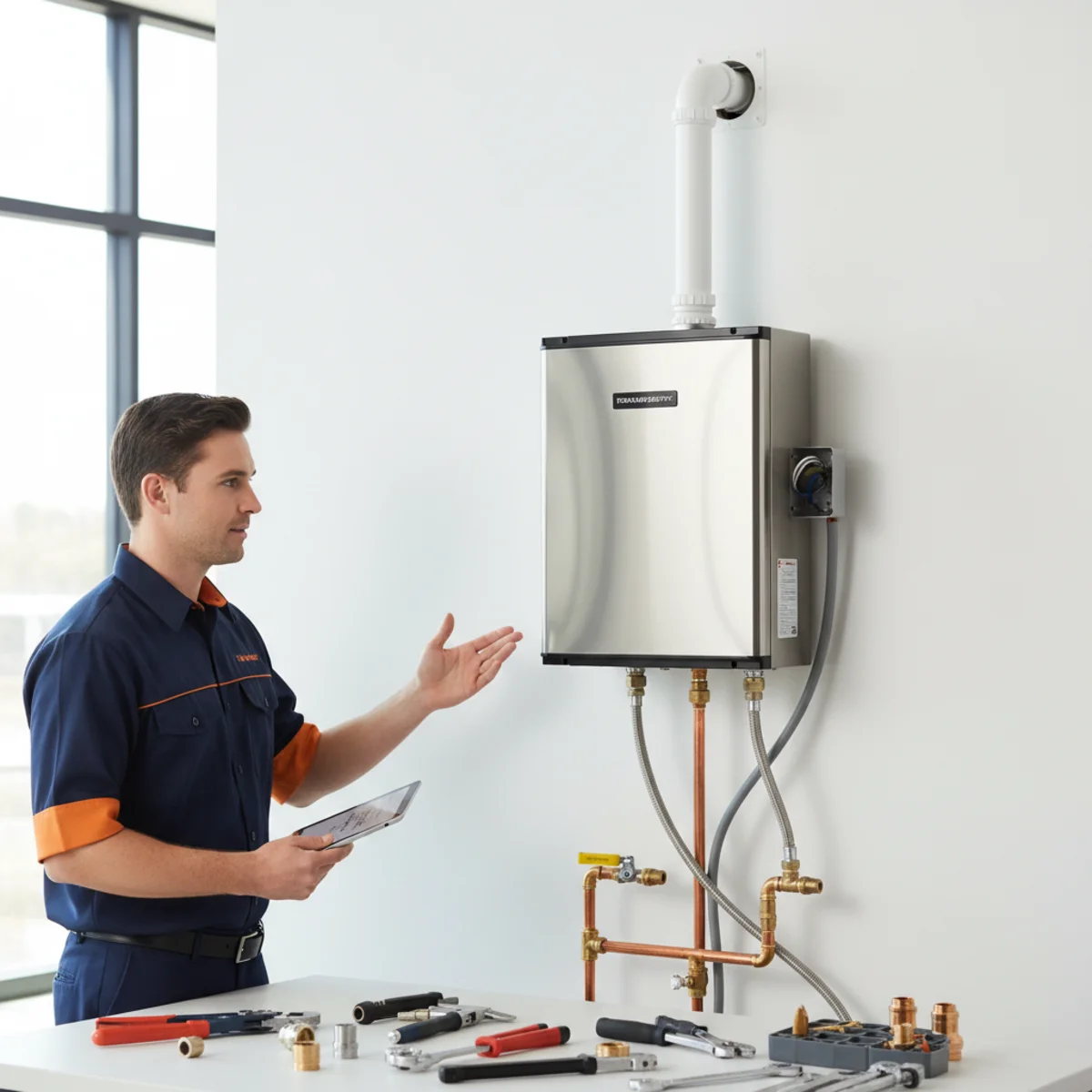
Your water heater decision starts with what's already in the wall. If you have a gas line running to the utility room, swapping like-for-like is the simplest path. If you're in an all-electric house — common in newer Rancho Cordova subdivisions built to modern energy codes — your choices open up in a different direction.
Neither fuel type is universally better. Gas recovers faster and tends to cost less per gallon heated in Sacramento County, where PG&E natural gas rates are relatively stable. Electric units are cheaper to buy upfront, easier to vent (they don't need venting at all), and qualify for generous California rebates when you step up to a heat pump model. The right answer depends on your existing infrastructure, household size, and long-term plans.
This guide walks you through both fuel types honestly — recovery rates, installation differences, code requirements, and the ongoing cost math — so you can make the call that fits your home, not just the cheapest unit on the shelf.
How Each Type Heats Water
A gas water heater burns natural gas (or propane) in a burner below the tank. Hot combustion gases rise through a flue at the center of the tank, transferring heat to the surrounding water, then vent outside through a dedicated flue pipe. Most 40-gallon gas models deliver a first-hour rating (FHR) — the amount of hot water produced in the first hour of operation starting with a full, hot tank — of 70 to 90 gallons.
An electric water heater uses one or two resistance elements immersed directly in the water. There's no combustion, no flue, and no draft — just electricity converting to heat. A comparable 40-gallon electric unit typically has an FHR of 55 to 70 gallons. It heats water more slowly, but it does so with near-100% efficiency at the point of use because there's no heat escaping up a flue.
The real-world difference shows up when demand spikes. A household of four taking back-to-back showers on a Saturday morning will drain a tank. Gas wins the recovery race — a typical 40K BTU burner can recover a depleted 40-gallon tank in about an hour. A standard electric unit may take 90 minutes or more.
Side-by-Side Comparison
The table below captures the key differences at a glance. Use it to identify which category matters most to your situation, then read the sections that follow for the details behind each row.
| Factor | Gas | Electric |
|---|---|---|
| Upfront unit cost | Moderate | Lower (standard resistance) |
| Recovery speed | Fast (~1 hr / 40 gal) | Slower (~1.5 hr / 40 gal) |
| Energy factor / UEF | 0.60–0.70 (standard) | 0.90–0.95 (standard resistance) |
| Venting required | Yes — B-vent or direct-vent | No |
| Seismic strap (CA) | Required | Required |
| Expansion tank (CA) | Required on closed systems | Required on closed systems |
| Rebate potential | Low | High (heat pump models) |
| Fuel switch cost | None (like-for-like) | High if adding gas line or panel upgrade |
California Code Requirements for Both Types
Regardless of fuel type, California plumbing and building codes require certain safety features on every replacement water heater in Rancho Cordova. A double-strap seismic restraint is mandatory statewide — one strap in the upper third of the tank, one in the lower third, anchored to wall studs or blocking. Sacramento County inspectors check this on permitted installs.
A thermal expansion tank is required any time the supply water is on a closed system — meaning a pressure-reducing valve (PRV), backflow preventer, or check valve blocks water from expanding back into the street main. Most homes built after the early 2000s have a PRV, so assume you need an expansion tank unless a plumber confirms otherwise. Without one, relief valve cycling shortens the life of both gas and electric units.
Gas units add venting requirements on top of those basics. Natural draft (atmospheric) burners need Category I B-vent routed to the exterior with proper clearances. Power-vent models use PVC pipe and a blower, giving you flexibility if your utility room lacks vertical clearance. Direct-vent units draw combustion air from outside, which matters in tight modern homes.
Work with a licensed installer who pulls the required Sacramento County permits. Unpermitted water heater swaps can complicate home sales and, more importantly, leave you without proof of a code-compliant install.
- Seismic straps: upper and lower third of the tank, anchored to studs.
- Expansion tank: required on virtually all post-2000 Rancho Cordova homes.
- T&P valve: factory-installed; discharge pipe must run to within 6 inches of the floor.
- Gas only: proper venting category matched to the unit's BTU rating.
- Drain pan: required when the unit is installed over a finished floor or living space.
Running Cost Reality in Sacramento County
Gas tends to be cheaper to operate in California when comparing a standard gas tank against a standard electric resistance tank. PG&E tiered electric rates mean the marginal cost of the electricity that heats water is often in the upper tiers, especially in summer when air conditioning is already pushing usage high. Natural gas, while it has risen in recent years, still delivers more BTUs per dollar for water heating in most billing scenarios.
However, the calculus shifts dramatically if you upgrade to a heat pump water heater (HPWH). A heat pump moves heat from the surrounding air into the tank rather than generating it from scratch, giving it a Uniform Energy Factor (UEF) of 3.0–4.0 — meaning three to four units of heat output per unit of electricity consumed. In Rancho Cordova's warm climate, where ambient air temperatures are high for many months, HPWHs perform near the top of their rated efficiency.
SMUD serves most of Rancho Cordova, and SMUD's flat-rate residential electric pricing changes the math compared to PG&E tiers. If your home is on SMUD, electric water heating — particularly a heat pump model — is worth a serious look. Confirm current rate schedules directly with your utility; rates change and what applied last year may not apply today.
When to Switch Fuels — and When Not To
Switching from gas to electric (or vice versa) adds cost beyond the unit price. Gas-to-electric means you need a 240V, 30-amp dedicated circuit — a panel upgrade if you're short on capacity. Electric-to-gas means running a new gas line and adding proper venting. Either conversion is workable, but budget for the rough-in work in addition to the unit itself.
If your existing setup is in good shape and code-compliant, a like-for-like replacement is almost always the faster, cheaper path. The exception is households actively planning to go all-electric or whose gas appliances are nearing end-of-life across the board — at that point a planned conversion makes economic sense.
Our gas water heater installation team handles everything from simple tank swaps to full fuel conversions, including permit filing and inspection coordination. For households leaning electric, see our electric water heater installation page for details on panel requirements and available models.
We cover Rancho Cordova and the surrounding area — contact us for an honest estimate on your specific situation.
Talk to a Local Rancho Cordova Water Heater Pro
Whether you need a repair today or you're planning an upgrade, we'll give you a straight answer and an upfront estimate.
Frequently Asked Questions
For standard tank models, gas typically costs less per month in our area. If you're on SMUD and willing to step up to a heat pump water heater, electric can match or beat gas on operating cost. Always run the numbers against your current utility rates — they change.
Yes. A permit is required for all water heater replacements in Sacramento County. The permit process includes an inspection that verifies seismic strapping, expansion tank installation, and proper venting — all of which protect your family and your home's resale value.
Only if you have an open 240V, 30-amp breaker slot. Many older Sacramento-area homes with 100-amp panels are already at capacity. A licensed electrician can assess whether a sub-panel or main upgrade is needed before you commit to an electric unit.
Both types average 8–12 years in Rancho Cordova's moderately hard water. Annual flushing slows sediment buildup in both. Anode rod inspection every 3–4 years extends tank life regardless of fuel type. Gas units that vent improperly may degrade faster due to condensation issues.
The first-hour rating (FHR) tells you how many gallons of hot water the heater can deliver in the first hour, starting from a full tank. It's a better sizing metric than tank capacity alone. A household of four typically needs an FHR of at least 80 gallons. Gas units generally have higher FHRs than same-size electric units.
Written by the Water Heater RC Pros team
Practical, local guidance from Rancho Cordova water-heater installers — written for homeowners and kept current with California code. Have a question about your unit? Call (201) 277-9344.