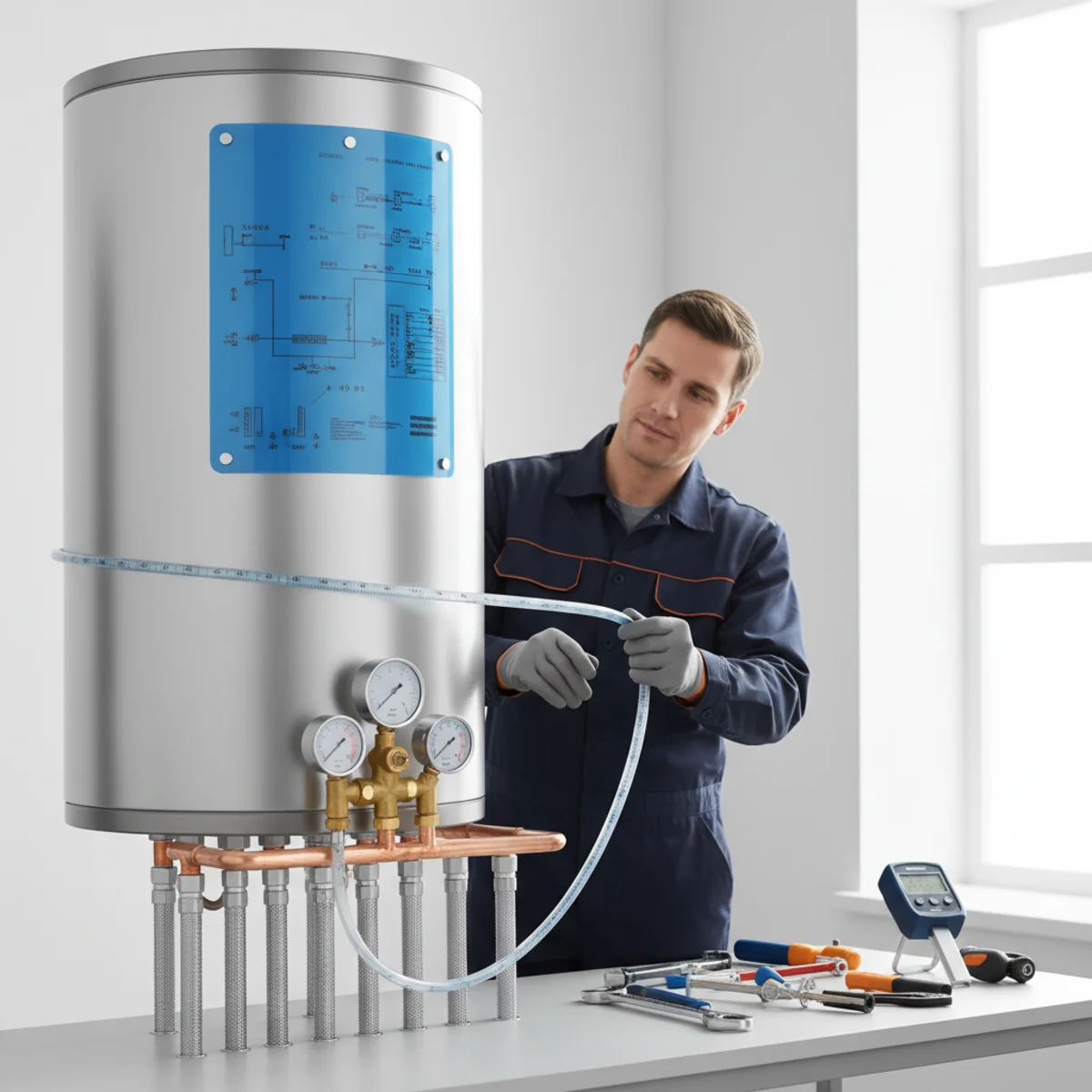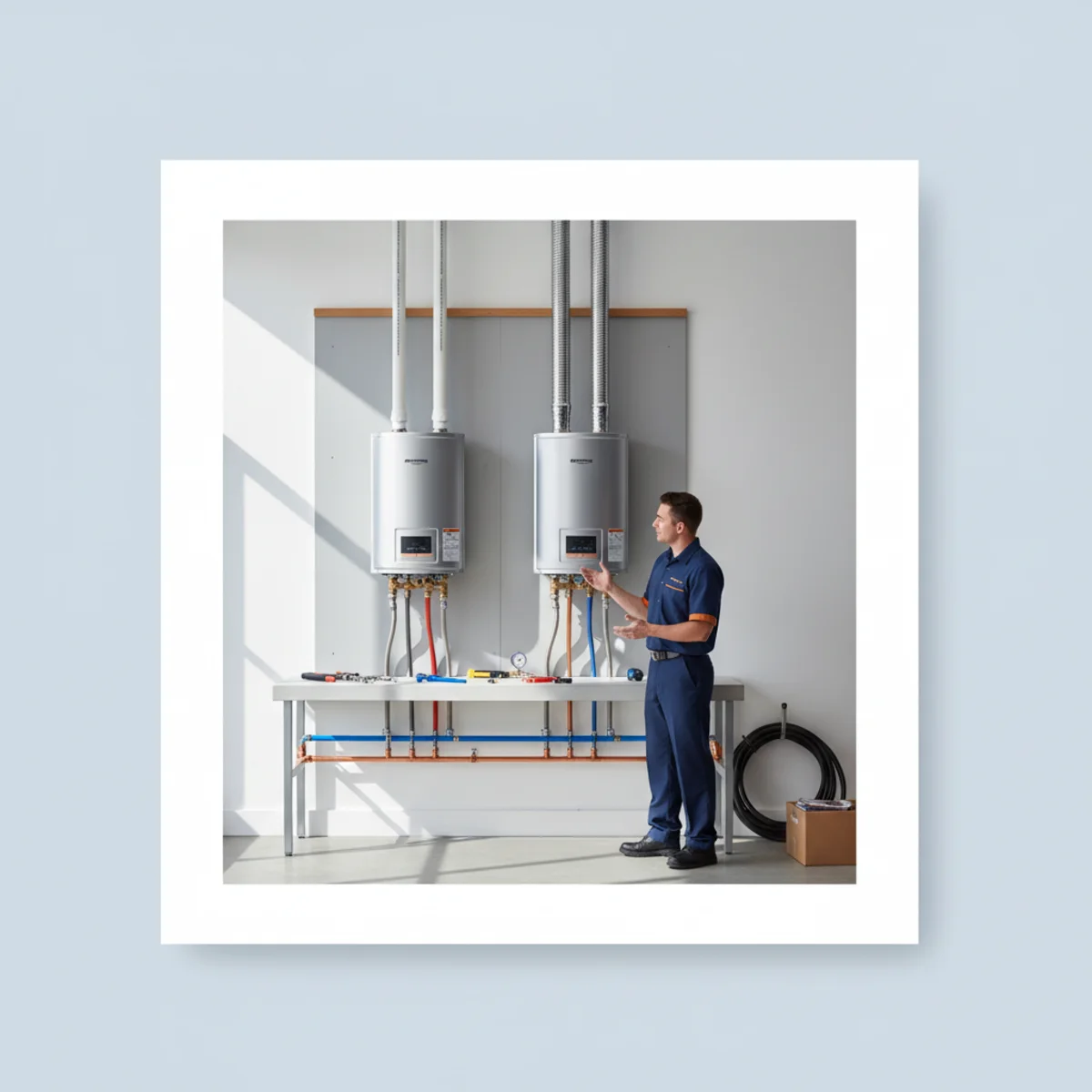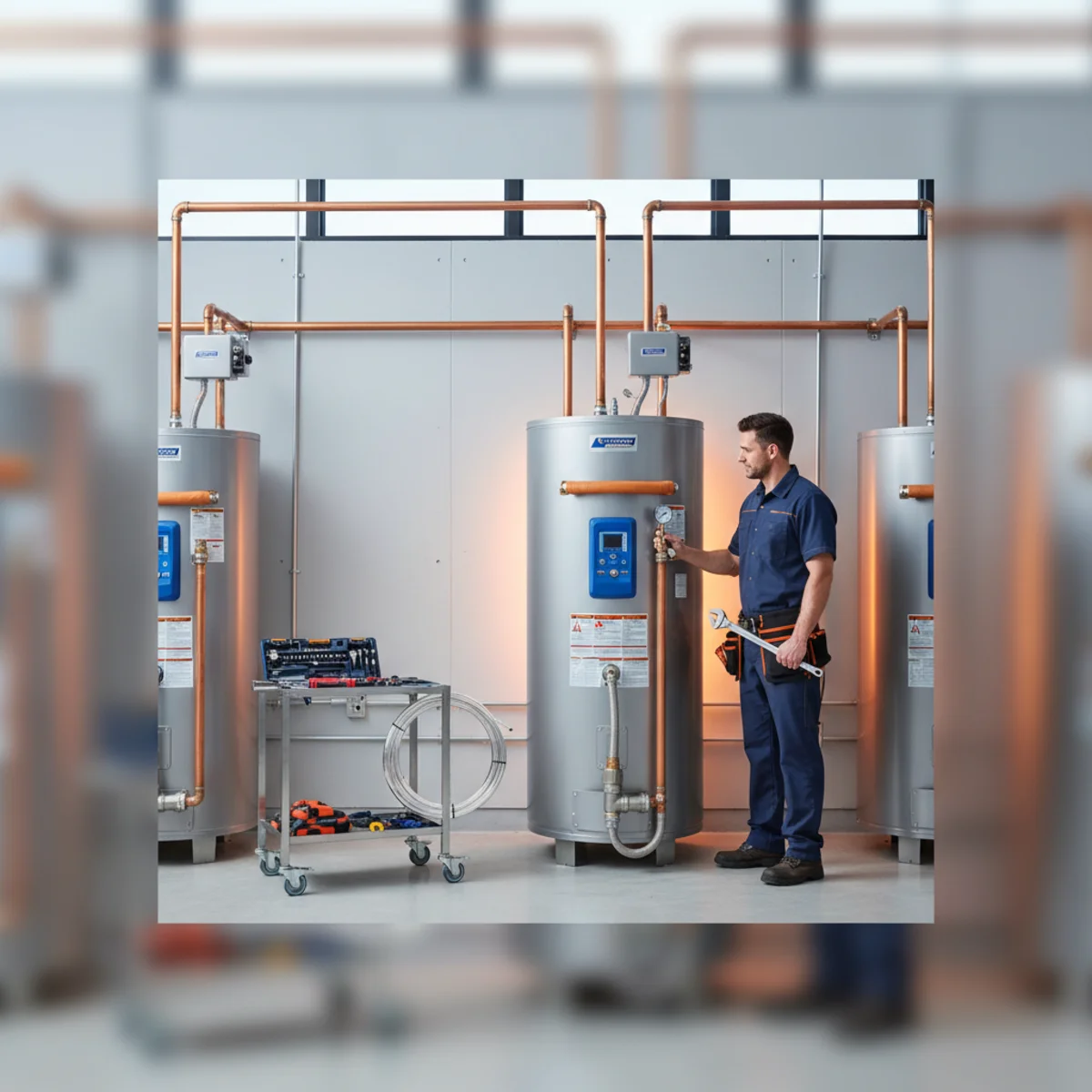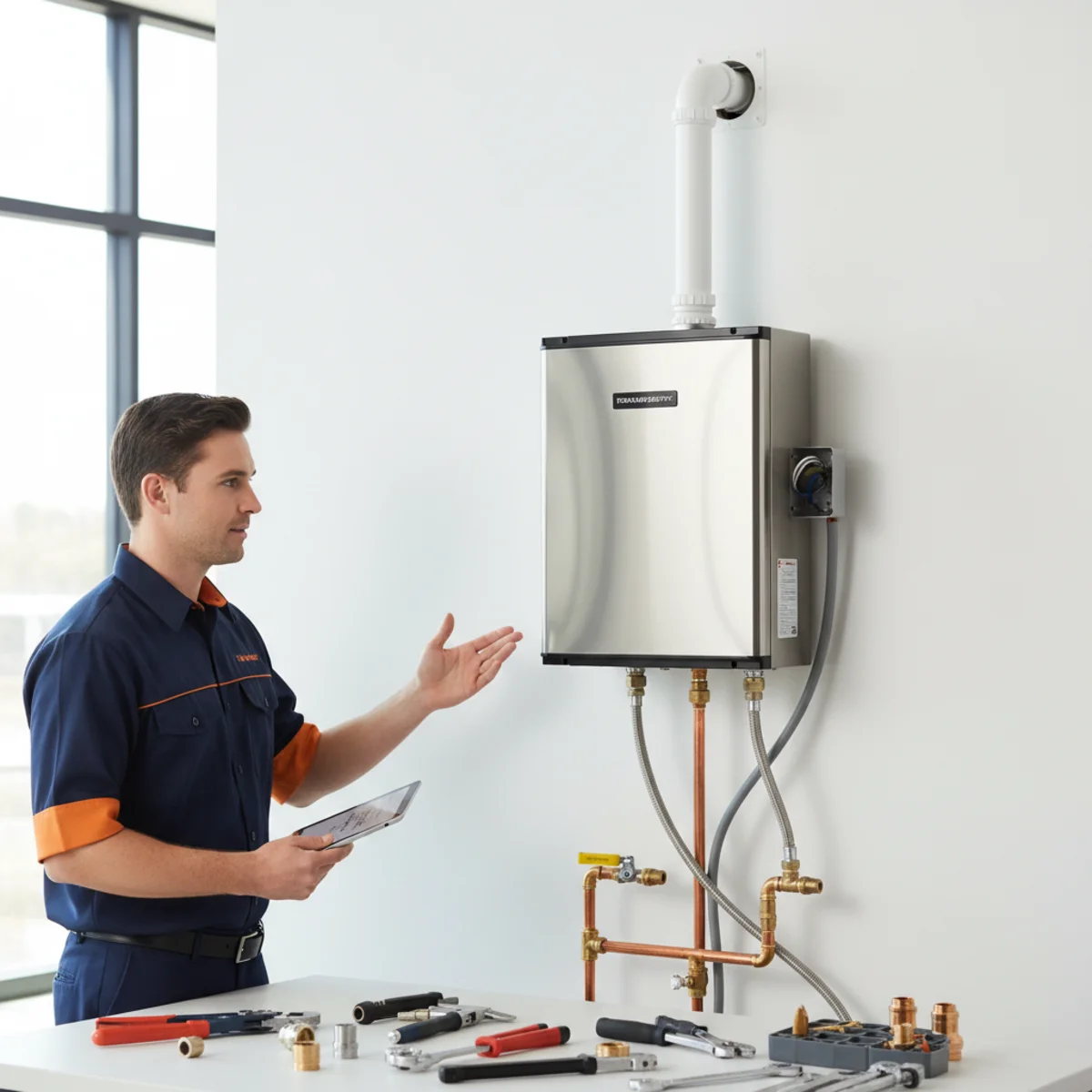
Tankless water heaters are genuinely excellent equipment for the right application. They deliver hot water on demand, last 15–20 years with proper maintenance, and consume less energy than a tank unit when household usage patterns match the technology well. But they have real infrastructure requirements that can make the installation more involved — and more expensive — than the unit's sticker price suggests.
The most common surprise in a tankless installation is the gas line. A 50-gallon gas tank water heater runs on a 3/4-inch gas line with a 36,000 BTU burner. A condensing tankless unit runs a 199,000 BTU burner at full demand. That's a completely different gas supply requirement. Whether your current line is adequate — or whether upgrading it is practical from your meter — can determine whether gas tankless is the right choice for your home.
This guide covers every infrastructure requirement for a tankless installation: gas line sizing, venting options, electrical needs, water quality considerations, and California permit and code requirements. Read it before you buy the unit.
Gas Line Requirements — The Most Common Upgrade
Natural gas tankless water heaters have high-BTU modulating burners. A whole-home condensing unit typically has a maximum input of 150,000–199,000 BTU/hr. Your existing gas line to the water heater location is almost certainly sized for your old tank unit — typically 1/2-inch or 3/4-inch pipe, sized for 36,000–40,000 BTU. That is insufficient for most tankless units at full demand.
Gas line sizing depends on the BTU load, the pipe diameter, the pipe length from the gas meter to the appliance, and the number of other gas appliances sharing the supply. A licensed installer will do this calculation using the AGA (American Gas Association) sizing tables. If the existing line from your meter to the heater location is too small, you need either a larger line run or a dedicated line — both of which add to the project cost.
This is one of the main reasons a tankless conversion can cost significantly more than a like-for-like tank replacement. The unit itself costs more, and the gas line upgrade — if needed — can add several hundred to over a thousand dollars depending on the run length and current pipe size. Get this assessed before committing to the equipment.
Our tankless water heater installation team assesses gas supply as the first step of any quote — we don't let clients buy equipment that can't be properly supplied.
Venting: Condensing vs. Non-Condensing Units
Gas tankless units need to exhaust combustion gases to the outside. The venting type depends on whether you choose a condensing or non-condensing unit, and the venting method affects where the unit can be physically installed.
Non-condensing units exhaust high-temperature gases and require Category III stainless steel vent pipe — essentially the same duct used for high-efficiency furnaces. This vent gets very hot and must be properly clearanced from combustibles. The installation is similar to a high-efficiency furnace vent.
Condensing units extract more heat from the combustion gases, which means the exhaust is lower temperature and lower in acid condensation. They can use PVC pipe for venting — much less expensive material that's easier to run. Condensing units typically achieve higher efficiency (UEF 0.90+) than non-condensing units (UEF around 0.82–0.86). The trade-off is a higher unit price.
Both types also require a combustion air supply. Some units are "direct vent" — they pull combustion air from outside through a concentric or two-pipe intake. Others require adequate combustion air from the room where they're installed. Garage installs in Rancho Cordova generally work well for direct-vent units; interior closet installations need careful attention to air supply requirements.
Replacing an old tank unit with a tankless unit typically means the old metal B-vent flue is no longer usable — it's the wrong type, wrong size, or the wrong configuration. Budgeting for new venting is almost always part of a tankless conversion.
| Factor | Non-Condensing | Condensing |
|---|---|---|
| Efficiency (UEF) | ~0.82–0.86 | ~0.90–0.96 |
| Vent material | Stainless steel Category III | PVC (cheaper, easier to run) |
| Exhaust temperature | High | Lower — safe for plastic pipe |
| Unit cost | Lower | Higher |
| Long-run install cost | Higher vent material cost | Lower vent material cost |
| Best for long vent runs | No — expensive duct | Yes — PVC is cost-effective |
Electrical Requirements
Even gas tankless units need electricity — they use electronic ignition, control boards, circulation pumps (on units with built-in recirculation), and communication modules for smart home integration. Most gas tankless units require a dedicated 120V/60Hz circuit with a ground fault outlet. The amperage draw is relatively modest (3–5 amps typically), but the dedicated circuit requirement means the outlet near the water heater location needs to be on its own breaker.
Many garage water heater locations don't have a nearby dedicated circuit. Adding one is straightforward for an electrician but is another line item in the conversion budget.
Electric tankless units are a different story entirely. Whole-home electric tankless units require large-capacity dedicated circuits — some requiring 240V at 120 amps or more, often requiring a service panel upgrade. This is rarely practical in existing Rancho Cordova homes without significant electrical work. Point-of-use electric tankless units (installed at a single sink) require 120V or 240V at 20–30 amps and are much more feasible.
For whole-home hot water, gas tankless is almost always the practical choice in a retrofit unless you already have electrical capacity to spare. Our gas water heater installation team can advise on the right fuel type for your specific situation.
Water Quality and Flow Rate Requirements
Tankless units have a minimum flow rate to activate the burner — typically 0.5 to 0.75 gallons per minute. If your incoming flow rate at the unit is below that threshold (common with clogged aerators, a weak pressure regulator, or very long supply lines), the unit won't fire. This produces the classic tankless complaint: trickle flow comes out cold.
Rancho Cordova's hard water creates scale inside the tankless heat exchanger — the coil of tubing where water is actually heated. Scale buildup reduces efficiency, reduces flow, and can cause premature failure. Annual descaling with a vinegar flush or commercial descaling solution is standard maintenance for tankless units in our area. Some installers recommend installing an inline water softener or scale-inhibiting pre-filter upstream of the unit.
Flow rate is also the main reason a whole-home tankless unit requires proper sizing. A unit rated at 7 gallons per minute at a 35°F temperature rise might only deliver 5 gallons per minute at the 50°F rise required in cooler months. Match the unit's flow capacity to your household's simultaneous demand — not just total daily usage.
- Confirm incoming water pressure is 40–80 PSI — tankless units need adequate pressure to activate and flow correctly.
- Rancho Cordova hard water requires annual descaling of the heat exchanger.
- Consider an inlet filter or water softener to reduce maintenance frequency.
- Minimum flow activation threshold (typically 0.5 GPM) means very low-flow fixtures may not trigger the unit.
- Ground floor installations in homes with very long runs to upper floors may benefit from a recirculation pump — confirm compatibility with your specific unit first.
California Code Requirements and Permits
Sacramento County requires a permit for all water heater replacements, including tankless conversions. The inspection covers gas line sizing and connections, venting installation and clearances, seismic restraint (tankless units are wall-mounted and require proper seismic anchoring), and electrical connections.
California's Title 24 building energy code affects equipment selection. Units installed in new construction or major remodels may need to meet higher efficiency thresholds than direct replacements. Your installer should be aware of current Title 24 requirements.
Thermal expansion tanks are required on closed plumbing systems in California, regardless of whether you're installing a tank or tankless unit. If your home has a pressure-reducing valve or backflow preventer on the water main without a thermal expansion provision, you need an expansion tank. This is not specific to tankless — it's a California code requirement for any water heater on a closed system.
SMUD and PG&E have offered rebates for high-efficiency gas water heaters, including condensing tankless units — confirm current program details before purchasing, as these programs change. Some rebates require specific installer certifications or pre-approval.
For any tankless installation in Rancho Cordova, we handle the permit application and inspection coordination as part of the project. Contact us or visit our tankless installation page for a site-specific assessment.
Talk to a Local Rancho Cordova Water Heater Pro
Whether you need a repair today or you're planning an upgrade, we'll give you a straight answer and an upfront estimate.
Frequently Asked Questions
The total cost varies significantly based on whether gas line upgrades are needed, what venting type the unit requires, whether electrical work is needed, and the unit itself. A straightforward like-for-like tankless replacement where the existing gas line is adequate is at the lower end. A full conversion from a tank unit with a new gas line run, new venting, and a condensing unit is at the higher end. We provide site-specific estimates — call or contact us to schedule an assessment.
Probably not without assessment. Most existing gas lines to tank water heaters are sized for 36,000–40,000 BTU. A whole-home tankless unit runs at 150,000–199,000 BTU at full demand. Whether an upgrade is needed depends on current pipe size, pipe length from the meter, and how many other appliances share the supply. This is one of the first things we check.
Yes — a garage is often the ideal location. Direct-vent condensing units can vent through the wall or roof with PVC pipe, and gas connections are typically accessible. California code requires carbon monoxide detectors if the garage is attached. The seismic wall anchoring is also straightforward in a garage where wall studs are accessible.
Yes, more than most homeowners expect. Annual descaling of the heat exchanger is essential in Rancho Cordova's hard water. The inlet filter screen should be cleaned annually. Some units have a maintenance indicator. Skipping descaling is the primary cause of premature tankless water heater failure — the heat exchanger clogs with mineral scale and efficiency drops sharply before failure.
Yes. Sacramento County requires a permit for all water heater replacements and installations, including tankless conversions. The inspection covers gas line sizing, venting, seismic anchoring, and electrical connections. Unpermitted water heater work can create issues with homeowner's insurance and at resale.
Written by the Water Heater RC Pros team
Practical, local guidance from Rancho Cordova water-heater installers — written for homeowners and kept current with California code. Have a question about your unit? Call (201) 277-9344.