Water Heater Maintenance in Rancho Cordova, CA
Water heaters are the one appliance homeowners tend to forget about until something goes wrong. Most households in Rancho Cordova have never flushed their tank, never inspected the anode rod, and never tested the T&P valve — and the unit is quietly accumulating the hard-water scale and corrosion that will eventually shorten its life and raise the energy bill. Annual maintenance changes that equation.
- Same-day appointments available
- Installed to California code
- Upfront, itemized estimates
- Clean work area & haul-away
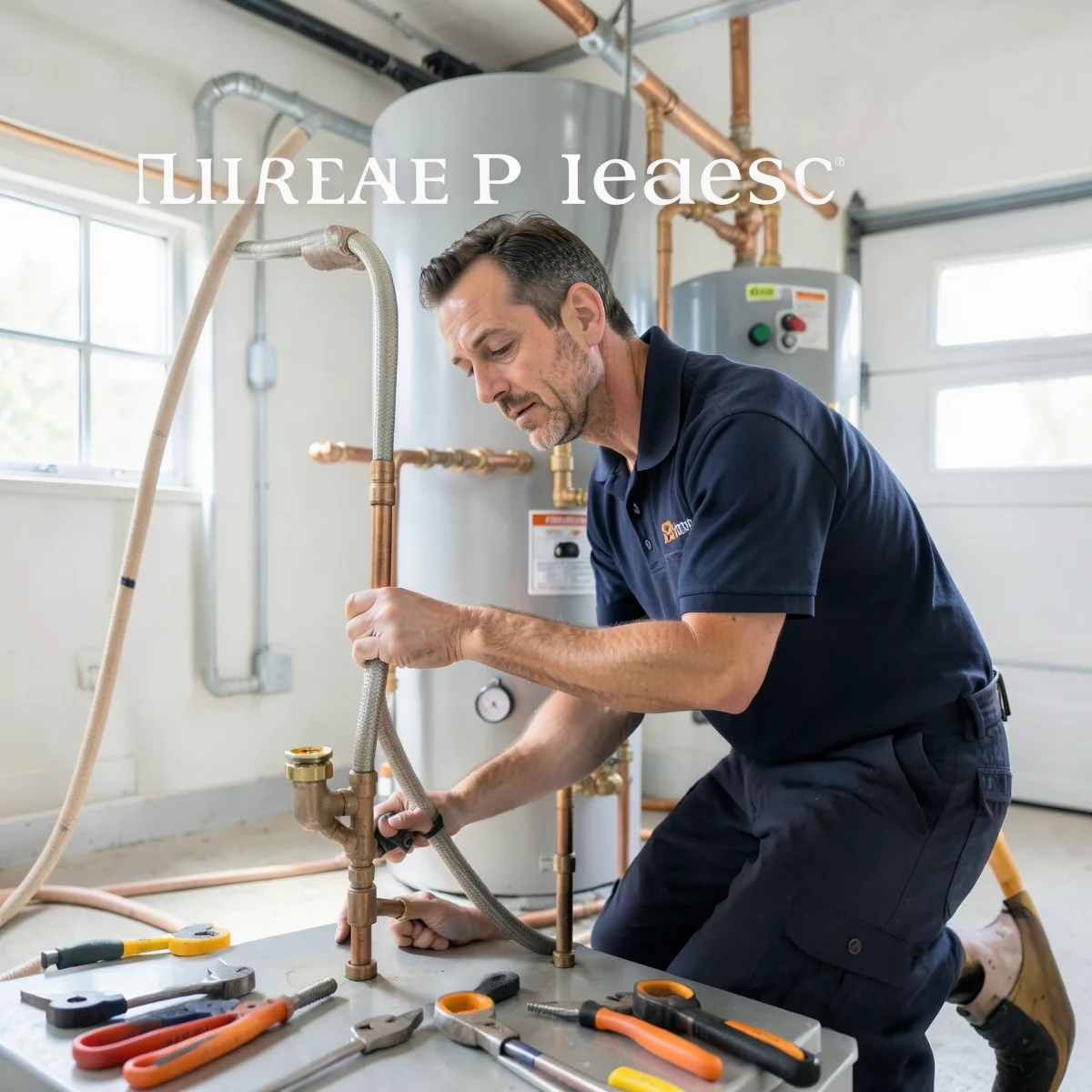
Water heaters are the one appliance homeowners tend to forget about until something goes wrong. Most households in Rancho Cordova have never flushed their tank, never inspected the anode rod, and never tested the T&P valve — and the unit is quietly accumulating the hard-water scale and corrosion that will eventually shorten its life and raise the energy bill. Annual maintenance changes that equation.
The Sacramento Valley's water supply runs hard — high in dissolved calcium and magnesium. Every time that water heats up, minerals precipitate out and settle on the bottom of the tank as sediment. Left alone for a few years, that sediment layer becomes an insulating crust that forces the burner to run hotter and longer, cuts recovery rate, and creates hot spots on the tank steel that accelerate corrosion. A one-hour annual flush removes what's loose; an anode rod inspection catches internal corrosion before it becomes structural.
Think of it as a tune-up for the most-used appliance in your home. A properly maintained tank that gets an annual flush and periodic anode replacement can outlast its warranty by years — and it does it more efficiently, month after month. Water heater repair visits drop when maintenance is consistent.
Quick Answer
Annual water heater maintenance in Rancho Cordova includes flushing sediment, inspecting and replacing the anode rod, testing the T&P relief valve, and checking the expansion tank pressure and all connections. In Rancho Cordova's hard water, this service pays for itself by extending tank life and keeping efficiency high. Same-day appointments available. Call (201) 277-9344 to schedule.
When to call
Signs You Need Water Heater Maintenance
Not sure if it's time? These are the situations where water heater maintenance in Rancho Cordova makes sense.
- The tank hasn't been flushed in more than 12 months — or ever.
- The unit is taking longer to reheat after showers or laundry.
- Rumbling, popping, or crackling sounds during the heating cycle — sediment on the bottom.
- Slightly discolored or metallic-smelling hot water, which can indicate a depleted anode rod.
- The T&P relief valve has never been manually tested and the unit is more than a year old.
- Your gas or electric bill has risen without a change in household usage patterns.
- The unit is 3–5 years old and has had no service since installation.
- You're on hard, unfiltered water and the tank has never had a water-quality check.
What's included
What Our Water Heater Maintenance Service Covers
Full sediment flush
We connect a hose to the drain valve, flush the tank until the water runs clear, and remove the mineral sediment that's been settling at the bottom. This is the single highest-impact maintenance task in hard-water areas.
Anode rod inspection and replacement
The anode rod (sacrificial magnesium or aluminum) is removed and inspected. If it's down to the core wire or heavily encrusted, we replace it — preventing the tank itself from corroding from the inside.
T&P relief valve test
The temperature and pressure relief valve is manually exercised to confirm it opens and reseats without leaking. A valve that won't open or won't close after testing is replaced — it's a safety component, not optional.
Expansion tank pressure check
If you have a thermal expansion tank (required on closed systems under California code), we check the pre-charge pressure and re-inflate or flag it for replacement if the membrane has failed.
Connections and fitting inspection
We check all water connections, the gas line or electrical connections, seismic strapping, and the drain pan — catching small leaks or loose fittings before they become larger problems.
Written service summary
We leave a written record of what we found, what we did, and what to watch for — including any items to address before the next annual visit.
Why it's done right
Why Proper Water Heater Maintenance Matters
Hard-water defense
Rancho Cordova's water runs hard, and that chemistry works against every water heater in the area. An annual flush removes the loose sediment that builds up as minerals precipitate from heated water. Anode inspection keeps the rod working before the tank's steel becomes the sacrificial material. Together, these two steps address the two most common ways hard water shortens tank life.
Safety
The T&P relief valve is the last line of defense against a water heater that overheats or over-pressurizes. A valve that has never been tested can seize open or — more dangerously — seize closed. Testing it annually confirms it will operate when it matters. Expansion tank pressure checks confirm your system isn't building up unchecked thermal expansion, which stresses fittings and the tank body.
Energy efficiency
A half-inch of sediment on the bottom of a gas water heater can raise energy consumption measurably, because the burner has to push heat through insulating mineral scale before it reaches the water. An electric element coated in scale runs hotter and fails sooner. Removing sediment each year keeps the unit running at the efficiency it was rated for.
Longer tank life and deferred replacement cost
A tank that's flushed annually, has a healthy anode rod, and has had its T&P exercised regularly simply lasts longer. The anode rod is an inexpensive part. The flush is a short service visit. Both delay the day you need a full replacement — and in Rancho Cordova's hard water, without maintenance, that day comes earlier than the nameplate suggests.
How we work
Our Water Heater Maintenance Process
Visual inspection
Check the unit for external corrosion, drips at fittings, seismic strap condition, drain pan status, and any visible scale or staining that points to past weeping.
Sediment flush
Connect a drain hose, open the drain valve, and flush until the outflow runs clear — removing accumulated mineral sediment from the bottom of the tank.
Anode rod check
Remove the anode rod access and inspect the rod's condition. Document what's there and replace it if it's past the point of providing adequate protection.
T&P valve test
Manually lift the T&P lever briefly to confirm the valve opens and reseats cleanly. Replace if it weeps after reseating or if the lever feels seized.
Expansion tank check
Test the Schrader valve on the expansion tank with a gauge to confirm pre-charge is at or near system pressure. Re-inflate if low; flag for replacement if the membrane has failed.
Fittings and connections walkthrough
Inspect all water and gas or electrical connections, check for soft spots in flexible lines, confirm strapping is tight, and verify the drain pan is clean and clear.
Written summary and next steps
Leave a written service note covering everything inspected, what was replaced, and any recommendations for the next service window.
Transparent pricing
What Affects Your Water Heater Maintenance Cost
We don't post fixed prices online because every home is different — but here's exactly what moves the number, so your estimate is never a mystery.
Unit type — tank vs. tankless
A standard tank tune-up covers a flush, anode-rod inspection, T&P valve test, and thermostat or burner check. A tankless descale and burner/flame-sensor inspection involves more steps and typically runs higher.
Current condition and sediment level
Rancho Cordova hard water deposits mineral scale faster than most regions. A tank with heavy buildup takes longer to flush fully, and excessive scale can point to deeper issues worth addressing before they shorten the unit's life.
Replacement parts found during inspection
If the anode rod is depleted, the T&P valve fails its lift test, or the drain valve leaks when opened, those parts get swapped during the same visit — parts cost is added on top of the service call.
Thermostat, burner, and element checks
Gas units get a burner and thermostat inspection; electric units get element and thermostat checks. Calibration is included in the tune-up; component replacement adds parts cost if anything is found faulty.
Access to the unit
A water heater blocked by storage in the garage or wedged into a tight closet takes longer to service safely than one with clear working space on all sides.
Frequency and plan enrollment
Scheduling annual tune-ups proactively — rather than calling once something goes wrong — is the most cost-effective way to stretch a unit's life through Rancho Cordova's hard-water years.
Local know-how
Rancho Cordova Considerations
The local details competitors treat as an afterthought — and we don't.
Sacramento Valley water hardness runs roughly 15–17 grains per gallon in many Rancho Cordova service zones — classified as very hard. That's well above the threshold where sediment buildup significantly shortens tank life and raises operating costs. For most households here, annual flushing is a minimum; twice-yearly flushing is reasonable on older units or homes without a water softener. If you're tired of the maintenance cycle, a water softener installation addresses the mineral content before it ever reaches the tank — the most upstream fix available.
The combination of hard water and Rancho Cordova's summer heat is harder on water heaters than either factor alone. Tanks in Gold River and Folsom area homes with unconditioned garages see their water stored in an ambient environment that can exceed 100°F in July and August. That thermal cycling accelerates the precipitation of minerals and stresses the tank's steel and fittings. Scheduling an annual maintenance visit in late spring — before summer heat hits — is well-timed for this region.
Anode rods in hard-water zones like Rancho Cordova typically need inspection at three years and replacement at four to five years, compared to national average guidance of five to six years. If you're on untreated city water, the aggressive mineral content depletes the rod faster. Combined with our water heater flushing service, a consistent maintenance schedule is the practical way to defend a new or mid-life tank against the Sacramento Valley's water chemistry. Code requirements and rebate programs change — confirm current details on any efficiency upgrade before you commit.
Related Water Heater Services
Water Heater Flushing
Annual sediment flush that restores heating efficiency and extends tank life in Rancho Cordova's hard-water environment.
Learn moreWater Heater Repair
Thermostat, element, pilot, T&P, or anode — most water heater problems are repairable, and we'll tell you honestly when replacement makes more sense.
Learn moreWater Softener Installation
Stop hard-water scale from destroying your water heater, fixtures, and appliances — professional softener installation sized for your home.
Learn moreWater Heater Installation
New tank or tankless, sized right and installed to California code — permits, code upgrades, and old-unit haul-away handled.
Learn moreAreas We Serve for Water Heater Maintenance
Questions, answered
Water Heater Maintenance FAQs
Once a year is the standard recommendation, and it's the right call in Rancho Cordova's hard water. An annual flush, anode check, and T&P test stays ahead of sediment and corrosion on most units. On older tanks or homes with particularly hard, untreated water, twice-yearly flushing is worth considering.
The flush removes sediment — calcium, magnesium, and silica — that precipitates out of hard water and settles at the bottom of the tank. That sediment insulates the burner or element from the water, raises energy use, and accelerates corrosion at the base of the tank. Flushing it out each year keeps the unit running efficiently and prevents that crust from hardening into a layer that's nearly impossible to remove.
The anode rod is a long sacrificial rod — usually magnesium or aluminum — that hangs inside the tank from the top. It corrodes instead of the tank's steel, protecting the tank from rusting from the inside out. When the rod is depleted (just a thin core wire left), the tank itself becomes the sacrificial material. Inspecting and replacing it on schedule is one of the cheapest ways to extend tank life.
If it drips continuously after being tested, weeps from the discharge pipe, or the lever feels seized and won't move, it should be replaced. A T&P valve is a life-safety component — it prevents catastrophic overpressure. If it hasn't been tested in years and the unit is more than six years old, replacement is often the right call regardless.
A thermal expansion tank is a small pressurized tank connected to your cold-water line. On a closed plumbing system — where a check valve or pressure regulator prevents water from expanding back toward the street — heated water has nowhere to go as it expands. The expansion tank gives it somewhere to go safely, preventing stress on fittings and the tank body. California code requires one on closed systems, and we check the pre-charge pressure during every maintenance visit.
No, but it reduces the scale that maintenance is addressing. A softener treats the water before it reaches the tank, dramatically cutting the mineral load that creates sediment. Annual maintenance — including the T&P test and anode inspection — is still needed regardless of water quality. The two work together rather than substituting for each other.
Usually 60–90 minutes for a standard tank flush, anode check, T&P test, and connections inspection. If the anode needs replacement or the expansion tank pre-charge is off, add a bit of time. We don't rush the flush — the water needs to run until it's genuinely clear, which takes longer on a tank that hasn't been serviced in several years.
Helpful Water Heater Guides
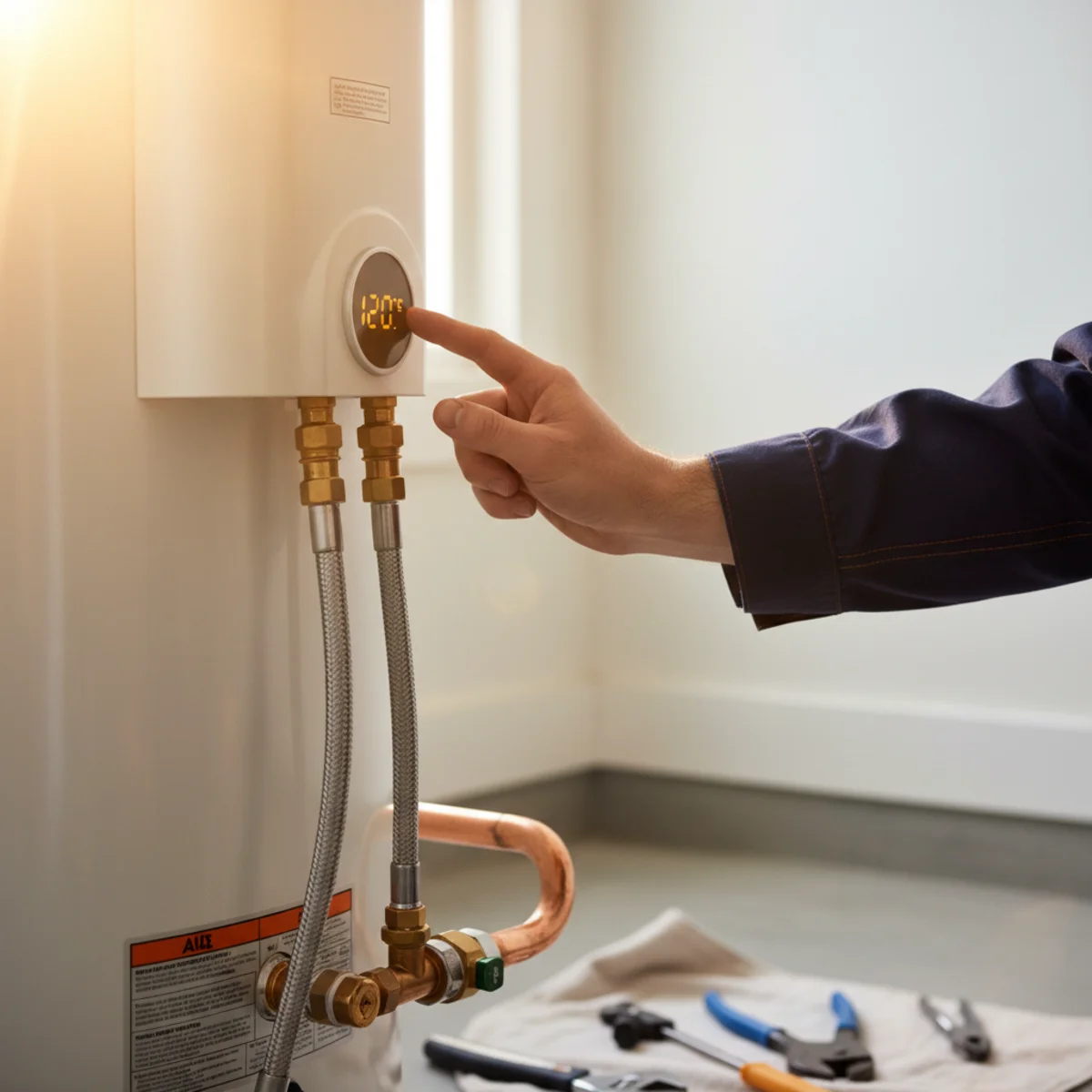
What Temperature Should Your Water Heater Be Set To?
The right water heater temperature isn't one-size-fits-all. Here's how to balance scalding risk, Legionella prevention, and energy savings for your household.
May 1, 2026
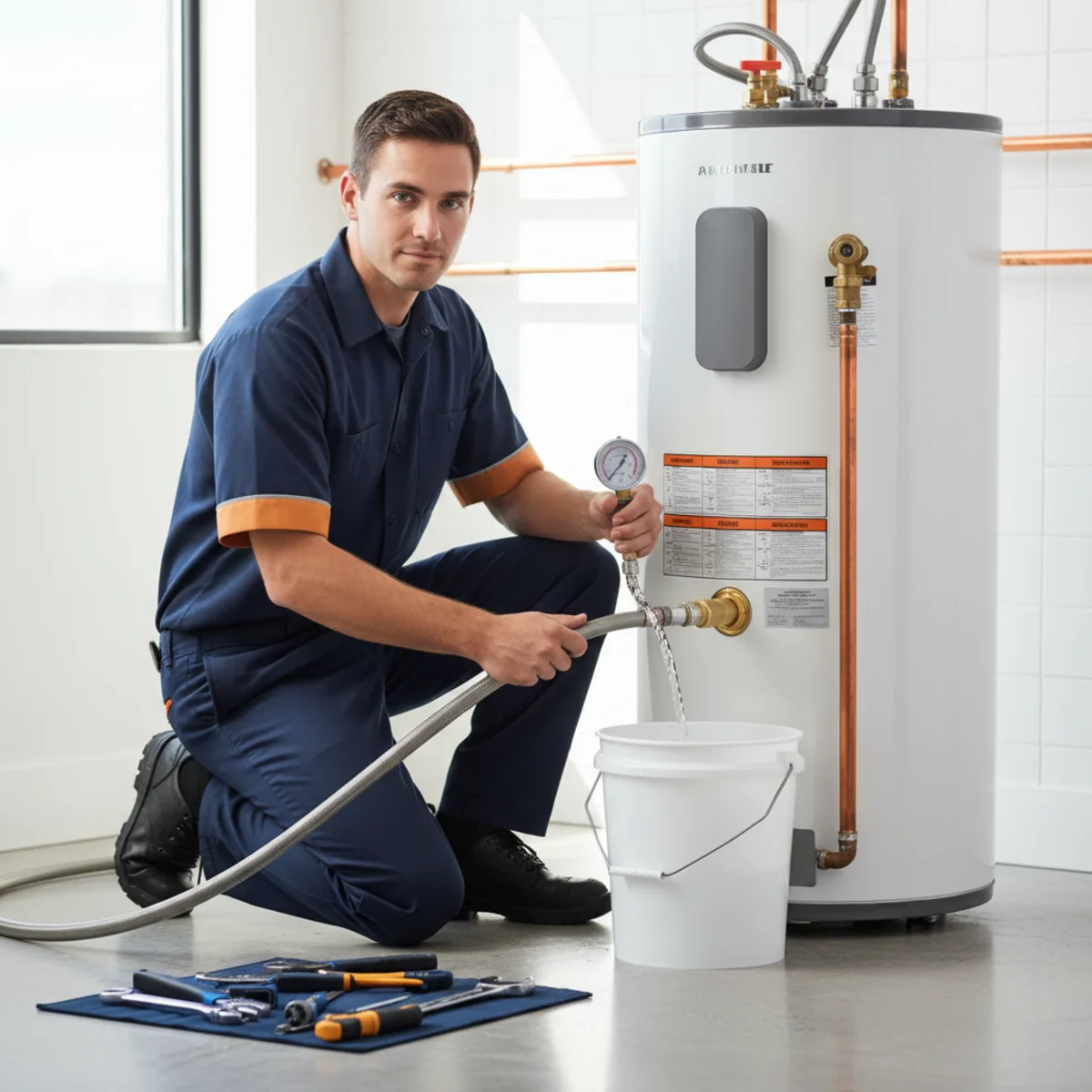
How to Drain and Flush a Water Heater (Step by Step)
Flushing your water heater once a year removes sediment that reduces efficiency and shortens tank life. Here's exactly how to do it safely.
February 24, 2026
Why Does My Hot Water Smell Like Rotten Eggs?
That rotten egg smell from your hot water is hydrogen sulfide — usually from bacteria in the tank reacting with your anode rod. Here's how to fix it.
February 6, 2026
Our Standards on Every Job
- Installed to current California Plumbing Code
- Sacramento County permit guidance on every job
- Upfront, written estimates — no surprises
- Code upgrades included: expansion tank, seismic strapping, drain pan, T&P discharge
- Warranty-backed equipment options
- Clean, protected work areas and old-unit haul-away
Licensing and insurance information available on request. Programs and code requirements change — we confirm current details before you buy.
Local & Official Resources
Helpful third-party references for Rancho Cordova and Sacramento County homeowners. Programs and code change — confirm current details on the official sites before you buy.
- Sacramento County Building Permits & InspectionPermits, inspections, and code for water heater work in the county.
- SMUD — Rebates & IncentivesThe local electric utility's heat-pump and efficiency rebate programs.
- PG&E — Rebates & EfficiencyGas and electric rebate programs serving parts of the area.
- California Energy Commission — Appliance StandardsState efficiency standards that affect new water heaters.
- U.S. DOE — Water Heating (Energy Saver)Independent guidance on types, sizing, and efficiency.
- California Building Standards CommissionThe California Plumbing Code is part of Title 24.
Schedule Water Heater Maintenance in Rancho Cordova
Talk to a local water heater pro who will give you a straight answer and an upfront estimate. For an active leak or no hot water, call now — same-day help is available.
3173 Fitzgerald Rd, Rancho Cordova, CA 95742
Have this ready for your estimate
- Your unit's age, capacity in gallons, and fuel type (gas or electric) — the label is usually on the front panel.
- Any symptoms you've noticed: slow recovery, rumbling or popping during heat cycles, discolored hot water, or unexplained increases in your gas or electric bill.
- A clear working path to the heater and at least two feet of open space around it before the technician arrives.
- The location of your cold-water inlet shut-off and the gas valve or circuit breaker — we'll confirm them on arrival, but knowing where they are speeds the job.
- A floor drain or outdoor hose-bib accessible nearby, since flushing sediment means running dirty water out of the tank.
Request a Free Estimate
Tell us what's going on — we'll follow up fast.
Same-Day Water Heater Help
Need Hot Water Back Today?
Same-day water heater help across Rancho Cordova and nearby Sacramento County. Talk to a local pro now — no pressure, just a straight answer.