You turn on the hot water and get hit with a smell like rotten eggs — or sulfur, or a lit match. It's off-putting, and it's understandable to wonder if something is seriously wrong.
The short answer: the smell is hydrogen sulfide gas (H2S), and it almost always has one of two causes — sulfate-reducing bacteria in the water heater tank, or naturally occurring sulfur in your water supply. Neither is typically a health emergency, but the smell is a signal worth addressing promptly. Left alone, the conditions that cause it can accelerate tank corrosion.
In Rancho Cordova, both groundwater and surface water sources occasionally carry elevated sulfur content — especially in neighborhoods drawing from older wells or blended supply systems. Add warm, oxygen-depleted tank water and a magnesium anode rod, and you have conditions that bacteria find hospitable. Here's how to identify which problem you have and what to do about it.
The Two Most Common Causes
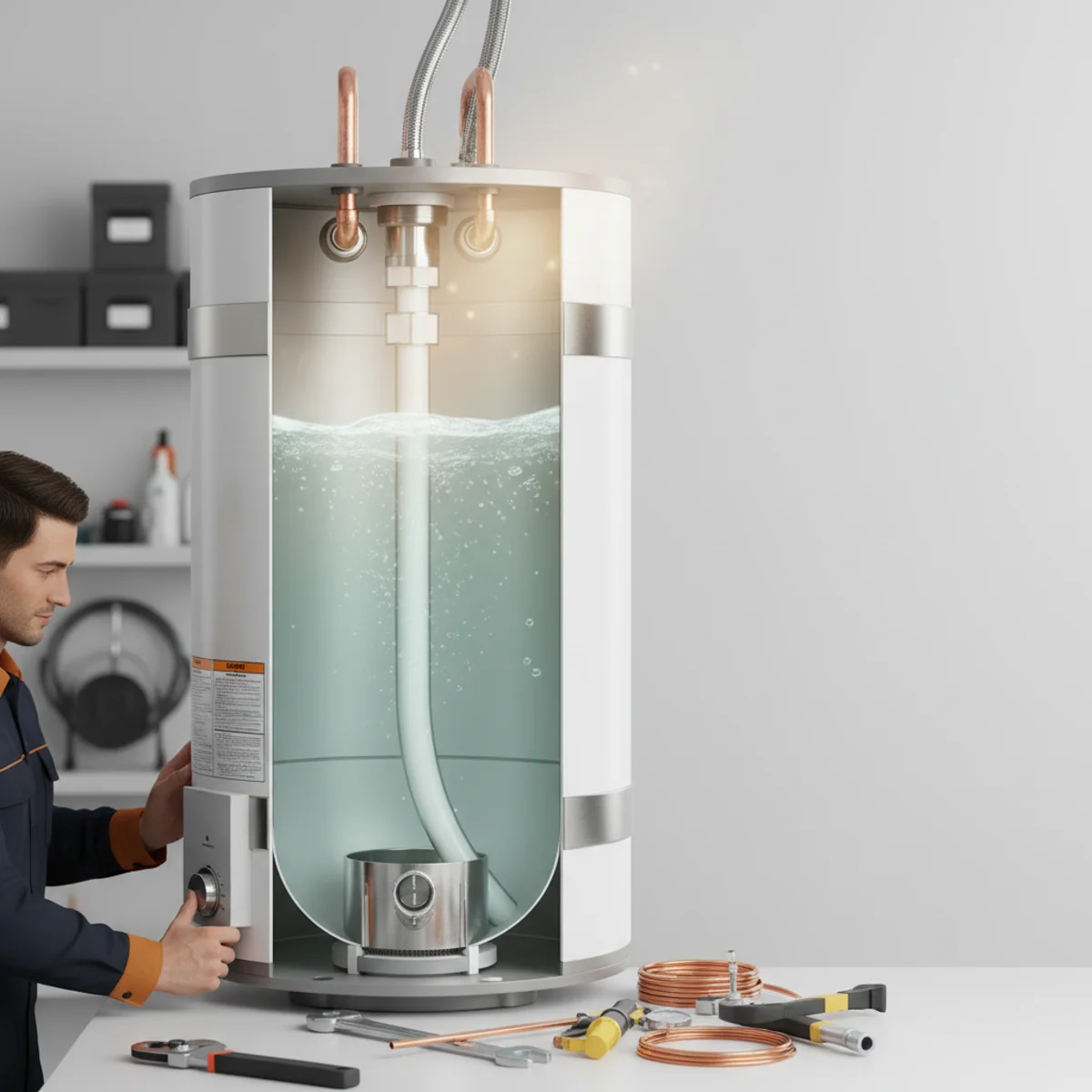
Cause one: sulfate-reducing bacteria. Anaerobic bacteria can colonize a water heater tank, particularly one that sits at lower temperatures (under 120°F) or hasn't been flushed in years. These bacteria consume sulfate ions naturally present in the water and produce hydrogen sulfide as a byproduct. Magnesium anode rods accelerate this — they create a chemical environment the bacteria thrive in.
Cause two: sulfur in the water supply itself. Some municipal water sources and well systems naturally contain dissolved hydrogen sulfide. In this case, both your hot and cold water may smell, though heat tends to vaporize the gas more readily, making the hot-water smell more pronounced.
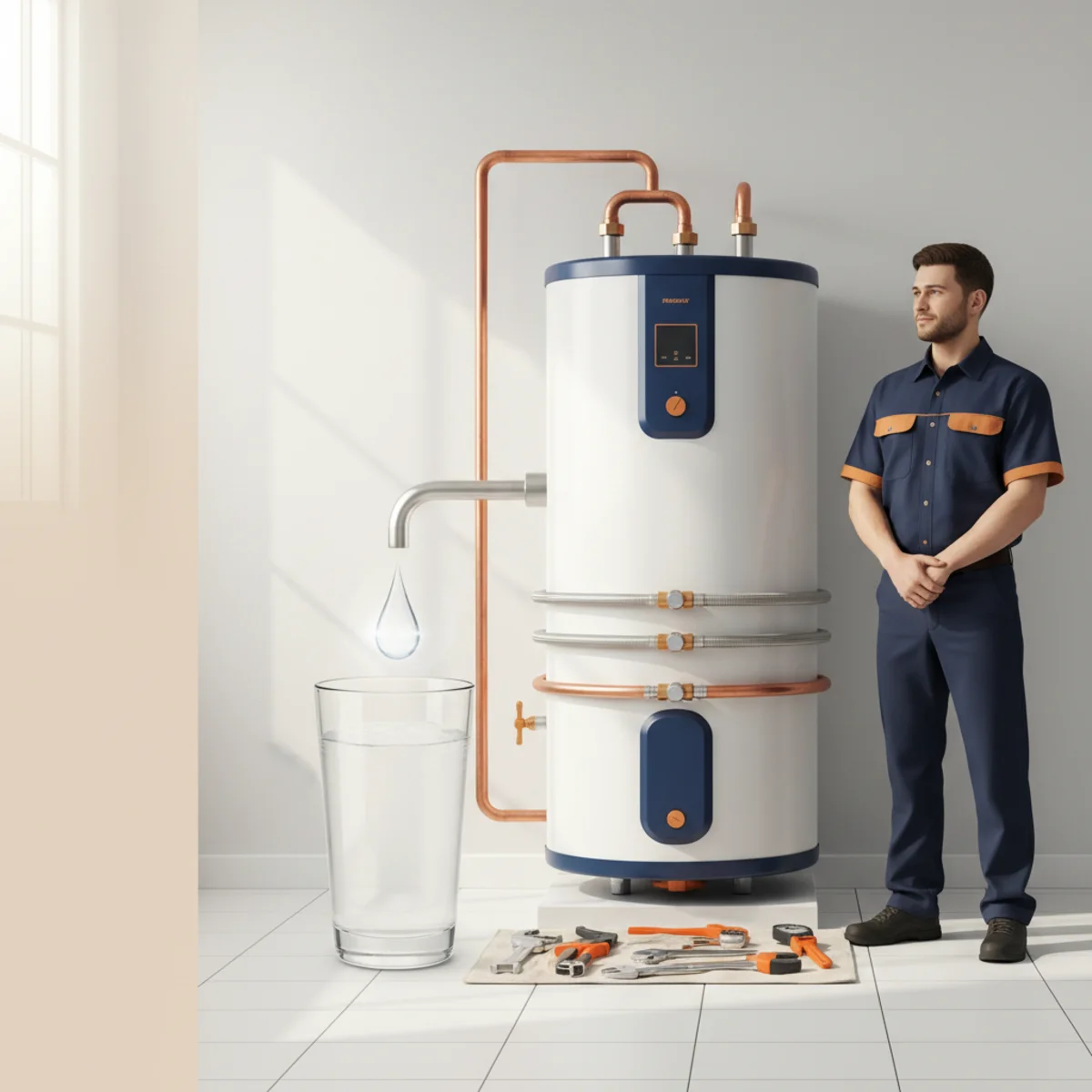
The diagnostic test is simple: smell both your hot and cold water from the same faucet. If only the hot water smells, the problem is inside the water heater. If both smell, the source is the water supply, and a whole-house filtration solution may be needed.
- Hot water only smells = problem is inside the tank (bacteria or anode reaction).
- Hot and cold both smell = problem is the water supply source.
- Smell worsens when heater hasn't been used for days = bacterial growth more likely.
- Smell is worse after softener install = softened water increases bacterial activity.
Why Anode Rods Are Involved
Magnesium anode rods are the standard factory install in most water heaters — they provide excellent galvanic protection. But magnesium also reacts with sulfate-reducing bacteria in a way that can amplify the hydrogen sulfide odor. The bacteria use the magnesium to reduce sulfate ions more efficiently.
Switching from a magnesium rod to an aluminum-zinc anode rod often reduces or eliminates the smell. The zinc in the alloy has antimicrobial properties that suppress the bacteria. This is not a cure for a bacterial infestation — it reduces the chemical conditions that favor bacterial activity.
A replacement anode rod is inexpensive, and it's often the first thing worth trying when the problem is isolated to the hot water. See our anode rod guide for more on how these rods work and when to replace them.
How to Treat Bacteria in the Tank
If bacteria are the cause, the most effective treatment is shock disinfection: temporarily raising the water heater to 140–150°F for a few hours to kill the bacteria, then flushing the tank thoroughly. This works but comes with a scalding risk — run hot water at a sink until you're sure the high-temperature water has cycled through, and use caution. Installing mixing valves at fixtures is a good safeguard if you have young children or elderly household members.
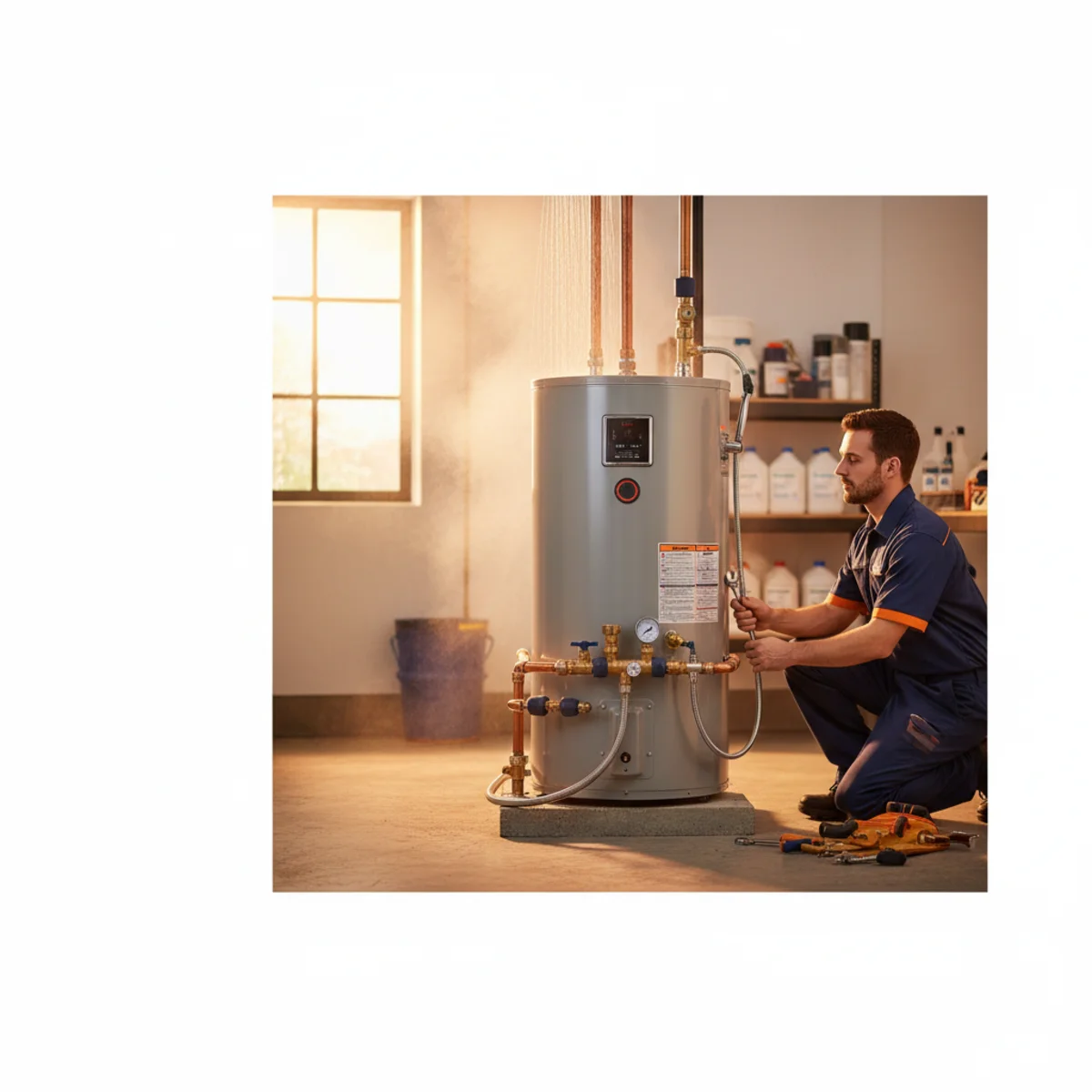
Flushing the tank after the heat treatment removes dead bacteria and sediment they colonized. Our water heater maintenance service includes a full sediment flush that addresses this directly.
If the problem keeps returning after treatment, the tank may have a deeper contamination or structural issue. At that point, a water heater repair assessment can help determine whether treatment or replacement makes more sense.
When the Problem Is the Water Supply
If your cold water also smells, or if you're on well water, the source is upstream of the heater. Hydrogen sulfide in source water is treated at the whole-house level, typically with an activated carbon filter or an oxidizing filter (like a greensand filter). These are different products from a standard water softener — confirm what you have before assuming it addresses sulfur.
Sacramento County Water Agency and SMUD Water periodically publish water quality reports that list sulfur compounds. If you're on municipal water and noticing a sudden onset of sulfur smell, check whether there's been a supply change or contact the utility to ask about current water quality in your zone.
What to Do in Rancho Cordova
Start with the diagnostic: cold and hot, or hot only? If hot only, try switching to a zinc-aluminum anode rod and doing a tank flush. If that doesn't resolve it within a few days of full use, have a plumber inspect the tank for bacterial contamination and assess whether a shock treatment or more thorough intervention is warranted.
We serve homeowners throughout Rancho Cordova and can handle both the diagnostic and the fix in one visit. Whether it's a maintenance flush or a repair assessment, we'll tell you what we find and what it would take to correct it. Contact us to book a visit.
Talk to a Local Rancho Cordova Water Heater Pro
Whether you need a repair today or you're planning an upgrade, we'll give you a straight answer and an upfront estimate.
Frequently Asked Questions
Hydrogen sulfide in water is unpleasant but generally not a health hazard at the low concentrations typical of residential water heaters. However, the bacterial conditions that cause the smell are worth addressing — sulfate-reducing bacteria can accelerate tank corrosion. Consult your water utility if you're concerned about supply-side sulfur.
Only if the tank itself is the source and cannot be effectively treated. In most cases, a zinc-aluminum anode rod swap and a tank flush resolve the problem without replacing the unit. We'll tell you honestly if we think a replacement is the right call.
After a shock heat treatment and flush, the smell usually clears within 1–3 days of normal use as fresh water cycles through the tank and lines. If it returns within a week or two, the bacterial colony wasn't fully eliminated and a more thorough approach is needed.
It can. Softened water has a lower mineral content that makes it more chemically aggressive — and it changes the tank environment in ways that can favor sulfate-reducing bacteria. If the smell started after a softener installation, that's likely connected. A zinc-aluminum anode rod is especially appropriate for softened-water households.
Age isn't the main factor — water chemistry and temperature are. A newer unit sitting at 110–115°F in a household that uses hot water infrequently (a vacation home or secondary bathroom) is prime territory for bacterial growth. Raise the thermostat to 120°F and use the unit regularly.
Written by the Water Heater RC Pros team
Practical, local guidance from Rancho Cordova water-heater installers — written for homeowners and kept current with California code. Have a question about your unit? Call (201) 277-9344.