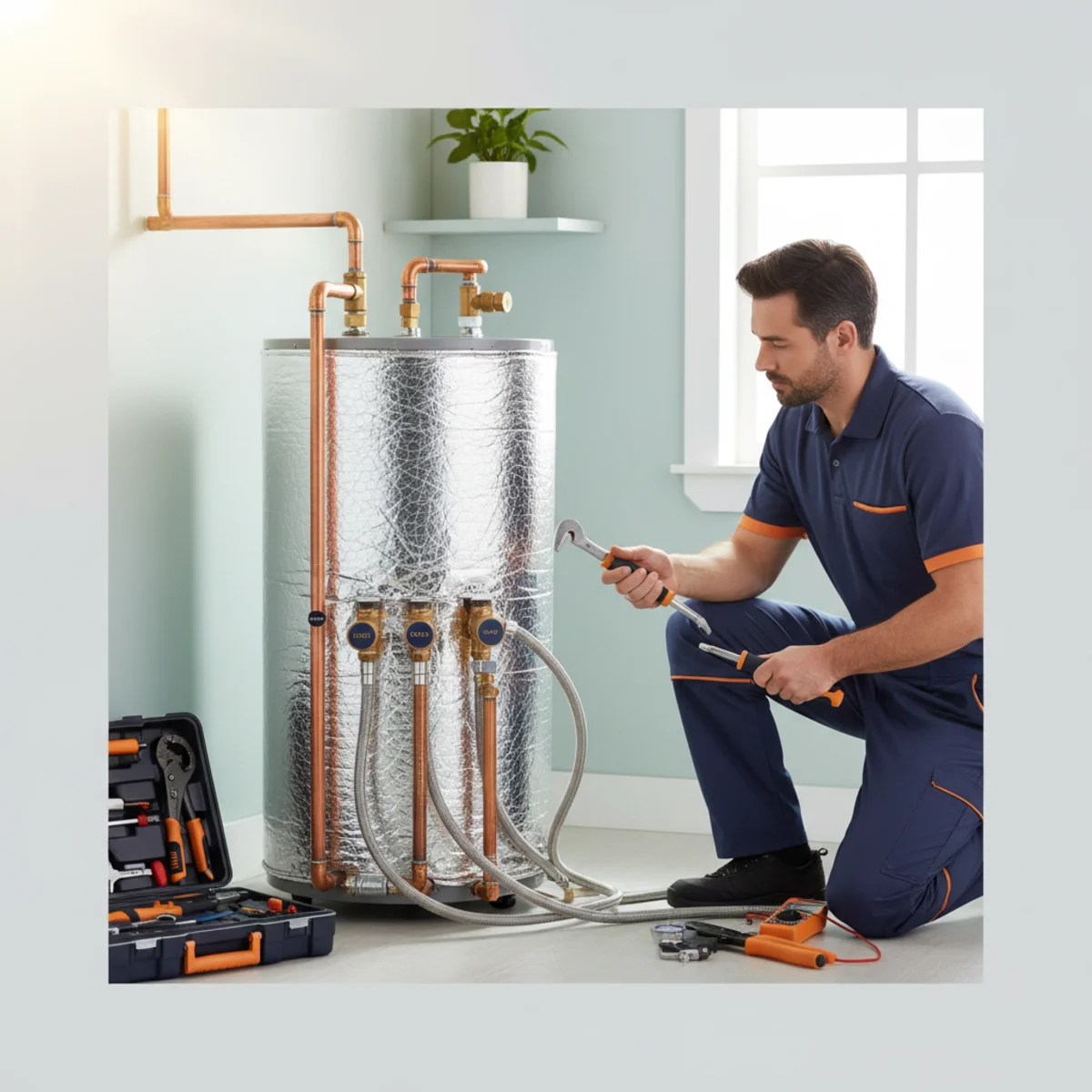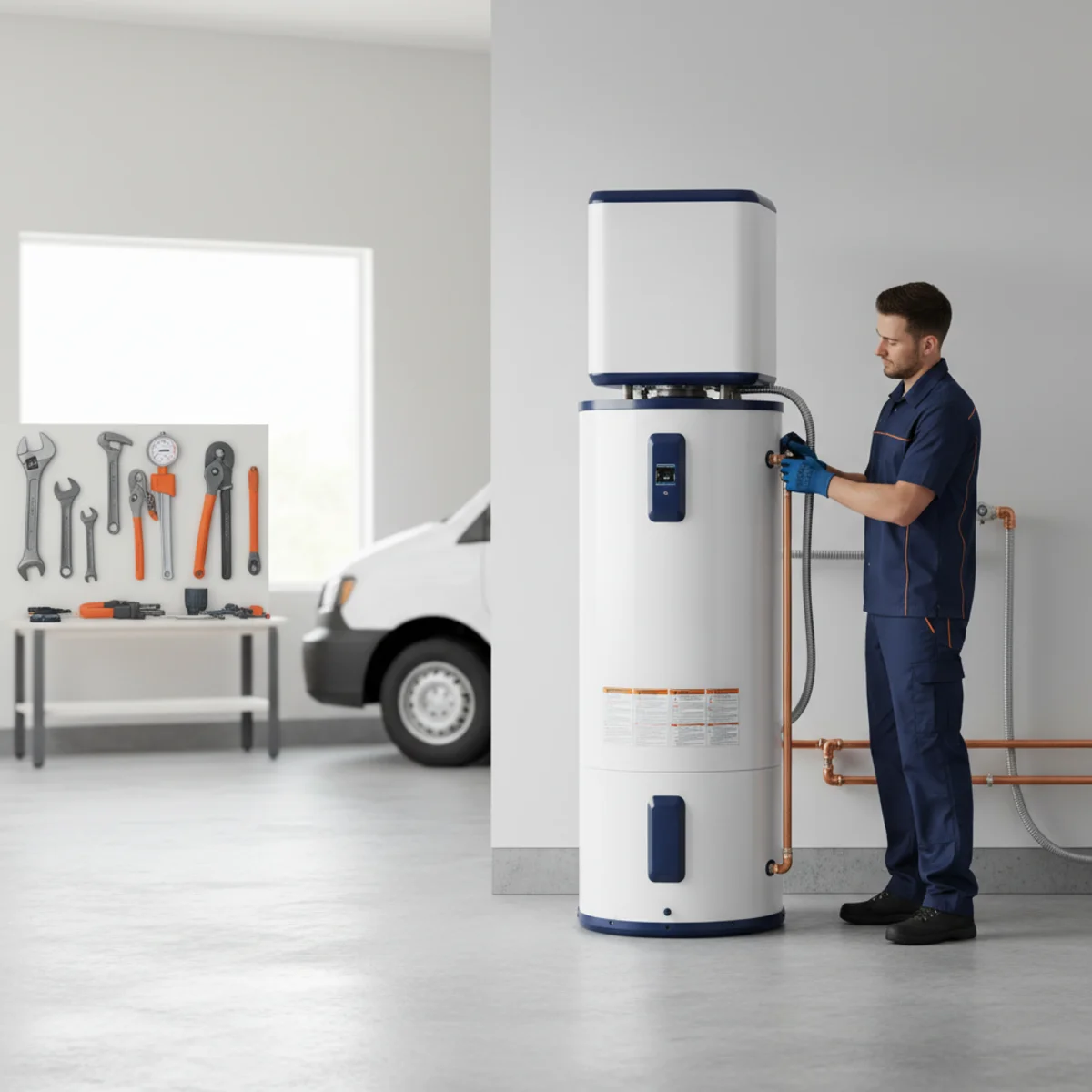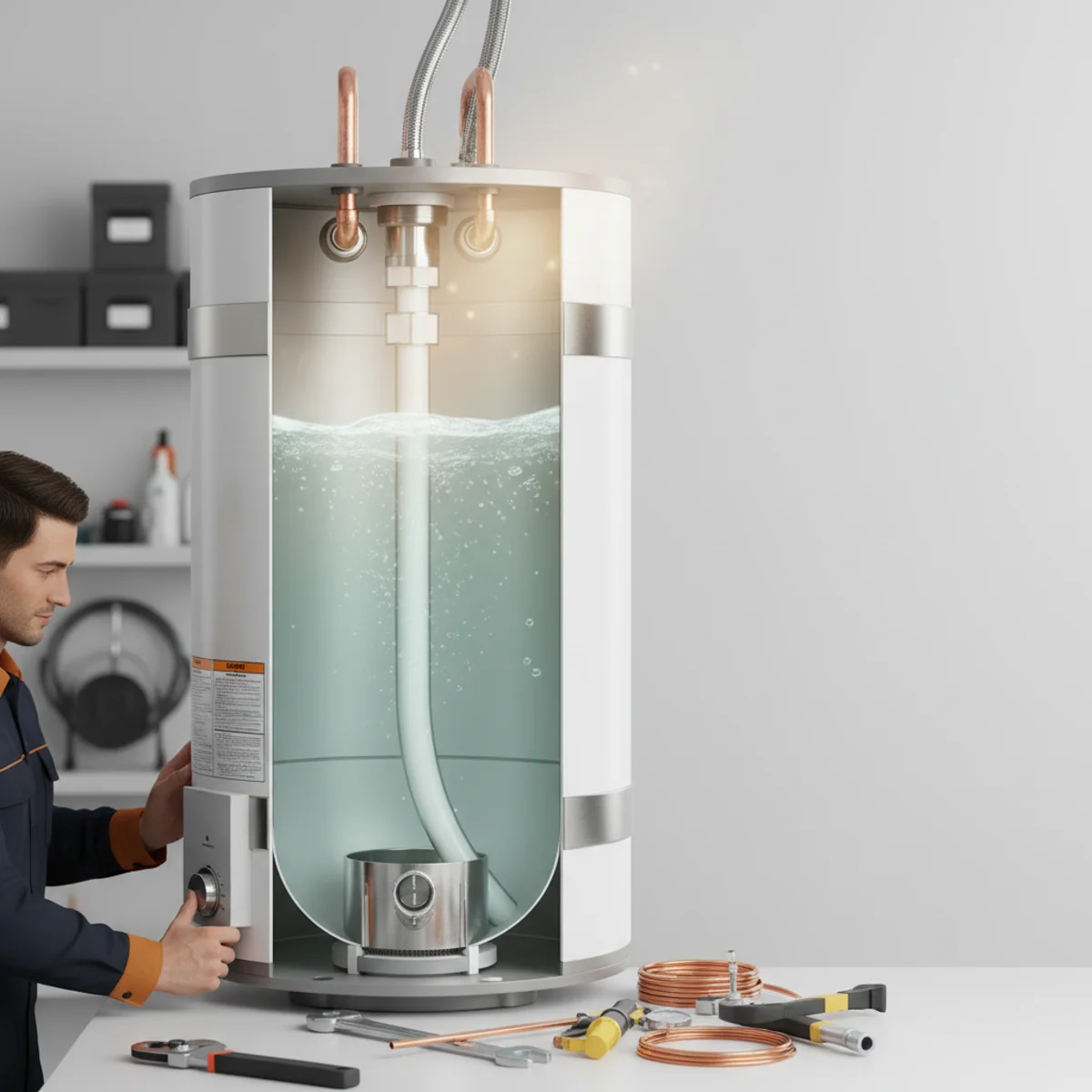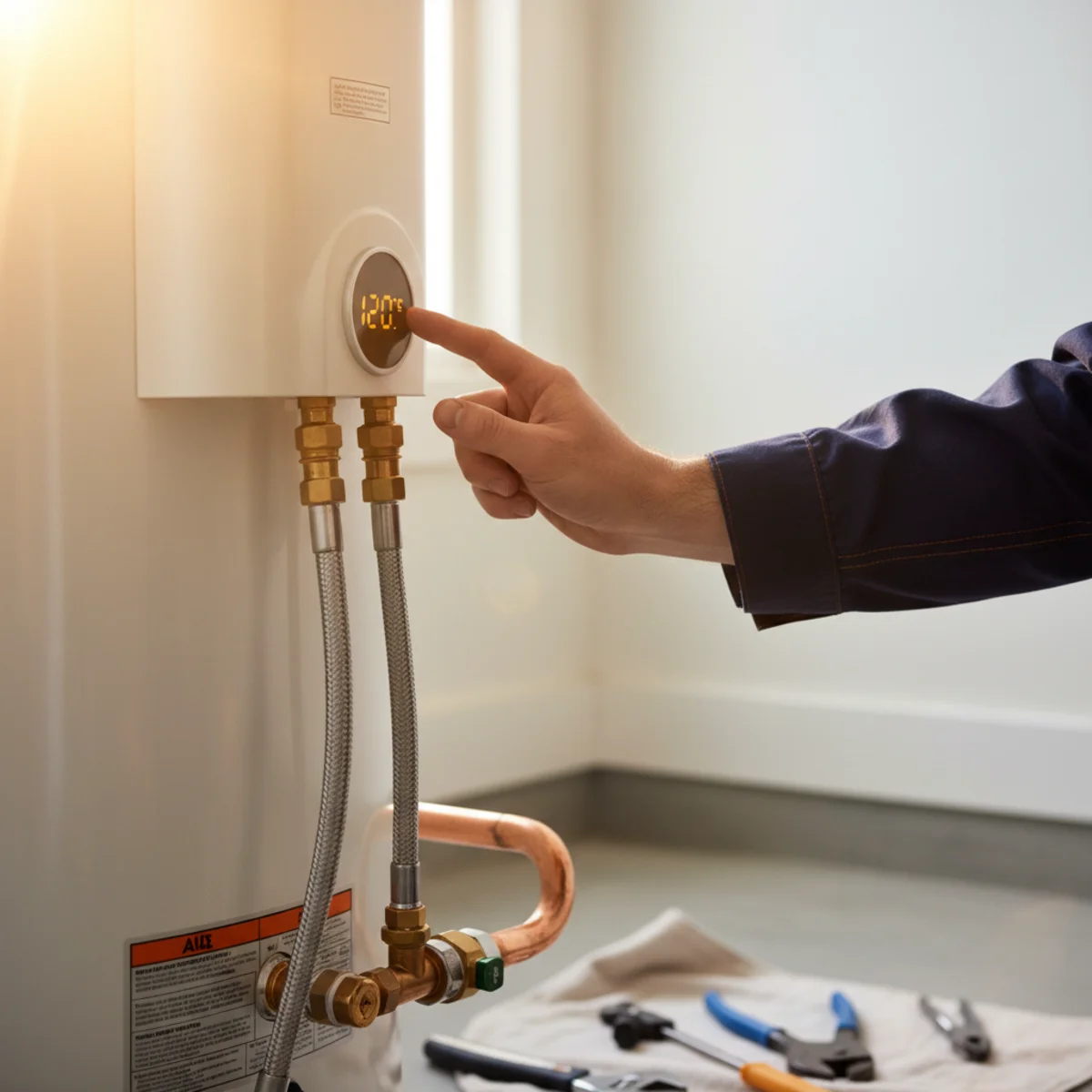
The temperature dial on a water heater affects three things that pull in different directions: your gas or electric bill, the risk of scalding at the tap, and the risk of Legionella bacteria growing inside the tank. Most water heaters ship from the factory at 120°F, but the right setting for your home depends on who's in the household and what your plumbing looks like.
120°F is the default recommendation from the Consumer Product Safety Commission and the EPA for most households. It's hot enough to handle normal domestic uses, limits standby heat loss compared to higher settings, and significantly reduces scald risk — especially important for young children and elderly adults. That said, 120°F is not a universal answer. Households with immunocompromised individuals or long plumbing runs where water cools significantly between tank and tap may need a different approach.
In Rancho Cordova, where summer ambient temperatures in garages can reach triple digits, water in un-insulated pipes loses heat faster than it does in cooler climates. That's a practical reason some local homeowners keep settings slightly higher than the bare minimum — not for energy reasons, but to ensure consistent delivery temperature at distant fixtures.
The 120°F Recommendation: What's Behind It
At 120°F (49°C), a full-thickness scald to adult skin takes about five minutes of exposure. At 130°F it drops to about 30 seconds. At 140°F it's under five seconds. Those numbers explain why the CPSC recommends 120°F as the maximum for households with young children or elderly adults — the margin for error at the faucet is much larger at lower temperatures.
From an energy standpoint, every 10°F reduction in water heater set temperature saves approximately 3–5% on water heating energy costs according to DOE estimates. A household dropping from 140°F to 120°F might save $20–$50 per year depending on usage and fuel type. That's modest but real, and it compounds with other efficiency measures like insulating the first few feet of hot water pipe and installing low-flow showerheads.
Standby heat loss — the energy your water heater uses just to keep water hot when you're not using it — also decreases at lower set temperatures. The greater the temperature difference between the tank and the surrounding air, the faster heat escapes. In a Rancho Cordova garage in July with ambient temperatures above 100°F, that differential is already reduced at any setting. In the same garage in January, the differential is much larger and standby loss is more meaningful.
Legionella: The Case For and Against 120°F
Legionella pneumophila — the bacterium behind Legionnaires' disease — thrives in water between 77°F and 113°F. It can survive but not multiply above 122°F, and it dies rapidly above 131°F. At 140°F, it's killed within minutes. That's the argument for a higher set point.
For most healthy households in single-family homes, the Legionella risk at 120°F is low. Residential Legionella outbreaks typically occur in homes with extended periods of stagnation — vacation properties, seasonal systems, or pipes that sit unused for weeks. A water heater cycling multiple times per day in a normally occupied household does not create the prolonged warm-stagnant conditions Legionella needs to multiply to dangerous levels.
The risk profile changes in specific situations: households with immunocompromised members, systems with long dead-leg plumbing runs that cool significantly below set temperature before reaching remote fixtures, or homes vacant for extended periods. In those cases, either a higher set point or a periodic high-temperature sanitization cycle — available on many modern units — is worth considering.
The CDC and ASHRAE guidance for healthcare settings recommends 120°F minimum at fixtures with the tank at 140°F, using a thermostatic mixing valve to reduce the temperature before distribution. This approach prevents Legionella in the tank while protecting against scalds at the tap. For residential use, this setup is optional but represents the best of both worlds in higher-risk households.
Where to Set Your Thermostat: A Practical Guide
For most households in Rancho Cordova, 120°F is the right starting point. Here's how to think through whether to adjust:
- Household includes young children or elderly adults: stay at 120°F, or install a thermostatic mixing valve if you want a higher tank temp for Legionella protection without scald risk at the tap.
- All adults, healthy household, normal daily use: 120°F works well. If fixtures run noticeably below temperature, check for long pipe runs or an undersized heater before raising the set point.
- Immunocompromised household member or a prior Legionella concern: consider 130–140°F in the tank with a thermostatic mixing valve to limit tap temperature to 120°F or below.
- Vacation home or property vacant more than two weeks: flush with 140°F water before occupying; return to 120°F for normal occupancy.
- Long hot water runs to remote fixtures: insulating the supply pipe is more efficient than raising tank temperature, but bumping slightly to 125°F is a reasonable interim fix.
How to Check and Adjust Your Actual Setting
Many gas water heater thermostats use vague labels — "hot," "A-B-C," or a dial with no degree markings. To know your actual delivery temperature, let the heater sit for at least an hour with no hot water use, then run a hot tap for two minutes to clear the lines and measure the temperature at the fixture with a thermometer. That gives you a real delivery temperature to work with.
Adjusting the thermostat: for gas units, turn the dial on the gas valve. For electric units, the thermostat is behind an access panel — there are typically two thermostats, upper and lower, usually set to the same temperature. Turn off the circuit breaker before opening the panel. Make a small adjustment, wait 2–3 hours, and re-measure at the tap.
If the temperature seems off from what the dial suggests, the thermostat may be inaccurate or failing — reading one setting while delivering another. That's a fixable water heater repair item. Thermostat replacement is relatively inexpensive compared to other water heater work.
California Code, T&P Valves, and Thermal Expansion
California Plumbing Code requires a temperature and pressure relief valve (T&P valve) on all residential water heaters. The T&P is set to open if tank pressure exceeds 150 psi or temperature exceeds 210°F — well above any normal operating range. The valve's presence isn't a reason to set temperatures carelessly high; it's a last-resort safety device, not an operating control.
California also requires a thermal expansion tank on closed water systems — systems with a backflow preventer or check valve on the cold supply, which most newer metered connections have. When a tank heats water, pressure builds; without an expansion tank to absorb it, that pressure can cause the T&P valve to drip periodically. If your T&P valve weeps after heat cycles, a missing or failed expansion tank is the likely cause — not a temperature setting problem.
Our water heater maintenance service includes a thermostat check, T&P test, and review of expansion tank status. It's a practical way to confirm your system is operating correctly and your temperature setting is hitting its target. We serve Rancho Cordova and the surrounding Sacramento area — contact us if you have questions about your specific setup.
Talk to a Local Rancho Cordova Water Heater Pro
Whether you need a repair today or you're planning an upgrade, we'll give you a straight answer and an upfront estimate.
Frequently Asked Questions
For most residential situations with daily use, yes. Legionella doesn't multiply meaningfully above 122°F, and normal daily cycling keeps water temperature above the proliferation range. The risk is highest in stagnant systems or after extended vacancies. If your household has immunocompromised members, talk with a plumber about a higher tank set point with a mixing valve to limit fixture temperature.
If raising the thermostat didn't fix the problem, the thermostat itself may be inaccurate or failing. Other causes include a burned-out heating element (electric), heavy sediment buildup insulating the burner from the water, or a broken dip tube mixing cold water into the hot supply. A service call can identify which factor is actually at fault.
Somewhat, yes. The DOE estimates roughly 3–5% higher energy use per 10°F increase in set temperature from standby heat loss alone. Going from 120°F to 140°F could add $15–$40 per year in gas costs for a typical household. Whether that's worthwhile depends on your household's specific risk factors and plumbing configuration.
Not necessarily. Low-flow showerheads reduce water consumption but don't change delivery temperature. If the lower flow rate makes the shower feel less hot subjectively, check the temperature at the showerhead with a thermometer before raising the heater setting — perception of warmth can shift with flow rate even when the water temperature is the same.
Once a year is reasonable — check it as part of a broader maintenance visit. Also verify it after any work done on the unit and after an extended vacancy to make sure nothing shifted. Scheduling a water heater maintenance appointment annually covers the temperature check along with the anode rod, T&P valve, and sediment flush.
Written by the Water Heater RC Pros team
Practical, local guidance from Rancho Cordova water-heater installers — written for homeowners and kept current with California code. Have a question about your unit? Call (201) 277-9344.