Garage Water Heater Installation in Rancho Cordova, CA
If you're in Rancho Cordova, odds are your water heater is in the garage. The attached two-car garage is the standard equipment room for the housing stock that makes up most of this city — built through the 1980s, 90s, and 2000s, with the water heater tucked in a back corner next to the furnace. That placement is completely normal. What isn't fine is when the unit gets swapped without addressing the code points specific to that location: elevated ignition sources on gas units, vehicle impact protection, seismic strapping, drain pan routing, and adequate combustion air.
- Same-day appointments available
- Installed to California code
- Upfront, itemized estimates
- Clean work area & haul-away
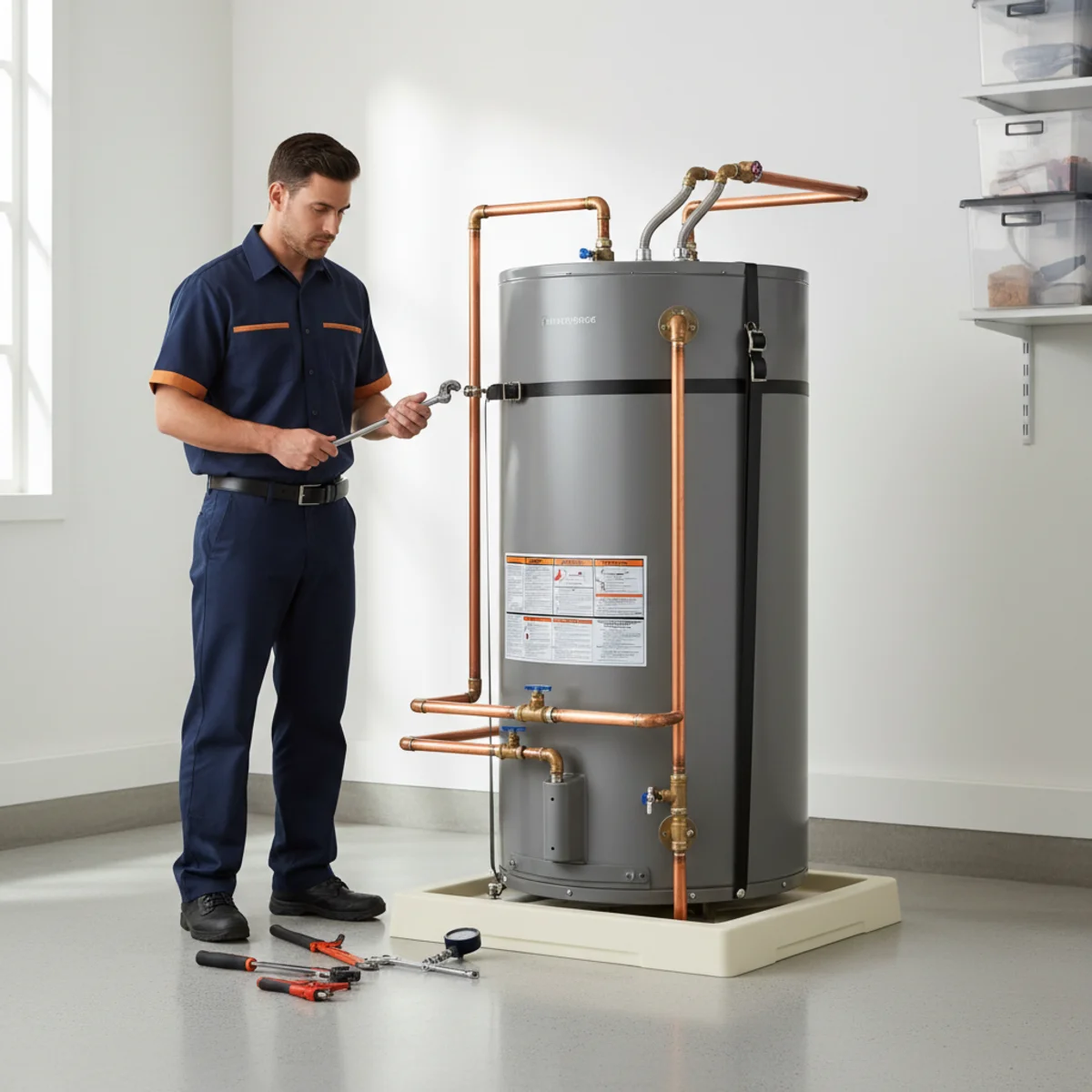
If you're in Rancho Cordova, odds are your water heater is in the garage. The attached two-car garage is the standard equipment room for the housing stock that makes up most of this city — built through the 1980s, 90s, and 2000s, with the water heater tucked in a back corner next to the furnace. That placement is completely normal. What isn't fine is when the unit gets swapped without addressing the code points specific to that location: elevated ignition sources on gas units, vehicle impact protection, seismic strapping, drain pan routing, and adequate combustion air.
A garage install that skips any of those details isn't just a permit problem — it's a real hazard. A car bump that damages an unprotected tank, a gas ignition at floor level where heavier-than-air vapors can pool, a drain pan with no routed discharge line — these are the scenarios California code is written to prevent. Catching them after the fact means another service call and possibly an expensive correction.
We install water heaters in Rancho Cordova garages the way Sacramento County inspectors expect to see them: gas ignition sources elevated above the finished floor per code, barrier protection against vehicle contact, seismic strapping to wall framing, a drain pan with a properly routed discharge line, and a T&P valve with a correct run to drain. If you're comparing a garage placement against an interior closet, or evaluating whether your current unit meets current requirements, see our permit and code upgrades page for what a full code review covers.
Quick Answer
Garage water heater installation in Rancho Cordova requires specific California code items: gas ignition source height above the finished floor, vehicle impact protection, seismic strapping, drain pan with routed discharge, and combustion air. We handle all of it, provide permit guidance, and install to current code so Sacramento County inspection goes smoothly. Call (201) 277-9344 for an upfront estimate.
When to call
Signs You Need Garage Water Heater Installation
Not sure if it's time? These are the situations where garage water heater installation in Rancho Cordova makes sense.
- Your garage water heater is past 10-12 years old and showing rust or slow recovery.
- The current unit was never permitted or strapped and you're preparing to sell.
- A vehicle backed into the unit or its gas connections — even a minor bump can damage flex connectors.
- There's no drain pan, or the pan has no routed discharge line.
- The gas ignition is at or near floor level, below the code-required minimum for a garage.
- There's no seismic strap, or the existing strap is rusted through.
- You're adding or reconfiguring garage space and need the unit relocated.
- Your garage unit shares a flue with the furnace and venting hasn't been checked in years.
What's included
What Our Garage Water Heater Installation Service Covers
Code-height ignition source placement
Gas water heaters in a garage must have ignition sources and burners elevated above the finished garage floor per California code — we set the unit on an approved platform to meet this requirement where needed.
Vehicle impact protection
We install approved bollards, posts, or structural barriers to protect the unit and its gas connections from accidental vehicle contact — a specific garage-installation code requirement.
Seismic strapping
Two properly anchored seismic straps, upper and lower, secured to wall framing rated to hold the load — not just drywall anchors. Required by California code statewide.
Drain pan and discharge routing
An appropriately sized drain pan under the tank with a discharge line routed to a drain or to the exterior — so a tank failure sends water to a drain, not across your garage floor.
Venting and combustion air
Proper vent connector slope, clearance, and combustion air supply for the garage equipment room — including confirmation that openings aren't obstructed by stored materials.
T&P valve and expansion tank
Correct T&P relief valve discharge piped to within six inches of the floor or to a drain, and a thermal expansion tank on closed water systems — both required by California code.
Why it's done right
Why Proper Garage Water Heater Installation Matters
Vehicle impact is a real risk
An unprotected water heater in an active garage is one distracted parking moment away from a broken gas connection or knocked-over tank. Code requires physical barrier protection for a reason — it's not paperwork. We've seen cars contact units that had been sitting in the same corner for fifteen years without incident, and one hit is enough to crack a flex connector or snap a shut-off.
Flammable vapor ignition
Gasoline, paint thinner, and cleaning solvents are common in garages, and their vapors are heavier than air — they accumulate at floor level. A gas water heater with its ignition source at floor height can ignite those vapors. The code-required minimum height for ignition sources in a garage exists specifically to keep the ignition point above the vapor zone. This is the safety detail that trips most un-permitted garage installs.
Code compliance and resale
Home buyers in Sacramento County encounter more flagged garage water heater installs than almost any other item. Missing strapping, missing drain pan, wrong ignition height, unprotected gas connections — any one of those can delay a sale. A permitted, code-compliant install protects your investment and your ability to sell. Permit requirements and code specifics are set by the authority having jurisdiction and do change — confirm current details before you buy.
Seismic protection
Northern California is seismically active. A full water heater that tips over in a quake can snap its gas connection. Seismic strapping is required by California code statewide, and a properly strapped unit has a dramatically better chance of staying upright. Straps should be checked annually — rubber sleeves degrade and bolts work loose over time.
How we work
Our Garage Water Heater Installation Process
Site assessment
We evaluate the garage layout, floor elevation, proximity to the vehicle path, existing venting and gas line, and whether a floor drain is accessible for the pan discharge.
Code point review
We walk through every garage-specific code requirement with you: ignition height, bollard placement, strapping, drain pan, T&P discharge, and combustion air — and give you an honest read on what your current setup is missing.
Clear estimate
Upfront, itemized estimate covering unit, platform (if needed), bollards, strapping, drain pan, code upgrades, and haul-away — no line items added after the job starts.
Remove the old unit
Gas or power off, water shut off, tank drained clean, old unit disconnected and removed without dragging sediment across the garage floor.
Install to code
New unit set on elevated platform if required, seismically strapped to wall framing, bollards or barrier installed, drain pan set with discharge line routed, gas and water reconnected, venting confirmed.
Test and verify
Leak test on all gas and water connections, T&P valve function verified, expansion tank pre-charge confirmed, venting checked for draft.
Walkthrough and documentation
We walk you through the new setup, explain the strapping and shut-offs, and provide documentation suitable for your permit file.
Your Install Day, Step by Step
A transparent walkthrough of how the day actually goes — no mystery, no all-day waits.
On arrival
Protect the floor and confirm the scope
We lay drop cloths across the garage floor from the driveway to the work area, confirm the install scope and estimate with you, and verify all permit details before touching gas or water.
First hour
Safe drain-down of the old unit
Gas off at the supply valve, water off at the cold-water inlet, old tank drained through a hose to the driveway or nearest drain — no sediment on your garage floor. Old unit staged for haul-out.
Mid-morning
Platform, strapping, and code prep
Raised platform set or confirmed to meet the ignition-source height requirement, strap anchor points located and set into stud or masonry, drain pan positioned, and drain line routed to its discharge point.
Midday
Set, connect, and vent
New unit lowered onto the platform, plumbed with clean supply and discharge connections, gas flex connected and leak-checked, and vent connector routed cleanly to the exterior penetration.
Early afternoon
Pressure, leak, and combustion test
System pressurized and every fitting checked, T&P valve exercised, expansion-tank pre-charge verified against system pressure, draft and combustion air confirmed for safe operation.
Before we leave
Bollard check, cleanup, and walkthrough
Impact protection confirmed or noted as a follow-up item, old unit hauled away, floor swept clean, and a plain-English walkthrough covering shut-offs, pilot procedure, maintenance schedule, and any inspection appointments.
Transparent pricing
What Affects Your Garage Water Heater Installation Cost
We don't post fixed prices online because every home is different — but here's exactly what moves the number, so your estimate is never a mystery.
Platform height for gas ignition sources
California code typically requires gas water heaters in garages to have the ignition source elevated above the floor to protect against flammable-vapor ignition. Building or supplying a code-compliant platform adds material and labor that a closet or utility-room install doesn't need.
Seismic strapping
All water heaters in California must be seismically strapped. Garage installs often require anchor bolts into masonry or concrete block rather than wood studs, which takes more time and hardware.
Bollard or vehicle-impact protection
Where a water heater is in a vehicle path or close to a garage door opening, code and good practice call for bollards or structural protection. Fabricating and setting bollards is a separate line item.
Drain pan and routed line
Concrete garage floors rarely have a floor drain directly under the heater. Routing the drain-pan line to a safe discharge location — floor drain, exterior, or utility sink — requires planning the run before the unit is set.
Venting path to exterior
Garage venting often means penetrating an exterior block or stucco wall rather than a simple interior run. Penetration work, weather collars, and flashing add to the scope when the path isn't already clear.
Unit type and capacity
A high-recovery gas tank suited to a large household costs more than a basic 40-gallon unit. Heat-pump water heaters benefit from garage installs because of the ambient heat — but confirm current rebate details before selecting one.
Local know-how
Rancho Cordova Considerations
The local details competitors treat as an afterthought — and we don't.
In Rancho Cordova neighborhoods like Anatolia, Sunridge Park, and Cordova Meadows, the standard attached two-car garage is deep enough that the water heater typically ends up in the back corner — right in the path of a backing vehicle. We see cracked gas flex connectors and bent shut-off valves from low-speed bumps on a regular basis. Proper bollard placement in that corner takes a short time to install, and it's the kind of detail that protects the entire installation for the life of the unit.
Sacramento County requires a permit for water heater replacement, and the garage install checklist is one of the more detailed inspections in a residential permit. The inspector will check ignition-source height, strapping, drain pan discharge, T&P routing, and combustion air. If any item is missing, the inspection fails and you get a notice of correction. We install to current California code so the first inspection is the last one. Permit requirements change — confirm current details with Sacramento County before scheduling if you have specific questions.
If your garage unit shares a flue run with your furnace — common in older Rancho Cordova homes — we inspect the shared vent connector as part of the water heater install. A furnace replacement or water heater upsizing can change the combined BTU load on that vent, and an undersized or degraded shared flue is a back-draft risk for both appliances. We cover the full venting scope on every garage install, and we can schedule a dedicated water heater venting service if the flue needs its own appointment.
Related Water Heater Services
Water Heater Installation
New tank or tankless, sized right and installed to California code — permits, code upgrades, and old-unit haul-away handled.
Learn moreWater Heater Permit & Code Upgrades
Permit guidance and every required code upgrade — expansion tank, seismic strapping, drain pan, and proper T&P discharge — installed to Sacramento County standards.
Learn moreWater Heater Drain Pan Installation
Stop a slow leak from becoming a water-damage claim — drain pan and routed drain line installed where code requires it and where common sense demands it.
Learn moreWater Heater Replacement
Swap an aging or failed tank before the next leak — new unit sized right, installed to California code, old unit hauled away.
Learn moreAreas We Serve for Garage Water Heater Installation
Questions, answered
Garage Water Heater Installation FAQs
California code requires that the ignition source of a gas water heater installed in a garage be elevated above the finished floor. This keeps the pilot light and burner above the zone where flammable vapor — from gasoline, solvents, or other garage chemicals — tends to accumulate at floor level. It's one of the most commonly missed items on garage installs and one of the first things an inspector checks.
Code requires physical protection for the water heater and its connections from vehicle damage. In practice this is typically concrete-filled steel bollards anchored to the slab, or a structural barrier between the parking area and the unit. The exact specification can vary — we confirm current requirements for your garage layout and install accordingly.
Yes. Code requires a drain pan under the unit and a properly routed discharge line from the pan to a drain or to the exterior. Even with a floor drain nearby, the pan keeps slow leaks contained and directed rather than spreading across the slab. It also captures T&P discharge if the relief valve opens.
Two straps — one in the upper third of the tank and one in the lower third — secured to structural wall framing with properly sized hardware. Anchoring into drywall only is not acceptable. The strap should be taut and sit against the tank without cutting into it. We check existing straps on every job and replace them when the hardware or strap material has degraded.
Yes. Tankless units in garages still need to meet code requirements for proper direct-vent or power-vent termination and wall-mount vehicle protection for the unit and its gas connections. We handle tankless installation in garages regularly.
Water heater replacement in California generally requires a permit, regardless of whether the unit is in a garage, utility closet, or elsewhere. The permit triggers an inspection where the garage-specific code items are verified. Permit guidance is available — we install to California code so the inspection goes smoothly. Confirm current permit requirements and fees with Sacramento County.
A like-for-like swap in a garage where the code items are already in place costs less than a first-time install that needs a platform, bollards, drain pan, and new strapping from scratch. We give an upfront, itemized estimate once we see the garage. Call (201) 277-9344 for a free estimate.
Helpful Water Heater Guides
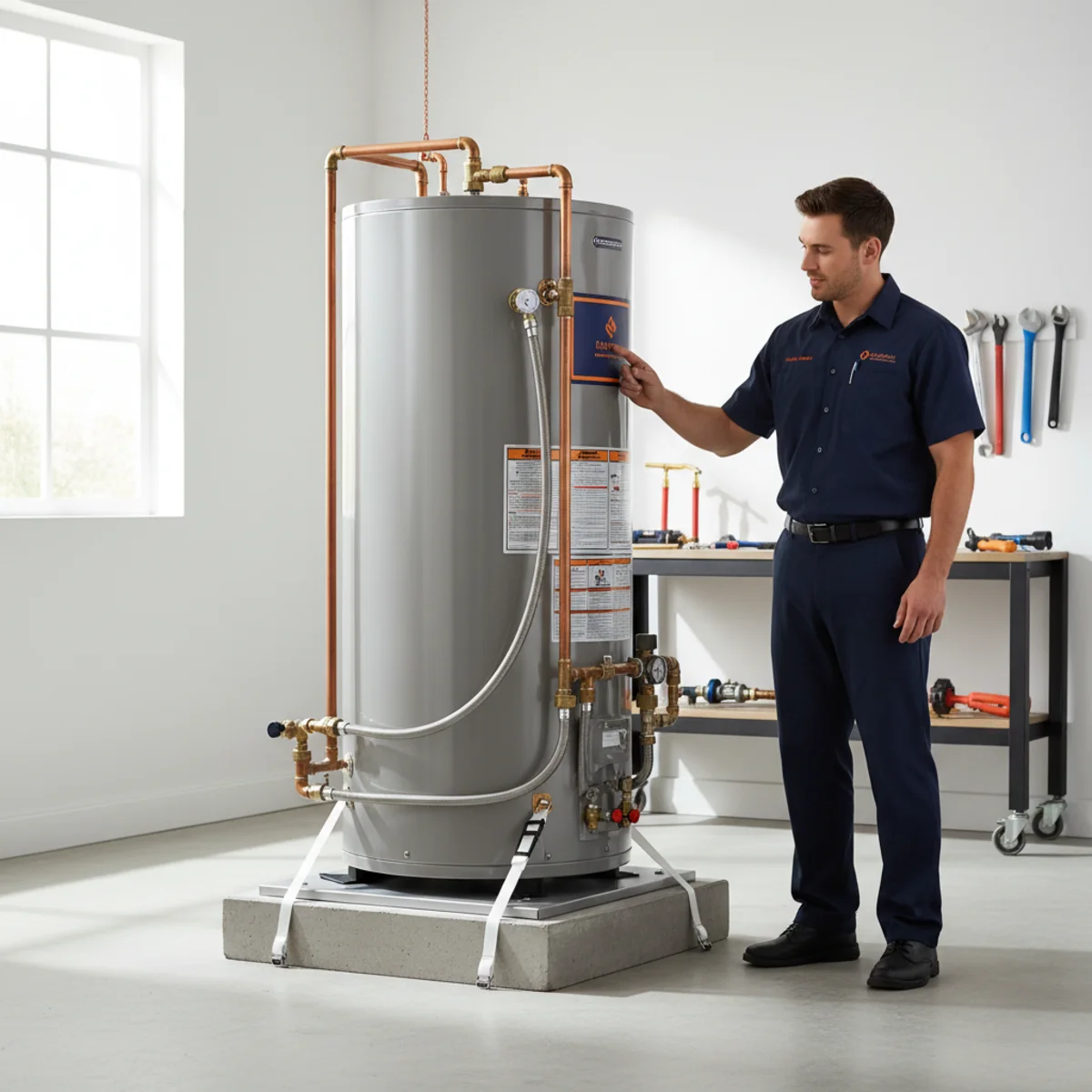
Garage Water Heater Installation: Safety and Code Basics
Most Rancho Cordova homes have garage water heater installations. California has specific code requirements for them — here's what you need to know before any work starts.
November 17, 2025
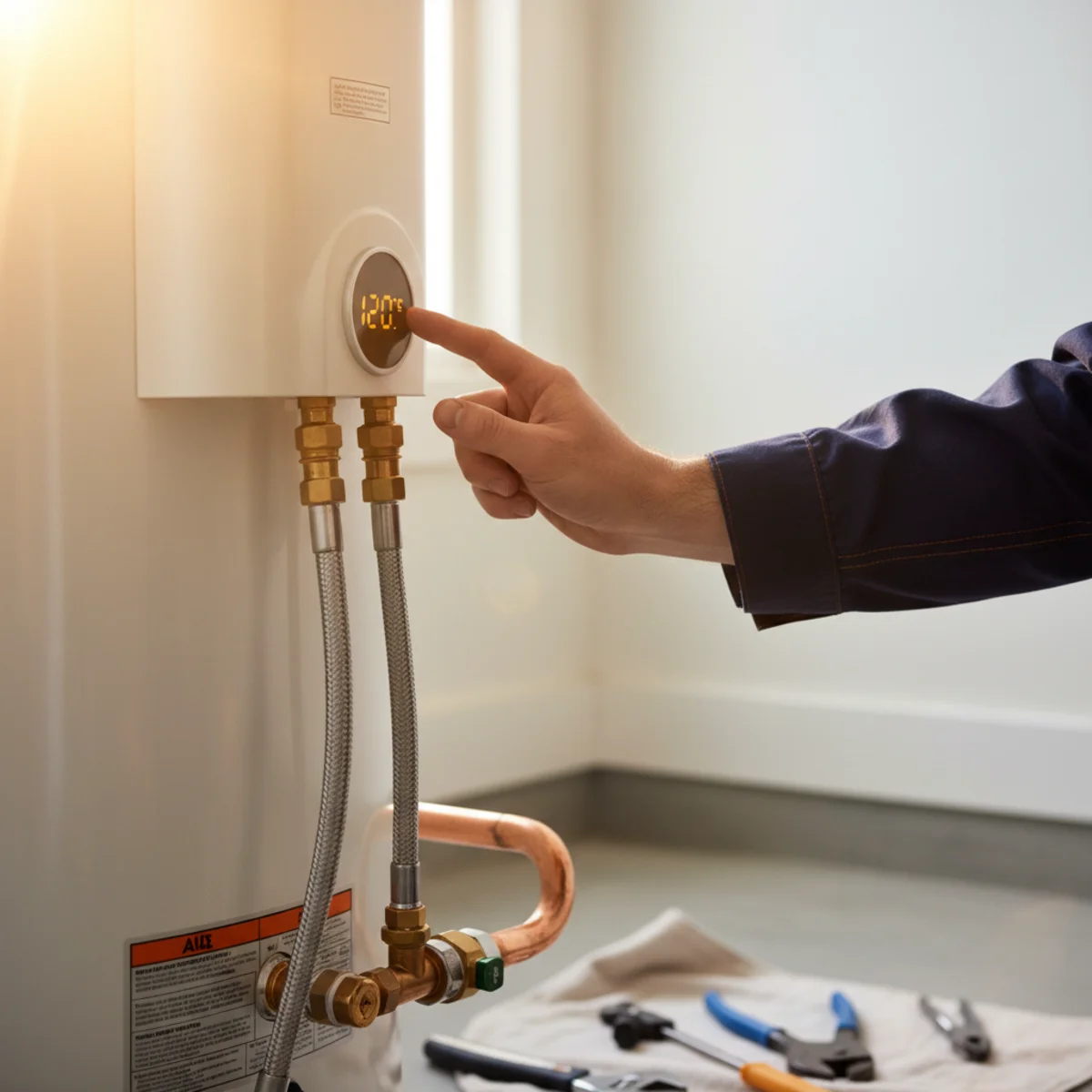
What Temperature Should Your Water Heater Be Set To?
The right water heater temperature isn't one-size-fits-all. Here's how to balance scalding risk, Legionella prevention, and energy savings for your household.
May 1, 2026
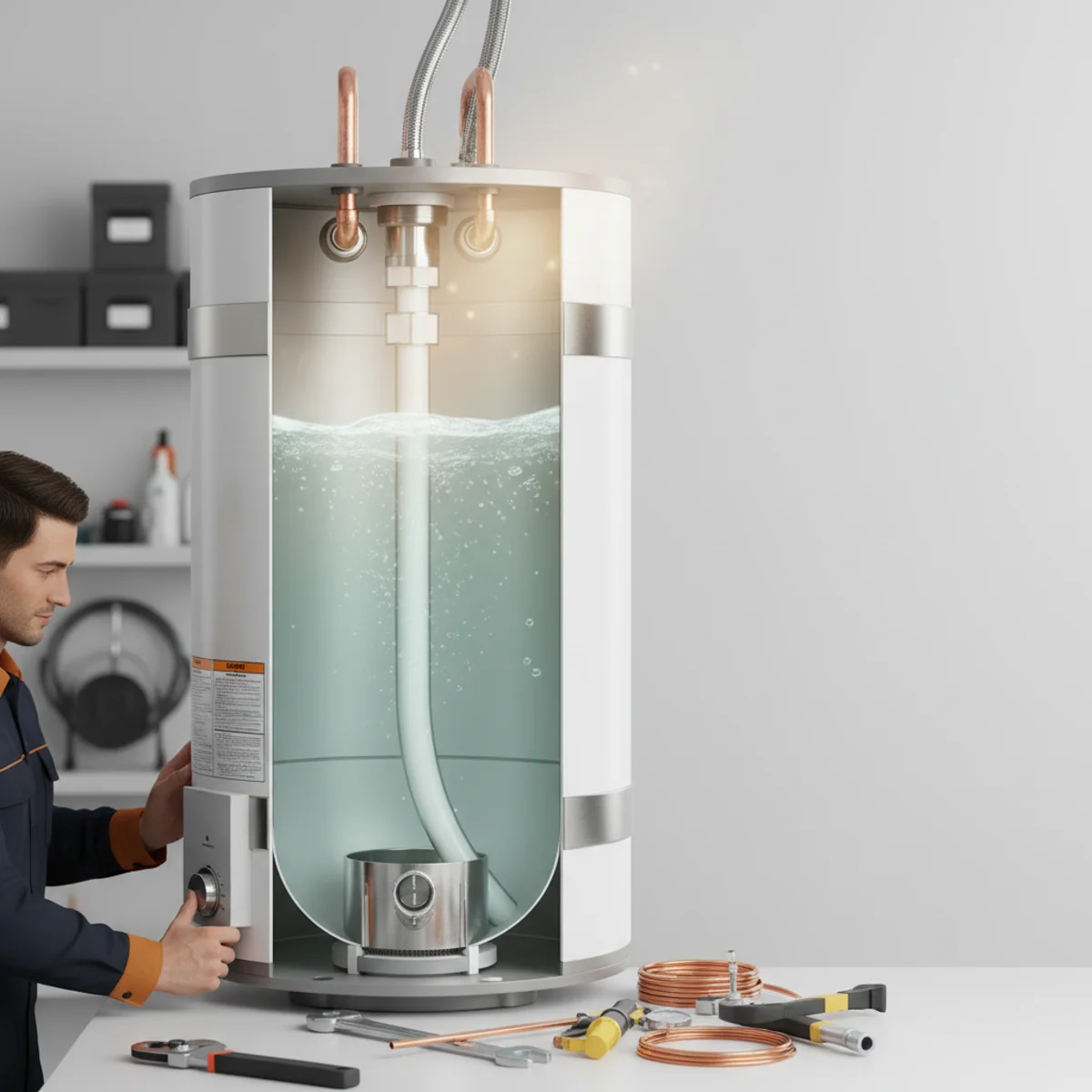
Lukewarm Water? Your Dip Tube Might Be Failing
If your water heater seems fine but showers go lukewarm fast, a failing dip tube is the overlooked culprit most homeowners never check. Here's what it is and what to do.
April 18, 2026
Our Standards on Every Job
- Installed to current California Plumbing Code
- Sacramento County permit guidance on every job
- Upfront, written estimates — no surprises
- Code upgrades included: expansion tank, seismic strapping, drain pan, T&P discharge
- Warranty-backed equipment options
- Clean, protected work areas and old-unit haul-away
Licensing and insurance information available on request. Programs and code requirements change — we confirm current details before you buy.
Local & Official Resources
Helpful third-party references for Rancho Cordova and Sacramento County homeowners. Programs and code change — confirm current details on the official sites before you buy.
- Sacramento County Building Permits & InspectionPermits, inspections, and code for water heater work in the county.
- SMUD — Rebates & IncentivesThe local electric utility's heat-pump and efficiency rebate programs.
- PG&E — Rebates & EfficiencyGas and electric rebate programs serving parts of the area.
- California Energy Commission — Appliance StandardsState efficiency standards that affect new water heaters.
- U.S. DOE — Water Heating (Energy Saver)Independent guidance on types, sizing, and efficiency.
- California Building Standards CommissionThe California Plumbing Code is part of Title 24.
Schedule Garage Water Heater Installation in Rancho Cordova
Talk to a local water heater pro who will give you a straight answer and an upfront estimate. For an active leak or no hot water, call now — same-day help is available.
3173 Fitzgerald Rd, Rancho Cordova, CA 95742
Have this ready for your estimate
- Measure the intended location and note the nearest stud wall or masonry surface for strap anchor points.
- Identify where the gas line and cold-water supply currently terminate in the garage, and confirm shut-off access.
- Locate the nearest drain point — floor drain, exterior wall, or utility sink — and measure the distance from the install location.
- Check whether there's currently a platform under the unit; if it's a gas heater on a bare slab, note the floor-to-ignition height.
- Note whether the heater is in a vehicle path and whether there's existing impact protection in place.
Request a Free Estimate
Tell us what's going on — we'll follow up fast.
Same-Day Water Heater Help
Need Hot Water Back Today?
Same-day water heater help across Rancho Cordova and nearby Sacramento County. Talk to a local pro now — no pressure, just a straight answer.