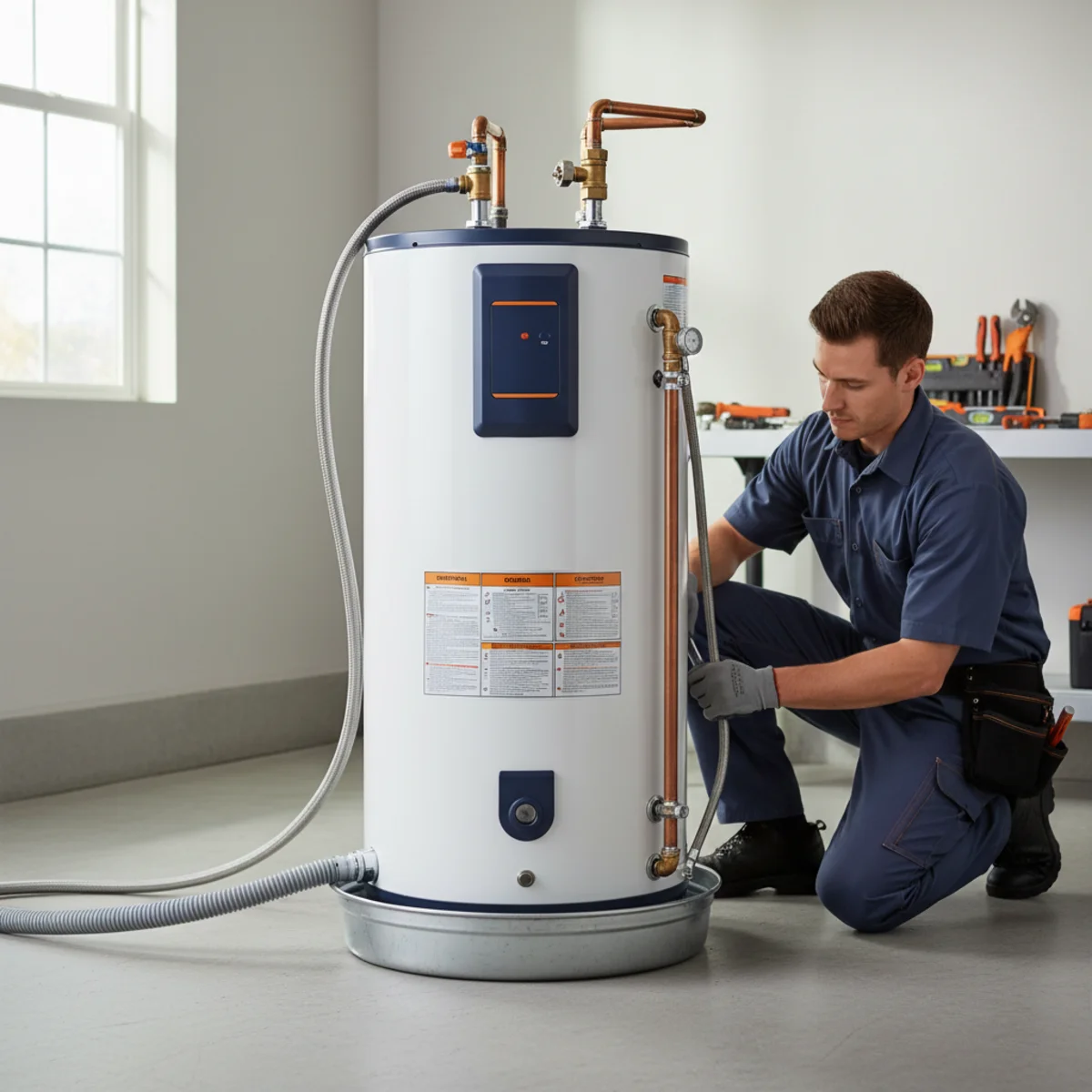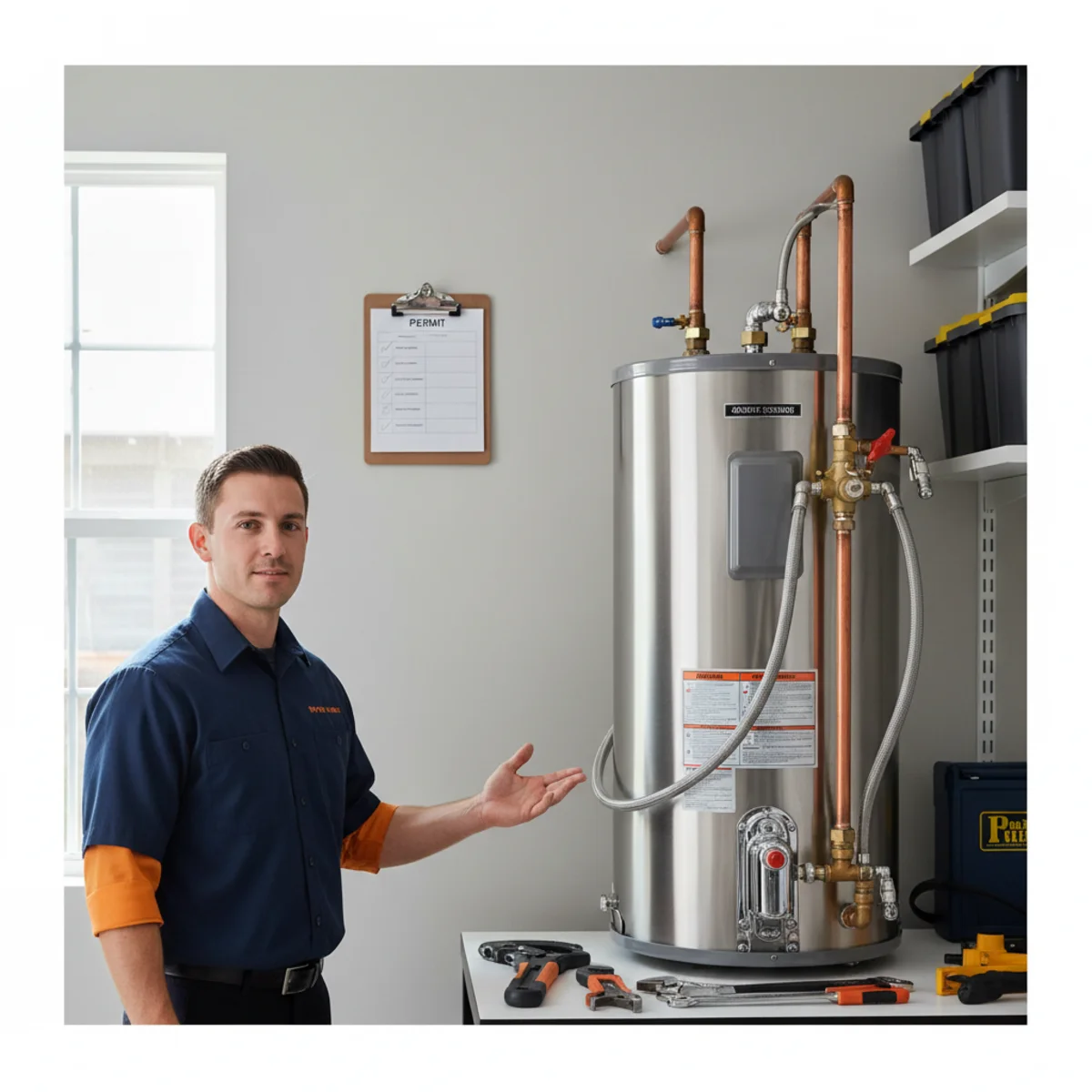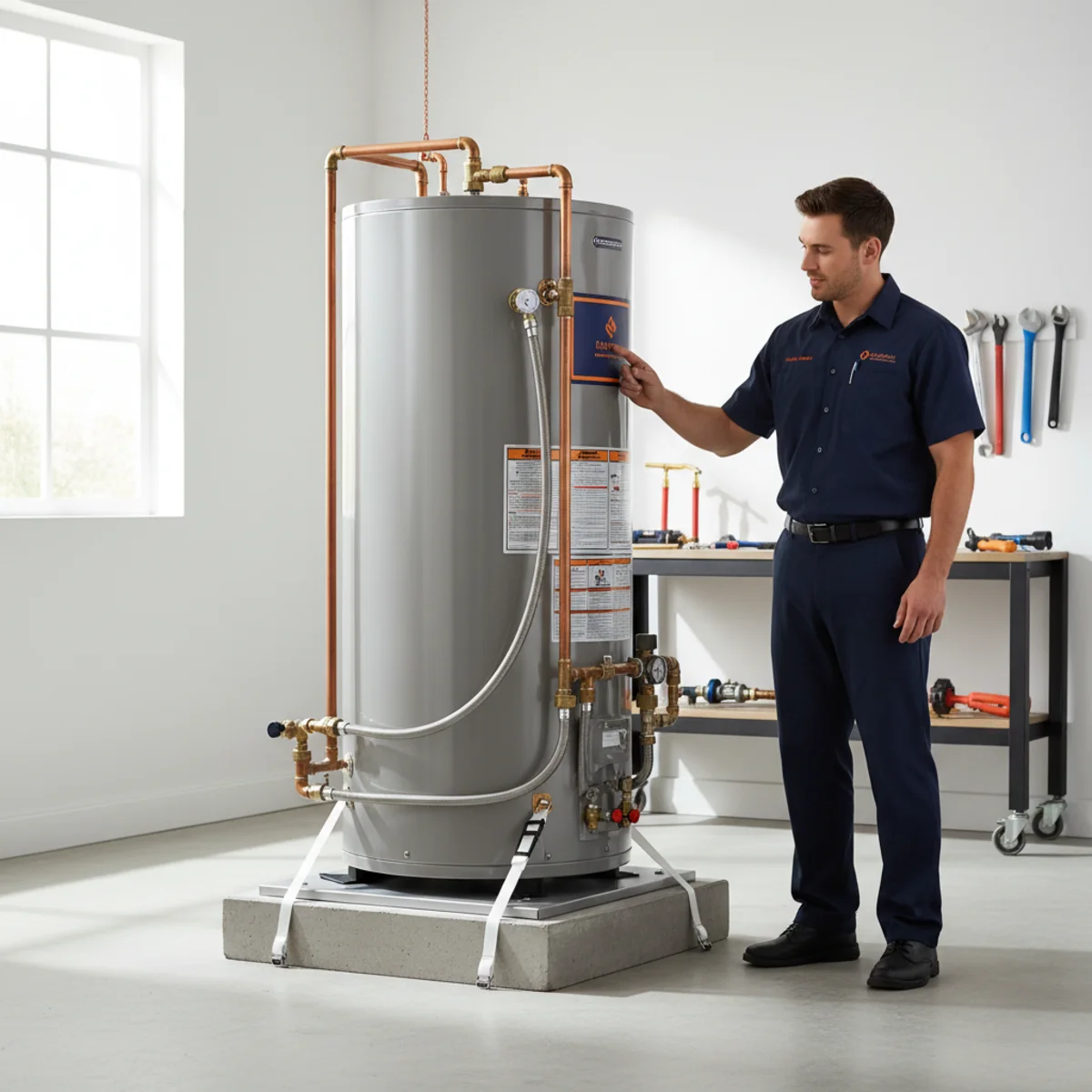
The garage is where most Rancho Cordova water heaters live — and it's also where the most code violations tend to show up. A unit that was installed without a permit ten years ago, or by a handyman who skipped the raised-platform requirement, may be running fine today. But when it comes time to sell your home or file an insurance claim, an unpermitted or non-compliant installation becomes a problem fast.
California's requirements for garage water heater installations are more specific than most states. Some of them are safety-critical — the rules around ignition sources and flammable vapors exist because garages store gasoline, paint, and solvents. Others are structural, like seismic strapping, which is mandated statewide.
This guide covers the key code requirements as an educational overview. Building codes are updated periodically, and local jurisdictions like Sacramento County can adopt amendments. Confirm current details with your installer or the building department before any work starts — this article is a starting point, not a substitute for a permit inspection.
Why Garage Installations Have Their Own Rules
Water heaters that use an open flame — all gas models and some electric heat pumps with resistance backup — are considered ignition sources. Garages commonly contain flammable liquids: gasoline in lawn equipment, solvents, paint thinner. Flammable vapors are heavier than air and pool at floor level.
The California Plumbing Code and Fire Code address this with a specific requirement: the ignition source on a gas water heater must be elevated so it cannot ignite vapors that accumulate at floor level. That's the basis for the raised-platform rule — and it's one of the most frequently missed requirements on older installs.
Beyond ignition hazards, garages present structural challenges. Vehicles back in and out, creating impact risk. Seismic activity is a reality in California. These factors shape the clearance and strapping requirements below.
The Raised-Platform Requirement
In California, gas water heaters installed in garages where automobiles are parked or stored must have their ignition source (burner or pilot) at least 18 inches above the floor. The platform must be able to bear the weight of the unit — typically 400–600 pounds when full of water — so a proper platform is anchored to the wall or built from structural lumber, not a stack of bricks or scrap wood.
FVIR (Flammable Vapor Ignition Resistant) water heaters, which have been required on all new residential gas water heaters since 2005, use an internal combustion chamber design that significantly reduces ignition risk. Some jurisdictions allow FVIR-rated units to be installed at floor level in garages — but this is a local code interpretation, not a universal rule. Confirm current details with Sacramento County Building Inspection or your licensed installer before assuming a floor-level install is acceptable.
Our garage water heater installation service includes building or verifying the platform to current standards. It's not optional work — a failed inspection means the job isn't done.
Seismic Strapping
California Health and Safety Code Section 19211 has required seismic strapping on all water heaters since 1991. This applies statewide — it's not optional and it's not just for earthquake-prone zones. The strap prevents the unit from toppling during shaking, which would rupture the gas line or cold/hot water connections.
Proper seismic strapping uses two metal straps: one in the upper third of the tank and one in the lower third. The straps must be attached to wall studs or a properly anchored backing plate — not drywall anchors. The straps themselves should be the manufacturer-specified type or code-approved equivalent.
A water heater that's been in place for 20 years and looks strapped is not necessarily strapped correctly. Many older installs used a single strap, thin plumber's tape, or drywall anchors that don't meet current requirements.
- Two straps required: upper third and lower third of the tank.
- Must be attached to wall studs or structural backing — not drywall.
- Strap material: code-specified metal strap or approved equivalent.
- Any new installation triggers a permit inspection that verifies strapping.
Venting and Clearances
Gas water heaters require a properly sized flue to exhaust combustion gases. In a garage, this usually means a vertical flue pipe running up through the roof or an exterior wall, depending on the unit type. Atmospheric-draft units (the most common standard tanks) need natural draft — the flue must be sized, pitched, and terminated correctly or the unit will backdraft carbon monoxide into the living space.
Clearances from combustible materials — wood framing, drywall, stored items — must meet the manufacturer's minimum specifications, which are printed on the rating plate. The area in front of the unit must remain unobstructed for service access. Piling boxes in front of the water heater is a code violation and a service headache.
Direct-vent and power-vent units have different requirements than atmospheric-draft models. If you're upgrading to a higher-efficiency unit, the venting may need to change. Our water heater permit and code upgrade service handles the assessment and corrects existing deficiencies.
Permits and Sacramento County Inspections
Sacramento County requires a permit for any new water heater installation, including like-for-like replacements. The permit triggers a rough-in inspection (if new gas or plumbing connections are made) and a final inspection. The inspector verifies strapping, platform height, T&P discharge pipe termination, venting, and clearances.
Skipping the permit saves a few hours and the permit fee upfront. What it costs you: no inspection means no verification of safety-critical work, it may void your homeowner's insurance coverage for a related claim, and it shows up in a home inspection report when you sell. Buyers and their lenders take unpermitted work seriously.
If you're in Rancho Cordova and need a compliant garage installation — or you want to bring an existing unpermitted unit up to code — contact us for an honest assessment. We pull the permit, do the work, and schedule the inspection.
Common Violations Found on Older Garage Installs
If your water heater was installed more than 10 years ago, or by someone who wasn't licensed, these are the issues that show up most often on Sacramento County inspections:
- Single seismic strap instead of two, or straps attached to drywall.
- Ignition source below 18 inches with no FVIR documentation on file.
- T&P discharge pipe not routed to within 6 inches of the floor or to a drain.
- Flexible gas connector exceeding the allowed length or routed through a wall.
- Inadequate clearance from combustibles stored around the unit.
- No permit on record (common on units installed before stricter enforcement).
Talk to a Local Rancho Cordova Water Heater Pro
Whether you need a repair today or you're planning an upgrade, we'll give you a straight answer and an upfront estimate.
Frequently Asked Questions
Yes. Sacramento County requires a permit for water heater replacements, including like-for-like swaps. Confirm current requirements with the Sacramento County Building Inspection Division or your licensed installer, as local adoption of code amendments can affect the specifics.
It depends on the unit type and when it was installed. FVIR-rated units installed after 2005 may qualify for floor-level installation under some interpretations, but the 18-inch rule still applies in many jurisdictions. If a permit was pulled for the original install and it passed inspection, you're likely compliant. If not, get an assessment before assuming.
It will show up in the home inspection report. Buyers can request you bring it into compliance, reduce the sale price, or both. Some lenders require unpermitted work to be resolved before closing. It's cheaper to address it proactively than to negotiate under time pressure during escrow.
Yes. Tankless units have their own code requirements — primarily around venting and gas line sizing — but they don't require a raised platform because there's no standing pilot or open-burner compartment at floor level. The permit requirement still applies.
This article reflects California code requirements as understood at the time of writing. Codes are updated on a regular cycle, and Sacramento County may adopt local amendments. Always confirm current requirements with a licensed installer or the Sacramento County Building Inspection Division before proceeding.
Written by the Water Heater RC Pros team
Practical, local guidance from Rancho Cordova water-heater installers — written for homeowners and kept current with California code. Have a question about your unit? Call (201) 277-9344.