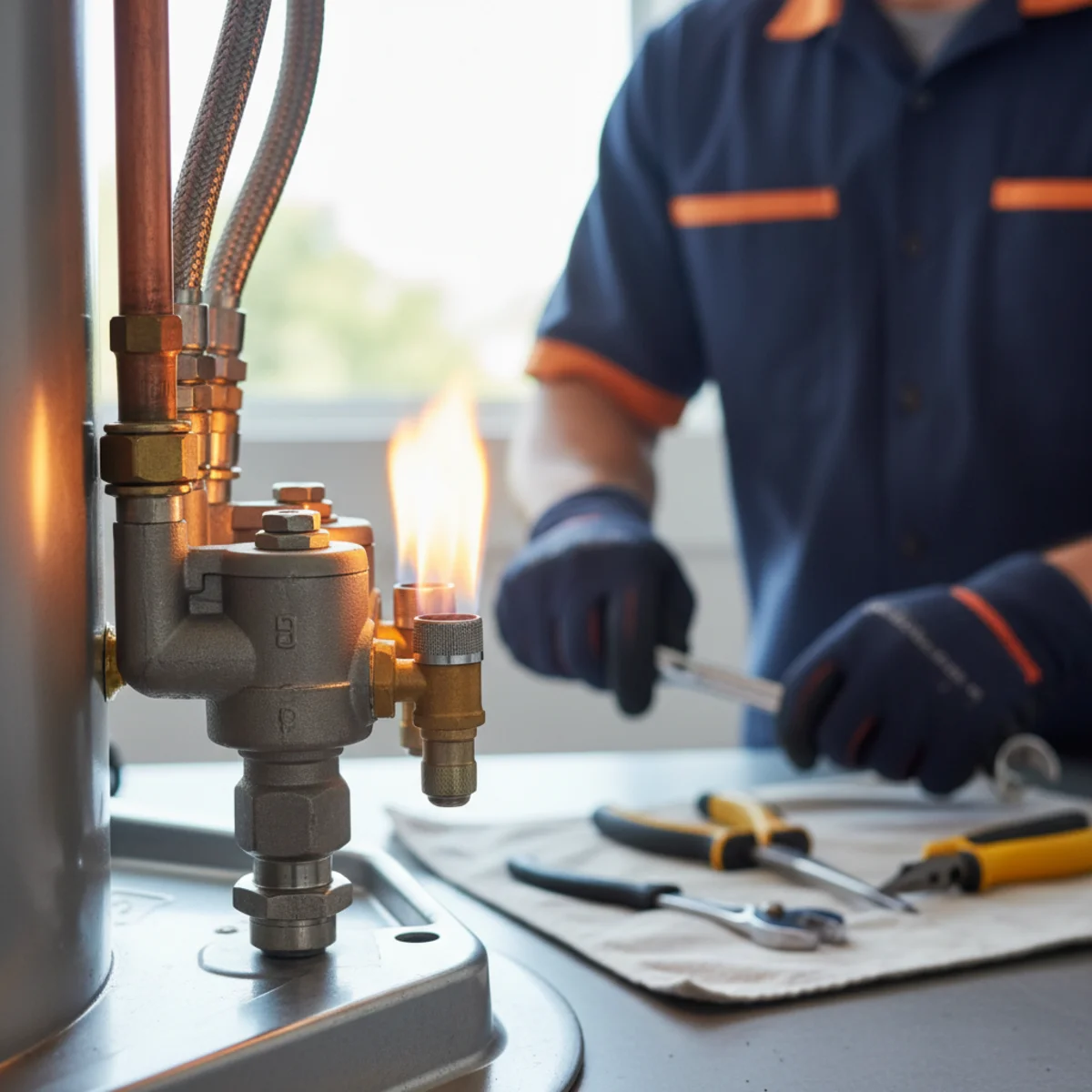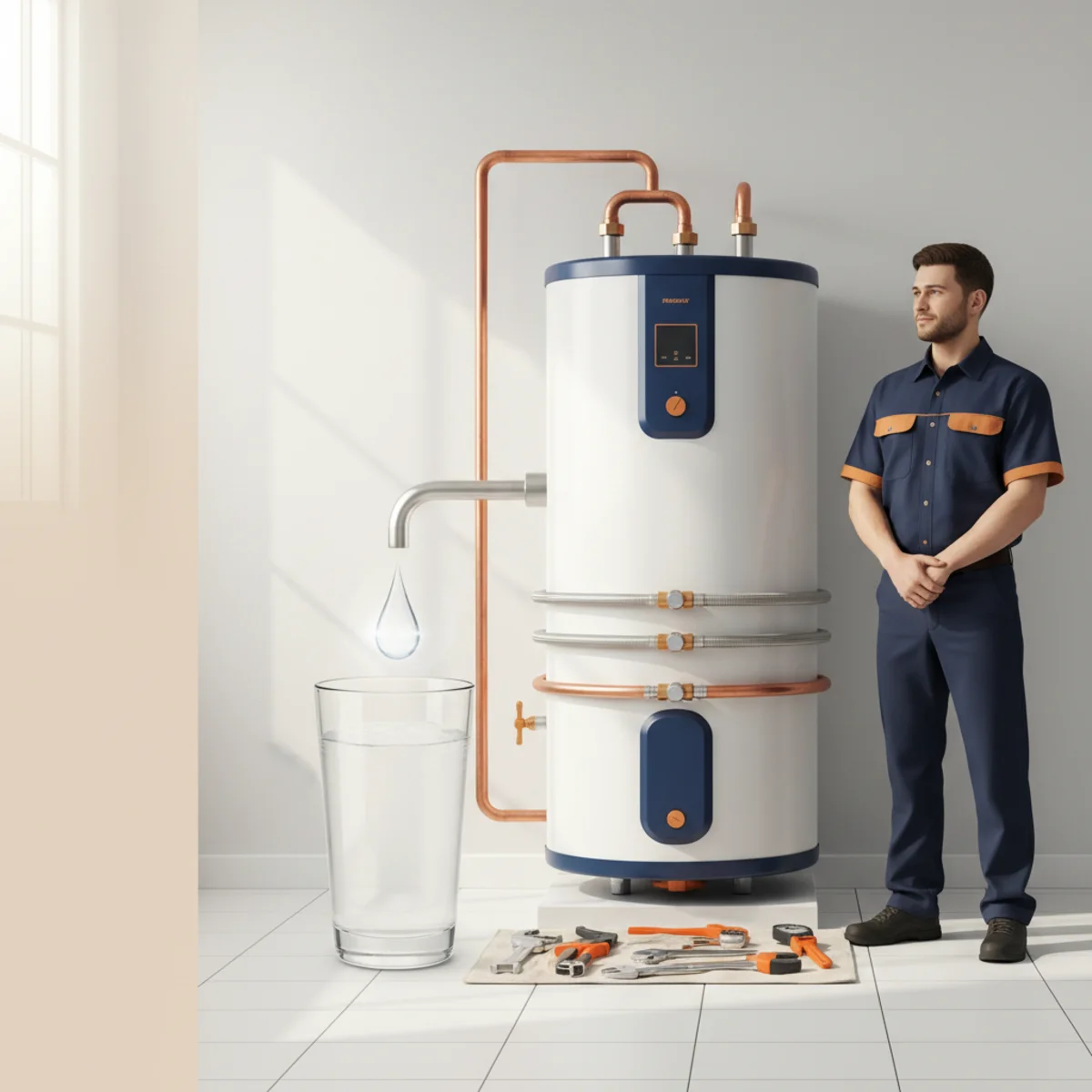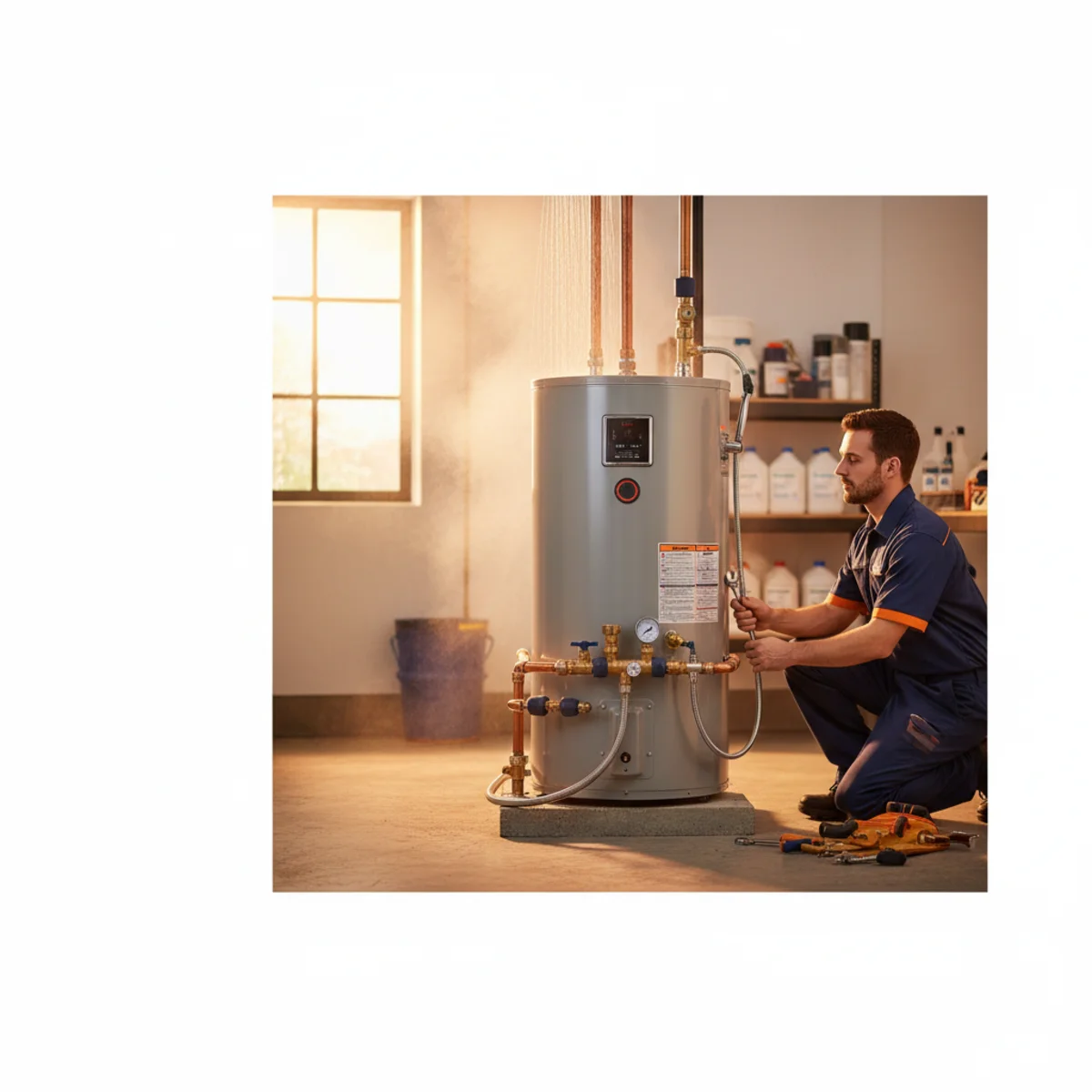
Your water heater turns on, the burner fires, the thermostat reads normal — and your morning shower still goes cold in six minutes. Before you assume the tank is failing or the heater is undersized, check one inexpensive plastic component that most homeowners have never heard of: the dip tube.
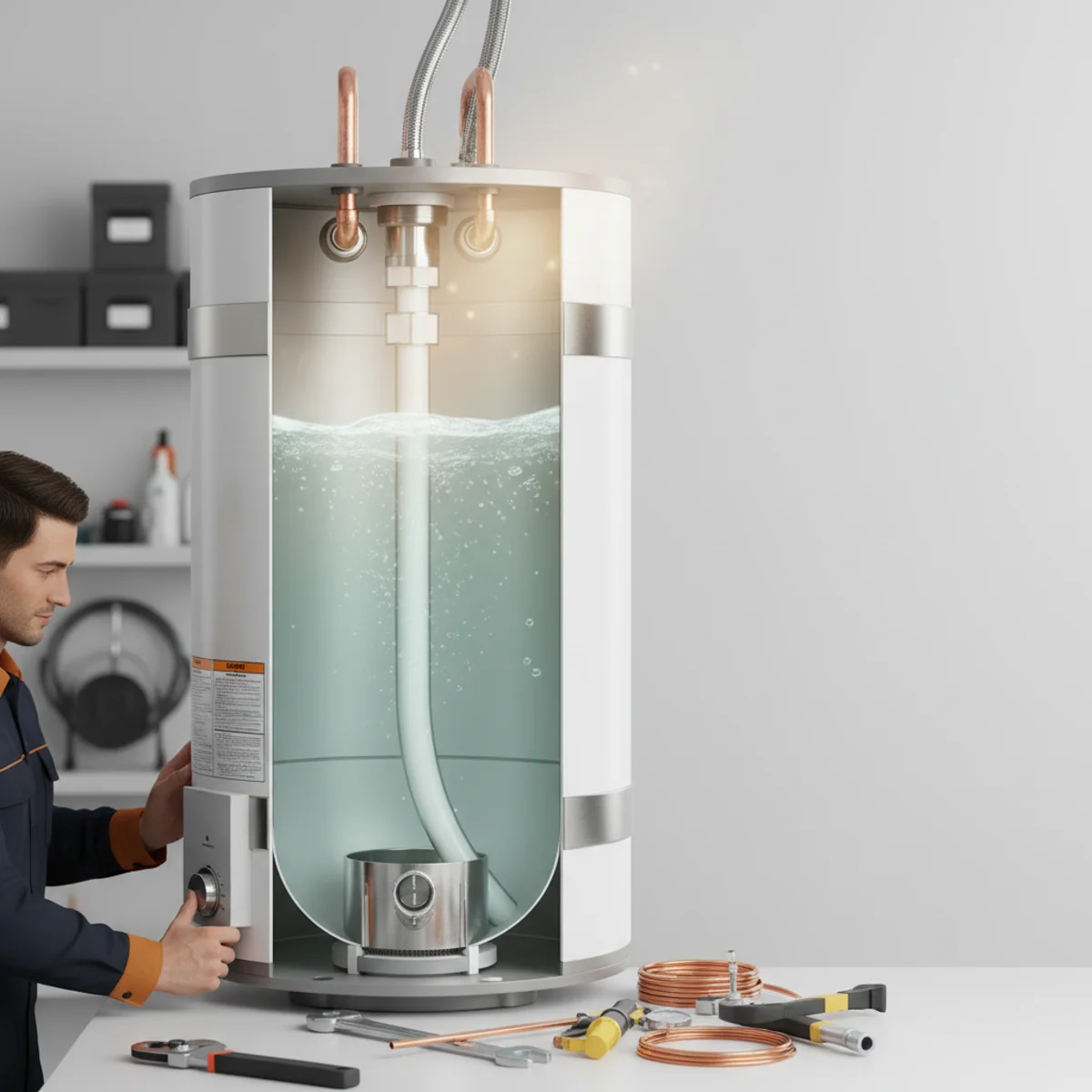
The dip tube is a plastic pipe inside the tank, attached to the cold-water inlet at the top and extending nearly to the bottom. Its entire job is to route incoming cold water down to the bottom of the tank — away from the hot water outlet at the top. When the dip tube works, stratification keeps cold water at the bottom (near the burner) and hot water at the top (near the outlet). When the dip tube breaks, cracks, or disintegrates, cold inlet water dumps directly into the top of the tank and mixes with the hot water supply before it ever reaches your faucet.
In Rancho Cordova, this problem is more common than most people expect. A specific plastic formulation used in dip tubes manufactured between roughly 1993 and 1997 was prone to premature breakdown — some literally crumbled into white plastic flakes that circulated through the home's plumbing. Units from that era still exist in local homes, and even outside that defective batch, dip tubes on older units in hard water eventually degrade.
What a Dip Tube Does and Why It Matters
Hot water is less dense than cold water. In a properly functioning tank, hot water naturally rises to the top and cold water sinks. The cold-water inlet is at the top of the tank — if incoming cold water discharged at the top, it would immediately mix with the hot supply and cool it down before it ever left the tank.
The dip tube prevents that. It channels the cold inlet water to the bottom third of the tank, near the burner or heating element. By the time that cold water rises through the heating zone and makes it to the top outlet, it's been heated. When the tube fails, that separation disappears. Cold water pours in at the top, mixes with hot water, and the outlet temperature drops — even though the thermostat reads normal and the burner is working correctly.
Symptoms of Dip Tube Failure
The classic symptom is lukewarm water that arrives quickly — the first few gallons feel hot, then it fades fast. This happens because the hot water sitting at the top of the tank (above the break point) exhausts quickly, and then you're drawing from the mixed zone below.
Other signs worth checking:
- Short bursts of hot water followed by a rapid temperature drop — not the slow fade of a depleted tank.
- White or gray plastic flakes in aerator screens or showerhead filters, especially on units from the mid-1990s.
- The heater cycles on and off frequently even with low usage.
- The unit is 8 or more years old and has never had the dip tube inspected.
- Lukewarm water even when the thermostat is set to 120°F or higher.
How to Diagnose Before Calling a Tech
You can narrow down a dip tube problem at home. Turn off all hot water draws in the house and let the heater sit for 30 minutes so temperatures stabilize. Then draw one or two gallons from a hot tap and measure the temperature with a kitchen thermometer. If the temperature is near the set point but drops fast with continued draw, the mixing pattern is consistent with a broken dip tube.
Check your aerator screens. If you find small white plastic fragments, that's strong evidence of a disintegrating dip tube — particularly on an older unit.
A water heater repair technician can verify the diagnosis by inspecting the tube directly. On most units the cold inlet connects at the top and the tube can be accessed with the water supply off.
The Fix: Replacement Is Cheap If Caught Early
A dip tube itself costs very little — typically $10–$20 for the part. The labor to swap it is straightforward: shut off the cold supply, access the inlet fitting, remove the old tube, and drop in the new one. The whole job usually takes less than an hour.
The complication is what broke the tube in the first place and whether plastic debris has already spread through the household plumbing. If white flakes are circulating, aerators, showerhead filters, and appliance inlet screens — dishwasher, washing machine — all need cleaning. On severely affected systems, debris can collect inside mixing valve cartridges, which may need service too.
If the unit is older than 10 years, a dip tube replacement is a judgment call. The part and labor cost is low, but you're putting money into an aging tank. A candid conversation with a technician about the unit's overall condition — anode rod status, sediment level, tank corrosion — helps you decide whether repair or replacement makes more financial sense.
Our water heater repair service covers dip tube diagnosis and replacement for Rancho Cordova homes. If the inspection suggests the tank itself is near the end of its life, water heater replacement is also available — we can do both in one visit if needed.
Local Context: Hard Water and Plastic Degradation
Sacramento Valley water tends toward the harder end of the scale, with elevated mineral content that can accelerate degradation of lower-grade plastics used in some dip tubes manufactured in the 1990s. If you have a unit from that era in your Rancho Cordova home — check your manufacture date using the serial number — a proactive inspection is worth the service call.
Even on newer units, periodic inspection of the dip tube is worth including in a broader maintenance visit. Most homeowners skip it because the symptom looks like a different problem. Now that you know what to look for, you can catch it before the plastic flakes start circulating. Contact us if you're seeing lukewarm water and want a diagnosis.
Talk to a Local Rancho Cordova Water Heater Pro
Whether you need a repair today or you're planning an upgrade, we'll give you a straight answer and an upfront estimate.
Frequently Asked Questions
Technically yes — it's a cold supply connection at the top of the tank. In practice, it requires shutting off the cold supply, identifying the correct inlet port (not the hot outlet), and seating the new tube at the correct depth. Mistakes can cause immediate or delayed issues. Most homeowners find it worth hiring a technician for the certainty.
Decode the manufacture date from the serial number — if the unit was made between 1993 and 1997, it may have the defective tube even if it hasn't visibly failed yet. If you're seeing plastic flakes in aerators, that's the clearest sign regardless of age.
The break itself doesn't damage the tank structure. The secondary issue is plastic debris circulating into valves, cartridges, and appliance inlets — that can cause damage to fixtures and appliances over time. Catching and fixing it early reduces that downstream impact.
No. Other causes include a failing thermostat, a defective heating element (electric), a partially closed gas valve, demand exceeding FHR capacity, or a mis-set thermostat. The dip tube pattern is distinctive — hot briefly, then dropping fast — rather than the slower fade of a depleted tank. A diagnostic visit can pinpoint which issue you're actually dealing with.
Written by the Water Heater RC Pros team
Practical, local guidance from Rancho Cordova water-heater installers — written for homeowners and kept current with California code. Have a question about your unit? Call (201) 277-9344.