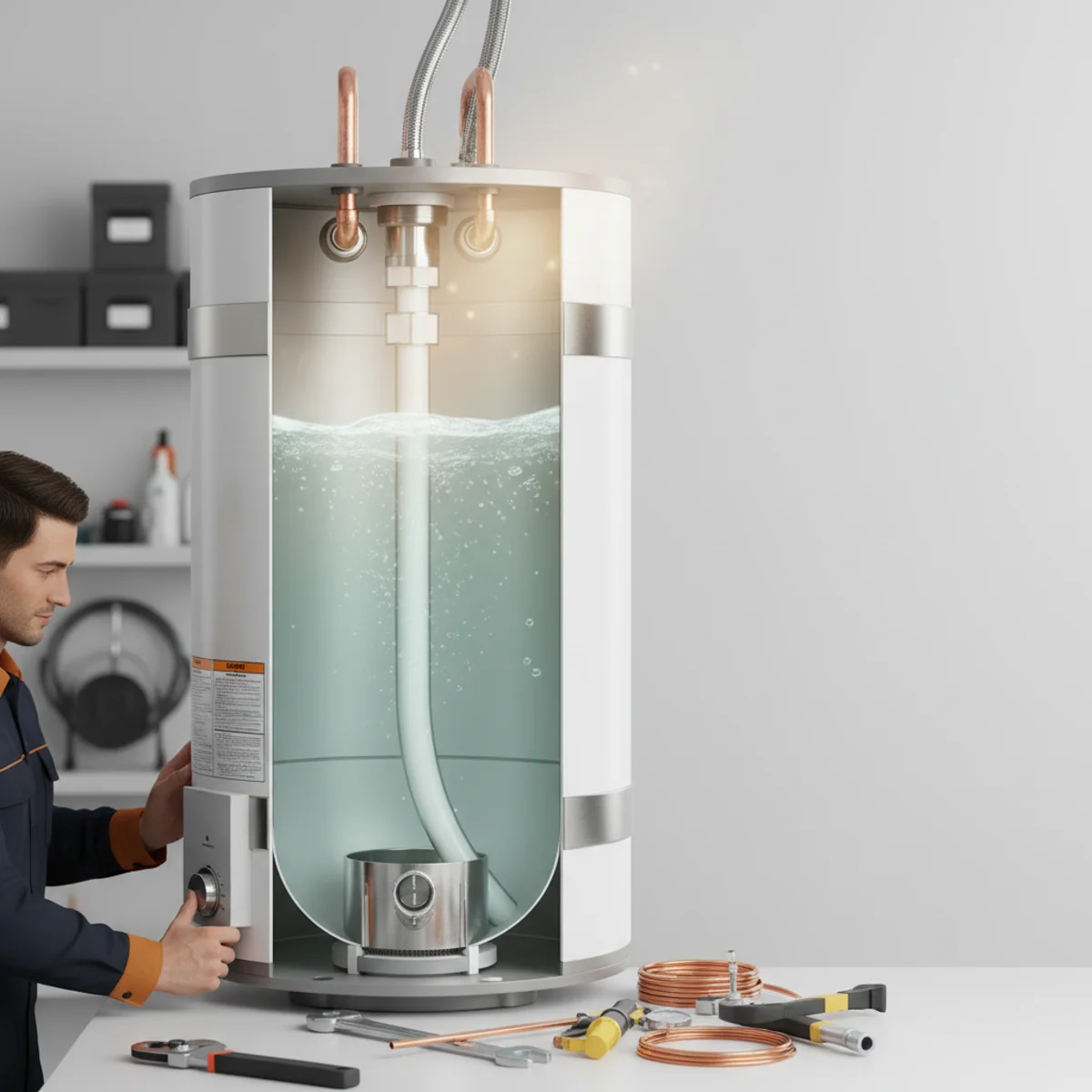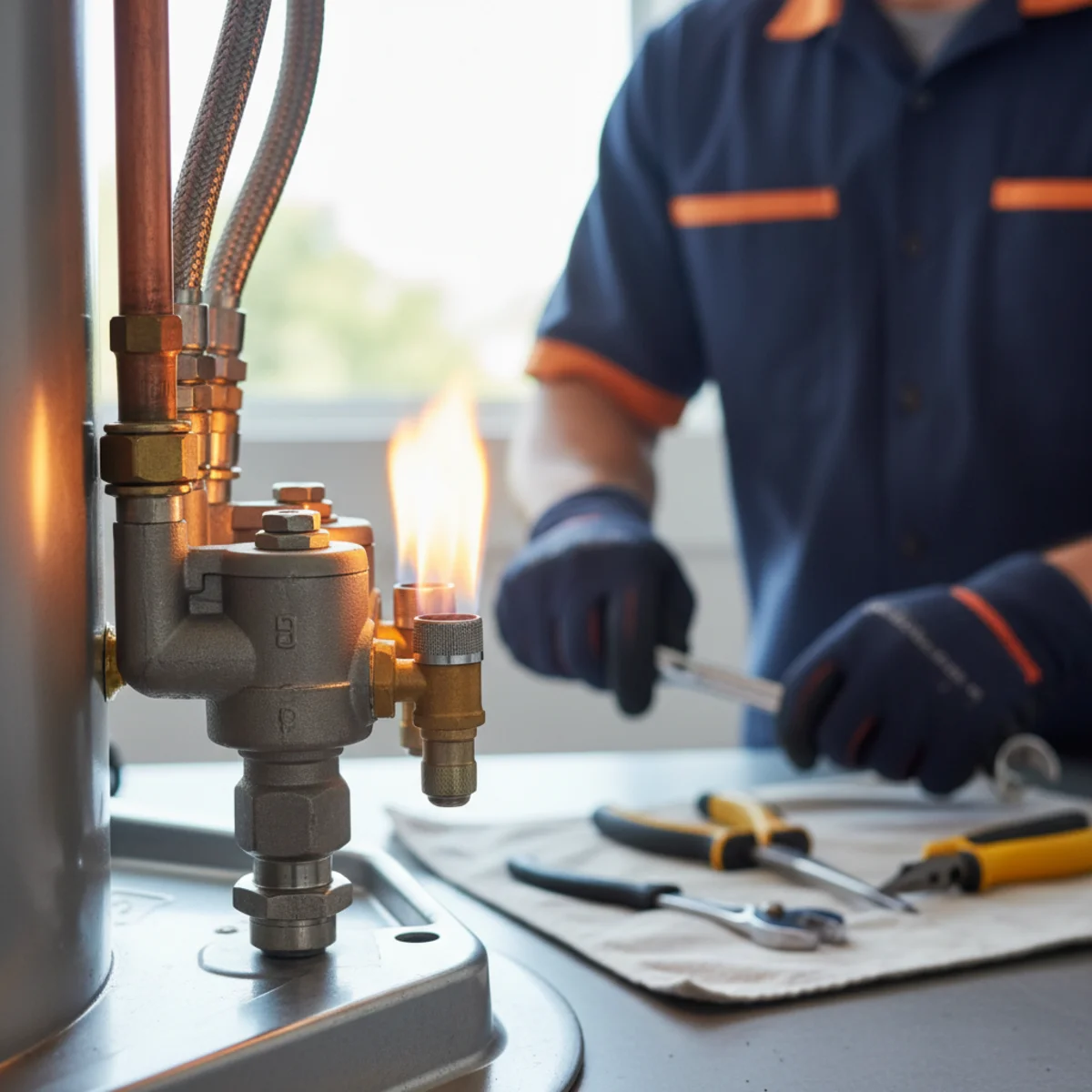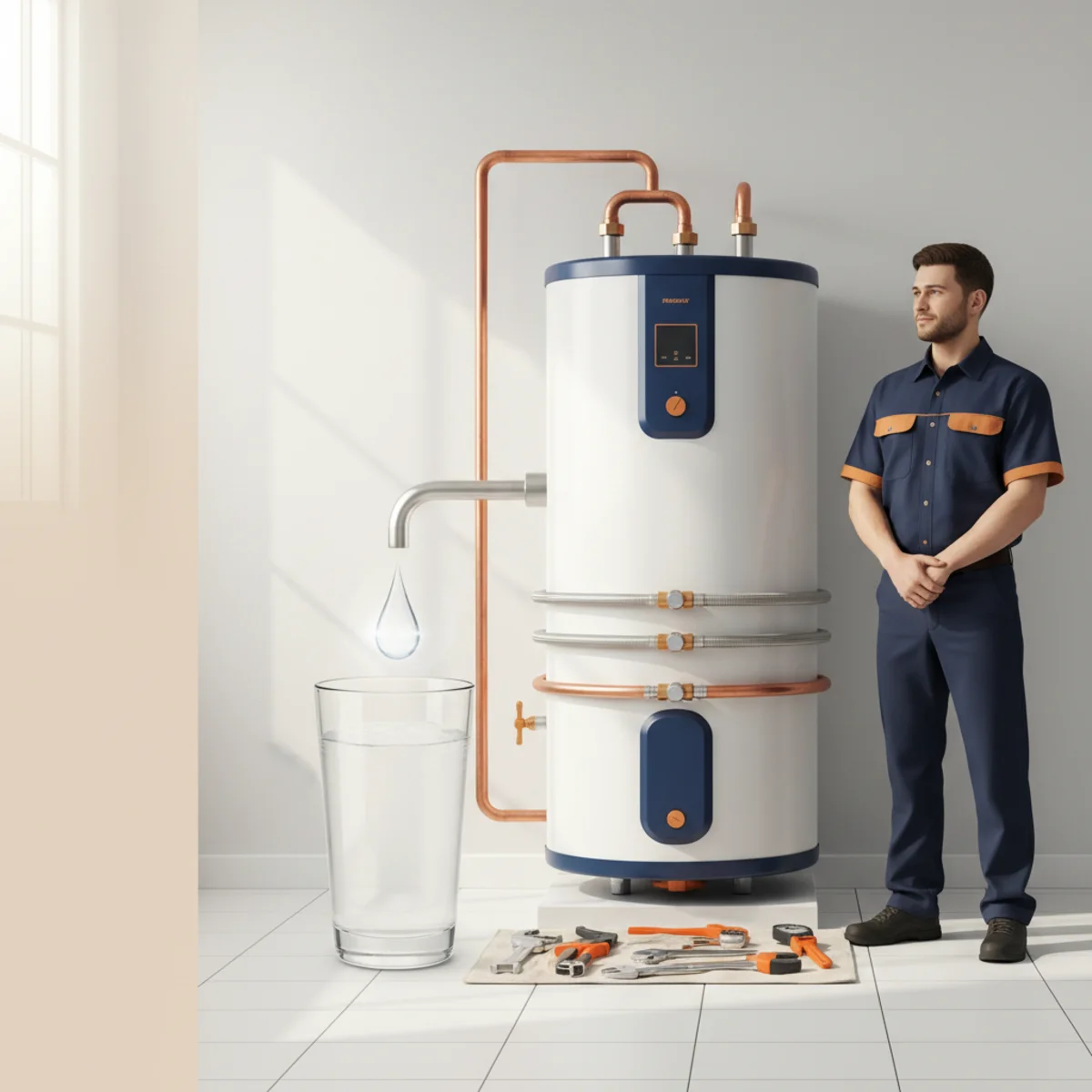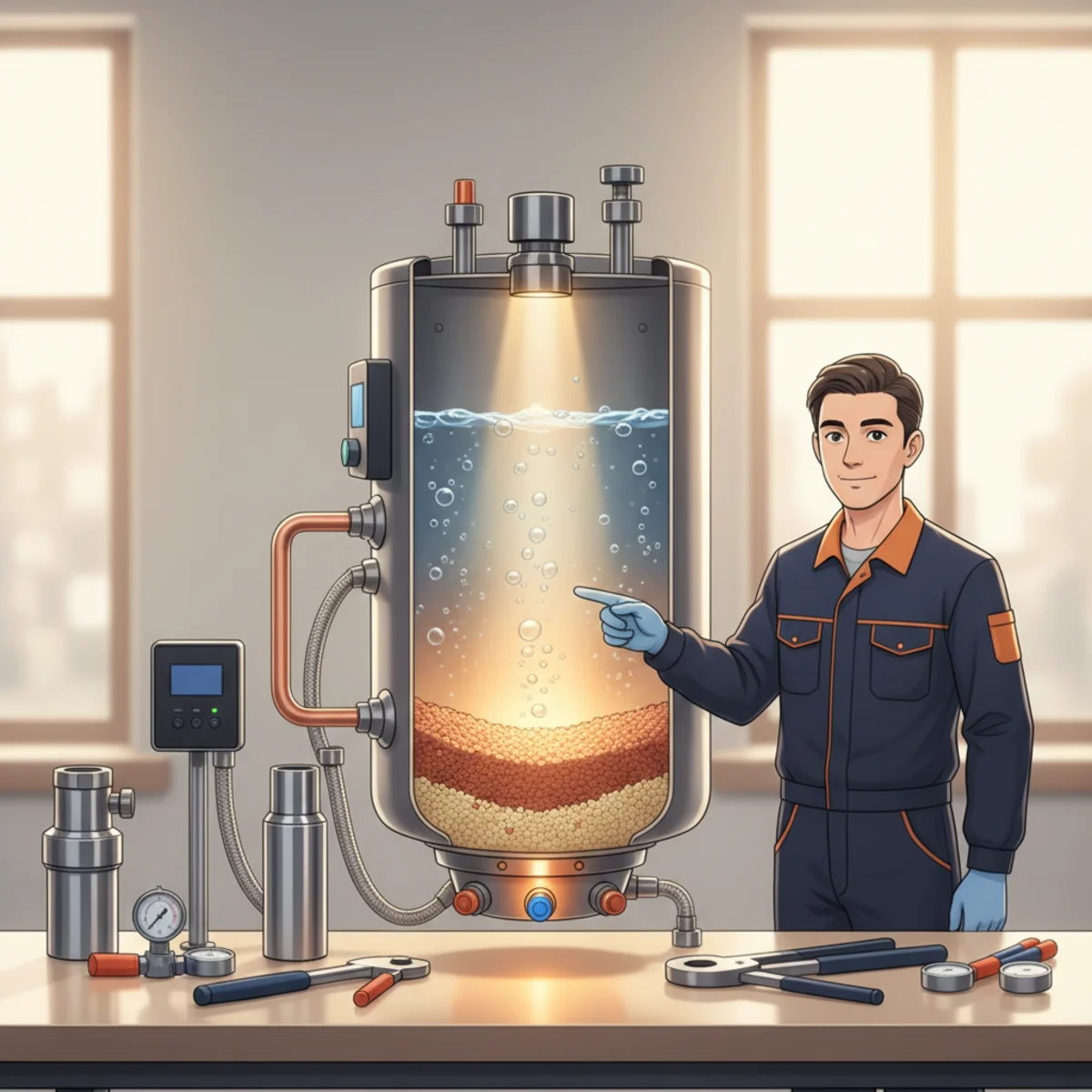
That knocking, popping, or rumbling sound from your water heater is alarming the first time you hear it. The good news: it's almost never a sign of imminent failure. The bad news: it means your tank has accumulated sediment, and if you ignore it long enough, that sediment will reduce efficiency, strain the heating element or burner, and shorten the life of the unit.
Rancho Cordova sits in an area with moderately hard water — Sacramento County's water supply typically runs between 100 and 175 parts per million of dissolved minerals, depending on the source blend in your neighborhood. Over months and years, calcium carbonate and other minerals settle to the bottom of the tank and form a layered crust. The noise you're hearing is what happens when the burner heats water that's trapped beneath that crust.
Understanding the cause helps you know which noises require immediate attention and which can be addressed with routine maintenance. This guide covers all the common water heater sounds, what each one means, and when to call a professional.
Why Sediment Causes Popping and Rumbling
On a gas water heater, the burner sits below the tank and heats the metal floor of the tank directly. As mineral deposits accumulate on the tank floor, they insulate the metal from the water above. The burner has to work harder and longer to transfer heat through the sediment layer. Small pockets of water trapped under or within the sediment layer superheat and flash to steam — that's the popping or crackling you hear.
On electric water heaters, the lower heating element sits inside the tank near the bottom, where sediment collects. Mineral scale coats the element over time, reducing its efficiency and causing the same type of localized superheating and steam pockets. You'll often hear a hissing or crackling sound rather than a low rumble.
Rumbling typically indicates a heavier sediment load — the noise is water churning through or over a substantial mineral layer. Popping is often earlier-stage buildup. Neither sound means the tank is about to burst; the T&P valve (temperature and pressure relief valve) is a safety device specifically designed to prevent dangerous overpressure. But both sounds mean the unit is working inefficiently and accumulating wear.
Other Noises and What They Mean
Not every water heater sound is sediment. Here's a quick breakdown of other common noises and their usual causes.
Ticking or Tapping
Most commonly caused by normal thermal expansion in the supply pipes as hot water flows through them. Heat traps — small check valves inside the inlet/outlet nipples — can also tick as water moves through them. This is normal and harmless.
Hissing
A continuous hiss can indicate a small water leak at a valve or fitting, or condensation dripping onto the burner on a gas unit. A hiss at the T&P valve means the valve is discharging — either because pressure or temperature is genuinely too high (call a plumber immediately) or because the valve itself has failed and is weeping (replace the valve promptly).
Hammering or Banging in the Pipes
Water hammer — a sharp banging when a faucet shuts off — is a plumbing issue, not a water heater issue. It's caused by sudden flow stoppage creating a pressure wave in the pipes. A hammer arrestor or properly secured pipes usually fix it.
Screeching or High-Pitched Squeal
Often caused by a partially closed valve restricting flow. Check that the cold-water inlet shutoff and any gate valves in the supply line are fully open.
How to Confirm Sediment Is the Problem
Before calling anyone, do a simple check. Attach a garden hose to the drain valve at the bottom of the tank and run a few gallons into a bucket. If the water runs brown, orange, or gray — or you see sandy or gritty particles — you have sediment buildup. Clear water suggests the noise may have another cause.
Also check: has your energy bill gone up without a corresponding change in usage? A sediment-loaded tank runs the burner or element longer to reach temperature, which shows up as higher gas or electric consumption. If you notice both the noise and higher bills, sediment is almost certainly the culprit.
Our water heater flushing service includes a full drain-and-flush, sediment assessment, and inspection of the anode rod and T&P valve. For units with significant buildup, multiple flush cycles may be needed.
When Flushing Fixes It — and When It Doesn't
A fresh tank with light sediment — one that's been flushed annually or that's only been in service a few years — usually quiets down after a thorough flush. The noise stops because the sediment layer is thin enough to break up and drain out.
An older tank with years of accumulated scale is a different situation. Mineral deposits can harden into a ceramic-like crust that doesn't flush out. Attempting to drain a tank that hasn't been serviced in five or more years carries a real risk: the drain valve may not reseal properly after sitting closed for years, leaving you with a dripping valve or, in the worst case, a valve that can't be fully opened because it's clogged with scale.
If your tank is more than 8–10 years old and making significant noise, the honest answer is that flushing may help temporarily but a replacement is likely the better investment. A professional assessment — not just a flush — is the right call at that age. Our water heater repair team can evaluate whether repair or replacement is the better path.
Homeowners in Rancho Cordova can contact us to schedule an inspection or flushing service. We'll give you an honest assessment of whether the unit is worth maintaining or approaching end of life.
Preventing Sediment Buildup Going Forward
Annual flushing is the single most effective preventive measure. In Rancho Cordova's moderately hard water, that cadence keeps mineral accumulation manageable for most tank water heaters. If your home has particularly hard water — sometimes seen in areas fed by wells or older city infrastructure — a whole-house water softener reduces the mineral load on all your water-using appliances, not just the water heater.
Keeping the thermostat at around 120°F (the standard recommendation) rather than higher temperatures also helps: lower operating temperatures slow the rate at which calcium carbonate precipitates out of solution. Higher temperatures heat faster but also accelerate mineral deposition.
The anode rod — a sacrificial metal rod inside the tank that prevents tank corrosion — should be inspected every 3–4 years. A depleted anode rod accelerates tank corrosion, which can combine with sediment buildup to shorten tank life significantly.
Talk to a Local Rancho Cordova Water Heater Pro
Whether you need a repair today or you're planning an upgrade, we'll give you a straight answer and an upfront estimate.
Frequently Asked Questions
In most cases, no. The noise is caused by sediment, not a structural problem with the tank. Your T&P valve is a safety device designed to prevent dangerous overpressure and temperature. However, if you hear hissing from the T&P valve or see water dripping from it, call a plumber promptly — the valve may be actively discharging or failing.
Yes, for a basic flush on a well-maintained tank. Attach a garden hose to the drain valve, connect it to a floor drain or outside, and let several gallons drain until the water runs clear. On older tanks or units that haven't been serviced in years, we recommend having a professional handle it — the drain valve can fail to reseal after years of disuse.
If the buildup is light, the noise often decreases noticeably within a day or two of flushing as remaining particles settle or flush through. Heavy scale may require multiple flush sessions or may not fully resolve — in that case, the tank may be near end of life.
At 11 years in Rancho Cordova's hard water, you're past the average service life for most tank units. A flush may quiet it temporarily, but a full inspection is warranted. If the tank shows corrosion, a failing anode rod, or significant scale, replacement is usually the more cost-effective path. Call (201) 277-9344 for an honest assessment.
Written by the Water Heater RC Pros team
Practical, local guidance from Rancho Cordova water-heater installers — written for homeowners and kept current with California code. Have a question about your unit? Call (201) 277-9344.