Two people live in your house and the second shower is cold. Or the dishwasher runs while someone's in the shower and the temperature drops. This problem has a specific name in the trade: you're exceeding the unit's first-hour rating — the amount of hot water it can deliver in the first hour of use. Figure out why, and you fix the problem. Ignore it, and it usually gets worse.
In Rancho Cordova, there are several local factors that make running out of hot water more common than the national average. Hard water sediment reduces effective tank capacity. Summer heat in the garage can create pressure and efficiency issues. Households with multiple adults and heavy morning demand frequently outpace a unit that was originally sized for a smaller family.
Six causes account for nearly every fast-running-hot-water complaint we see. Some you can address yourself. Others need a service call. Here's how to tell the difference.
Cause 1 — Sediment Buildup Reducing Effective Capacity
Hard water deposits calcium and magnesium carbonate inside the tank every time cold water enters and heats. Over time, this sediment accumulates at the bottom — in Rancho Cordova homes, often several inches worth after a few years without flushing. That layer reduces the actual volume of usable hot water in the tank because it's displacing water with rock.
A 50-gallon tank with 6 inches of sediment may be delivering the effective capacity of a 38-gallon tank. If your hot water duration has been declining gradually over the past year, sediment is the first thing to check.
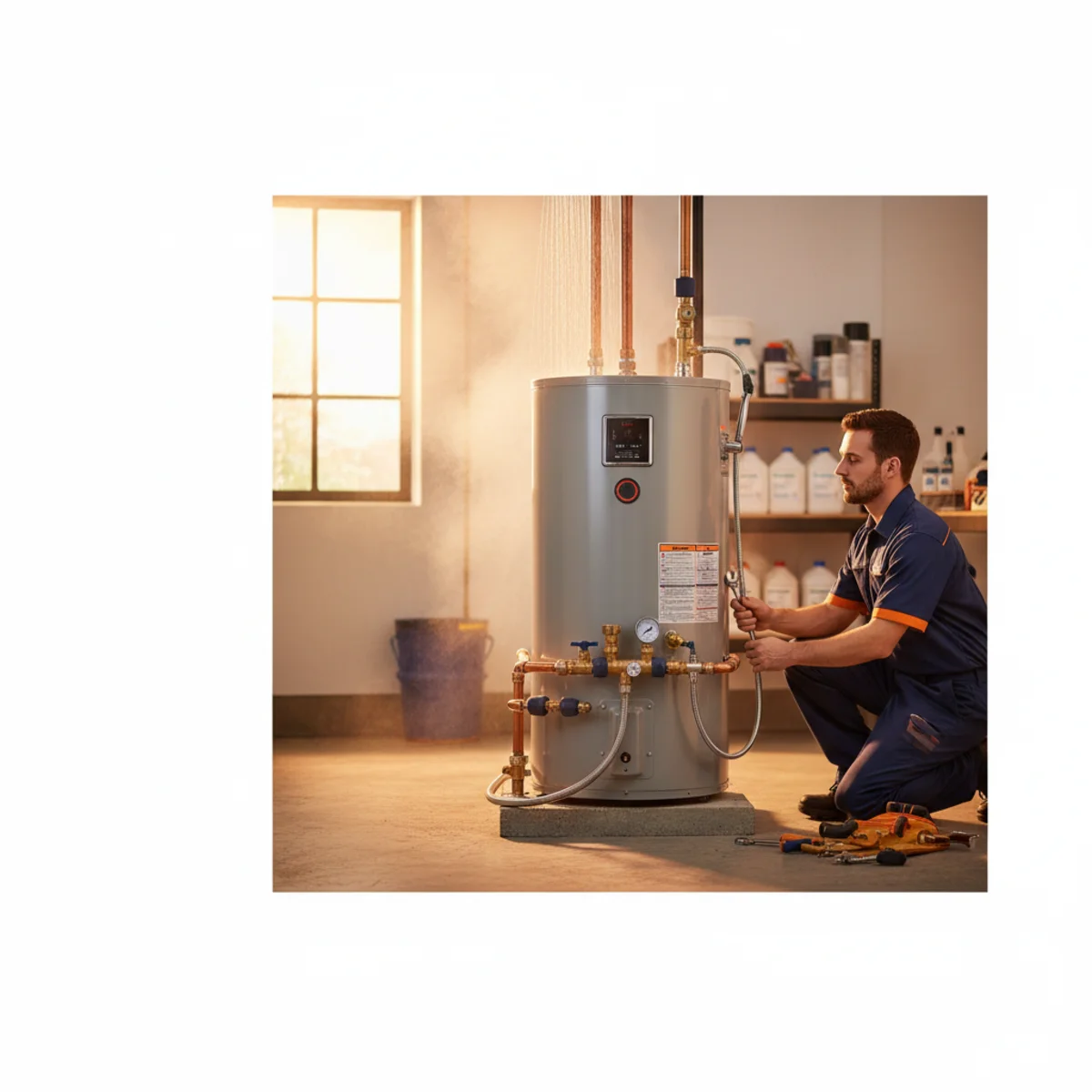
The fix is a thorough tank flush via the drain valve. If it's been more than 2 years since the last flush, the change in performance after flushing can be dramatic. Our water heater repair service can flush and inspect the system in one visit.
Cause 2 — A Failed or Weak Heating Element (Electric Units)
Electric water heaters have two elements — upper and lower — that work in sequence. If the lower element fails, the heater runs entirely on the upper element, which only heats the top portion of the tank. You get a small shot of hot water, then cold. If this describes your situation — normal hot water for the first few minutes, then suddenly very cold — a failed lower element is the likely cause.
Replacing a heating element is a moderate repair. The element itself is inexpensive, but the work requires shutting off power, draining part of the tank, and safely handling a 240V connection. If you're comfortable with electrical work, it's doable DIY. If not, a service call is the right move.
A failing thermostat on the upper or lower element can cause similar symptoms — the heater runs but doesn't actually reach the set temperature, so the tank never fully recovers between uses.
Cause 3 — Thermostat Set Too Low
The default factory setting on many water heaters is 110–115°F — lower than the EPA-recommended 120°F. At that temperature, the difference between the stored hot water and the incoming cold water is small, which reduces the effective usable output. Mixing valves (if installed) or tempering valves blend cold water into the hot supply — the lower the heater temperature, the less mixing happens, and the less total water you get at a usable temperature.
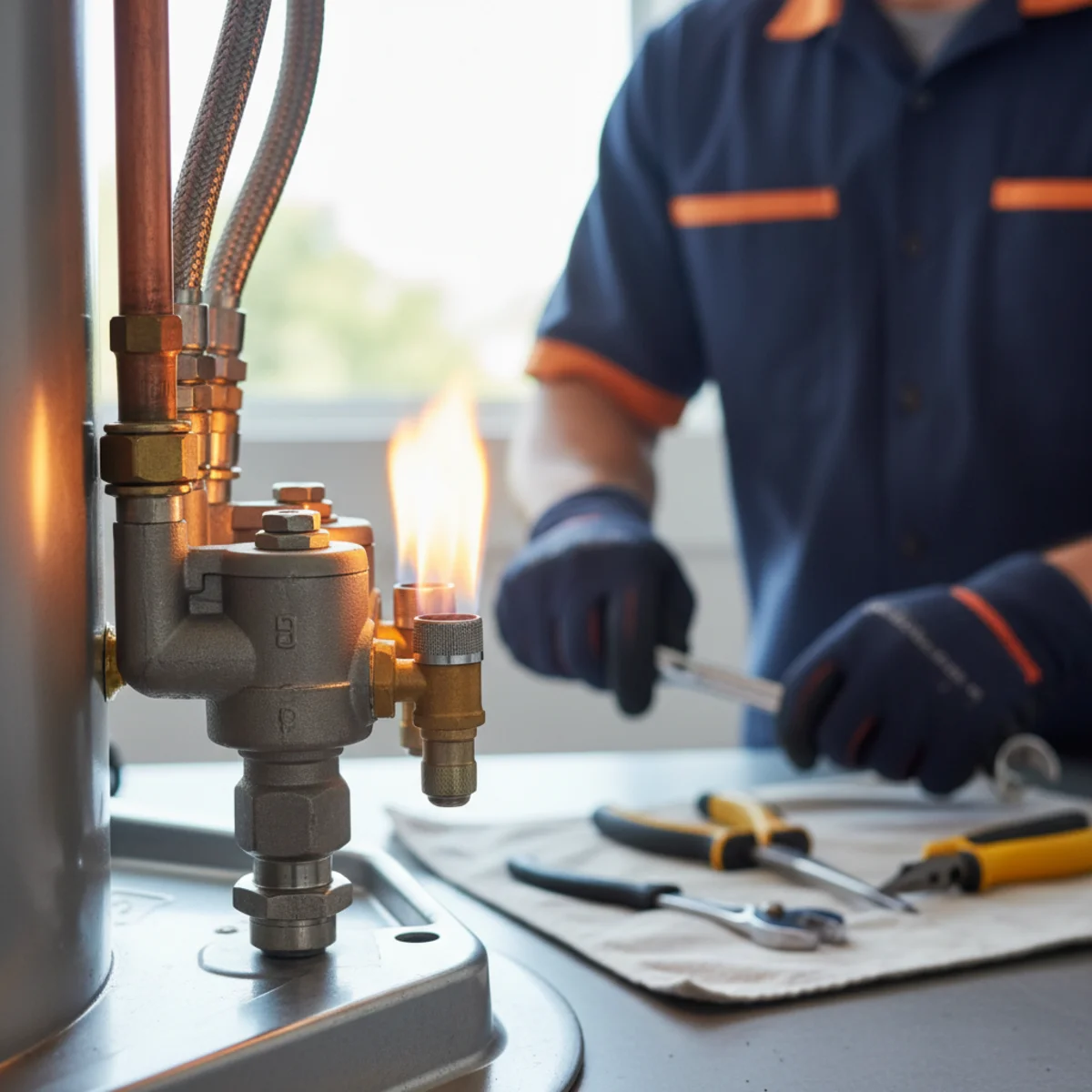
Check your thermostat setting. On a gas unit it's typically the dial on the gas valve. On electric units, remove the access panels to access the upper and lower thermostats. Set both to 120°F. If you have young children or elderly household members especially sensitive to scalding, install a mixing valve at the point of use rather than lowering the tank temperature below 120°F — bacteria growth (including Legionella) is a real risk below 120°F.
This is a free fix. Try it before calling for service.
Cause 4 — The Unit Is Undersized for Current Demand
Water heaters are sized for a household's peak demand. A 40-gallon unit may have been adequate when two people lived in the house; add two teenagers with long showers and the same tank struggles. If your hot water problems developed as your household grew, or became noticeable after a renovation added a new bathroom, sizing is likely the issue — not the equipment.
The key sizing metric is first-hour rating (FHR): the number of gallons the unit can deliver in the first hour starting with a full tank. For a household of 4, you typically want an FHR of 70–80 gallons. A 40-gallon tank with an FHR of 58 gallons won't keep up with four people on a weekday morning.
If your unit is appropriately maintained and functioning correctly but still can't keep up, replacement with a properly sized unit — or adding a tankless unit — is the right direction. Check our water heater installation service for sizing guidance.
| Household Size | Recommended Tank Size | Target First-Hour Rating |
|---|---|---|
| 1–2 people | 30–40 gallons | 50–60 gallons FHR |
| 3–4 people | 40–50 gallons | 65–80 gallons FHR |
| 5+ people | 50–80 gallons | 80–100+ gallons FHR |
| High simultaneous use | Two units or tankless | Demand-based |
Cause 5 — A Dip Tube Failure
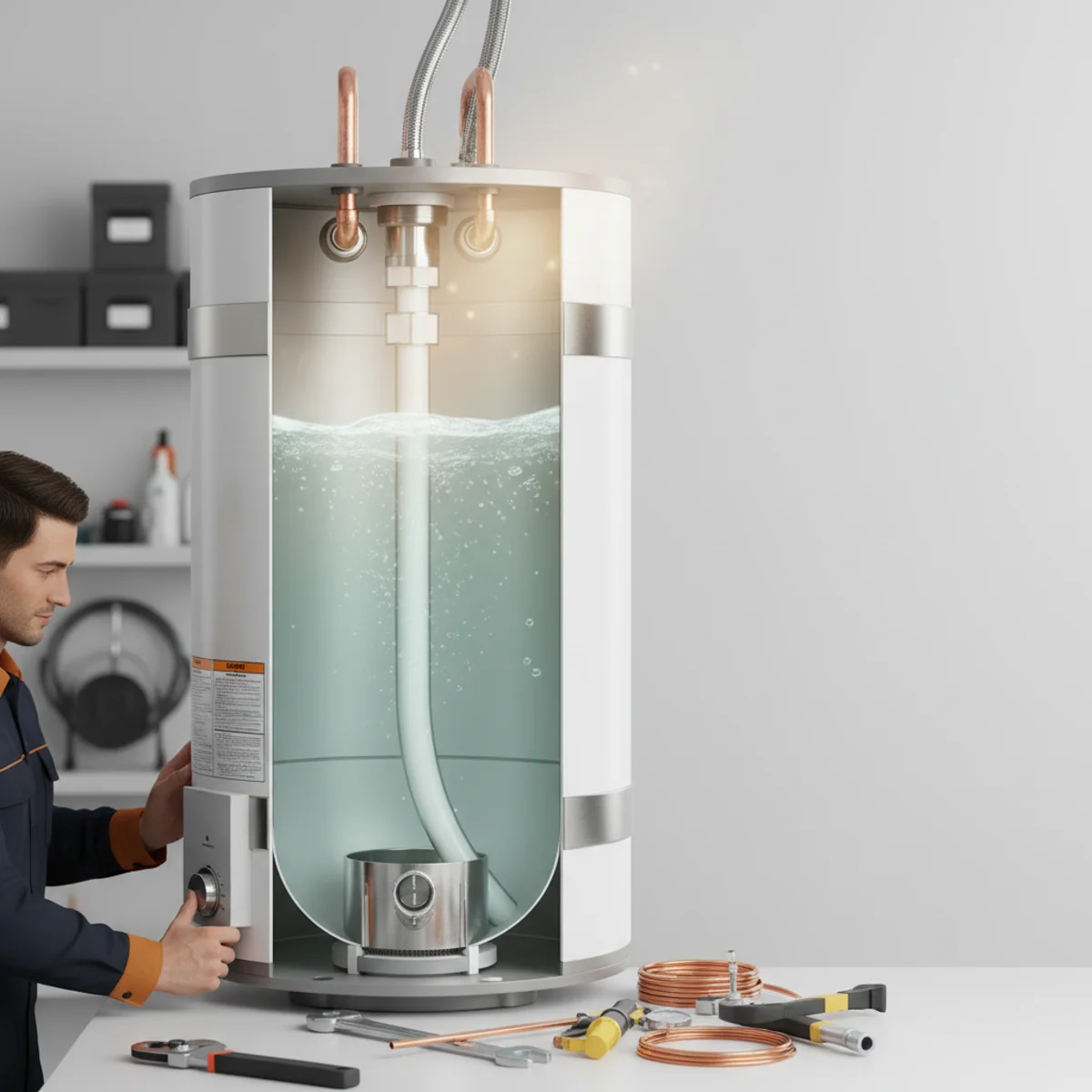
The dip tube is a plastic pipe inside the tank that directs incoming cold water to the bottom, where it heats before rising to the hot outlet at the top. If the dip tube breaks or cracks — which is especially common on units manufactured between 1993 and 1997, a known defect era — cold water enters at the top, mixes with hot water, and dilutes it immediately. You get consistently lukewarm water rather than short bursts of hot followed by cold.
Diagnosing a failed dip tube usually requires inspection. The symptom is subtle compared to other failures — the water isn't cold, just never fully hot. If flushing the tank reveals small white plastic fragments in the drain water, that's a strong indicator. Dip tube replacement is a moderate repair and is often worth doing on an otherwise healthy unit.
Cause 6 — Recovery Rate Can't Keep Up With Usage
Even a properly functioning unit will run out if usage outpaces recovery. Recovery rate is how fast the heater can reheat a depleted tank — measured in gallons per hour. A standard gas unit recovers about 30–40 gallons per hour. An electric unit typically recovers slower. If everyone showers back-to-back in under an hour, there may not be enough time to recover between uses even if the unit is working perfectly.
Staggering usage is the free fix — space showers 45 minutes apart. If that's not practical, the options are upgrading to a larger unit, switching to a high-recovery unit (some gas units have faster burners), or installing a tankless water heater, which heats on demand with no recovery limit.
For Rancho Cordova households hitting this issue, a consultation can help you figure out whether a tank upgrade or a tankless switch makes more sense for your home layout and fuel supply. Contact us with your household size and current unit specs and we can point you in the right direction.
Talk to a Local Rancho Cordova Water Heater Pro
Whether you need a repair today or you're planning an upgrade, we'll give you a straight answer and an upfront estimate.
Frequently Asked Questions
Incoming cold water is colder in winter, which means the heater has to work harder to reach the set temperature. The temperature differential is larger, so the first-hour rating effectively decreases. If your hot water is borderline in summer, it will run short in winter. This is especially noticeable in garage installations where ambient temperature affects the tank directly.
Not necessarily broken — possibly just undersized for your household. Check the unit's capacity (gallon label on the side) and the first-hour rating on the EnergyGuide label. If it was sized for a smaller household, it will run short with more people. Also check the thermostat setting — previous owners may have turned it down.
Sediment typically causes a gradual worsening of hot water duration over months or years, combined with a rumbling or popping sound during heating. A failed element tends to produce a sudden change — normal performance one day, then suddenly very short hot water duration the next. Sediment is common in older units or units that have never been flushed.
Yes, if you're comfortable working with 240V electrical circuits. The process involves turning off the breaker, attaching a non-contact voltage tester to confirm power is off, draining part of the tank, and replacing the element with the correct wattage and thread type. If you're not confident with electrical safety, this is a reasonable job to hand off.
For most shortage situations, yes — tankless units heat on demand with no stored supply to deplete. The caveat is that a tankless unit has a maximum flow rate (measured in gallons per minute), so if you're running three showers simultaneously, a single small unit can still struggle. Proper sizing is critical. We can help you assess whether tankless makes sense for your household.
Written by the Water Heater RC Pros team
Practical, local guidance from Rancho Cordova water-heater installers — written for homeowners and kept current with California code. Have a question about your unit? Call (201) 277-9344.