Inside every steel water heater tank is a part most homeowners have never heard of: the anode rod. It's a metal rod — usually magnesium, aluminum, or zinc — suspended in the water to protect the tank lining from corrosion. The anode sacrifices itself through a process called electrolytic corrosion, drawing corrosive minerals away from the steel walls.
When the anode rod is depleted, the tank itself starts to corrode. That's when you get rusty water, leaks, and eventually a failed unit. In Rancho Cordova, moderately hard water accelerates this process — more mineral content means faster anode depletion.
The good news: anode rods are cheap, and replacing one every 3–6 years can add years to an otherwise healthy tank. This guide explains how they work, how to know when yours is gone, and how to get the most out of this single most underrated maintenance item on your water heater.
How an Anode Rod Works
Steel corrodes. Every gallon of water in your tank contains dissolved oxygen and minerals that want to oxidize that steel. The tank's glass lining blocks direct contact, but microscopic imperfections in the lining — and the exposed steel in ports and fittings — are vulnerable.
An anode rod works through galvanic protection. Magnesium and aluminum are more electrochemically active than steel, which means they corrode preferentially when both metals are in contact with water. The anode rod attracts corrosive electrochemical activity to itself, leaving the tank walls alone.
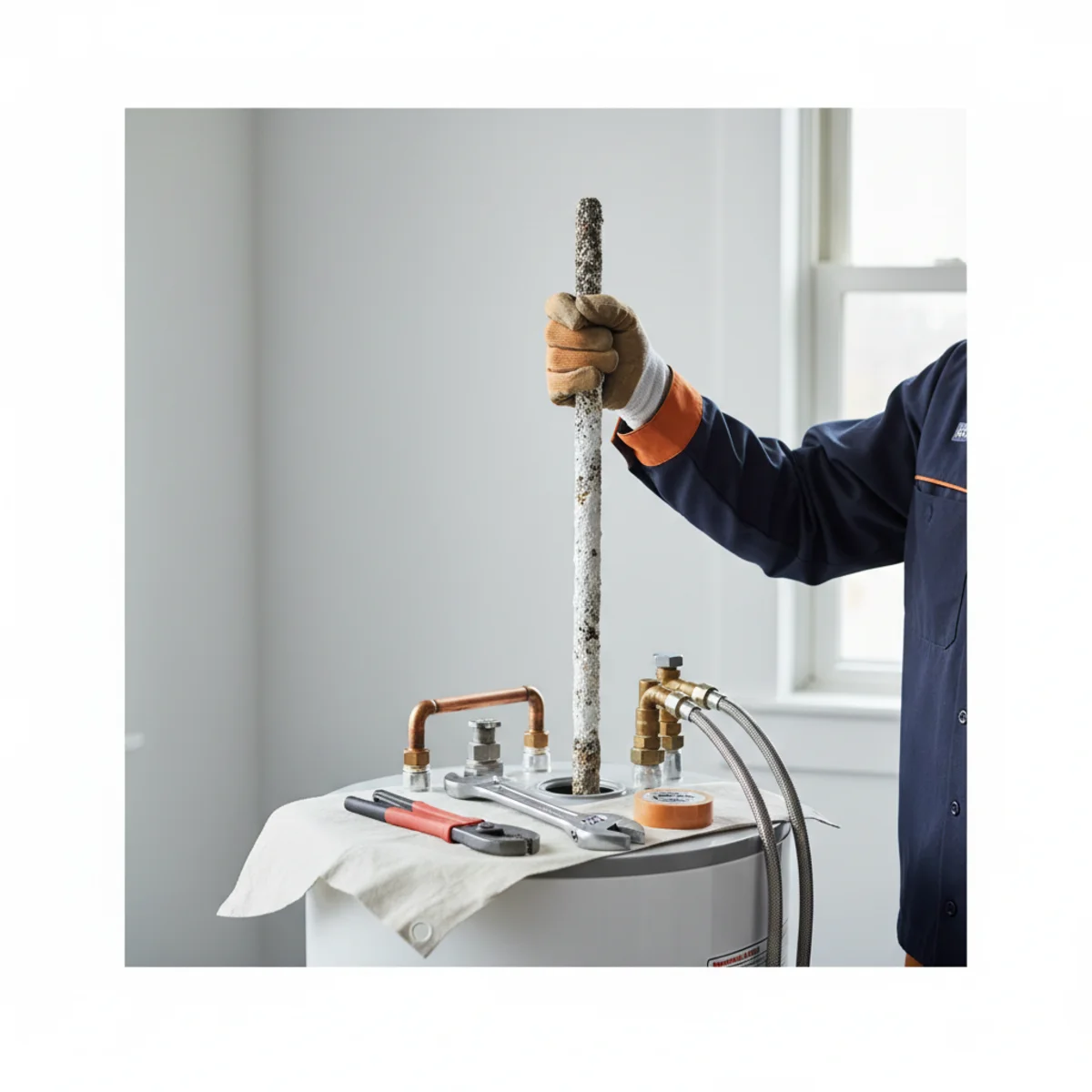
A healthy rod is slightly corroded with a rough surface. A depleted rod is eaten down to the core wire — thin, brittle, and often white or flaky. Once the magnesium or aluminum is gone, the rod can no longer protect the tank. The clock starts on the steel from that point.
Magnesium vs. Aluminum vs. Zinc Rods
Magnesium rods offer the strongest protection and are the best choice for most homes with softened or moderately hard water. They deplete faster but do their job more aggressively.
Aluminum rods are harder and last longer, but they don't protect as actively. They're a better fit for very soft water or water that's been treated through a water softener.
Zinc rods (actually an aluminum-zinc alloy) are specifically useful for homes experiencing sulfur odors in their hot water. The zinc inhibits the bacteria that cause hydrogen sulfide (the rotten egg smell). If that's your problem, a zinc anode is worth considering — though you should also address the root bacterial cause, not just suppress the symptom.
| Material | Protection Strength | Lifespan | Best For |
|---|---|---|---|
| Magnesium | Strongest | 3–5 years in hard water | Most homes; Rancho Cordova hard water |
| Aluminum | Moderate | 4–6 years | Soft or treated water |
| Zinc-aluminum alloy | Moderate | 4–6 years | Sulfur odor reduction |
How Often to Replace the Anode Rod
The standard recommendation is to inspect the anode rod every 2–3 years and replace it when it's depleted by more than half — meaning it's less than half its original diameter. In practice, most rods in Rancho Cordova homes need replacement every 3–5 years.
Several factors accelerate depletion: water softeners (softened water is more aggressive on anodes), higher thermostat settings, and higher water usage. If you've had a water softener installed, plan on inspecting the anode every 1–2 years and replacing it on a shorter cycle.
Warranty note: many tank water heater manufacturers require documented anode rod maintenance to honor their warranty. Check your owner's manual — skipping this maintenance could void coverage on a $600–$1,200 unit.
- Inspect every 2–3 years; replace when depleted more than 50%.
- Hard water households: lean toward 3–4 year replacement cycles.
- Water softener households: inspect annually, replace on 2–3 year cycle.
- Rotten egg odor? Consider a zinc-aluminum rod at next change.
- Check your warranty — many manufacturers require documented anode maintenance.
Signs the Anode Rod Is Gone
You won't see the anode rod from outside the tank, so you have to either pull it for inspection or watch for downstream symptoms.
Rusty or brown hot water is a late-stage sign that the tank itself is corroding. At that point, the anode was depleted long ago and the damage may already be done. Other signs include a sulfur or metallic taste in the hot water, visible rust around the inlet or outlet fittings, and a tank that's making popping or rumbling sounds (from sediment, also a maintenance indicator).
If you're seeing rusty hot water, the decision point is whether to replace the anode and hope the tank lining holds, or to move toward water heater replacement. We'll give you an honest assessment — sometimes the tank is worth saving, sometimes it isn't.
Local Considerations for Rancho Cordova Homeowners
Rancho Cordova's municipal water supply comes largely from the American River via Sacramento County Water Agency, blended with groundwater. It's classified as moderately hard — enough that sediment accumulation and anode depletion are real maintenance concerns, not theoretical ones.
Homes with whole-house water softeners are common in the area. Softened water's lower mineral content actually makes the water more aggressive toward metal surfaces — a counterintuitive fact that surprises many homeowners. If you softened your water in the last few years, your existing anode rod has likely already been consumed faster than a standard schedule would predict.
Our water heater maintenance service includes anode rod inspection and replacement, sediment flush, and a full safety check. We cover the Rancho Cordova area and surrounding communities. Contact us to schedule a maintenance visit before small issues become expensive ones.
Talk to a Local Rancho Cordova Water Heater Pro
Whether you need a repair today or you're planning an upgrade, we'll give you a straight answer and an upfront estimate.
Frequently Asked Questions
It's technically a DIY-accessible repair — you need a 1 1/16" socket, a breaker bar, and the right replacement rod. The hard part is that the rod is often seized from years of mineral buildup, requiring significant torque to break free. On older tanks, forcing it too hard can crack fittings. If in doubt, have a plumber handle it.
A healthy rod is a solid, slightly rough metal cylinder. A depleted rod is eroded down to a thin core wire, often covered in white calcium-carbonate deposits or crumbling gray flakes. If less than half the original metal remains, replace it.
Not always. Rusty hot water means the tank lining is already compromised — the anode was depleted before the rust started. Installing a new rod may slow further corrosion, but it can't repair pitting that's already occurred. A plumber can assess whether the tank is worth maintaining or approaching end-of-life.
The rod itself typically costs $20–$60 depending on type and size. Labor adds to that, especially if the old rod is seized. Call us at (201) 277-9344 for an honest estimate — it's generally a minor service call.
Written by the Water Heater RC Pros team
Practical, local guidance from Rancho Cordova water-heater installers — written for homeowners and kept current with California code. Have a question about your unit? Call (201) 277-9344.