A water heater is the most-ignored appliance in most homes. It sits in the garage, does its job quietly, and gets zero attention until the day it stops working or — worse — starts leaking. The average tank water heater should last 10–12 years with decent maintenance. In Rancho Cordova, where hard water from the American River watershed deposits mineral scale inside the tank every year, an unmaintained unit commonly fails at 7–8 years.
You don't need a technician for all of this. Some tasks are straightforward homeowner checks. Others — like replacing an anode rod or testing an in-service T&P valve properly — are better handled by someone with the right tools and training. This checklist flags which is which.
Run through this once a year. Mark it on the calendar. The 30 minutes it takes annually can easily add 3–5 years to your unit's life.
Annual Visual Inspection — Do This Yourself
A quick visual check takes under five minutes and can catch problems before they become emergencies. Do this every year, or any time you notice something unusual.
- Check the area around the base of the tank for water stains, rust rings, or standing water. Even a small drip is worth investigating.
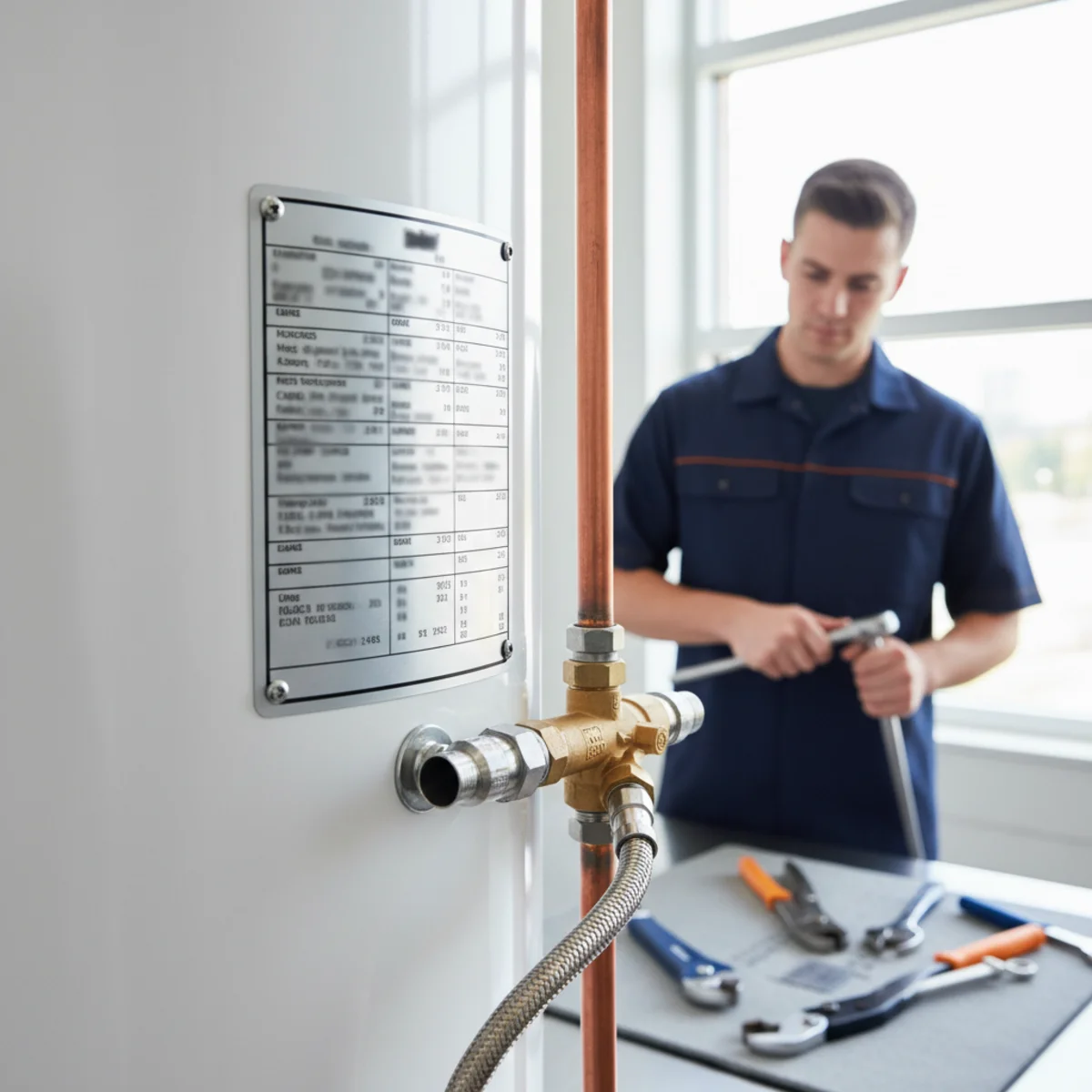
- Inspect the cold-water inlet and hot-water outlet connections at the top of the tank for corrosion, green or white mineral deposits, or visible drips.
- Look at the T&P (temperature and pressure relief) valve and its discharge pipe. The pipe should run to a floor drain or terminate safely — never cap it or route it to a bucket as a permanent fix.
- Examine the seismic straps (California requires two). Make sure both are tight against the unit and the wall anchors look secure.
- Check the drain pan under the unit. It should be dry. Standing water in the pan means a slow leak somewhere.
- For gas units: look at the flue pipe for rust, gaps, or disconnected joints. A compromised flue is a carbon monoxide risk.
- For electric units: make sure the access panels are in place and there are no scorch marks around the element covers.
Flush the Tank Annually — Hard Water Makes This Essential
Sediment — primarily calcium and magnesium carbonate — settles at the bottom of the tank every time cold water enters and heats. In Rancho Cordova's hard water, this buildup is faster than most manufacturers' specs assume. Accumulated sediment insulates the burner or lower element from the water, forcing the heater to run longer to reach temperature. You'll hear it as a popping or rumbling sound during heating cycles.
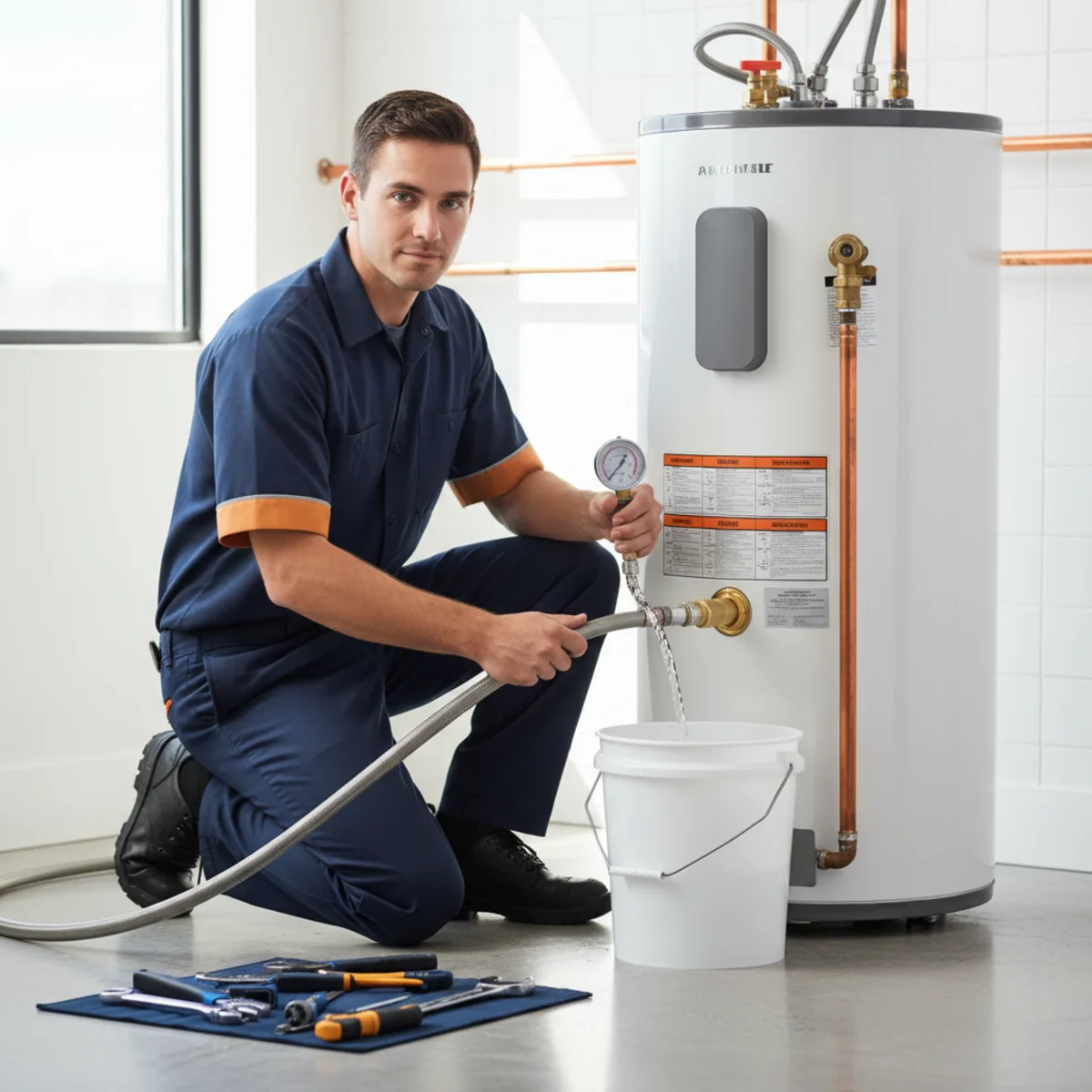
Flushing the tank once a year removes most of that sediment. Connect a garden hose to the drain valve at the base of the unit, run it to a floor drain or outside, shut off the cold-water supply, and open the drain valve. Run until the water clears. On a tank that's gone years without flushing, plan for murky water and possibly a slow drain — heavy sediment can partially block the valve.
Our water heater flushing service handles this cleanly, including dealing with stubborn sediment that won't drain freely from a neglected valve. Annual flushing is also the core of our water heater maintenance visits if you'd rather have it done properly the first time.
Note: if your drain valve starts dripping after you close it, it may need replacement — a common issue on older units after the first time you open them.
Test the T&P Relief Valve
The T&P (temperature and pressure) relief valve is the most important safety device on a tank water heater. It releases water if internal pressure or temperature exceeds safe limits, preventing tank rupture. A valve that's seized open or won't seat after testing needs immediate replacement.
Testing procedure: place a bucket under the discharge pipe. Lift the lever on the T&P valve quickly and let it snap closed. You should hear a brief rush of water and see discharge into the pipe. If no water comes out, the valve is seized and needs replacement. If water continues to flow after you release the lever, the seat is worn — also needs replacement.
Important caveat: on older units, testing a T&P valve that has never been tested can cause it to start dripping afterward because sediment was dislodged from the seat. Many technicians on older units recommend replacing the valve as part of the test rather than testing and hoping. A T&P valve costs relatively little; replacing it proactively is smart on any unit over 6 years old.
Anode Rod Inspection — The Most Overlooked Maintenance Item
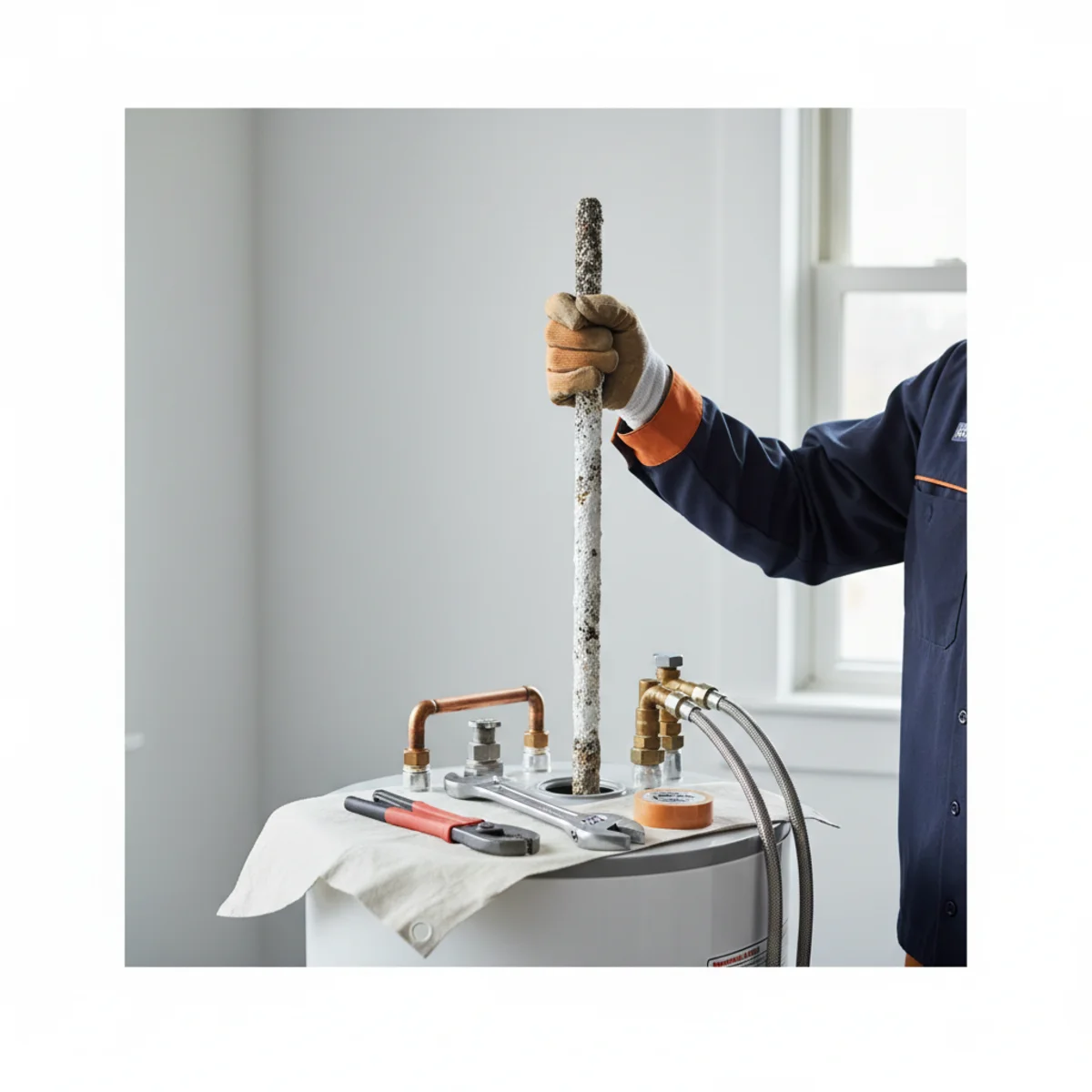
The anode rod is a magnesium or aluminum rod that hangs inside the tank and corrodes sacrificially — meaning it attracts corrosion so the tank walls don't. Once the rod is depleted, the tank itself starts to corrode. In soft-water areas, an anode rod can last 6–8 years. In Rancho Cordova's hard water, expect more like 3–5 years.
Inspecting the anode rod requires removing it — typically a large hex bolt at the top of the unit, sometimes hidden under the sheet metal. If the rod is less than half its original diameter, heavily pitted, or coated with hard calcium scale, it needs replacement. This is not a beginner plumbing job; the bolt is often very tight, and improper handling can crack a fitting.
Have the anode rod inspected every 3 years as part of your maintenance routine. It's a low-cost part that, if replaced on schedule, can easily add several years to your tank's life.
- Magnesium anode rods work best in hard water — the standard choice for Rancho Cordova homes.
- Aluminum rods are acceptable but deplete faster in high-mineral water.
- Powered anode rods (small electric units) are available for homes where the rotten-egg smell is an issue with magnesium rods.
- Water softeners accelerate anode depletion significantly — if you have a softener, inspect the rod annually.
Full Annual Maintenance Checklist Summary
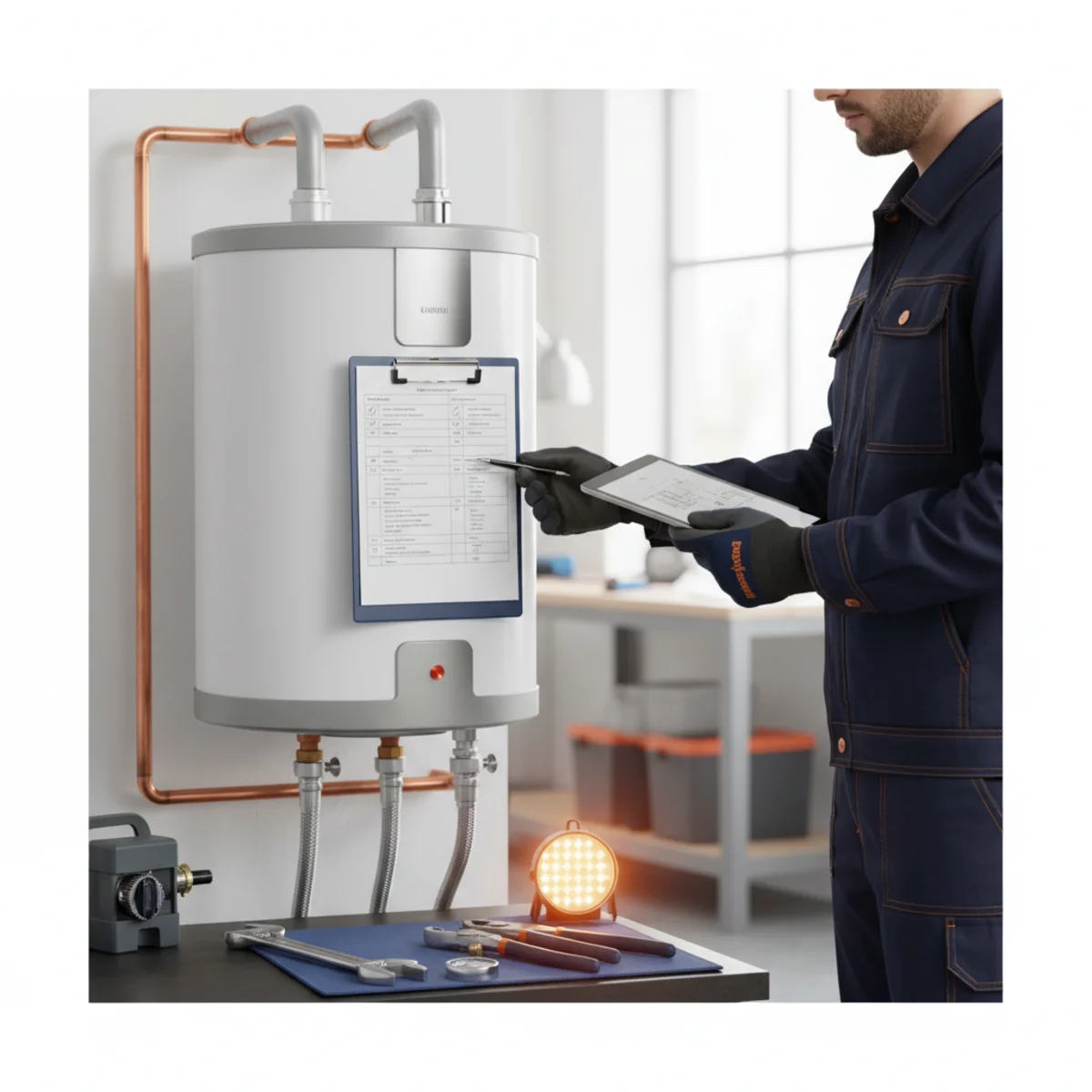
Use this as your yearly reference. Items marked DIY are reasonable homeowner tasks with basic comfort around plumbing. Items marked Pro are better done by a technician.
- DIY — Visual inspection of tank, connections, straps, drain pan, and flue.
- DIY — Listen for rumbling or popping during heating cycles (indicates sediment).
- DIY — Check the T&P valve discharge pipe is clear and terminates safely.
- DIY or Pro — Flush sediment from the tank via the drain valve.
- Pro — Test the T&P relief valve; replace if over 6 years old or if it won't seat.
- Pro — Inspect and replace the anode rod every 3 years (annually if you have a water softener).
- Pro — Check burner flame color on gas units (should be blue with a small yellow tip; a fully yellow flame indicates combustion issues).
- Pro — Inspect the dip tube (the cold-water inlet tube inside the tank) on units over 10 years old for deterioration.
- DIY — Confirm the temperature setting. 120°F is the EPA-recommended setting for most households.
- DIY — Make sure the area around the unit has clearance and nothing is blocking combustion air for gas units.
When to Call a Professional — and Local Permit Notes
Some of the items above are DIY-friendly. Others involve gas connections, high-voltage electrics, or pressurized components where an error creates a real hazard. If you're not confident with any of the pro-tier items, the professional cost is modest compared to a cracked fitting or a T&P valve damaged by improper testing.
Sacramento County permits aren't typically required for routine maintenance like flushing or replacing a T&P valve. A full water heater replacement or relocation does require a permit. When in doubt, ask your technician before work begins.
If you're in Rancho Cordova and want a professional annual maintenance visit, our water heater maintenance service covers all the pro-tier items in one visit. Contact us to schedule.
Talk to a Local Rancho Cordova Water Heater Pro
Whether you need a repair today or you're planning an upgrade, we'll give you a straight answer and an upfront estimate.
Frequently Asked Questions
Once a year is the standard recommendation. In Rancho Cordova's hard water, once a year is the minimum — some households with high usage and older tanks benefit from flushing every 6 months. If you've never flushed and the unit is several years old, do it now regardless of schedule.
That sound is water boiling under sediment buildup at the bottom of the tank. The heater is working harder to push heat through the mineral layer. It's not immediately dangerous, but it is shortening your unit's life and raising your energy bill. Flushing the tank resolves it if the buildup isn't too severe.
Hydrogen sulfide gas produced by sulfate-reducing bacteria reacting with the magnesium anode rod. It's more common when a home sits vacant for a while or in certain water chemistries. Solutions include flushing the tank, replacing the magnesium rod with an aluminum or powered anode rod, or temporarily raising the water temperature to 140°F for pasteurization (use caution around young children with scalding risk).
For most homeowners, yes. A technician can inspect the anode rod, test the T&P valve safely, check burner or element performance, and catch early corrosion signs — things that are difficult to assess without the right tools. The cost of one annual visit is usually far less than the cost of an emergency replacement.
Visual inspection, temperature checks, and tank flushing are DIY-accessible for homeowners comfortable with basic plumbing. Anode rod replacement, T&P valve testing on older units, and gas burner inspection involve more risk and are better handled professionally. Starting with the DIY items is always a good move.
Written by the Water Heater RC Pros team
Practical, local guidance from Rancho Cordova water-heater installers — written for homeowners and kept current with California code. Have a question about your unit? Call (201) 277-9344.