A water heater rarely announces its age. There's no odometer, no birthday label, and no dashboard warning light. What's there is a serial number — and buried in that serial number is the manufacture date, if you know how to read it. Knowing the age of your unit is the single fastest way to figure out whether you're living on borrowed time.
The average tank water heater lasts 8–12 years. At the 10-year mark, the risk of a failure — leak, burst, or flooding — climbs noticeably. In Rancho Cordova, where hard Sacramento Valley water accelerates sediment buildup and anode rod depletion, some units don't make it to 10 years without problems. Knowing your heater's age lets you budget for replacement proactively rather than responding to a Sunday-afternoon flood.
Most major brands encode the manufacture year and month directly in the serial number. The tricky part is that every brand uses a different format. This guide covers the most common ones so you can find your date in a couple of minutes.
How to Find Your Serial Number
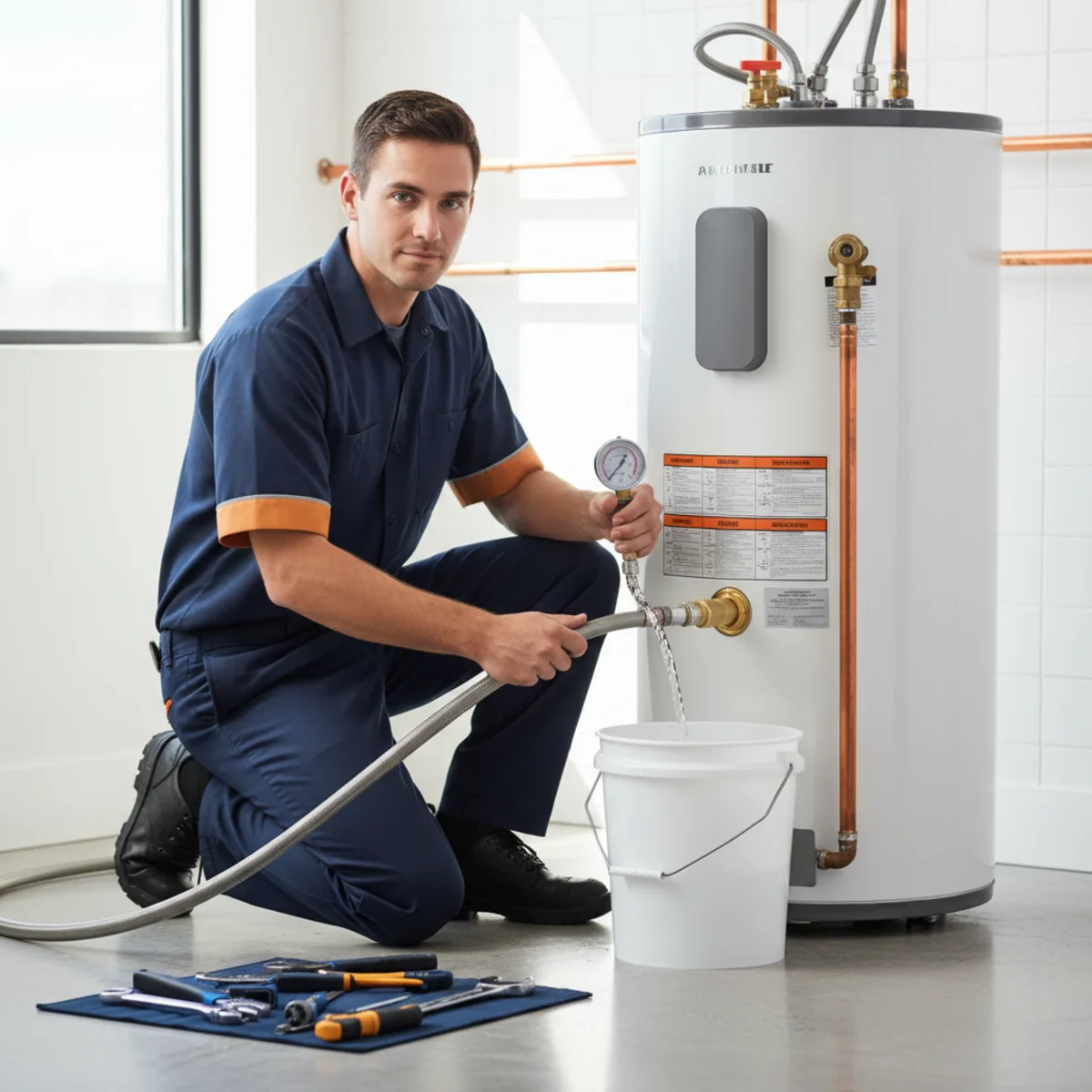
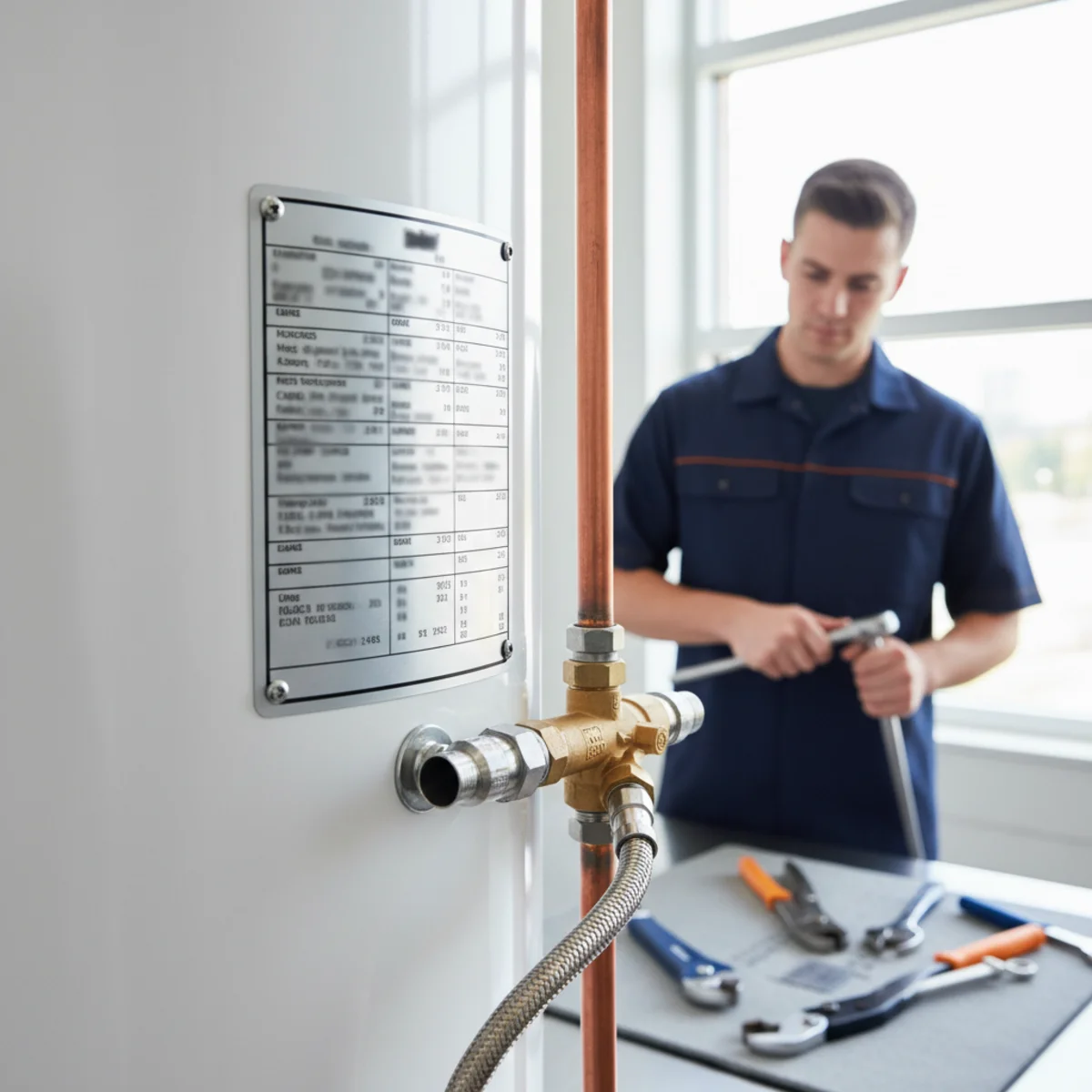
The serial number is on a data plate affixed to the unit — usually near the top of the tank, on the front or side. On older units it may be printed on a paper label under a clear cover; on newer units it's often a sticker or embossed metal plate. Grab a flashlight if the unit is in a dim corner.
The data plate also shows the model number, the fuel type, the BTU input or wattage, the tank capacity in gallons, and often the working pressure rating. All of that is useful, but for age determination you only need the serial number.
Decoding by Brand
Here are the most common formats for brands you're likely to encounter in Rancho Cordova and Sacramento County homes. Formats occasionally change between production runs, so if your serial number doesn't match the pattern described, try the manufacturer's website or call the brand's consumer line with the full serial.
Rheem and Ruud
Rheem and Ruud (sister brands) use a serial format where the first two characters indicate the week of manufacture and the next two indicate the year. A serial starting with 0118 means week 01 of 2018 — January 2018. Some older Rheem serials used a letter for the month followed by a two-digit year: 'A' = January, 'B' = February, continuing through 'M' = December (skipping 'I'). A serial starting with A18 in that older format means January 2018.
Bradford White
Bradford White uses a letter-based system where the first letter of the serial encodes the year on a 20-year rotating cycle. The second character encodes the month. The year cycle runs: C = 1984/2004/2024, D = 1985/2005/2025, E = 1986/2006/2026, F = 1987/2007, G = 1988/2008, H = 1989/2009, J = 1990/2010, K = 1991/2011, L = 1992/2012, M = 1993/2013, N = 1994/2014, P = 1995/2015, R = 1996/2016, S = 1997/2017, T = 1998/2018, U = 1999/2019, V = 2000/2020, W = 2001/2021, X = 2002/2022, Y = 2003/2023. The month letter runs A = January through M = December, skipping I. A serial starting with TF means year 1998 or 2018, month June — use the broader unit context to determine which cycle applies.
A.O. Smith and American Water Heaters
A.O. Smith and American Water Heaters (related brands) typically embed the year and month in positions 3–6 of the serial number. The third and fourth characters represent the year (for example, 18 = 2018) and the fifth and sixth represent the month (01 through 12). Some A.O. Smith serials use a different encoding — if the serial starts with two letters, the second letter is often the year on a rolling alphabetical key. When in doubt, A.O. Smith's website has a serial number lookup tool.
State Water Heaters
State Water Heaters (part of the A.O. Smith family) use a format similar to A.O. Smith. The first two alpha characters are a plant or product code; the next four digits are the year and month. For example, digits 1804 following the alpha prefix mean April 2018.
Kenmore (Sears)
Kenmore water heaters were manufactured by several OEM brands over the years — commonly Whirlpool or A.O. Smith. The first three digits of the model number identify the underlying manufacturer; from there, use the decoding method for that brand.
What to Do Once You Know the Age
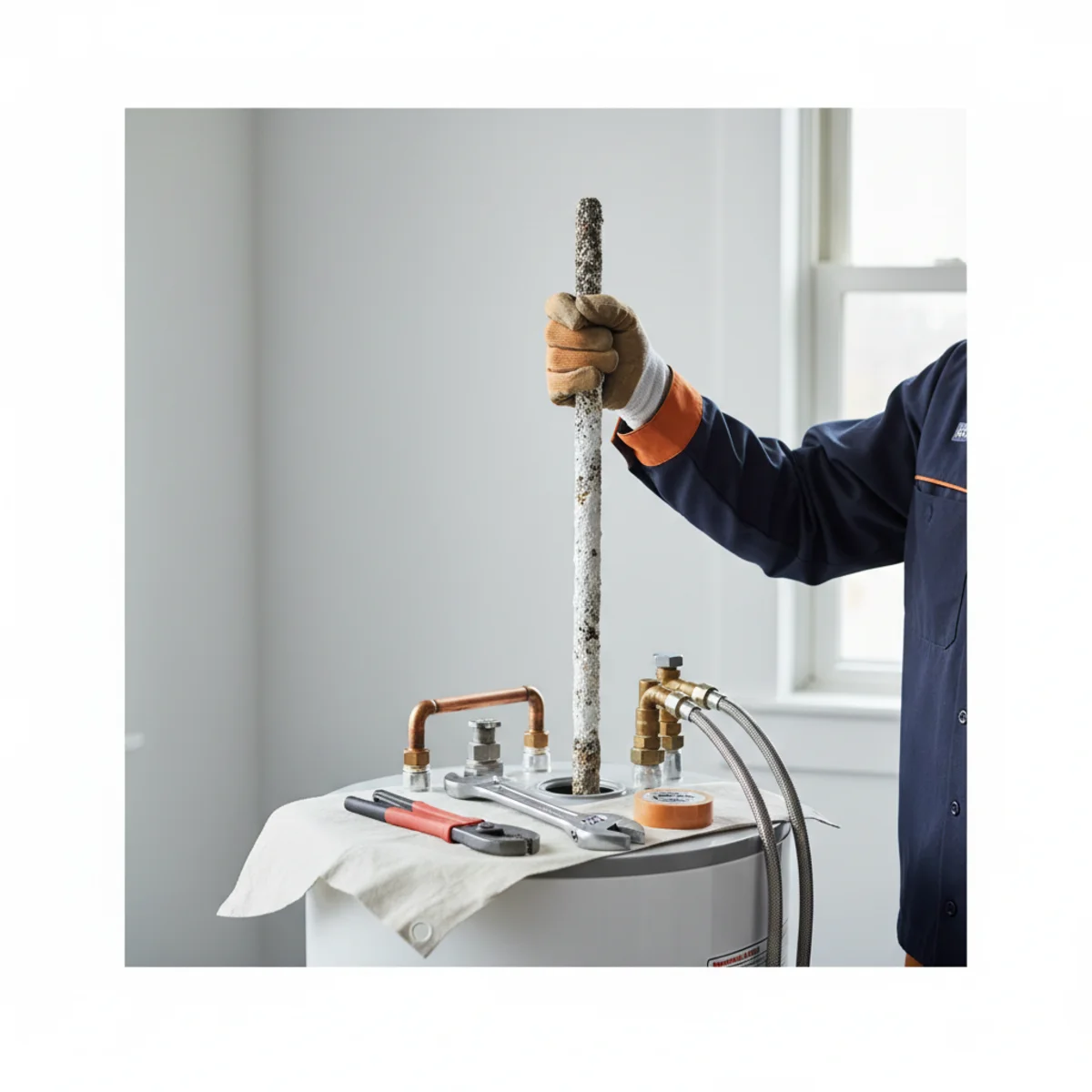
Under 6 years old: focus on maintenance. Annual flushing and periodic anode rod inspection keep the unit in peak shape and extend its useful life. A routine water heater maintenance visit is a low-cost way to stay ahead of problems.
6–9 years old: stay watchful. Inspect the area around the unit regularly for moisture or rust staining on the floor or lower tank jacket. Schedule an anode rod check if it hasn't been done. Start budgeting mentally for replacement in the next few years.
10 years or older: start planning a replacement now, before the decision is made for you by a leak. At this age in Rancho Cordova's hard-water environment, the anode rod is often fully depleted, sediment buildup can be significant, and the risk of tank failure is meaningfully elevated. A proactive replacement on your schedule is far less disruptive than an emergency call after a flood.
Beyond age, watch for these signs regardless of how old the unit is: rusty or discolored hot water, a popping or rumbling sound during heating (sediment boiling off the tank bottom), visible corrosion at the fittings, or any sign of moisture at the base of the tank.
The Sacramento Valley Hard Water Factor
Rancho Cordova and the broader Sacramento Valley are served by water with moderate to high mineral content — calcium and magnesium that accumulate as scale on heating elements and at the tank bottom. That scale insulates the burner from the water, forcing the unit to run longer to heat the same volume and accelerating wear on the tank. In areas with harder water, a unit that might last 12 years in soft-water regions sometimes needs replacement at 8–9 years.
Annual sediment flushing slows that buildup. If your current unit is past 8 years and has never been flushed, a flush is still worthwhile — it buys time — but the older the unit, the more cautious a technician will be about flushing, because disturbing old sediment can sometimes dislodge scale that was effectively sealing a minor seam.
Our water heater replacement team works throughout Rancho Cordova and can assess whether your unit is a maintenance candidate or a replacement candidate. Contact us to talk through what makes sense for your home.
Talk to a Local Rancho Cordova Water Heater Pro
Whether you need a repair today or you're planning an upgrade, we'll give you a straight answer and an upfront estimate.
Frequently Asked Questions
Call the manufacturer's customer service line with the full model and serial number — most brands can look it up in their production database and tell you the exact manufacture date. The brand name is usually on the data plate or the outer jacket of the tank.
Not necessarily. Water heaters can sit in distribution for several months before installation. A unit manufactured in January 2015 might have been installed in August 2015. For warranty purposes, most manufacturers start the warranty clock from the purchase or installation date, not manufacture. Check the original permit or your home inspection report for the installation date if it matters.
Once you have the manufacture date and the brand, look up the warranty term for your specific model — usually 6 or 12 years on the tank for residential units. Compare that against the date. Keep in mind that labor is rarely covered after the first year and that warranty service usually requires documentation of proper installation.
There's no universal threshold, but once a tank unit is 10 years old and experiencing problems — rusty water, leaks, inconsistent heating — replacement is usually the better investment. A major repair on a 10-year-old tank may cost several hundred dollars, and you'll still have a 10-year-old tank. A water heater repair technician can give you an honest read on whether the remaining life justifies the repair cost.
Check the original permit documentation from your home purchase or the last inspection record. If none exists and you have no idea when it was installed, treat the unit as aged — budget for replacement and watch for warning signs closely.
Written by the Water Heater RC Pros team
Practical, local guidance from Rancho Cordova water-heater installers — written for homeowners and kept current with California code. Have a question about your unit? Call (201) 277-9344.