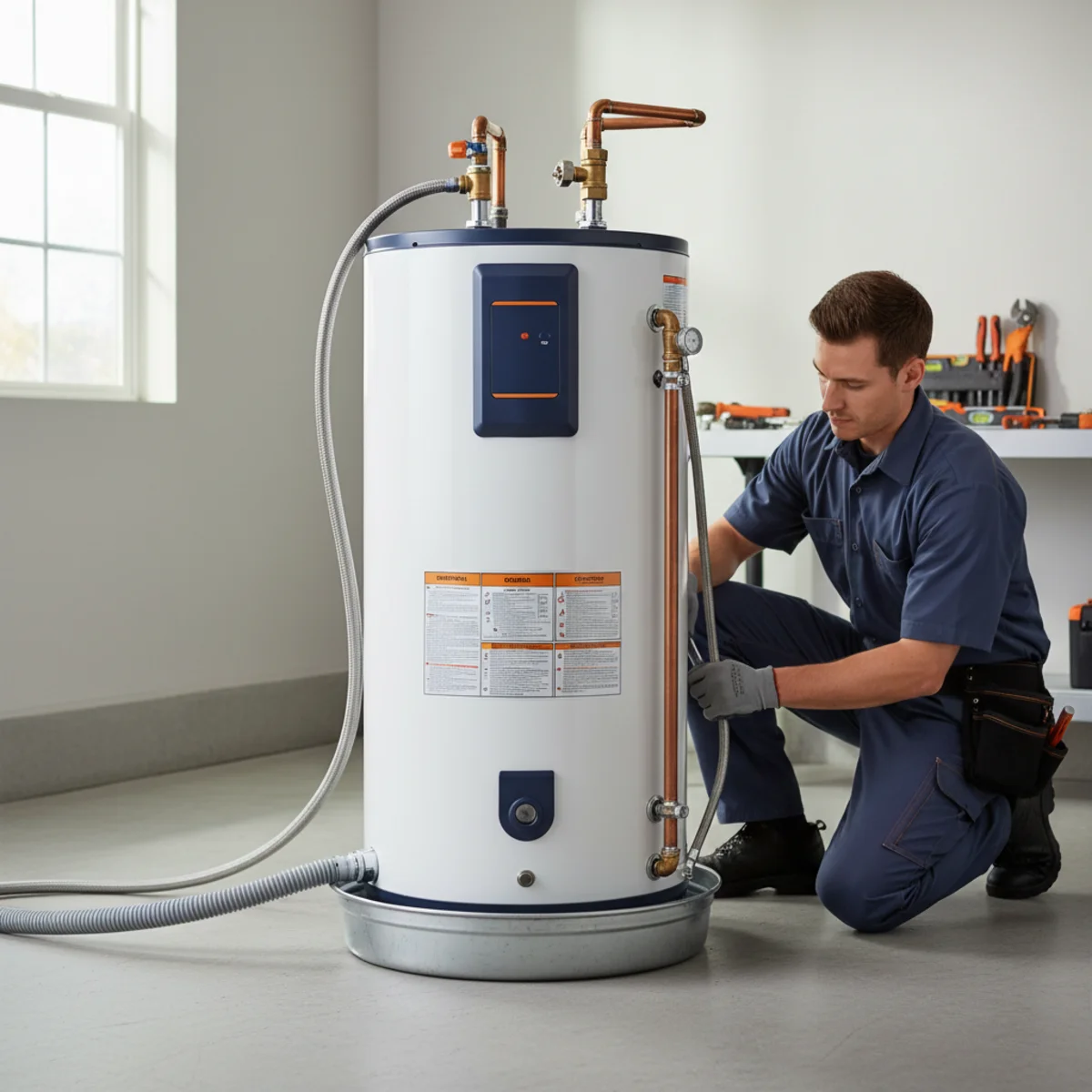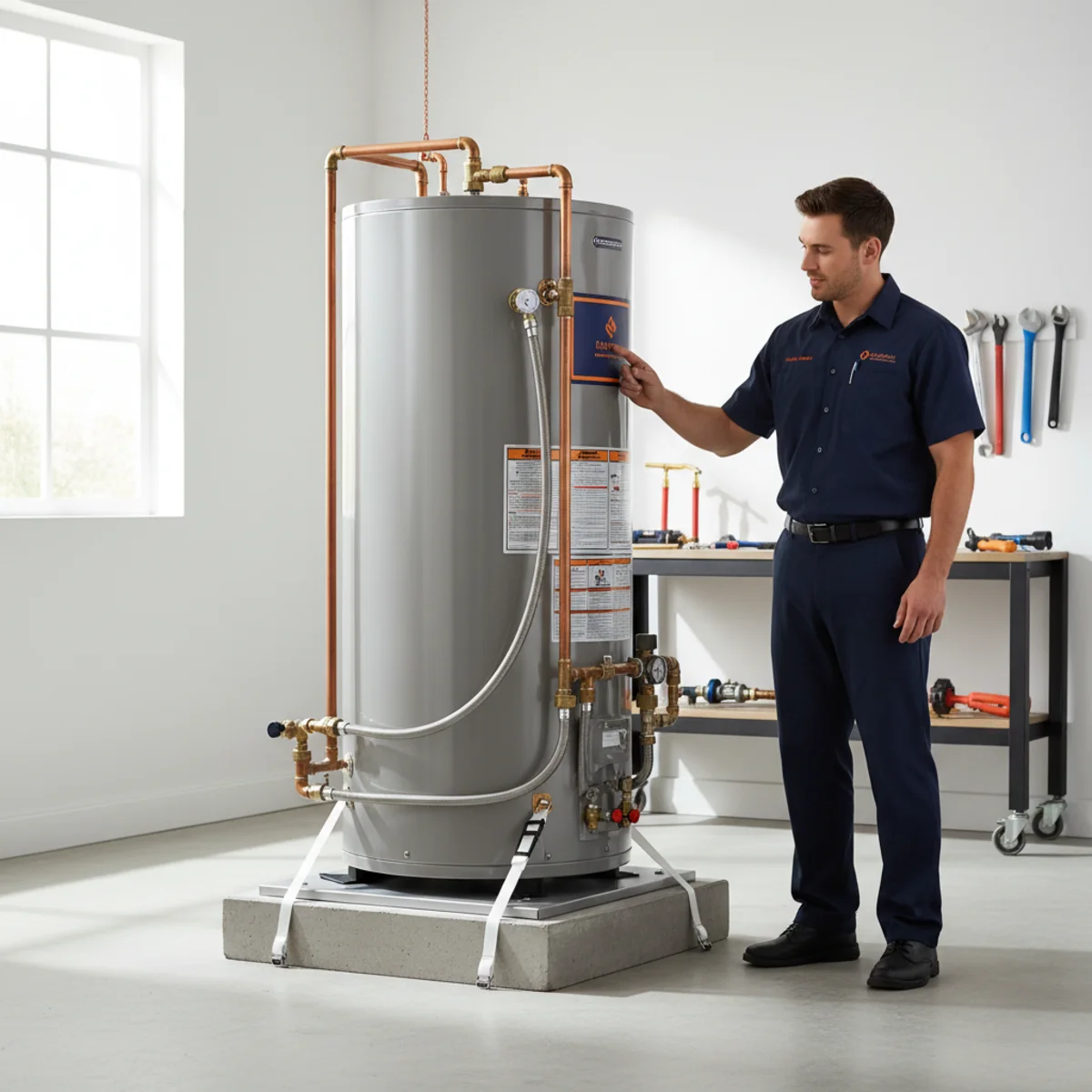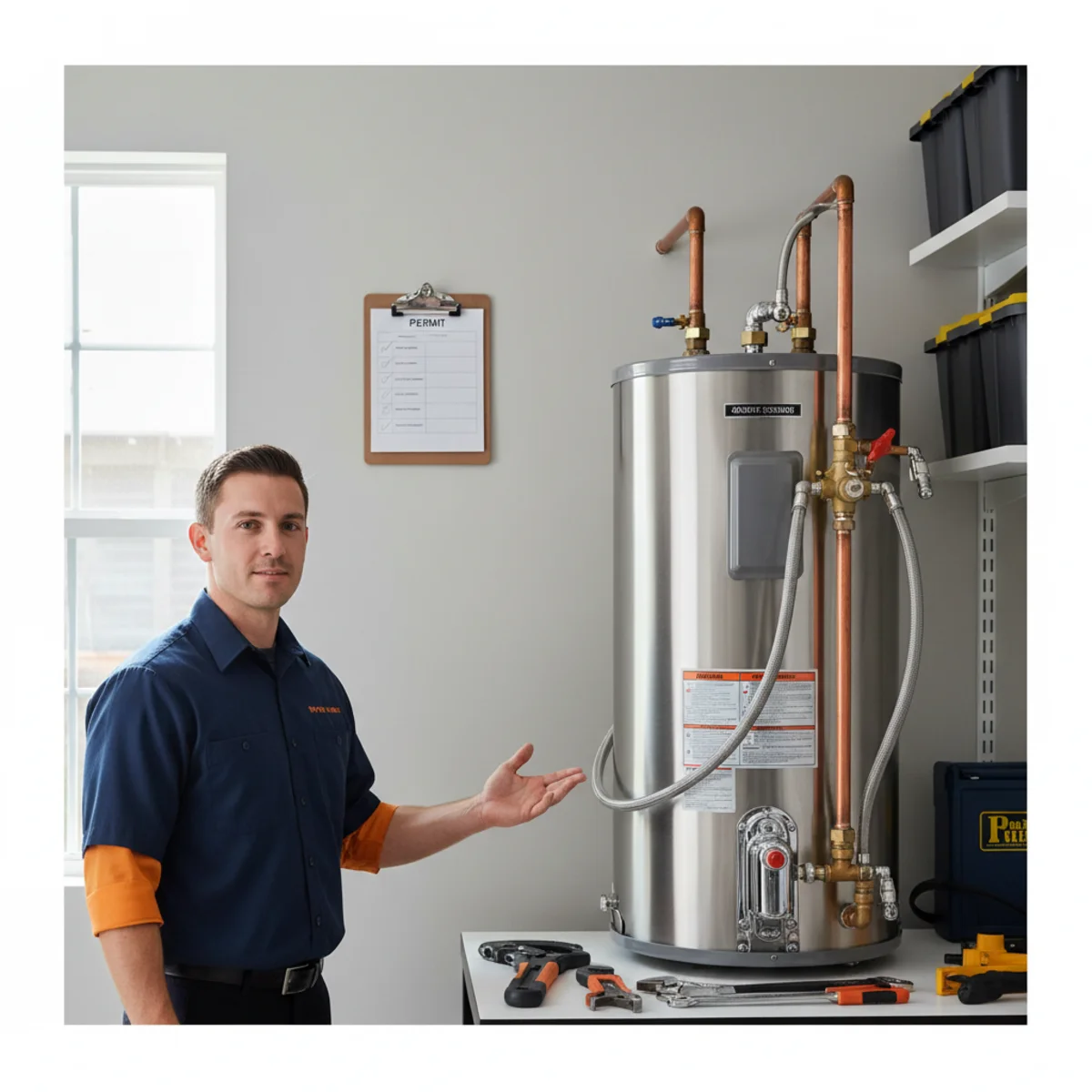
Here's something most homeowners don't know: every time your water heater heats a tank of water, the water expands. Cold water is denser than hot water. In a standard 50-gallon tank, heating from 60°F to 120°F causes the water to expand by about half a gallon. That water has to go somewhere.
In older homes with open plumbing systems, excess pressure could push back toward the municipal main — the pressure relief was built in. But a check valve or pressure-reducing valve (PRV) on your supply line creates a closed system. In a closed system, there's nowhere for the expanded water to go except into the piping and the water heater itself. Over time, this thermal expansion stresses fittings, causes the T&P valve to drip, and shortens the life of the tank.
An expansion tank — a small pressurized tank installed on the cold-water supply line — solves this by giving the expanded water a place to go. California plumbing code requires one in most closed-system situations. If your home has a PRV or backflow preventer on the supply, read on.
How an Expansion Tank Works
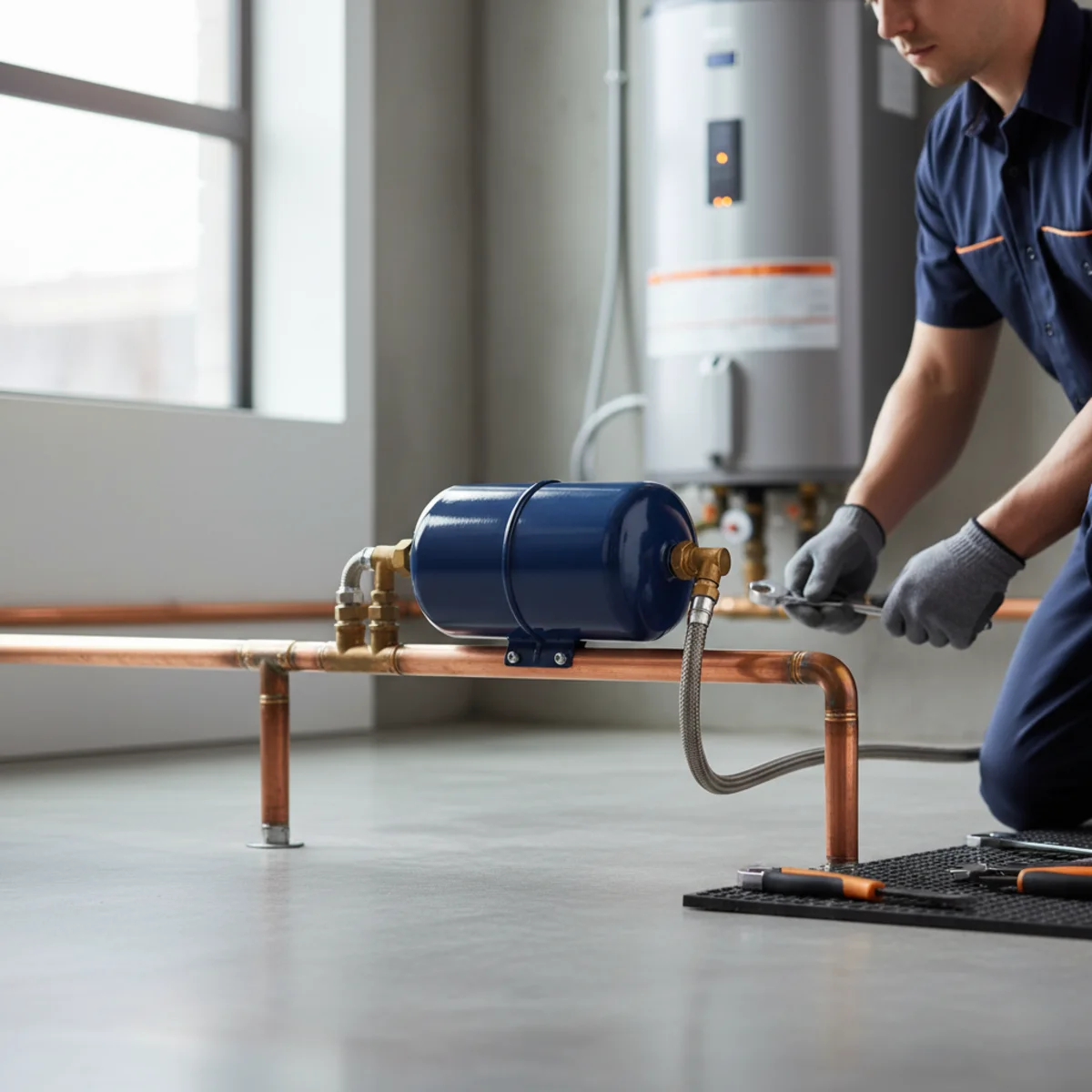
An expansion tank is a small steel tank — typically 2 to 5 gallons — divided internally by a rubber diaphragm or bladder. One side connects to your cold-water supply line near the water heater. The other side contains compressed air, pre-charged at the factory to match your household water pressure.
When the water heater heats up and water expands, the excess water volume pushes into the expansion tank, compressing the air bladder. When hot water is used and pressure drops, the bladder pushes the stored water back into the system. The expansion tank absorbs and releases this pressure fluctuation repeatedly, thousands of times over its service life.
The result is that your piping, fittings, and water heater tank operate within a stable pressure range rather than spiking every heating cycle. Your T&P valve stops dripping. Your fittings last longer. The water heater is under less stress.
Open vs. Closed Plumbing Systems
Whether you need an expansion tank depends on whether your plumbing system is open or closed. This is the single most important factor.
An open system allows expanded water to flow back toward the municipal main. The city's water main absorbs the pressure fluctuation. Most homes built before the 1980s had open systems.
A closed system uses a device that prevents backflow into the city main — either a pressure-reducing valve (PRV), a check valve, or a backflow preventer. If your home has any of these — and most newer Rancho Cordova homes do — you're on a closed system and your code authority likely requires an expansion tank.
- PRV on your supply line: almost certainly a closed system.
- Check valve on the meter: closed system.
- Backflow preventer: closed system.
- Not sure? Your plumber can check pressure response at the hose bib.
California Code Requirements
The California Plumbing Code requires a thermal expansion control device — typically an expansion tank — on any water heater installation where a check valve, backflow preventer, or pressure-reducing valve creates a closed system. This requirement applies to new installations and replacements.
In practice, this means most permit-required water heater replacements in Sacramento County trigger the expansion tank requirement. If your installer pulls a permit — as they should — the inspector will check for it.
The expansion tank must also be sized correctly. A tank that's too small won't absorb enough volume to keep pressure in range. Sizing depends on the water heater capacity, the system pressure, and the pre-charge air pressure in the expansion tank. Our water heater expansion tank installation service includes proper sizing as part of the job.
Codes are updated periodically, and Sacramento County may adopt local amendments. Confirm current requirements with a licensed installer or the building department before your project — this article is educational, not a substitute for a permit inspection.
Signs You May Not Have One (or Have a Failed One)
An expansion tank is passive — it doesn't make noise or use energy, so you won't know it's missing until you see symptoms. Here's what to look for:
- T&P valve dripping regularly: the T&P (temperature-and-pressure) relief valve is doing the job an expansion tank should be doing. It's a safety valve, not a pressure regulator — this pattern will wear it out.
- Water hammer or banging pipes when the heater shuts off.
- Pressure fluctuations throughout the house — faucets that surge or drop.
- Tank failing prematurely (under 8 years in a hard-water area like Rancho Cordova).
- A plumber or inspector flagging the issue during a home sale.
Installation and Maintenance
An expansion tank is installed on the cold-water supply line going into the water heater — typically with a tee fitting above the shutoff valve. It should be supported properly if mounted horizontally, though vertical mounting is generally preferred for bladder longevity.
Expansion tanks have a service life of roughly 5–10 years. The internal bladder eventually fatigues and loses its elasticity, at which point the tank becomes waterlogged and useless. A simple check: tap the tank. A healthy tank sounds hollow; a failed tank sounds completely full. You can also check the Schrader valve on the air side — if water comes out instead of air, the bladder has failed.
When we install a new water heater in Rancho Cordova, we assess whether an expansion tank is required and install one sized to the system. If you're buying a replacement unit and want to make sure everything is done right, reach out here.
What Does an Expansion Tank Cost?
We don't publish fixed prices online because installation costs vary by accessibility, existing supply-line configuration, and whether any valve upgrades are needed. That said, an expansion tank is one of the more affordable code-compliance items — the tank itself is relatively inexpensive, and installation typically takes under an hour when done alongside a water heater replacement.
If your current water heater installation did not include an expansion tank and you're on a closed system, it's worth adding one now. The cost of a failed T&P valve, premature tank failure, or a rejected home-sale inspection will exceed the cost of the expansion tank several times over. See our water heater installation service page for more context on what a full compliant install includes.
Talk to a Local Rancho Cordova Water Heater Pro
Whether you need a repair today or you're planning an upgrade, we'll give you a straight answer and an upfront estimate.
Frequently Asked Questions
The quickest check: look for a pressure-reducing valve (a bell-shaped device) on your main water supply line where it enters the house. If you have one, you're almost certainly on a closed system. A plumber can confirm with a pressure test.
You can, but you shouldn't. The T&P valve is a safety device designed to open only in dangerous conditions. Using it as a routine pressure relief will wear the valve seat and eventually cause it to fail open or leak continuously — then you have a bigger problem.
Minimal. Check the pre-charge air pressure annually with a tire pressure gauge — it should match your household supply pressure. Tap the tank to confirm it's not waterlogged. A well-maintained expansion tank lasts 5–10 years.
Yes. The requirement is based on the plumbing system (closed vs. open), not the fuel type. Whether you have a gas tank, electric tank, or tankless unit, a closed system requires a thermal expansion control device.
If your home is on a closed system, the installation may not be code-compliant. Have a licensed plumber verify whether one was required. If it was and it was omitted, it can be added — it doesn't require replacing the water heater.
Written by the Water Heater RC Pros team
Practical, local guidance from Rancho Cordova water-heater installers — written for homeowners and kept current with California code. Have a question about your unit? Call (201) 277-9344.