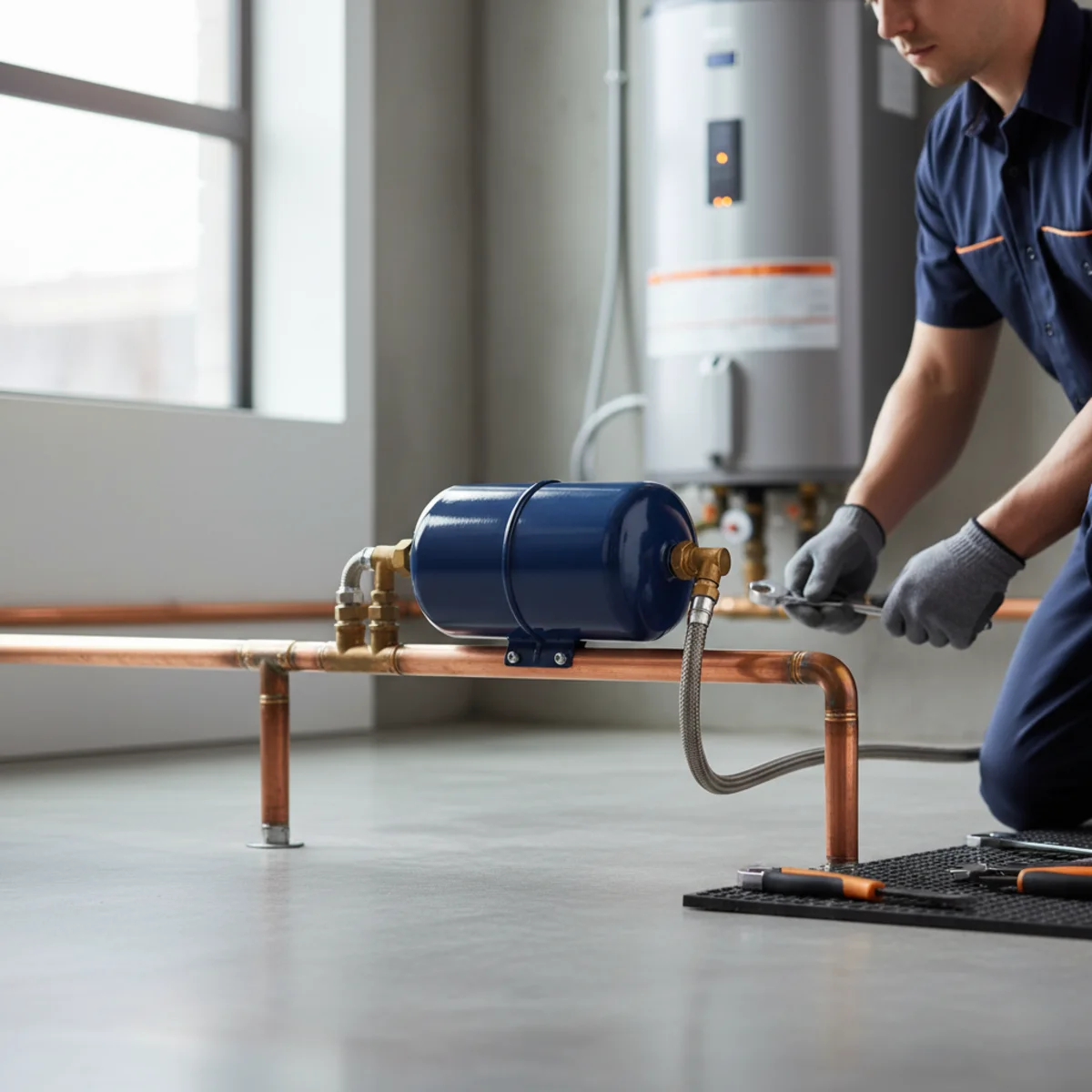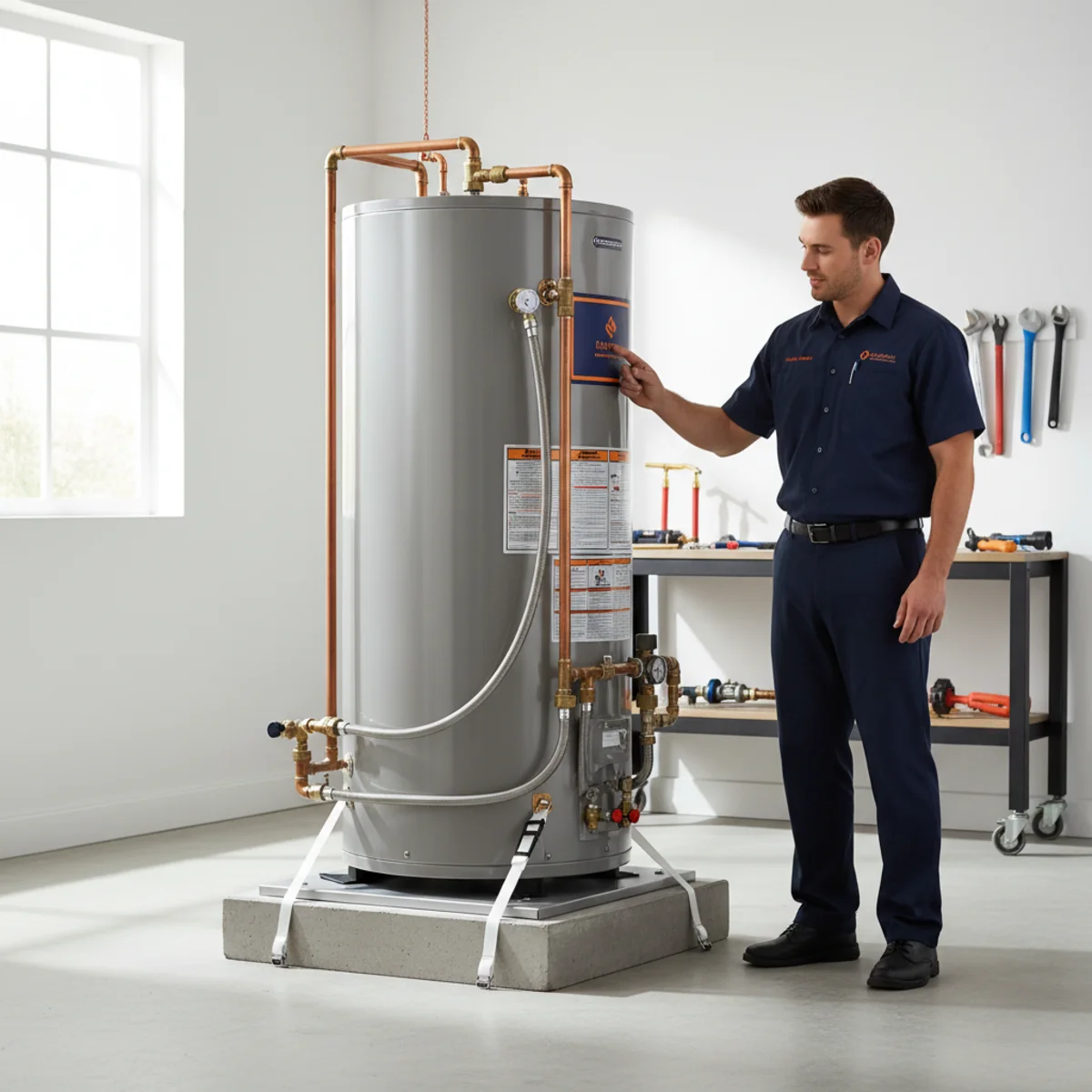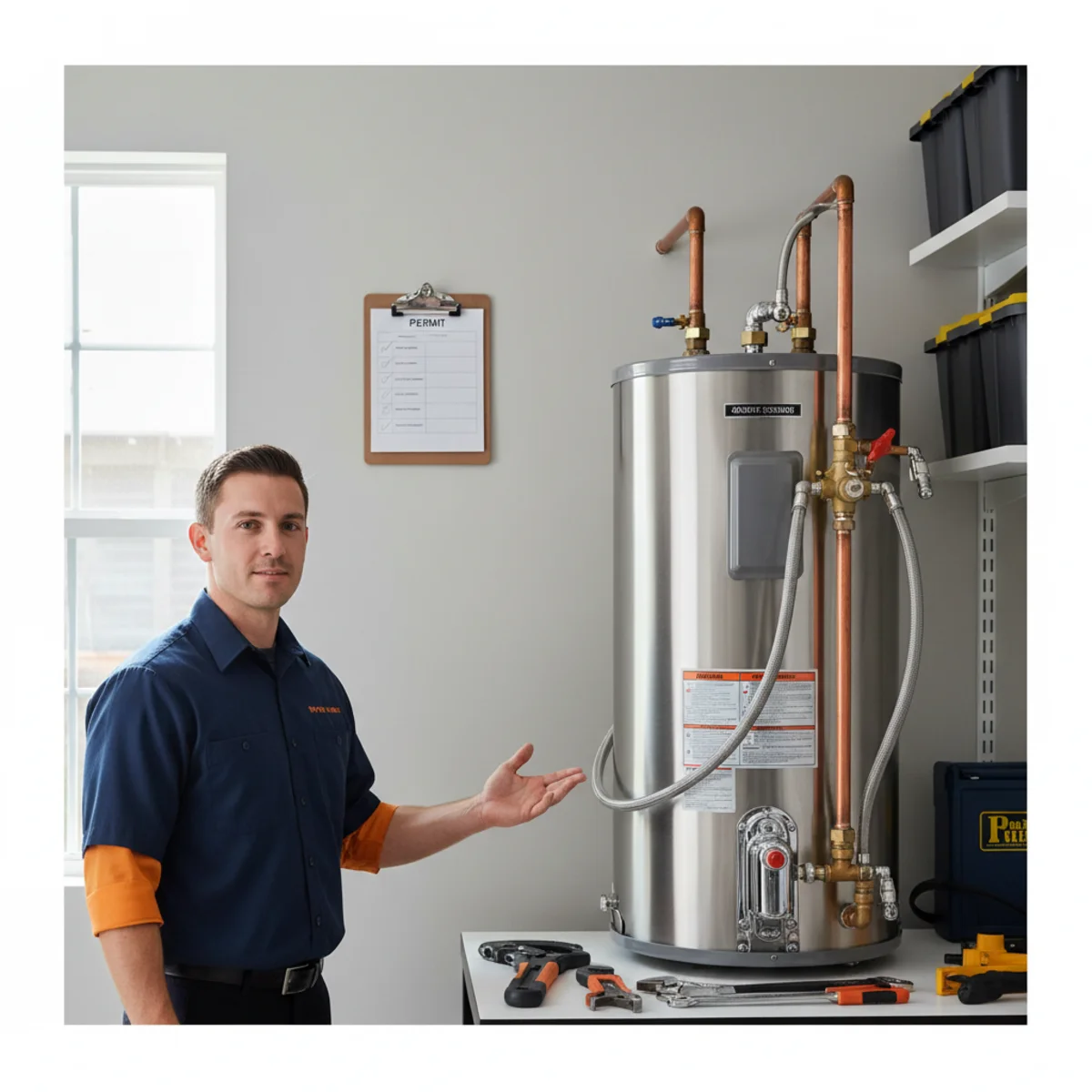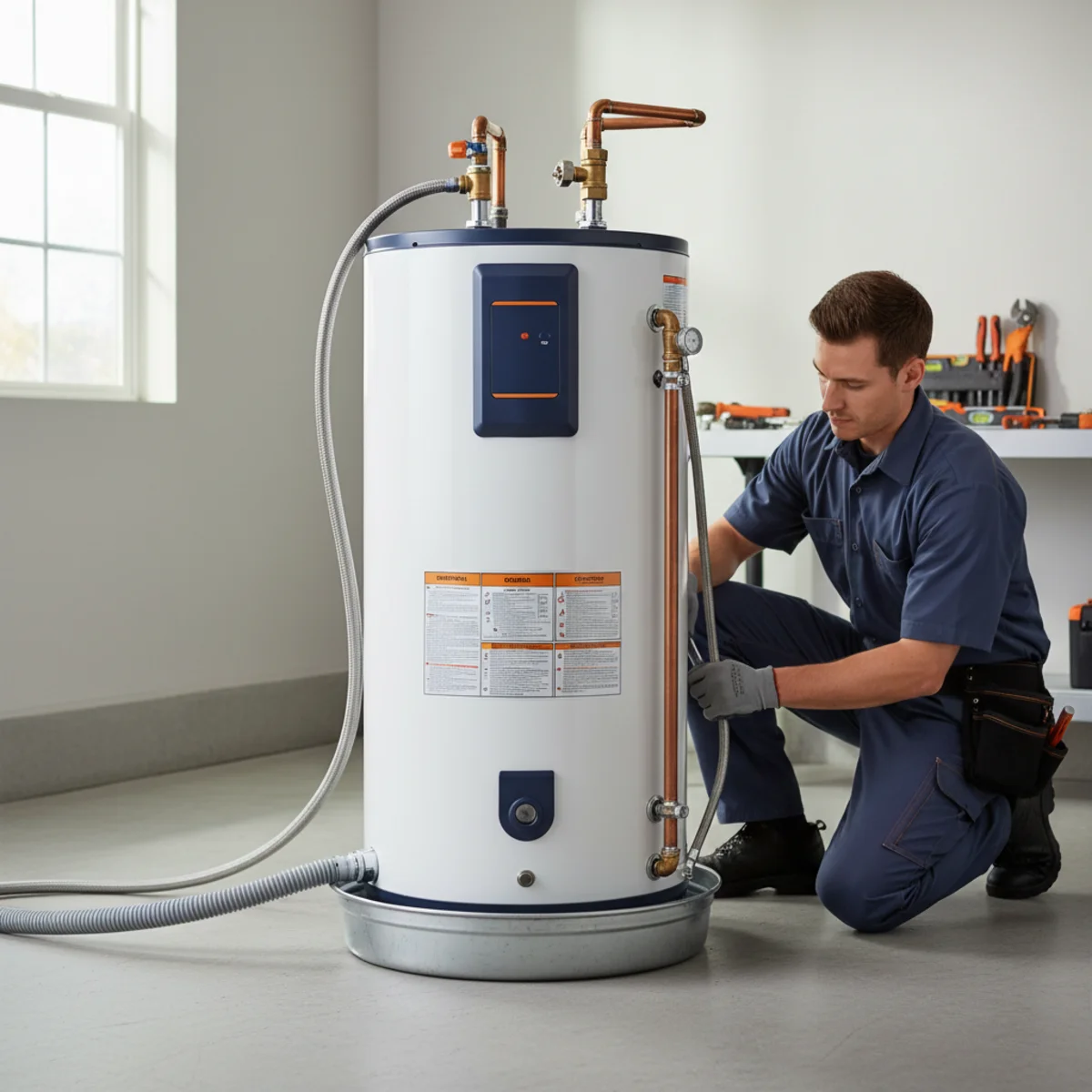
A drain pan is exactly what it sounds like: a shallow pan that sits under the water heater to catch drips, minor leaks, and condensation. It sounds like a simple accessory. In practice, it's the difference between catching a slow T&P drip and watching it migrate under the subfloor for six months.
California Plumbing Code is explicit about when a drain pan is required — and for many Rancho Cordova homes with interior utility closet installs or units above finished living space, the code triggers. What happens without one and without a proper drain line isn't theoretical: it's mold in the walls, damaged subfloor, and a homeowner's insurance headache.
This guide covers when a drain pan is required, what it has to drain to, and the practical reality of getting this right on an older installation.
When Does California Code Require a Drain Pan?
The California Plumbing Code requires a drain pan under a water heater when the unit is installed in a location where leakage could cause damage to the structure or adjacent areas. In plain terms: if the water heater is inside the living envelope of the home — in a closet, a utility room, an attic, a first-floor space above a crawl space — a drain pan is required.
Garage installations in Rancho Cordova are the common exception: a water heater sitting on a concrete garage floor typically doesn't require a drain pan because leakage drains safely to the floor. But "typically" is doing work in that sentence — if the garage floor slopes toward the interior, or if there's finished space nearby, the inspector may require one anyway.
Building codes are updated regularly and Sacramento County may adopt local amendments. This article is educational — confirm current requirements with a licensed installer or the Sacramento County Building Inspection Division before any installation.
What the Pan Has to Drain To
A drain pan by itself doesn't solve the problem — it just collects the water. Without a drain line, it fills up and overflows, creating the same damage you were trying to prevent but more slowly.
California code requires that the drain pan be piped to an adequate drain, to the exterior of the building, or to another appropriate location. The drain line must be made of appropriate material (metal or CPVC is typical), must slope continuously to the discharge point, and must terminate in a visible location so that a discharge is noticeable.
The visible termination requirement is important: if the drain line is routed into a wall cavity or to an unseen location, you won't know the pan is draining until the wall is soaked. Proper installation routes the drain to a floor drain, a standpipe, or the exterior — somewhere you'll see it if something goes wrong.
- Pan material: galvanized metal or plastic — must be corrosion-resistant.
- Pan depth: typically 1.5 to 2 inches minimum.
- Drain line: minimum 3/4-inch diameter, continuous slope to discharge point.
- Discharge location: floor drain, standpipe, exterior — visible and unobstructed.
- No trapped or low-point sections in the drain line (water won't flow uphill).
What Happens Without One
The failure mode is slow and invisible. A T&P valve that drips occasionally, a fitting that seeps overnight, a little condensation during cool winter mornings — none of it is dramatic until the day you find soft spots in the floor or a black spot on the drywall behind the closet.
In Rancho Cordova, the combination of hard water mineral deposits and occasional condensation from temperature swings (cool winter nights, warm days) means even well-maintained units produce some moisture. A drain pan intercepts it. Without one, that moisture gets absorbed by framing, subfloor, and drywall.
From an insurance standpoint, gradual water damage from a missing drain pan — where the installation didn't meet code — may be treated as a maintenance failure rather than a sudden covered loss. That's a distinction that matters when you're looking at a mold remediation bill.
Retrofit: Adding a Pan to an Existing Installation
If your water heater is in a closet or interior space and doesn't have a drain pan, you have two options: add one during the next service or replacement, or retrofit one now without replacing the unit.
Retrofitting a pan under a live water heater is possible but awkward — the unit has to be lifted and supported while the pan is slid underneath. It's a two-person job at minimum and easier when combined with other service work. The drain line is the harder part: routing it to a proper discharge point in an existing closet often requires cutting into drywall or running it to the exterior.
When we do a full water heater installation in Rancho Cordova, the drain pan and drain line are part of the scope when code requires them. If you want to add one to an existing setup, our drain pan installation service handles the assessment and installation.
Drain Pan vs. Leak Detection Sensor
A leak detection sensor (a small electronic device placed in the pan or near the unit) is a useful addition but not a substitute for a properly drained pan. The sensor alerts you early — before the pan fills — but if the drain line isn't in place, early warning still requires you to act quickly before the pan overflows.
For interior installations above finished living space, the combination of drain pan + properly routed drain line + leak sensor is the belt-and-suspenders approach. For a garage install on concrete, a leak sensor alone can be sufficient. Assess based on what's at risk below and adjacent to the unit.
If you're in Rancho Cordova and unsure whether your installation meets current code, contact us for a quick assessment. We'll tell you what's there, what's required, and what it takes to close the gap.
Talk to a Local Rancho Cordova Water Heater Pro
Whether you need a repair today or you're planning an upgrade, we'll give you a straight answer and an upfront estimate.
Frequently Asked Questions
Usually not, as long as the garage floor drains away from the structure and there's no finished space at risk. But garage layouts vary — if there's a finished room adjacent or the floor slopes toward the house, a pan may be appropriate even if not strictly required. Confirm with a licensed installer.
The pan must be large enough to extend at least 3 inches beyond the water heater on all sides and be deep enough (typically 1.5–2 inches) to hold any minor leakage. Most standard tanks fit a 24-inch or 30-inch round or square pan. Your installer will confirm the right size for your unit.
The pan itself is inexpensive. The cost variable is the drain line: routing it to a proper discharge point in an existing closet or interior utility room may require additional labor and materials. We include an honest scope in every estimate.
A pan on a new installation is straightforward if you're experienced with basic plumbing. The drain line termination needs to meet code requirements. Retrofitting under a live tank is harder and involves lifting a unit that weighs 400–600 pounds full. When in doubt, have a licensed plumber do it.
Galvanized metal pans can rust over time — especially in hard-water areas like Rancho Cordova where mineral-laden drips leave deposits. Plastic pans don't corrode but can crack under heavy units. Inspect the pan when you service the water heater and replace it if you see cracks, significant rust, or deterioration.
Written by the Water Heater RC Pros team
Practical, local guidance from Rancho Cordova water-heater installers — written for homeowners and kept current with California code. Have a question about your unit? Call (201) 277-9344.