Yes — in most California jurisdictions, installing a water heater requires a permit. That's true in Rancho Cordova and throughout Sacramento County for new installations and replacements alike. This isn't a technicality that most people skip without consequence. The permit triggers an inspection, and the inspection confirms your installation is code-compliant and safe.
This guide explains what the California permit and code requirements actually involve, why they exist, and what the real risk is if the work gets done without one. It's educational information — permit requirements, fees, and processes change, so confirm current details directly with Sacramento County's building department before you start a project.
If you're planning an installation and want to know how the permit process works in practice, our water heater permit and code upgrades service handles this as part of every job.
Why California requires a permit for water heater installation
Water heaters are regulated under California's plumbing and mechanical codes because an improperly installed unit creates real hazards. A T&P (temperature and pressure relief) valve that isn't present or is installed incorrectly can allow a tank to overpressurize — in extreme cases leading to catastrophic failure. A gas water heater with improper venting can introduce carbon monoxide into the living space.
The permit-and-inspection system is how the state verifies that someone with authority checked the installation. It's not bureaucracy for its own sake — there's a documented history of water heater failures tied to installations that bypassed this process.
California's energy code also uses the permit process to enforce efficiency standards. Replacing an older unit with a new one that doesn't meet current Title 20 requirements is a code violation that the permit inspection would catch.
What Sacramento County requires for a water heater permit
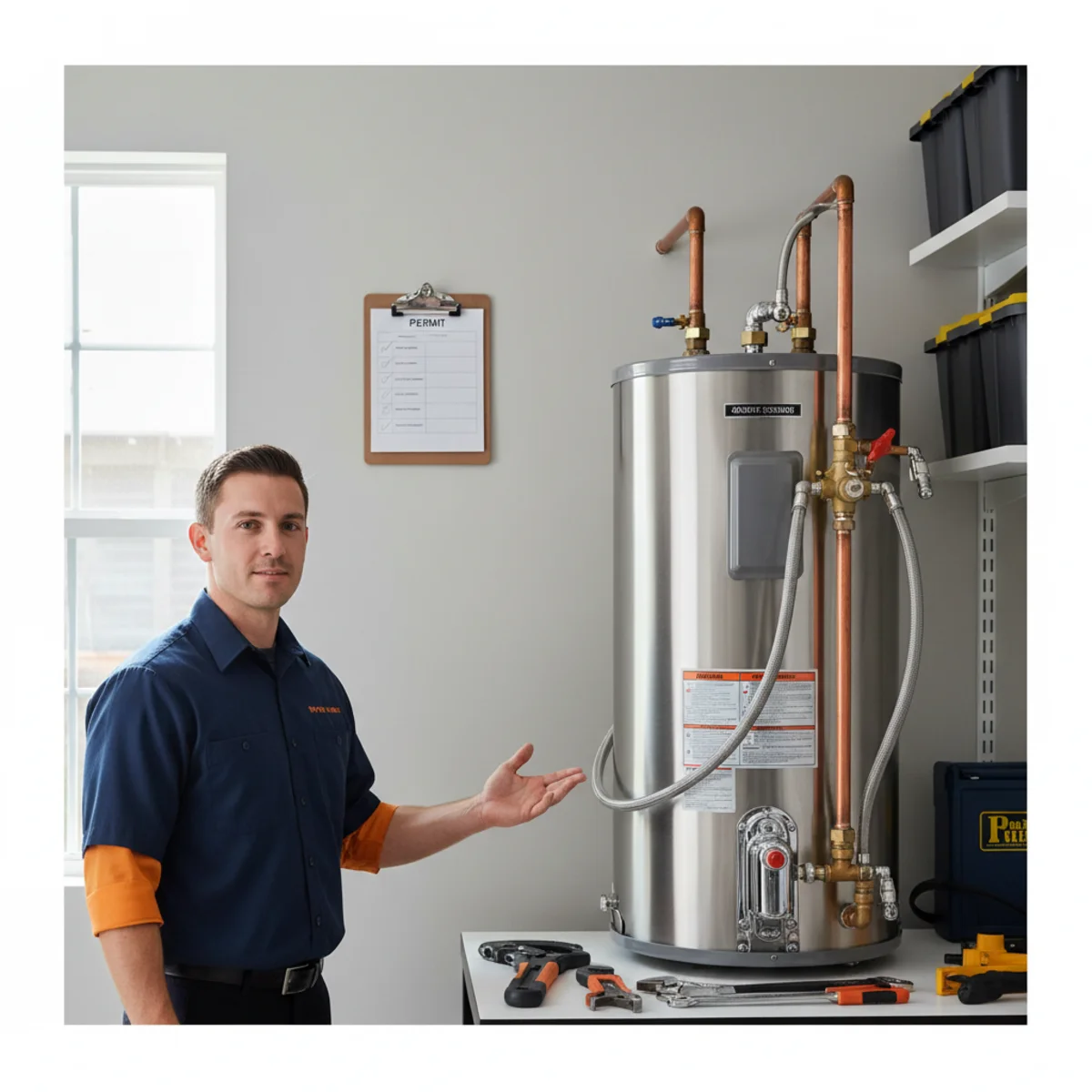
Sacramento County's building department issues mechanical permits for water heater installations. A permit is required for replacement installations — not just new construction. The permit application typically requires the address, the unit type and capacity, and the contractor's license information if a contractor is pulling it.
After installation, a county inspector visits to verify the work. They'll check that the unit is properly seismically strapped (California requires double-strap bracing on all residential water heaters), that the T&P valve is present and properly piped to a discharge location within 6 inches of the floor, that an expansion tank is present if the system is closed (a backflow preventer or check valve on the main creates a closed system), and that venting meets code for the unit type.
Important caveat: permit fees, specific requirements, and inspection processes change. The information above reflects the general framework — confirm current details directly with Sacramento County's Community Development and Sustainability Department before you start work. Don't rely on this article or any contractor's verbal description as a substitute for verifying current requirements.
California-specific code requirements that come with the permit
The permit process enforces several California-specific requirements that differ from other states. Understanding them helps you evaluate whether a contractor's quote is complete.
Seismic strapping
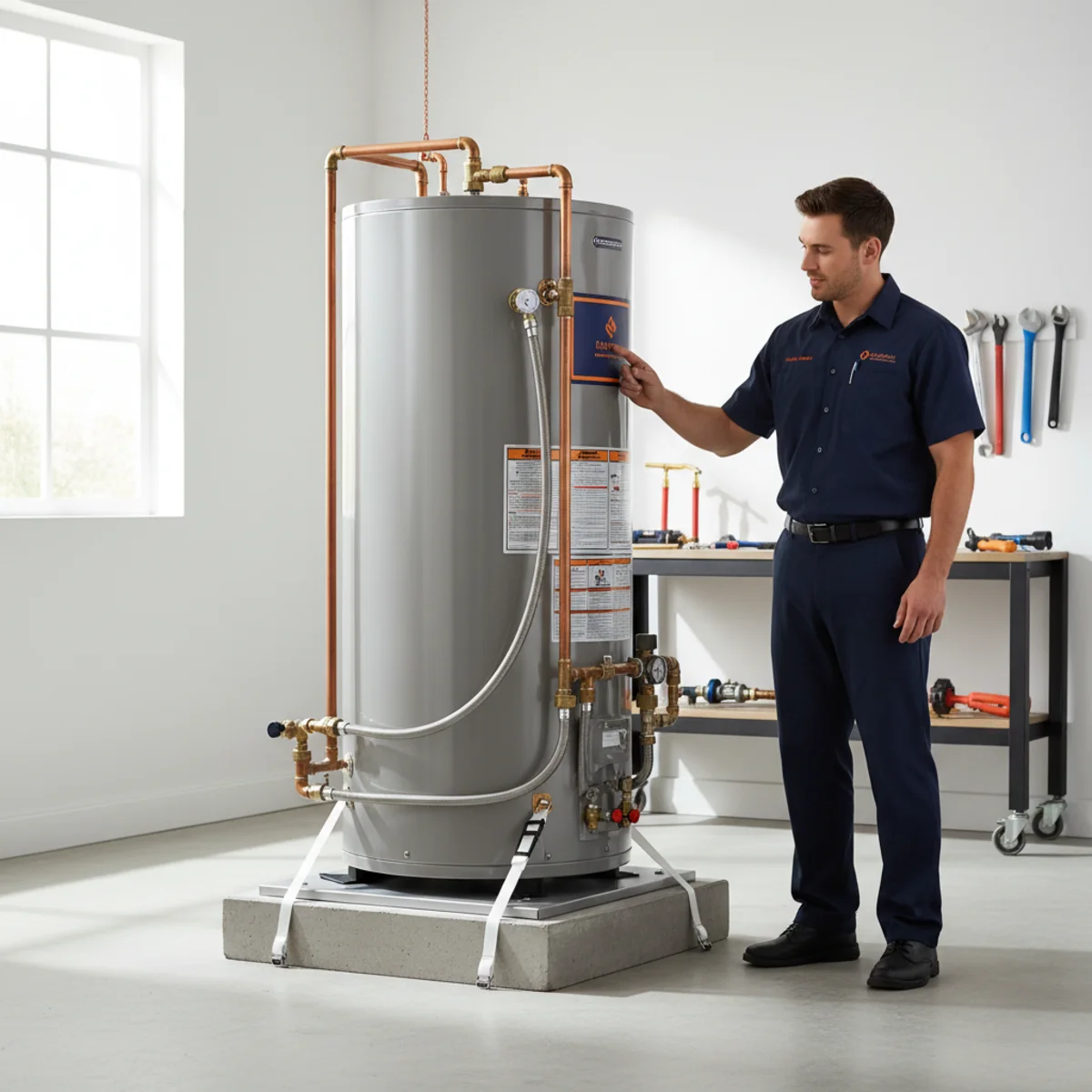
All water heaters in California must be double-strapped to wall studs or structural members with approved strapping material. The straps must be positioned in the upper and lower thirds of the tank. This is an earthquake preparedness requirement that has been in California code for decades.
Expansion tank
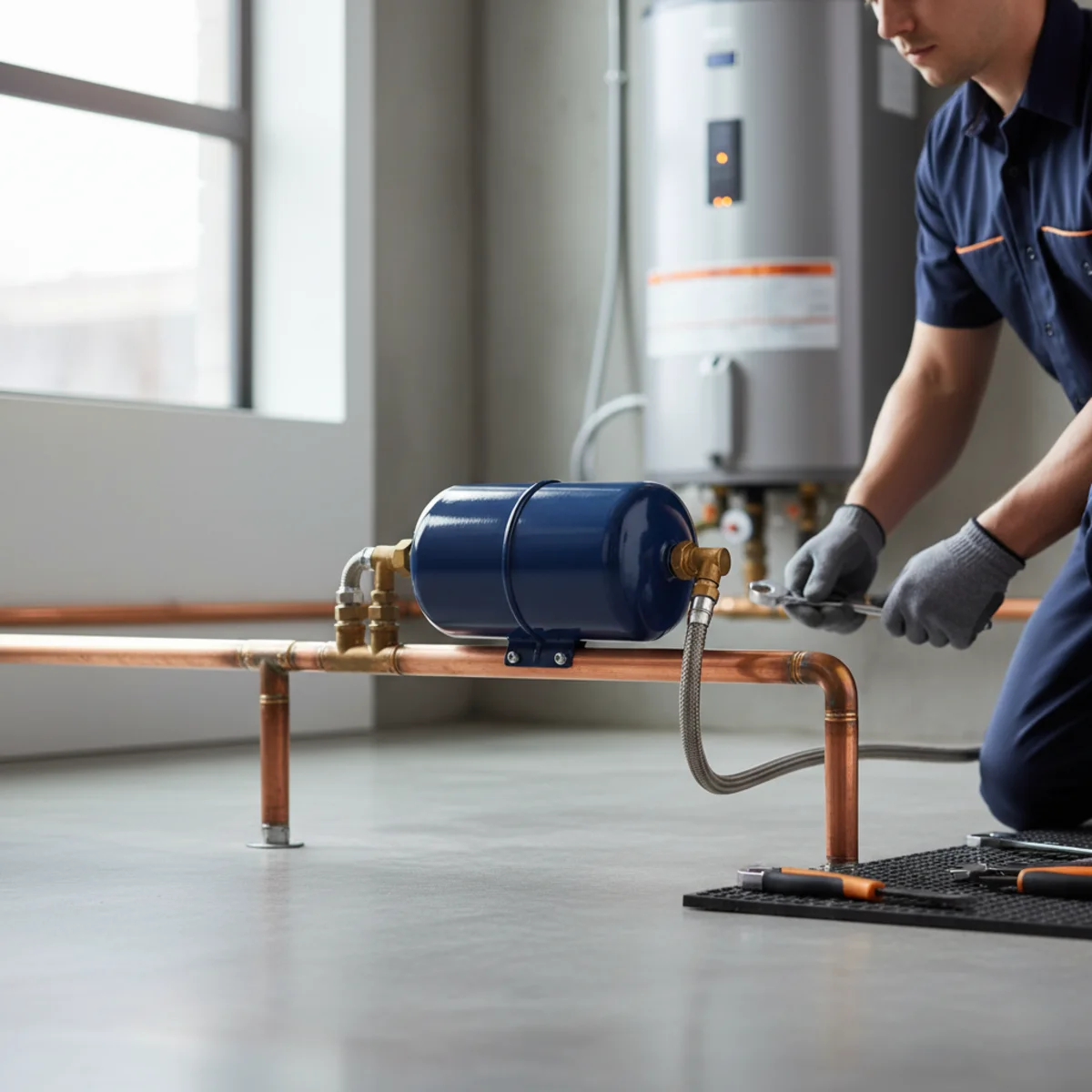
If your home has a closed plumbing system — meaning there's a check valve, pressure-reducing valve, or backflow preventer on the main supply — water has nowhere to go when the tank heats and expands. California code requires an expansion tank to absorb this thermal expansion. The tank is sized to the water heater capacity and must be pre-charged to match supply pressure.
T&P valve and discharge piping
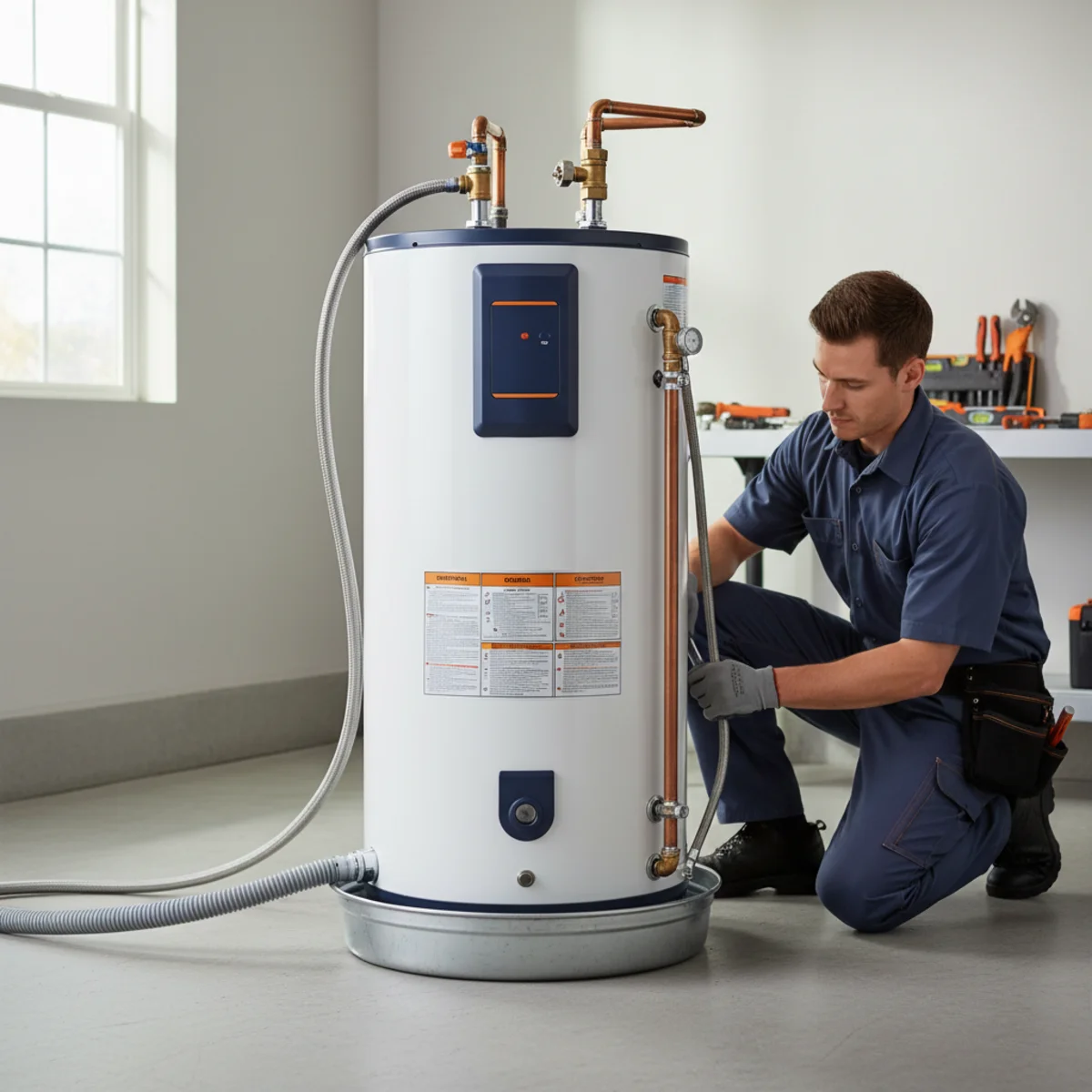
Every water heater must have a properly rated T&P valve installed at the designated port. The discharge pipe must be the same diameter as the valve outlet, routed downward without traps, and terminate within 6 inches of the floor or at an approved drain — never capped or plugged.
Venting requirements
Gas water heaters must be vented to remove combustion gases from the living space. Atmospheric-vent units use Type B double-wall flue. Direct-vent sealed combustion units use manufacturer-specified vent systems. Tankless gas units typically require Category III stainless steel flue. Mixing vent types or using damaged flue sections fails inspection.
Drain pan
Water heaters installed in locations where a leak could damage the structure or finished floors require a drain pan with a drain line routed to an appropriate discharge point. This is common for installations in upper-floor mechanical rooms, but local inspectors may also require them in garages depending on the configuration.
What happens if you skip the permit
Unpermitted water heater installations are more common than most homeowners realize, usually because a low-price contractor skips the permit to reduce cost and hassle. The risks fall on the homeowner.
When you sell the home, a real estate transaction in California typically includes disclosure of unpermitted work and may require bringing the installation into compliance before closing. An unpermitted water heater can delay or complicate a sale.
If a water heater failure causes property damage, your homeowner's insurance carrier may investigate the installation. An unpermitted installation that contributed to the loss can give the carrier grounds to dispute or reduce coverage.
If a building inspector discovers the unpermitted work — during a sale inspection, a remodel, or a complaint — you may be required to expose the installation for retroactive inspection, potentially involving drywall removal and re-work costs.
How the permit process works with a licensed contractor
When you hire a licensed contractor for a permitted installation, the process is straightforward from your perspective. The contractor pulls the permit, does the installation, and schedules the inspection. You get a copy of the permit and a pass notice from the inspector.
The whole process typically adds a day or two to the project timeline for a standard replacement — it's not a significant delay. What it does is give you documented evidence that the installation was done correctly, which protects you in all the scenarios above.
Our water heater permit and code upgrades service is built around this process. We pull the permit, handle the inspection coordination, and deliver code-compliant installations for Rancho Cordova homeowners.
For water heater installation projects where permits and code compliance are included as standard, there are no surprises — you know what you're getting before the job starts. Contact us to discuss your project.
Talk to a Local Rancho Cordova Water Heater Pro
Whether you need a repair today or you're planning an upgrade, we'll give you a straight answer and an upfront estimate.
Frequently Asked Questions
Owner-builders can generally pull permits for work on their own primary residence in California, with some limitations. However, the installation still needs to pass inspection, and if you're doing the work yourself you're responsible for meeting all code requirements. Confirm current owner-builder permit rules with Sacramento County before proceeding.
Permit fees are set by the county and change periodically. We can't quote a current number here — confirm the current fee schedule directly with Sacramento County's Community Development and Sustainability Department.
In Sacramento County, that's generally not accurate for a water heater replacement. A contractor who skips the permit is saving themselves hassle at your expense — you bear the risk of an unpermitted installation when you sell or file an insurance claim. Confirm directly with the county rather than taking any contractor's word for it.
It's a strong indicator, not an absolute guarantee. The inspection checks all the critical safety items — T&P valve, seismic strapping, venting, expansion tank — but inspectors are human and inspections have limits. A permit plus a reputable, experienced installer gives you the best combination of verification and quality.
The most frequent surprises on older installations are: missing or undersized expansion tank, old single-strap seismic bracing that doesn't meet current double-strap code, T&P discharge pipe that terminates too high or is missing entirely, and degraded or improperly sized flue pipe. A thorough installer assesses all of these before quoting so there are no surprise line items.
Written by the Water Heater RC Pros team
Practical, local guidance from Rancho Cordova water-heater installers — written for homeowners and kept current with California code. Have a question about your unit? Call (201) 277-9344.