Your water heater runs every single day — showers, dishes, laundry — and it typically accounts for 14 to 18 percent of a home's total energy bill. In Rancho Cordova, where summer cooling costs already strain budgets, trimming water-heating waste is one of the fastest ways to see a real drop on your SMUD or PG&E statement.
The good news: most efficiency gains cost little or nothing upfront. A few adjustments today can shave dollars off every monthly bill. And if you're ready to invest in a new unit, California's rebate landscape makes energy-efficient equipment more attainable than many homeowners realize — though rebate programs change, so confirm current details before you buy.
This guide covers the free wins, the low-cost upgrades, and the bigger moves — like switching to a heat pump water heater — so you can decide what makes sense for your household and your budget.
Start with the Free Adjustments
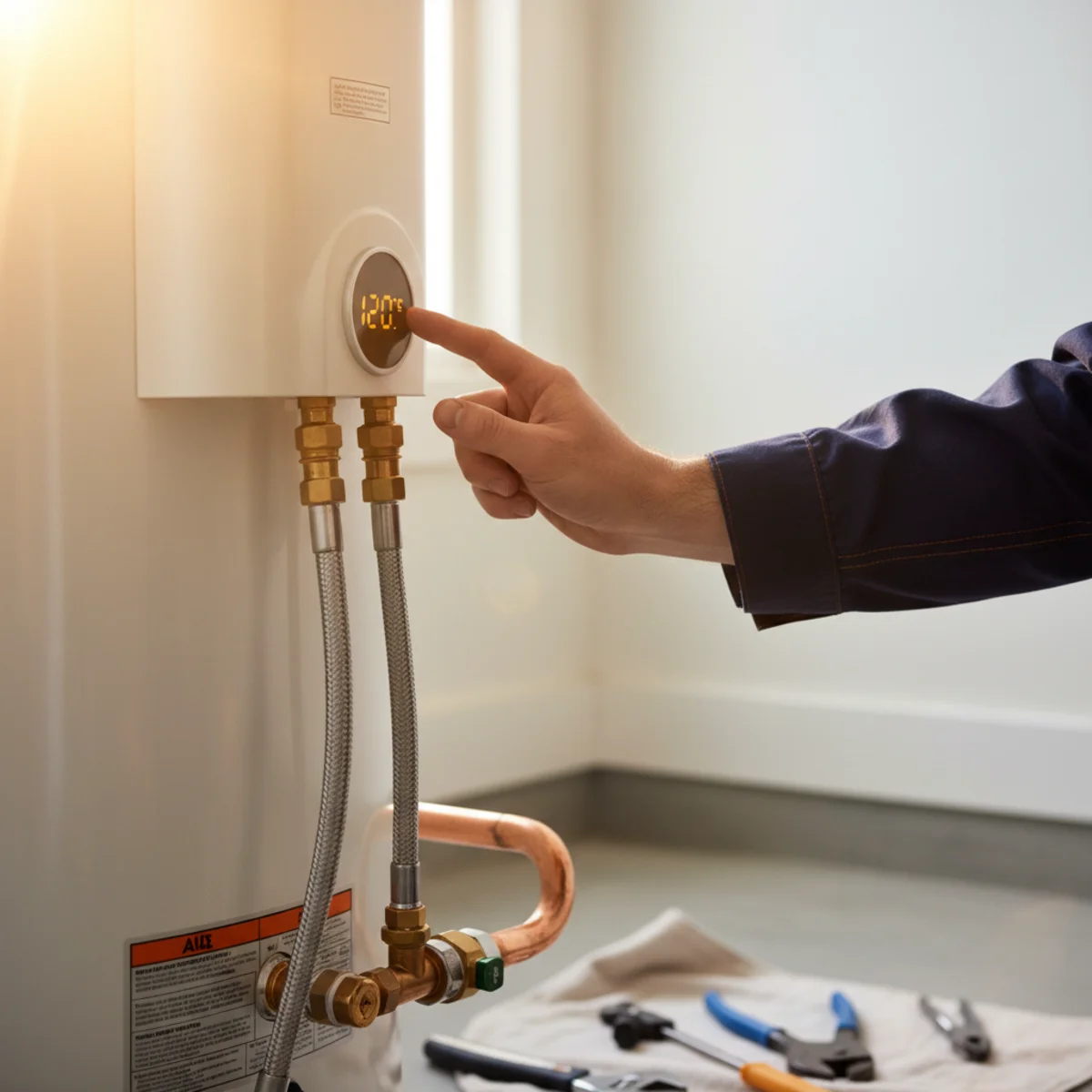
The default thermostat setting on most tank water heaters from the factory is 140°F. The U.S. Department of Energy recommends 120°F for most households — it's hot enough to kill legionella, safe for showers, and uses noticeably less energy. Every 10°F reduction saves roughly 3–5% on water-heating costs. If your household includes adults only and no one immunocompromised, 120°F is the right call.
While you're at the thermostat, check that the unit isn't cycling while you're on vacation. Most modern water heaters have a "vacation" or "pilot" mode that maintains only a minimal temperature. A week away with the heater running at full duty is wasted energy.
- Set thermostat to 120°F — saves 3–5% per 10°F reduction.
- Use vacation/pilot mode when you're away for 3+ days.
- Run dishwashers and washing machines with full loads to spread the hot-water cost.
- Fix dripping hot-water faucets promptly — a slow drip can waste 10–20 gallons a day.
Low-Cost Upgrades That Pay Back Fast
Pipe insulation is underrated. The first 6 feet of hot-water pipe leaving the heater lose heat to the surrounding air before the water even reaches a faucet. Pre-slit foam pipe insulation costs a few dollars and installs in minutes. In an unconditioned Rancho Cordova garage — where summer temps inside can hit 110°F and winter nights drop into the 30s — insulating those pipes helps year-round.
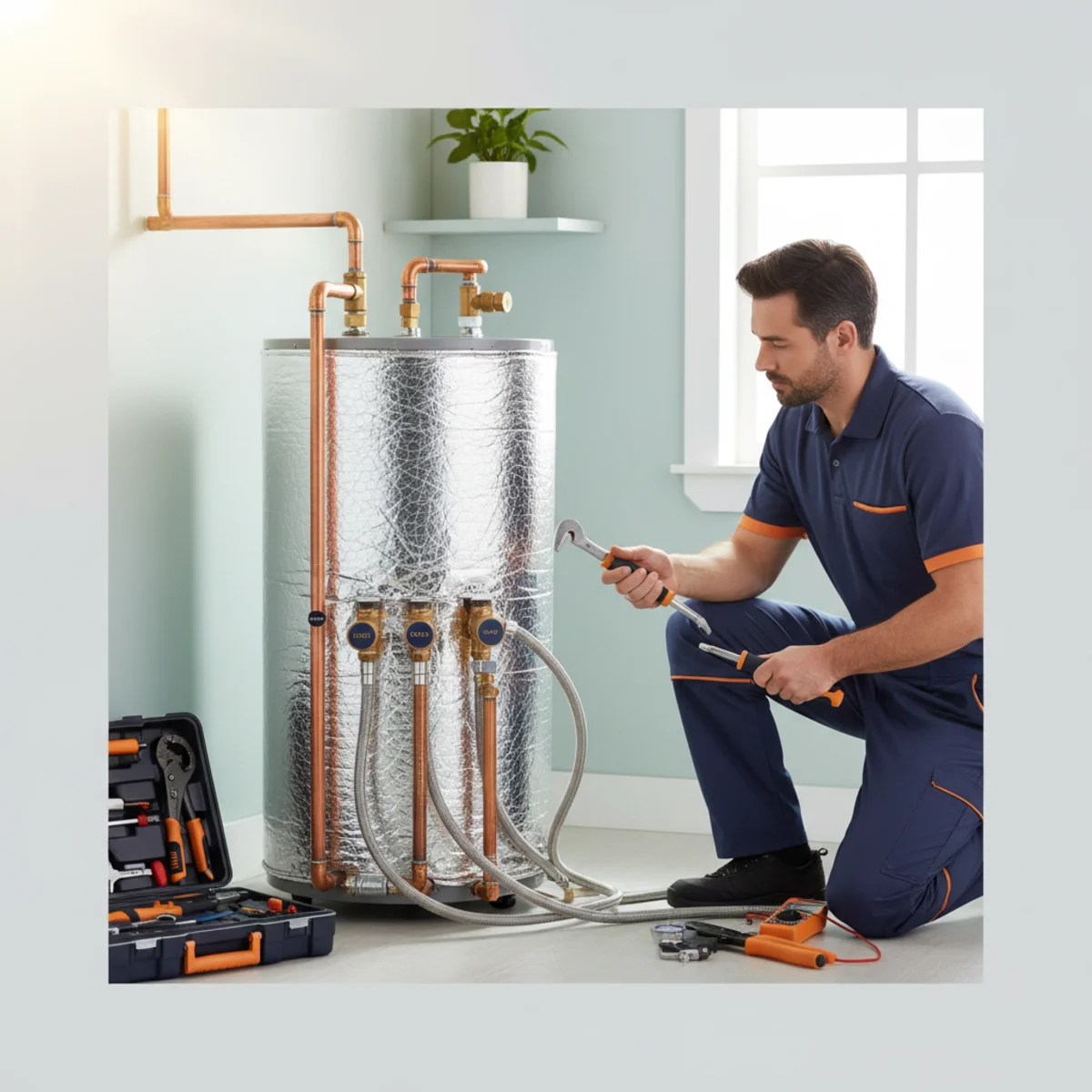
A water heater insulation blanket is worth considering for older tanks (pre-2004) that lack modern foam insulation. Newer units are already well-insulated at the factory, so check before you buy a blanket — it won't help if the tank is already R-16 or better. The label or owner's manual will tell you.
Low-flow showerheads and faucet aerators reduce how much hot water you use in the first place. A 2.5 GPM showerhead replaced with a 1.8 GPM model cuts hot water consumption by nearly 30% in the shower. These cost $15–$40 and install with no tools.
Efficiency by Water Heater Type
Not all water heaters are equal on efficiency. The chart below compares common residential types so you can see where your current unit stands — and what a replacement could mean for your bill.
| Type | Efficiency Rating | Best For | Notes |
|---|---|---|---|
| Standard gas tank | ~60–70% thermal efficiency | Most existing homes | Lowest upfront cost; widely available |
| High-efficiency gas tank | ~80–90% EF | Gas-connected homes wanting a simple swap | Power vent or direct-vent required |
| Electric resistance tank | ~90–95% EF | Backup or low-demand use | Higher operating cost than heat pump |
| Heat pump (hybrid) electric | ~300–400% COP (UEF 3.5+) | Moderate-to-high hot-water demand | Best efficiency; needs ~1,000 cu ft of air space |
| Tankless gas | ~80–98% EF | Whole-house continuous demand | High flow rate; condensing models most efficient |
Heat Pump Water Heaters: The Biggest Efficiency Leap
A heat pump water heater (HPWH) moves heat from the surrounding air into the water rather than generating heat from scratch. That's why its Uniform Energy Factor can exceed 3.5 — meaning it delivers 3.5 units of heat energy for every 1 unit of electricity consumed. Compared to a standard electric resistance tank, a HPWH can cut water-heating electricity use by 60–70%.
In Rancho Cordova's climate, HPWHs are a strong choice. Our warm-to-hot summers mean the unit has warm ambient air to work with for most of the year. Garages stay above freezing nearly year-round, which keeps the heat pump operating efficiently. The unit does pull heat out of the room it's in — a slight cooling effect — which is actually a bonus in an unconditioned garage in July.
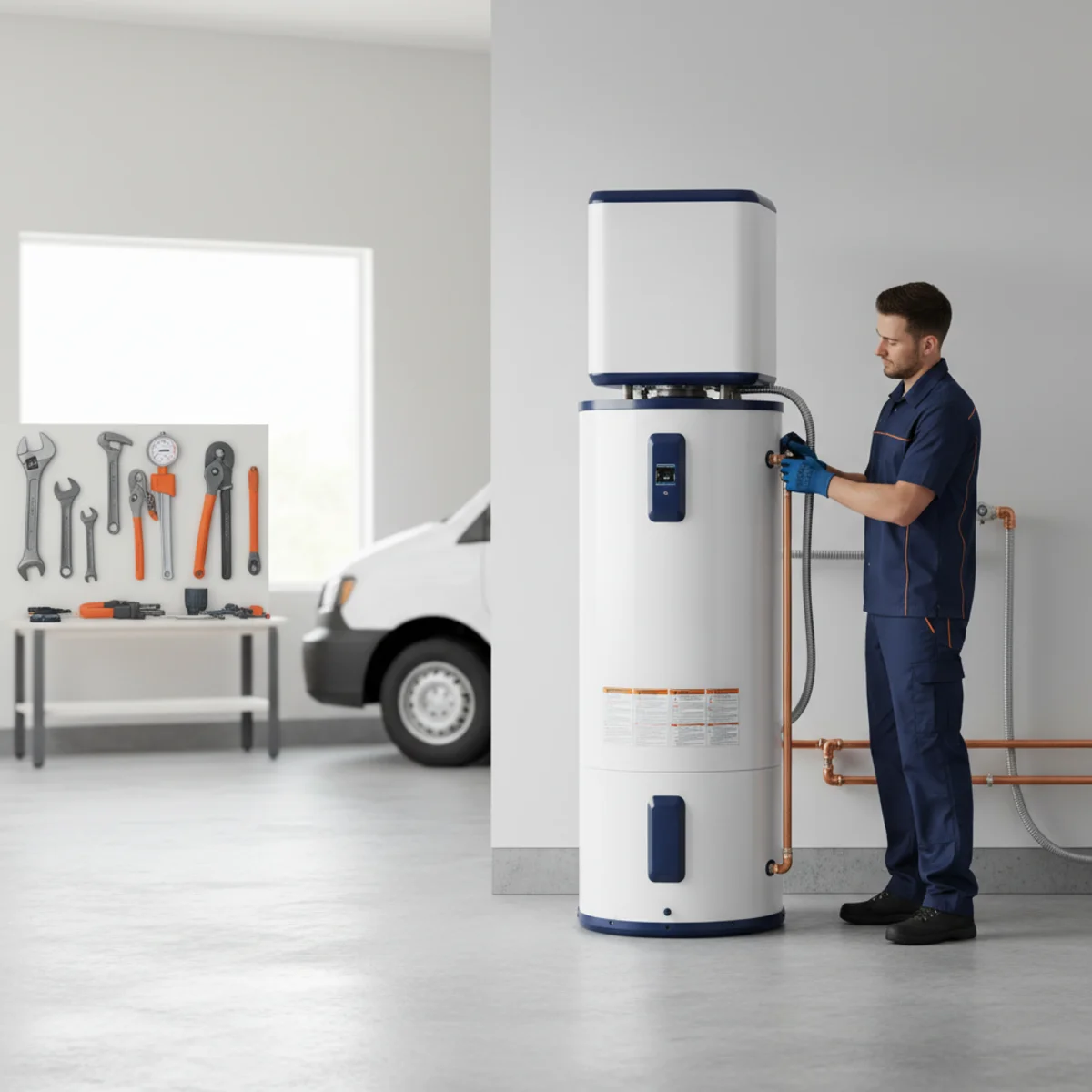
Our heat pump water heater installation team handles sizing, clearance verification, and the 240V electrical work these units require. If your panel is already near capacity, we'll tell you upfront. Pairing a HPWH with rooftop solar maximizes the savings — many Rancho Cordova households are already solar-equipped.
California Rebates and Incentives — What to Know
California and local utilities have offered significant rebates for heat pump water heaters. SMUD (the municipal utility serving most of Rancho Cordova) has historically offered cash rebates for qualifying HPWH installations. PG&E serves parts of Sacramento County and has run similar programs. The federal Inflation Reduction Act created a 30% tax credit (up to $600) for qualifying heat pump water heaters through 2032, and the HEEHRA program offered point-of-sale rebates for income-qualifying households.
Here's the important caveat: rebate amounts, eligibility rules, and program funding change regularly. A program active when this was written may be modified or exhausted by the time you read it. Before you buy, check directly with SMUD or PG&E, the TECH Clean California program, and the IRS guidelines for the Energy Efficient Home Improvement Credit. Confirm current details before you buy.
If you're considering a hybrid water heater installation, ask us what documentation you'll need to capture for rebate claims — we're familiar with what utilities typically require, though we don't file rebates on your behalf.
Maintenance That Keeps Efficiency Up
An efficient water heater that's never been flushed isn't as efficient as it looks on the nameplate. Rancho Cordova's water is moderately hard — enough that sediment accumulates on the tank floor over time. Sediment acts as an insulating layer between the burner and the water, forcing the heater to run longer to hit setpoint.
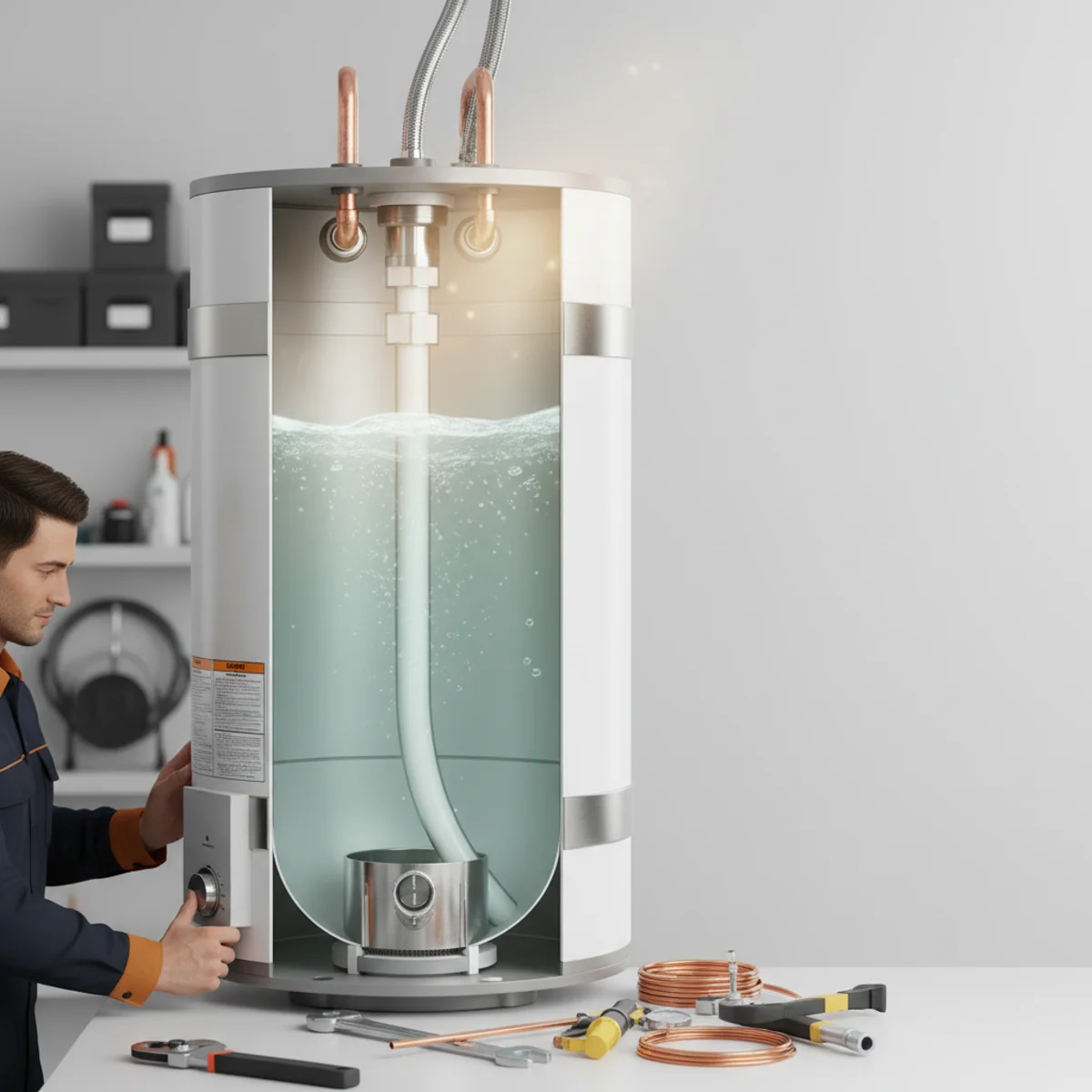
Flushing the tank once a year removes that sediment and restores original efficiency. Replacing the anode rod every 3–6 years keeps the tank from corroding from the inside out — a corroded tank is a leaking tank, and leaks are never efficient.
For personalized advice on your current setup, visit our Rancho Cordova service area page or contact us for a no-pressure assessment.
Talk to a Local Rancho Cordova Water Heater Pro
Whether you need a repair today or you're planning an upgrade, we'll give you a straight answer and an upfront estimate.
Frequently Asked Questions
120°F is the recommended setting for most households. It reduces energy use by 6–10% compared to the 140°F factory default, while still being hot enough to prevent bacterial growth. Households with immunocompromised members or infants may want to consult a doctor before going below 120°F.
The DOE estimates that switching from a standard electric resistance tank to a heat pump water heater saves the average household $300–$500 per year in electricity costs. Actual savings depend on your household size, current utility rates, and how much hot water you use. Pairing with solar can push that figure higher.
SMUD has historically offered cash rebates for qualifying heat pump water heaters, and state and federal programs have added additional incentives. However, rebate programs change — funding runs out, eligibility rules shift. Always confirm current details directly with SMUD or at energyupgradeca.org before purchasing.
In most cases, yes. Heat pump water heaters need roughly 1,000 cubic feet of air space and perform best in spaces that stay above 40°F — most Rancho Cordova garages easily meet that threshold. The unit does cool and dehumidify the surrounding air slightly, which can be a welcome side effect in summer. Call us at (201) 277-9344 to discuss your specific garage layout.
Only if your tank is older and lacks modern insulation. Water heaters manufactured after about 2004 have factory insulation that renders a blanket redundant or even harmful to ventilation. Check your unit's energy factor label; if it's already well-insulated, skip the blanket and focus on pipe insulation instead.
Written by the Water Heater RC Pros team
Practical, local guidance from Rancho Cordova water-heater installers — written for homeowners and kept current with California code. Have a question about your unit? Call (201) 277-9344.