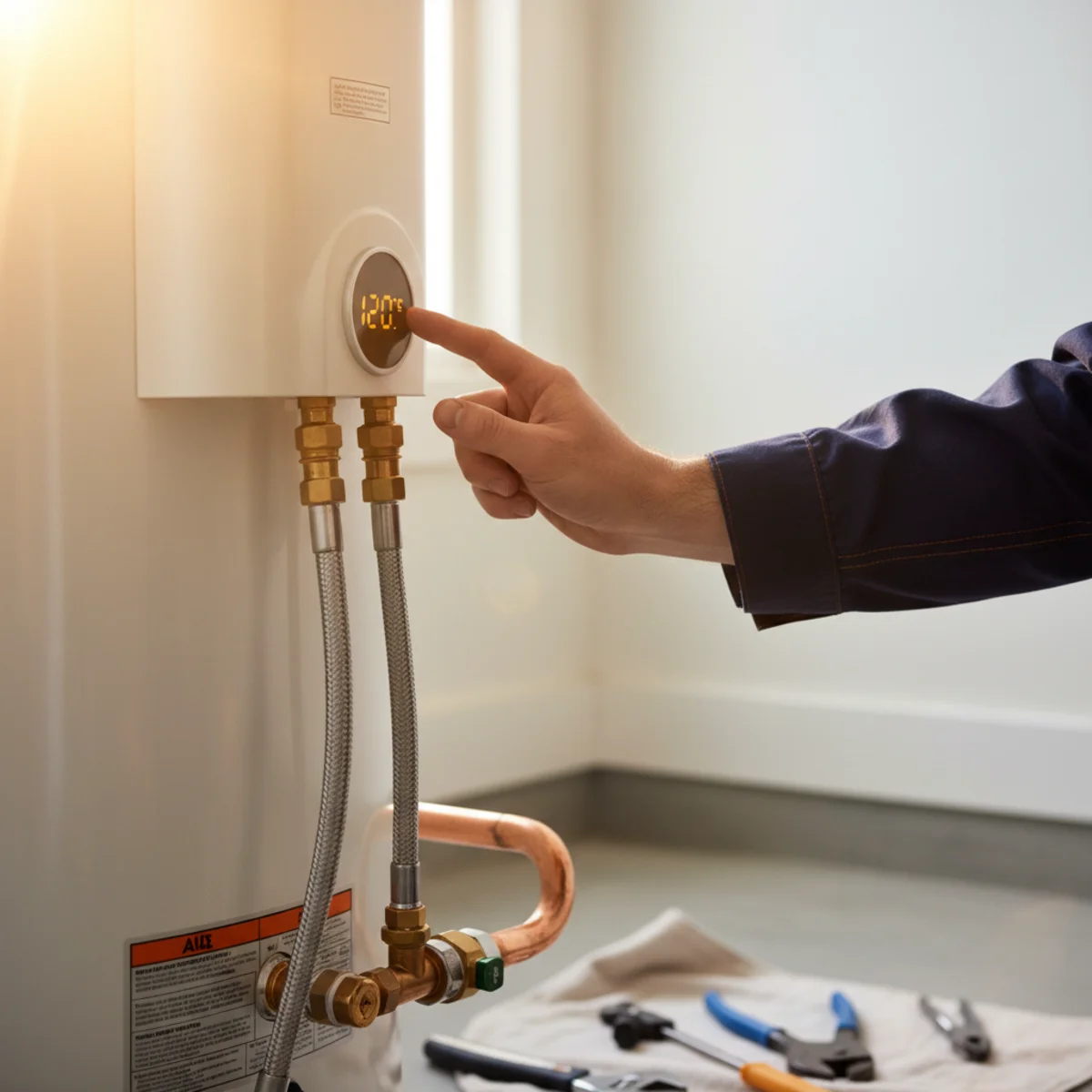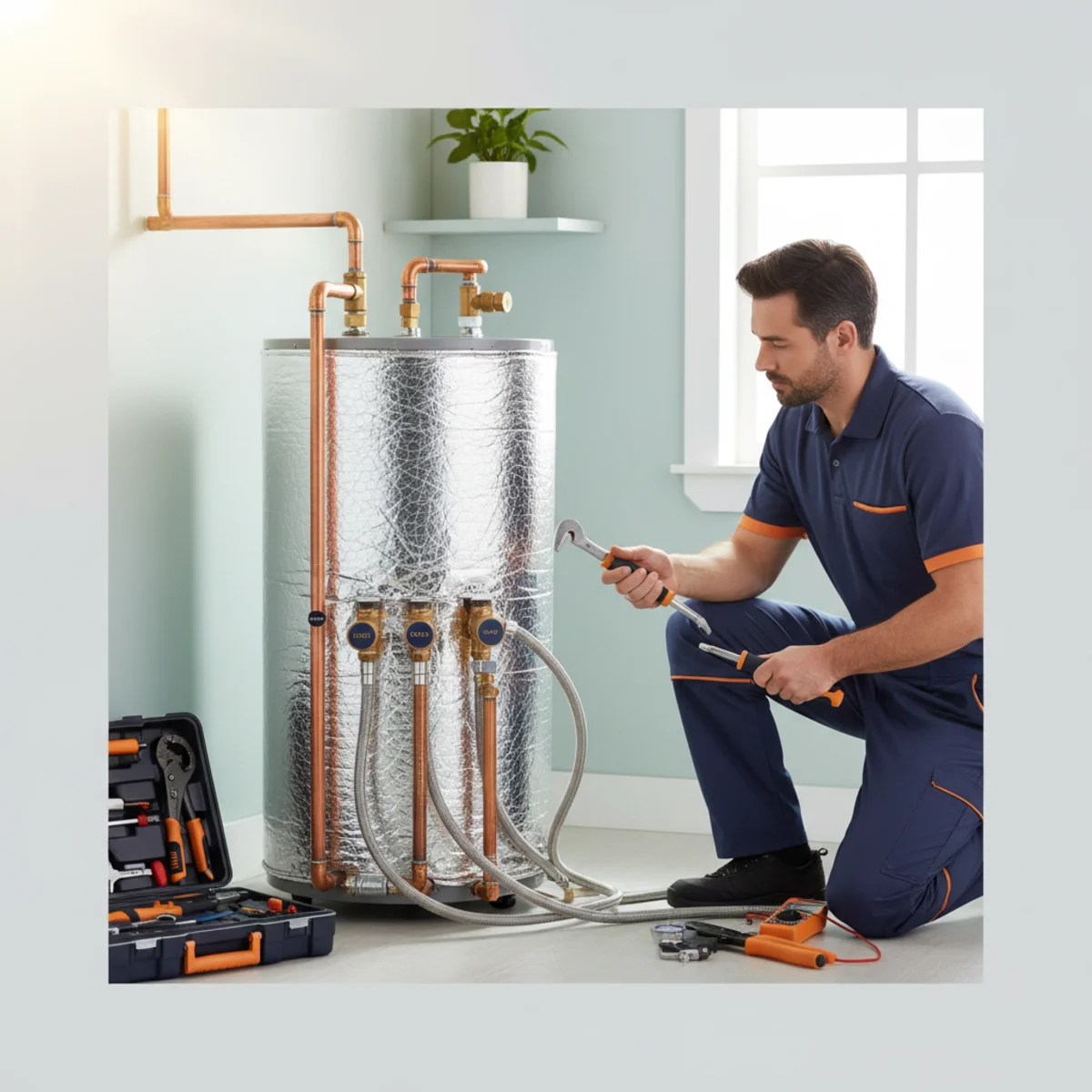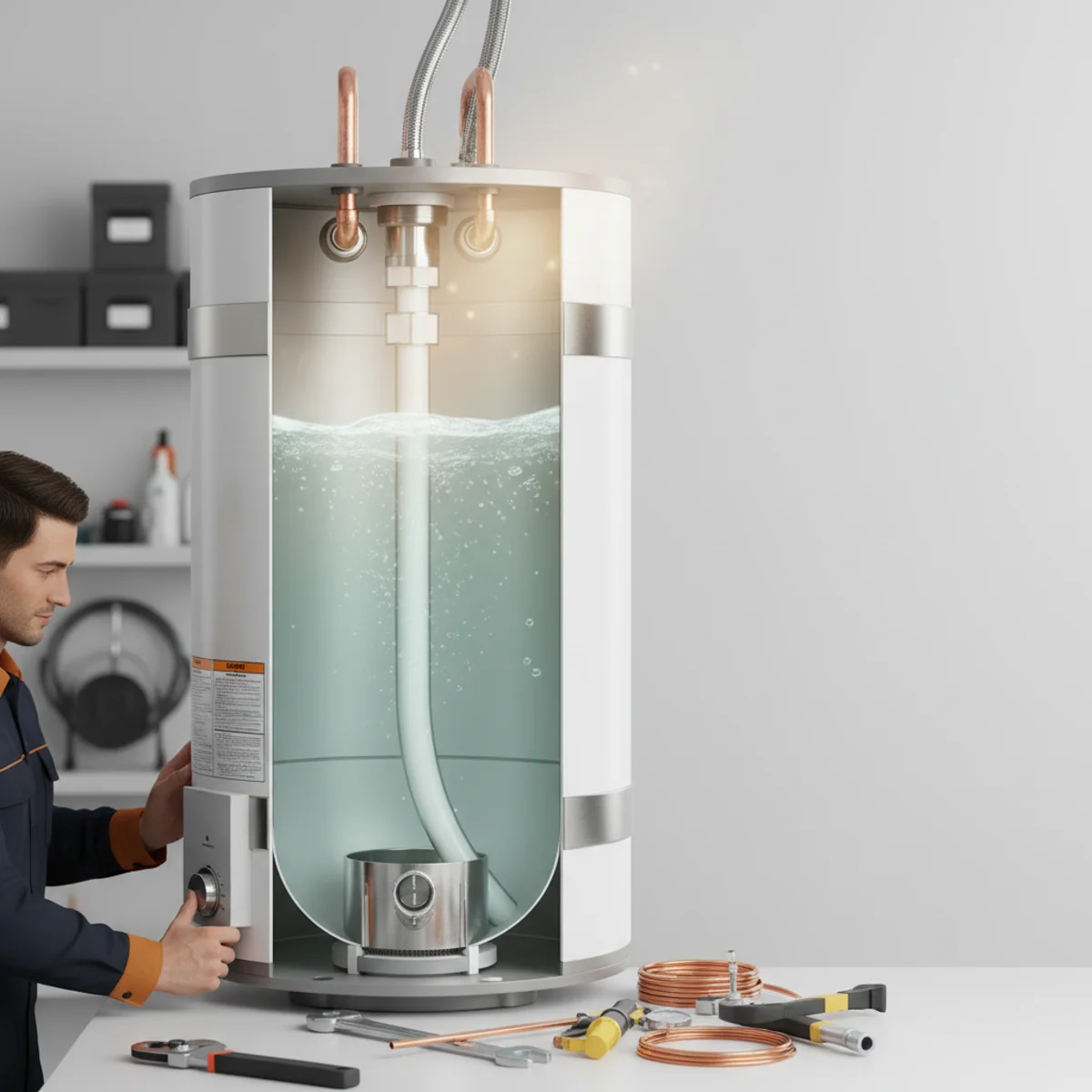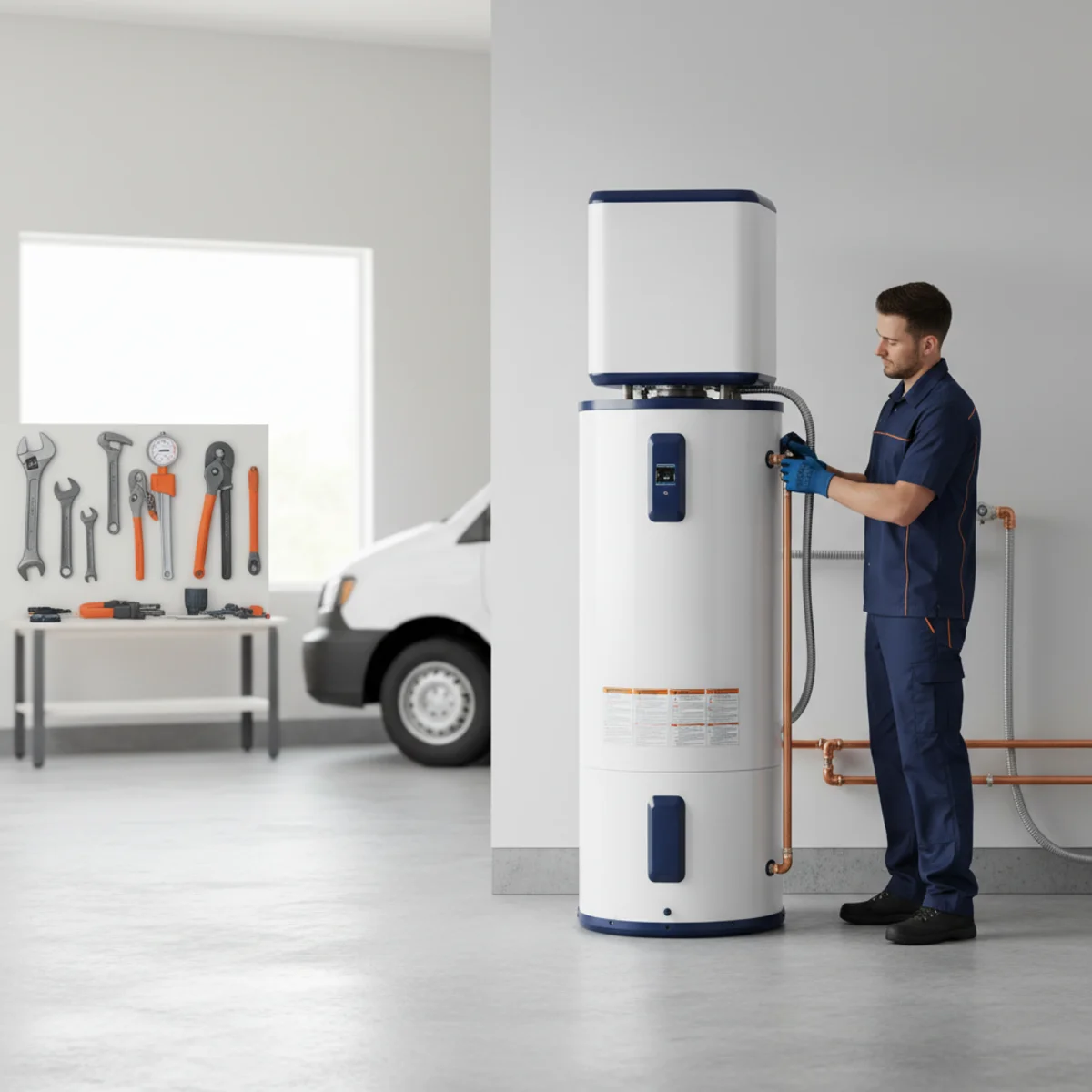
Here's the bottom line: a heat pump water heater (HPWH) uses roughly 60–70% less electricity than a standard resistance tank. On a typical Sacramento-area household, that can translate to significant annual savings depending on your utility and usage. The unit costs more upfront — often $1,000–$1,400 before rebates — but the payback period has shortened considerably as equipment prices have dropped and rebate programs have expanded.
Rancho Cordova is a good candidate for heat pump technology for two reasons. First, the climate: HPWHs move heat from the surrounding air into the water, and they perform best when ambient air temperatures are above 50°F. Sacramento County has roughly 300 days a year above that threshold, meaning your unit runs in high-efficiency heat-pump mode most of the time rather than falling back to resistance heating. Second, the utility incentives: both SMUD and PG&E have offered rebates on qualifying HPWH installs, and the federal government has provided tax credits through the Inflation Reduction Act. Always confirm current program details before purchasing — rebate availability changes without notice.
This guide covers how the technology works, what the installation requires, and the honest trade-offs so you can decide whether the investment makes sense for your home right now.
How a Heat Pump Water Heater Works
A heat pump water heater works on the same refrigeration principle as your air conditioner — in reverse. A compressor and refrigerant loop extract heat energy from the surrounding air and transfer it into the water tank. The efficiency metric is the Coefficient of Performance (COP) or Uniform Energy Factor (UEF): most modern HPWHs carry a UEF of 3.0–4.5, meaning they deliver 3–4.5 units of heat for every unit of electricity consumed.
By contrast, a standard electric resistance element converts electricity to heat at essentially a 1:1 ratio (UEF around 0.92–0.95). Gas tank water heaters run around 0.60–0.70 UEF because some heat escapes up the flue. The heat pump's advantage is real and large.
Most units also include resistance backup elements that kick in when demand exceeds what the heat pump can keep up with — a cold February morning with multiple people showering, for example. This hybrid operation (hence the alternate name 'hybrid water heater') means you rarely run short of hot water even during peak demand.
Space and Installation Requirements
HPWHs are larger than standard tanks — typically 60–80 inches tall — and they need air volume around them to function. Most manufacturers specify at least 700–1,000 cubic feet of air space (roughly a 10x10x8 room or larger). Many Rancho Cordova homes have the unit in the garage, which works well: garages are often large enough, and the unit actually helps cool the garage slightly in summer as a side effect of extracting heat.
The heat pump generates a low-level hum from the compressor and fan — quieter than a dishwasher, but audible. Installation inside a closet adjacent to a bedroom can be an issue; a garage or dedicated utility room is the preferred location.
Electrical requirements are the same as a standard electric tank: a dedicated 240V, 30-amp circuit. If you're converting from gas, you'll need an electrician to run that circuit. The water connections are standard — 3/4-inch supply and outlet with a T&P valve and discharge pipe as required by California code.
Our heat pump water heater installation team handles the electrical coordination and permit filing. We also install hybrid water heater systems where the application calls for it.
Rebate and Tax Credit Landscape
As of the time this was written, multiple incentive programs have applied to HPWH installations in California. The federal Inflation Reduction Act (IRA) established a tax credit of up to $300 for qualifying HPWH installations under the 25C energy efficiency credit, with higher credits under the HOMES rebate program depending on household income and energy savings achieved. California's TECH Clean California initiative has offered point-of-sale rebates through participating contractors. Both SMUD and PG&E have run their own instant or mail-in rebate programs.
Confirm current details before you buy. These programs change frequently — amounts are adjusted, funding runs out, and eligibility requirements shift. What was available six months ago may not be available today, and new programs may have launched since this was written. Ask your installer about current programs, and verify directly with your utility and a tax professional for the federal credit.
Even without any incentives, the payback period on a HPWH in Rancho Cordova is typically 4–7 years based on current energy prices. With rebates and tax credits, payback can drop to 2–4 years. The unit has a rated life of 10–15 years, so the economics are favorable in most scenarios.
- Federal IRA 25C tax credit: consult IRS guidance or a tax professional for current amounts and eligibility.
- SMUD residential rebates: check smud.org for current HPWH programs.
- PG&E rebates: check pge.com/rebates — note that Rancho Cordova is primarily SMUD territory.
- TECH Clean California: point-of-sale incentives through enrolled contractors — verify current enrollment.
- Always confirm current details before purchasing — program funding changes without notice.
Real Savings in Rancho Cordova's Climate
Sacramento County's climate is a genuine advantage for HPWH efficiency. The units operate in pure heat-pump mode (highest efficiency) above roughly 50°F ambient, and in hybrid mode below that. With an average low of around 40°F in January and temperatures well above 50°F from March through November, a Rancho Cordova HPWH spends the vast majority of its operating hours in the most efficient mode.
Summer is especially favorable: when it's 95°F outside and your garage is 85°F, the heat pump is pulling abundant thermal energy from the air. The flip side is that in tight, conditioned spaces, the unit adds a small cooling load to the room — which can actually help in summer and slightly increase heating demand in winter. Garages mostly avoid this interaction.
For an honest projection specific to your usage and utility rate schedule, contact us — we can walk through the numbers before you commit to a purchase.
Trade-offs Worth Knowing
HPWHs aren't the right fit in every situation. If your utility room is a small interior closet without adequate air volume, you'd need to duct the unit to an outside air source — adding cost and complexity. If you're converting from gas and the panel is near capacity, the electrical upgrade can add significant cost.
Recovery time is slower in heat-pump-only mode compared to gas. Most units have an 'efficiency' mode (pure heat pump) and a 'hybrid' mode (heat pump plus resistance backup). In hybrid mode, recovery is faster but efficiency drops. For households with very high peak demand, sizing up to a 65- or 80-gallon HPWH often solves the problem.
Maintenance is modest but real: the air filter on the unit needs occasional cleaning (every few months in dusty garage environments), and the anode rod should be inspected every 3–5 years just like a standard tank. See our water heater maintenance page for scheduled service options.
For most Rancho Cordova homeowners with a suitable space — especially those on SMUD — a heat pump water heater delivers genuine long-term savings. Visit our Rancho Cordova service area page for coverage details.
Talk to a Local Rancho Cordova Water Heater Pro
Whether you need a repair today or you're planning an upgrade, we'll give you a straight answer and an upfront estimate.
Frequently Asked Questions
Yes. Most modern HPWHs operate efficiently down to about 40–50°F, which covers nearly all Sacramento-area winter conditions. In pure heat-pump mode they may be slightly slower to recover on cold January nights, but hybrid mode with resistance backup handles peak demand reliably.
Most manufacturers require 700–1,000 cubic feet of surrounding air space. A standard two-car garage easily meets this. Small utility closets usually don't — in those cases you'd either need to duct the unit to outside air or choose a standard electric tank.
They produce a low hum from the compressor and fan — roughly 50–55 decibels, similar to a moderate dishwasher cycle. For garage installs it's generally not an issue. Adjacent bedrooms can be problematic depending on the wall assembly.
Rebate programs change frequently. At various times, federal IRA tax credits, SMUD instant rebates, and TECH Clean California point-of-sale rebates have all applied. Verify current availability directly with your utility and a tax professional before purchasing — this is an area where information goes stale quickly.
Most manufacturers rate them at 10–15 years, similar to or slightly longer than a standard tank. Annual maintenance — filter cleaning and anode rod inspection — helps reach the upper end of that range. Call (201) 277-9344 to ask about our maintenance plans.
Written by the Water Heater RC Pros team
Practical, local guidance from Rancho Cordova water-heater installers — written for homeowners and kept current with California code. Have a question about your unit? Call (201) 277-9344.