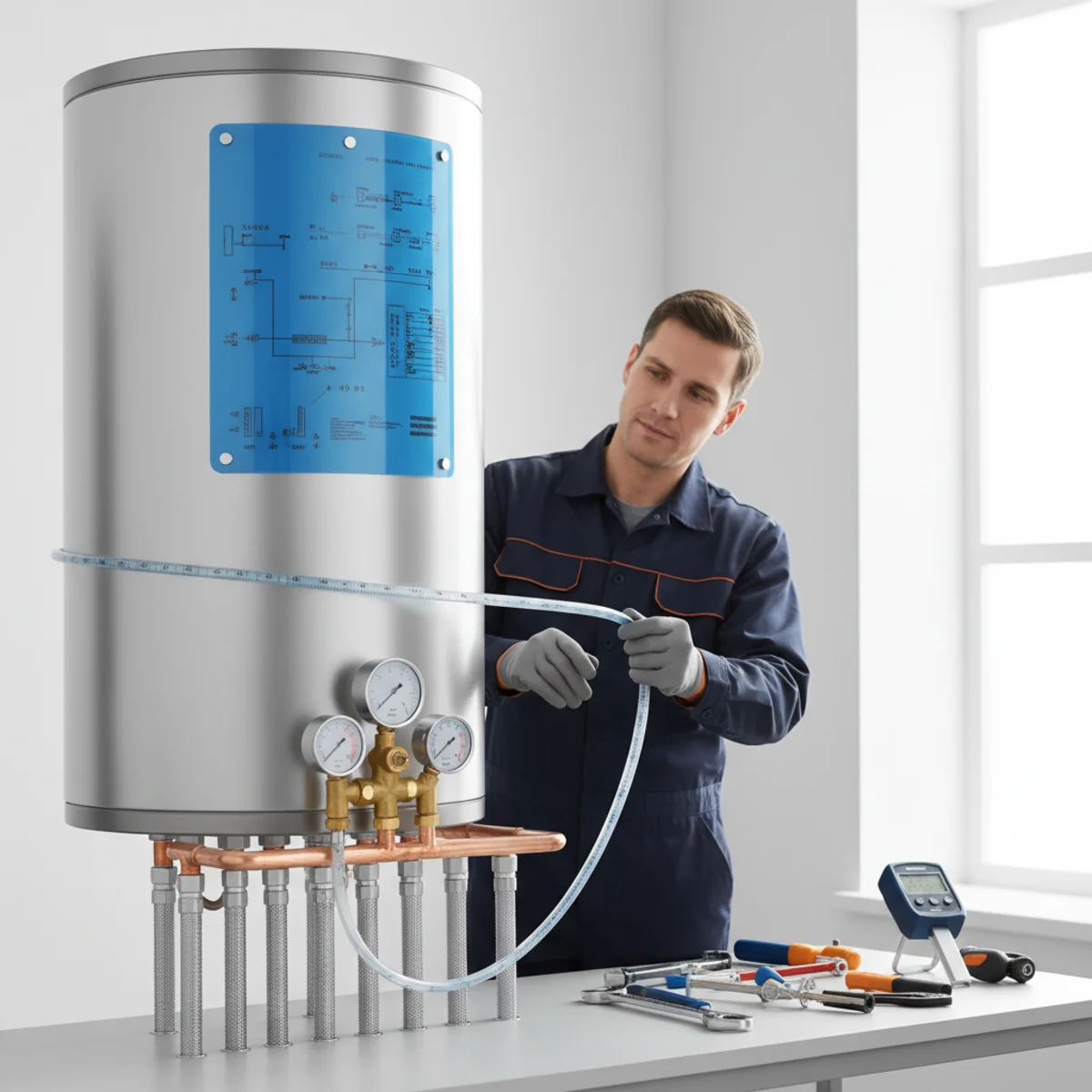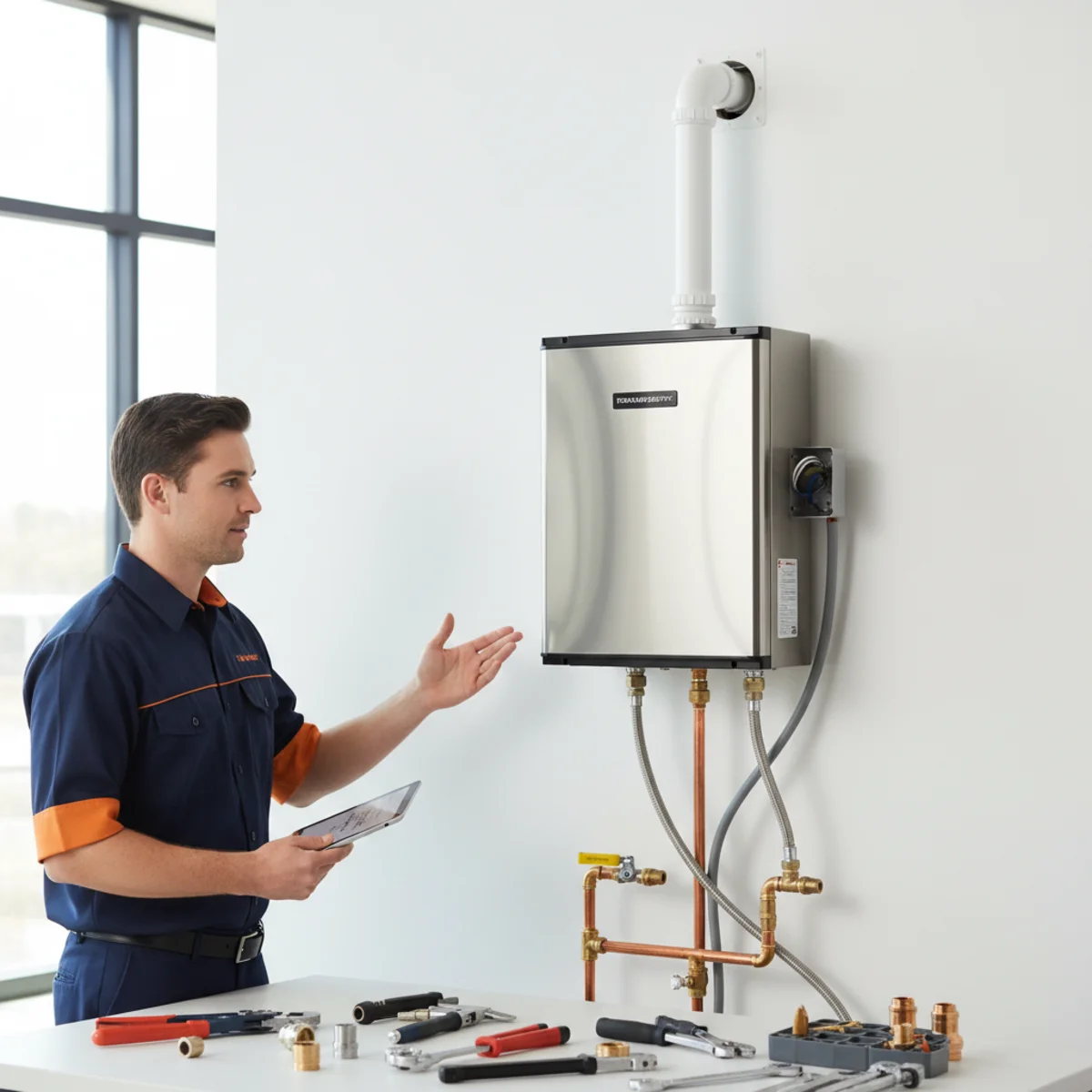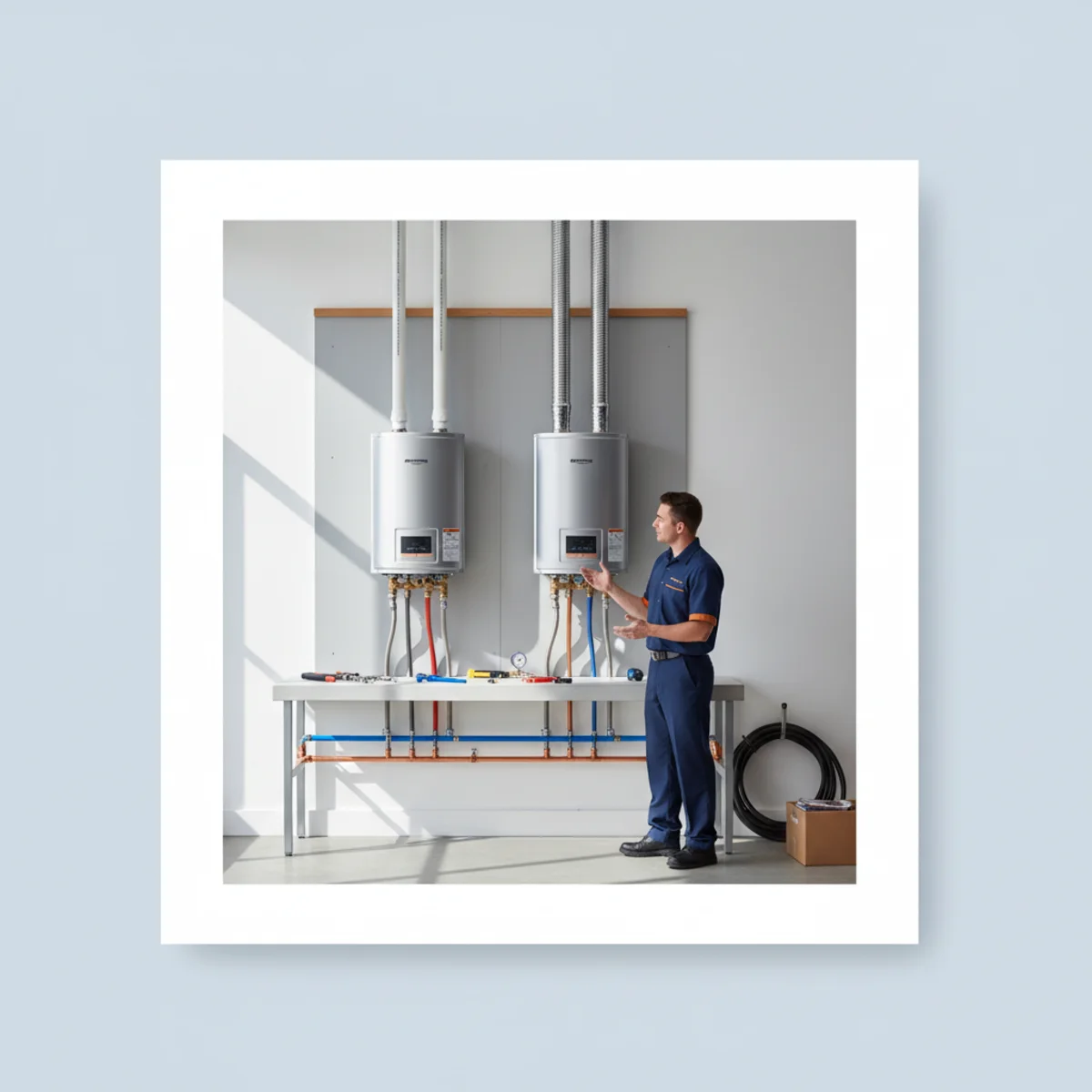
Choosing the wrong type of tankless water heater doesn't just mean paying more on your gas bill — it can mean an expensive venting retrofit six months after installation. The condensing vs. non-condensing choice is the single biggest technical decision you'll make when going tankless, and most homeowners don't know it exists until a contractor brings it up.
At its core, the difference comes down to how each unit handles exhaust gases. Non-condensing tankless heaters vent hot combustion gases — often above 300°F — out through a dedicated metal flue. Condensing units extract a second round of heat from those gases before they leave the unit, cooling them down to roughly 90–110°F and pulling more BTU value out of the same amount of gas. That's why condensing units typically carry efficiency ratings (UEF) in the 0.93–0.96 range, while non-condensing models usually sit between 0.80–0.87.
For Rancho Cordova homeowners, the local angle matters here. Our hot summers push households to run whole-house cooling while still drawing hot water for laundry and showers — two demands that hit the gas meter at the same time. Higher tankless efficiency helps offset that combined load. That said, the right unit also depends on what your current venting setup looks like and where the heater will live, whether that's a garage, utility closet, or exterior wall mount.
How Each Technology Actually Works
A non-condensing tankless heater burns gas and immediately routes the combustion exhaust outside. The heat exchanger captures most of the energy before the gas exits, but the flue gases are still hot enough to require Category III or Category IV stainless-steel venting that can handle high temperatures and slight positive pressure. That venting is more expensive than standard PVC pipe, and in a garage or interior utility room, the run length has to stay within manufacturer limits — typically 30–50 equivalent feet depending on the unit.
A condensing tankless heater adds a secondary heat exchanger. That secondary stage wrings additional heat from the exhaust, dropping the flue gas temperature low enough that the moisture in it condenses into liquid water — hence the name. Because the exhaust exits cool, it can be safely vented through standard CPVC or PVC pipe, which is cheaper to buy and easier to route. The condensate itself (slightly acidic water) drains through a small plastic line to a nearby floor drain or condensate pump.
Both types operate on demand — no tank, no standby heat loss. The efficiency gap between them is the heat they extract before gases leave the building.
Side-by-Side Comparison
The table below covers the factors that most directly affect your purchasing decision and installation cost. These are typical ranges; always verify the specific model's spec sheet.
| Factor | Non-Condensing | Condensing |
|---|---|---|
| Typical UEF | 0.80 – 0.87 | 0.93 – 0.96 |
| Exhaust temp | ~300°F+ | ~90 – 110°F |
| Vent material | Stainless Category III/IV | PVC or CPVC |
| Condensate drain needed | No | Yes (floor drain or pump) |
| Unit purchase price (rough) | Lower | Higher |
| Venting retrofit cost | Higher if not in place | Lower (PVC is cheaper) |
| ENERGY STAR eligible | Some models | Most models |
| Best fit | Existing SS flue or exterior wall | New install, interior rooms |
Venting — Where Most of the Cost Difference Hides
The unit price is only part of the story. If you're replacing a tank water heater that used a B-vent (the double-wall metal flue common in older homes), neither tankless type can reuse that vent as-is. Non-condensing units need a dedicated stainless flue; condensing units need PVC. In a garage where an exterior wall is two feet away, either option is manageable. In a central utility closet with a 40-foot run to the outside, the venting labor and materials can swing the installed cost by $500–$1,500 or more.
That's why a water heater venting assessment is worth doing before you commit to a unit type. Knowing the actual vent path length and what's already in the wall changes the math quickly. For some homes in Rancho Cordova — particularly ranch-style houses where the water heater is in a detached garage — a non-condensing unit vented directly through the exterior wall is the simpler, lower-total-cost option even if the unit efficiency rating is slightly lower.
Condensing units also produce condensate that has to go somewhere. In most Sacramento County installations, that's a nearby floor drain or laundry drain. If one isn't close by, factor in the cost of a condensate pump or a short drain run.
California Code and Rebate Considerations
California's Title 24 energy standards favor high-efficiency equipment, and tankless water heaters — especially condensing models — often satisfy the minimum efficiency thresholds required for new construction and permitted replacements. Sacramento County requires a permit for water heater replacement in most cases, and an inspector will verify that the new unit's venting meets current code for the fuel type and unit category.
SMUD and utility rebate programs have historically offered incentives on high-efficiency water heaters, and condensing tankless units have frequently qualified. Rebate programs change often — amounts, eligibility windows, and requirements shift year to year. Confirm current details at your utility's website before making a purchasing decision based on a rebate amount you read elsewhere.
If you're ready to move forward, our tankless water heater installation service covers the full job — unit selection, venting, code compliance, and permit coordination. You can also contact us to talk through which unit type fits your specific home layout.
Which One Is Right for Your Home?
Non-condensing makes more sense when you already have a compatible stainless flue in place, when the heater is on an exterior wall with a short vent run, or when a nearby floor drain for condensate is unavailable. The lower unit price and simpler condensate situation can outweigh the efficiency gap in those scenarios.
Condensing makes more sense when you're starting fresh with no existing flue, when the heater will be in an interior location requiring a longer vent run, or when maximizing efficiency and potential rebate eligibility are priorities. The higher unit cost is often offset over a few years by lower gas bills and, sometimes, a utility rebate.
Rancho Cordova homeowners in the newer subdivisions near Easton Valley Parkway often have utility rooms with no exterior wall access — condensing with a PVC vent run to an exterior soffit tends to work cleanly there. Older homes near Mather or in the original Cordova neighborhoods more often have garages with short exterior-wall vent paths where either option works. Our Rancho Cordova service area page has more on what's common in the area.
Talk to a Local Rancho Cordova Water Heater Pro
Whether you need a repair today or you're planning an upgrade, we'll give you a straight answer and an upfront estimate.
Frequently Asked Questions
No. A condensing unit requires PVC or CPVC vent pipe rated for the lower exhaust temperature and slight positive pressure. A B-vent (the double-wall aluminum and galvanized type) is designed for natural draft and cannot be safely reused for a condensing tankless unit.
A condensing unit rated at UEF 0.95 versus a non-condensing unit at UEF 0.84 means the condensing model extracts about 13% more usable heat per therm of gas. On a household that spends $300 per year on water heating gas, that's roughly $35–$40 in annual savings before any rebate.
Yes, in most cases. The condensate output is modest — typically a few gallons per day depending on usage — but it needs somewhere to go. A nearby floor drain, laundry drain standpipe, or condensate pump to a remote drain are the common solutions. An installer should confirm drain availability before finalizing the plan.
Both types run a variable-speed fan during operation. Condensing units sometimes run the fan slightly longer at the end of a cycle to clear residual condensate. In practice, most homeowners don't notice a meaningful difference in operating noise between the two types.
In most cases, yes. Any water heater replacement — tank or tankless — typically requires a Sacramento County building permit when a licensed contractor pulls it. Inspectors verify venting, seismic strapping, T&P relief, and gas connections. Confirm current requirements with Sacramento County Building Inspection before starting work.
Written by the Water Heater RC Pros team
Practical, local guidance from Rancho Cordova water-heater installers — written for homeowners and kept current with California code. Have a question about your unit? Call (201) 277-9344.