Plenty of homeowners replace a 40-gallon tank with a 50-gallon tank and still run cold halfway through the second shower. The problem isn't the number of gallons — it's that gallons alone don't describe how fast a heater can recover. That's what first-hour rating (FHR) measures, and it's the number the Department of Energy requires on every EnergyGuide label for a reason.
First-hour rating tells you how many gallons of hot water the unit can deliver in the first hour of peak use, starting with a full tank at set temperature. It combines stored capacity with recovery rate. A 50-gallon tank with a slow burner might have an FHR of 54 gallons. A 40-gallon tank with a powerful burner might have an FHR of 70 gallons. Same morning rush, completely different results.
In Rancho Cordova households, the morning rush is real. Families with two bathrooms, a laundry cycle, and a dishwasher running before 9 a.m. put serious demand on a water heater in a compressed window. Getting the FHR right on a new unit prevents that cold-shower problem without overspending on a tank that's larger than necessary.
What First-Hour Rating Actually Measures
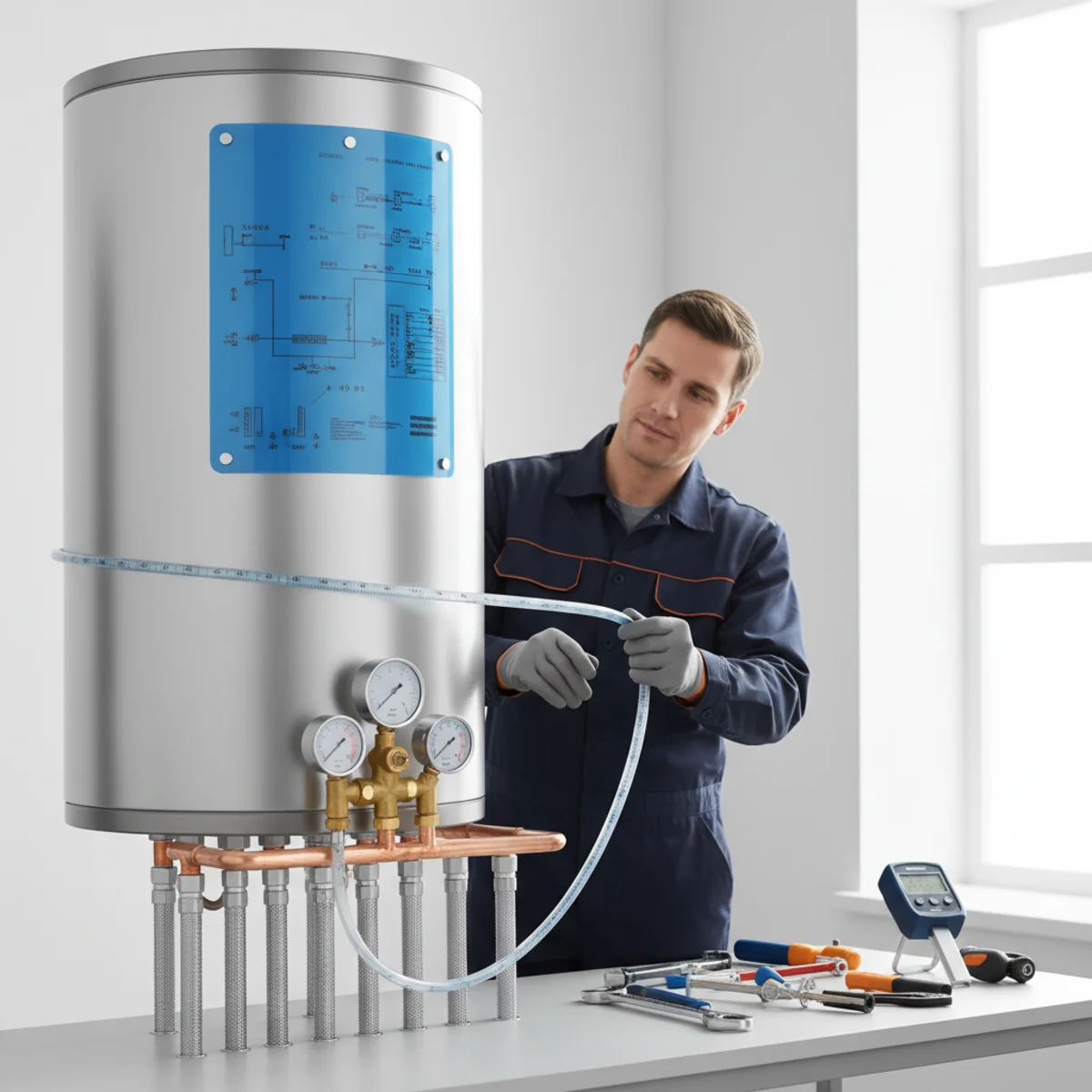
The FHR test starts with a full, fully heated tank. The tank is drawn down at a prescribed rate — 3.1 gallons per minute — until the outlet temperature drops 25°F below its starting point. The total gallons delivered before that drop is the FHR. The heater is recovering the whole time the test runs, so a unit with a high BTU input or fast electric elements will recover faster and push its FHR well above tank capacity.
For gas water heaters, BTU input is the recovery driver. A standard residential gas unit delivers 36,000–40,000 BTU per hour. High-demand models can reach 76,000 BTU per hour or more, which dramatically increases recovery speed and FHR. For electric units, the wattage and number of elements drive recovery. A 240V, dual-element 4,500-watt unit recovers meaningfully faster than a single-element version of the same tank size.
The FHR number appears right on the yellow EnergyGuide label. It's worth finding before you buy rather than going by tank size alone.
How to Estimate the FHR Your Household Needs
The DOE provides a simple sizing method based on peak-hour demand — the busiest hour of hot-water use in your home, usually the morning. Add up the likely hot water use during that hour using these standard approximations:
- Shower: approximately 10 gallons for an 8-minute shower at a typical flow rate.
- Bath: approximately 20 gallons.
- Shaving or hand-washing at the sink: approximately 2 gallons.
- Dishwasher cycle: approximately 6 gallons.
- Clothes washer on a warm or hot cycle: approximately 7 gallons.
- Food prep or hand dishwashing: approximately 4 gallons.
Putting the Numbers to Work
A family of four with two morning showers, one shave, and a dishwasher running adds up to roughly 28 gallons of peak-hour demand. The DOE recommends selecting a unit with an FHR within a few gallons of that number — in this case, a unit rated around 28–34 gallons FHR would cover the family comfortably without massive oversizing.
Compare that against common tank sizes: a standard 40-gallon gas unit often has an FHR of 55–60 gallons; a 50-gallon unit might reach 65–70. That means most average families are well-served by a properly specified 40-gallon unit. Upgrading to 50 gallons may make sense for larger households, back-to-back shower schedules, or homes with a soaking tub that fills frequently.
Oversizing has costs beyond the higher purchase price. A tank that's too large heats and holds more water than you use, and that standby heat loss shows up on your gas or electric bill every month. In Rancho Cordova's climate, where summer AC use already pushes utility bills, unnecessary standby loss is worth avoiding.
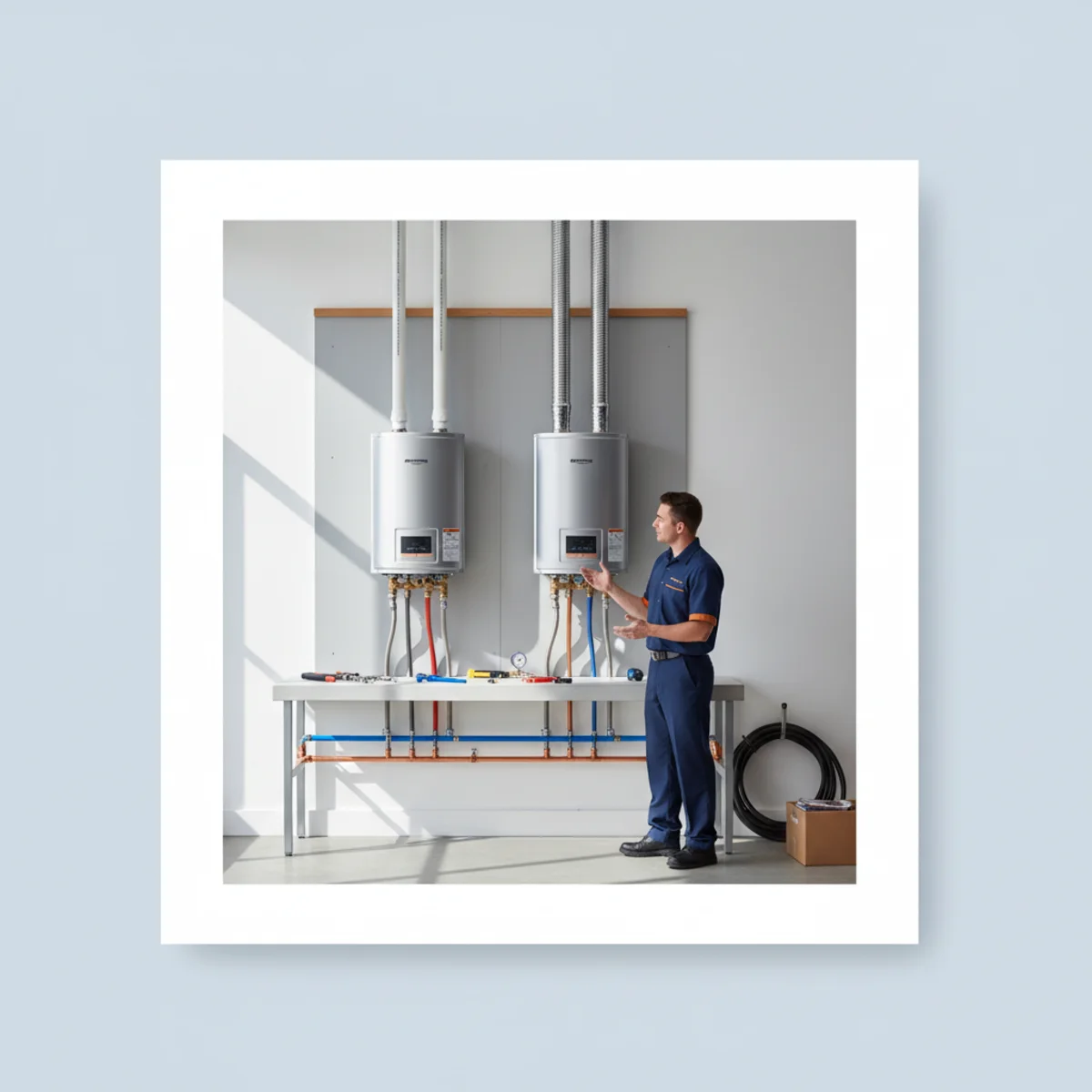
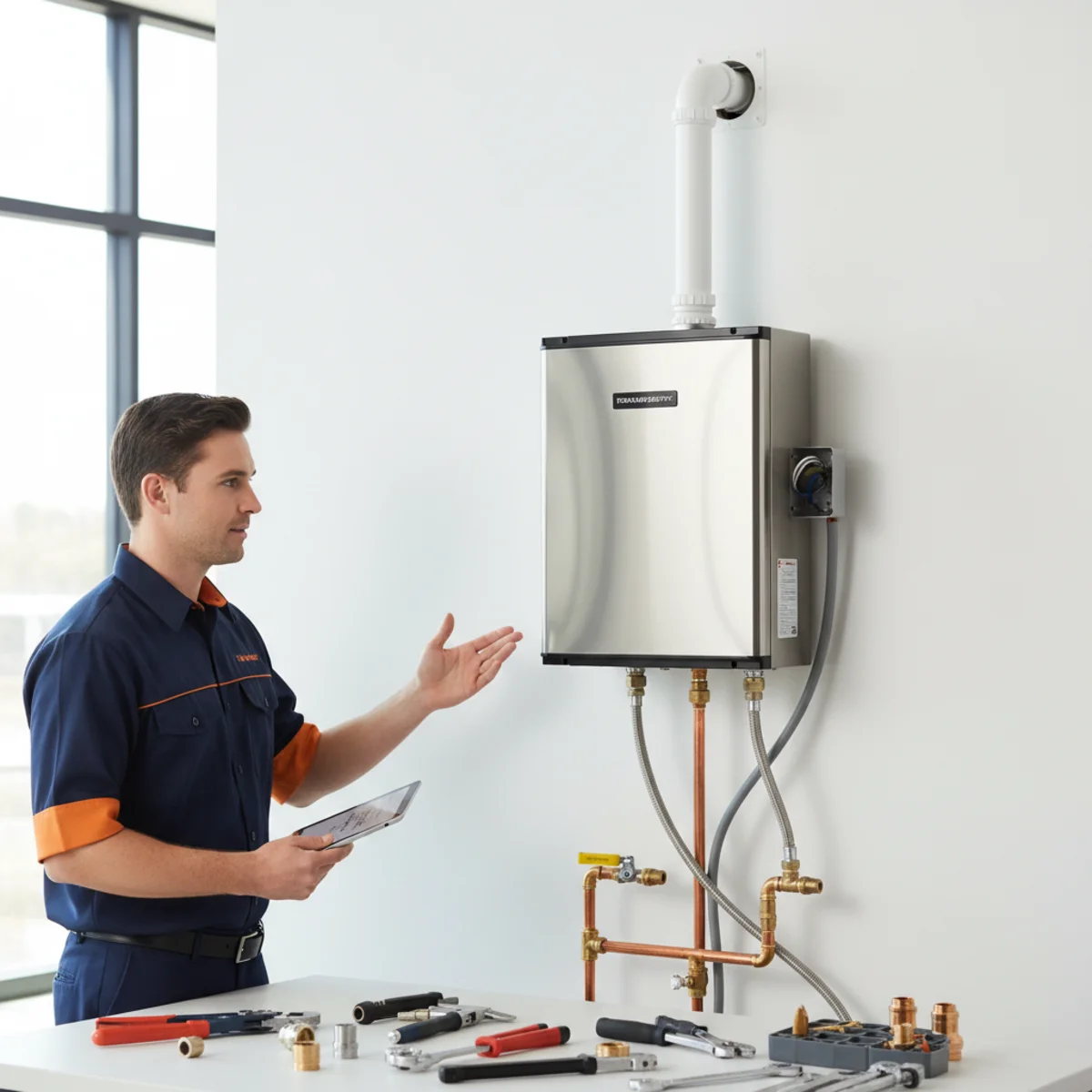
If you're also considering going without a tank entirely, a tankless water heater installation eliminates standby loss completely — though sizing a tankless unit uses a different method: gallons per minute at the required temperature rise rather than FHR.
Gas vs. Electric Recovery Rates
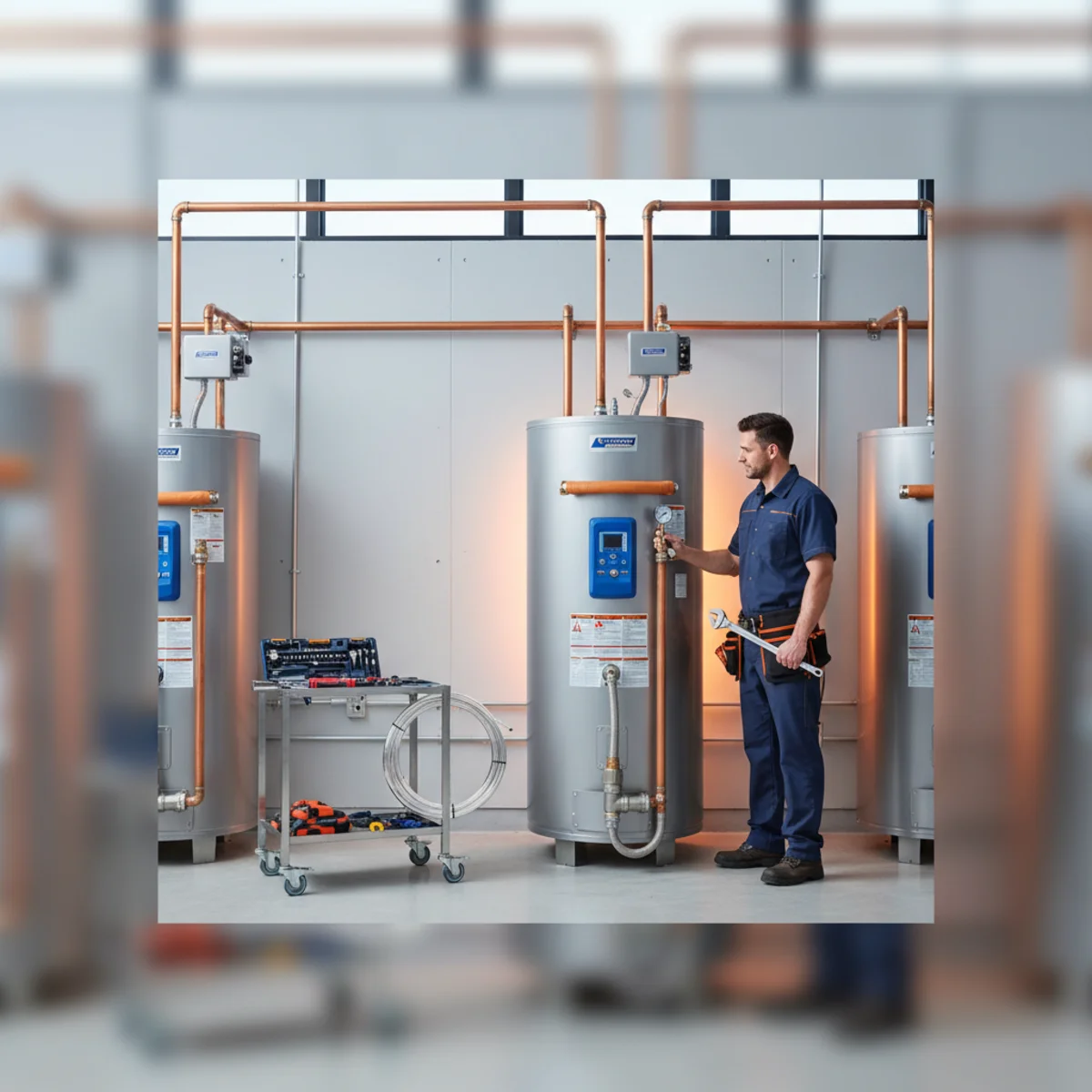
Gas heaters recover faster than standard electric for the same tank size. A 40-gallon gas unit at 40,000 BTU per hour recovers roughly 41 gallons per hour. A 40-gallon standard electric unit at 4,500 watts recovers approximately 21 gallons per hour. That's why the FHR on a 40-gallon gas unit often exceeds the FHR on a larger 50-gallon electric unit.
This matters most in Sacramento County where many older homes have electric water heaters in interior closets with no gas line nearby. If your household has high demand and you're stuck with electric, look for a model with a high wattage rating or a heat pump water heater — which uses a compressor to move heat rather than generate it and can have FHRs comparable to gas units while using significantly less electricity.
SMUD customers may find heat pump water heater rebates available; confirm the current program before purchasing. Our water heater replacement service can help you navigate the options for your fuel type and home layout.
When to Call a Pro for Sizing Help
The FHR method works well for average households. It gets more complicated with large families, multiple simultaneous users, or unusual fixtures like high-flow showerheads, multi-person shower systems, or commercial-size dishwashers. If you've already replaced a tank once and still run cold, the issue might not be FHR — it could be a failing dip tube mixing cold water into the hot supply, a sediment buildup reducing effective capacity, or a deteriorating heating element.
A quick inspection can rule out those factors before you spend money on a larger unit. Our water heater installation team serving Rancho Cordova can assess your current unit and recommend the right FHR for your household's actual demand. Contact us if you want a second opinion before you buy.
Talk to a Local Rancho Cordova Water Heater Pro
Whether you need a repair today or you're planning an upgrade, we'll give you a straight answer and an upfront estimate.
Frequently Asked Questions
No. Tank capacity is how many gallons the tank holds when full. FHR includes recovery — how much water the heater can deliver in one hour starting from full. FHR is almost always higher than tank capacity for gas units and lower-to-equal for slower electric units.
It should be on the EnergyGuide label — the yellow sticker on the side of the tank. If the sticker is missing or faded, look up the model number on the manufacturer's website or in the DOE's ENERGY STAR database.
Possibly, but check first whether the current tank's FHR actually falls short of your new peak demand. Sometimes the issue is a failing component — dip tube, heating element, thermostat — rather than insufficient capacity. A diagnostic check before replacement saves money if the existing unit just needs a repair.
Not necessarily. FHR is about delivery rate, not efficiency. A unit with a high BTU burner will have a higher FHR, but its actual energy use depends on how often it fires and the unit's efficiency rating (UEF). For energy costs, look at the annual energy cost estimate on the EnergyGuide label alongside the FHR.
Written by the Water Heater RC Pros team
Practical, local guidance from Rancho Cordova water-heater installers — written for homeowners and kept current with California code. Have a question about your unit? Call (201) 277-9344.