A restaurant, salon, medical office, or auto shop running out of hot water mid-day doesn't just inconvenience customers — it can shut down operations. Commercial water heaters are built for continuous high-demand use, and choosing the right one requires a different set of calculations than a residential installation. The first-hour rating methodology that works for home sizing doesn't apply the same way when you're heating water for a commercial dishwasher running every 90 seconds.
Rancho Cordova's commercial corridor along Folsom Boulevard, the industrial areas near Mather Field, and the business parks throughout the city represent a wide range of small-business water demands — from a hair salon needing 30 gallons of consistent hot water to a restaurant needing continuous high-temperature supply for a commercial dishwasher. The right unit for one is completely wrong for the other.
This guide walks through how commercial units differ from residential ones, how to size for your business type, what California code requires for commercial installations, and how the maintenance picture changes in a commercial context.
How Commercial Water Heaters Differ from Residential Units
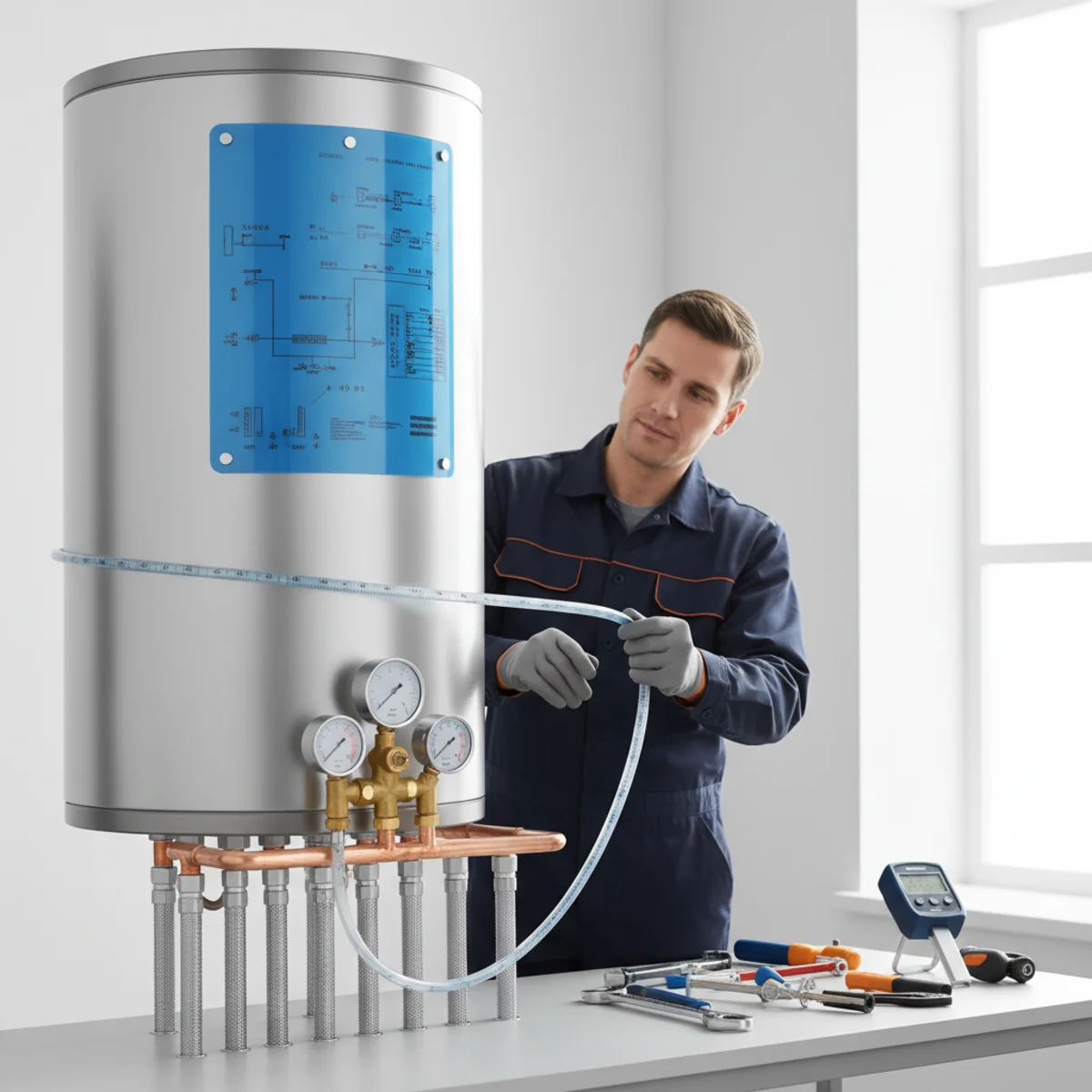
Commercial water heaters are built for duty cycles and flow rates that residential units aren't rated to handle. The key differences are recovery rate, input rating (BTU or kW), and build durability. A residential 50-gallon gas unit might have a 36,000 BTU burner and recover 33 gallons per hour. A commercial 100-gallon unit can have a 199,000 BTU burner and recover over 190 gallons per hour — nearly 6 times the recovery rate.
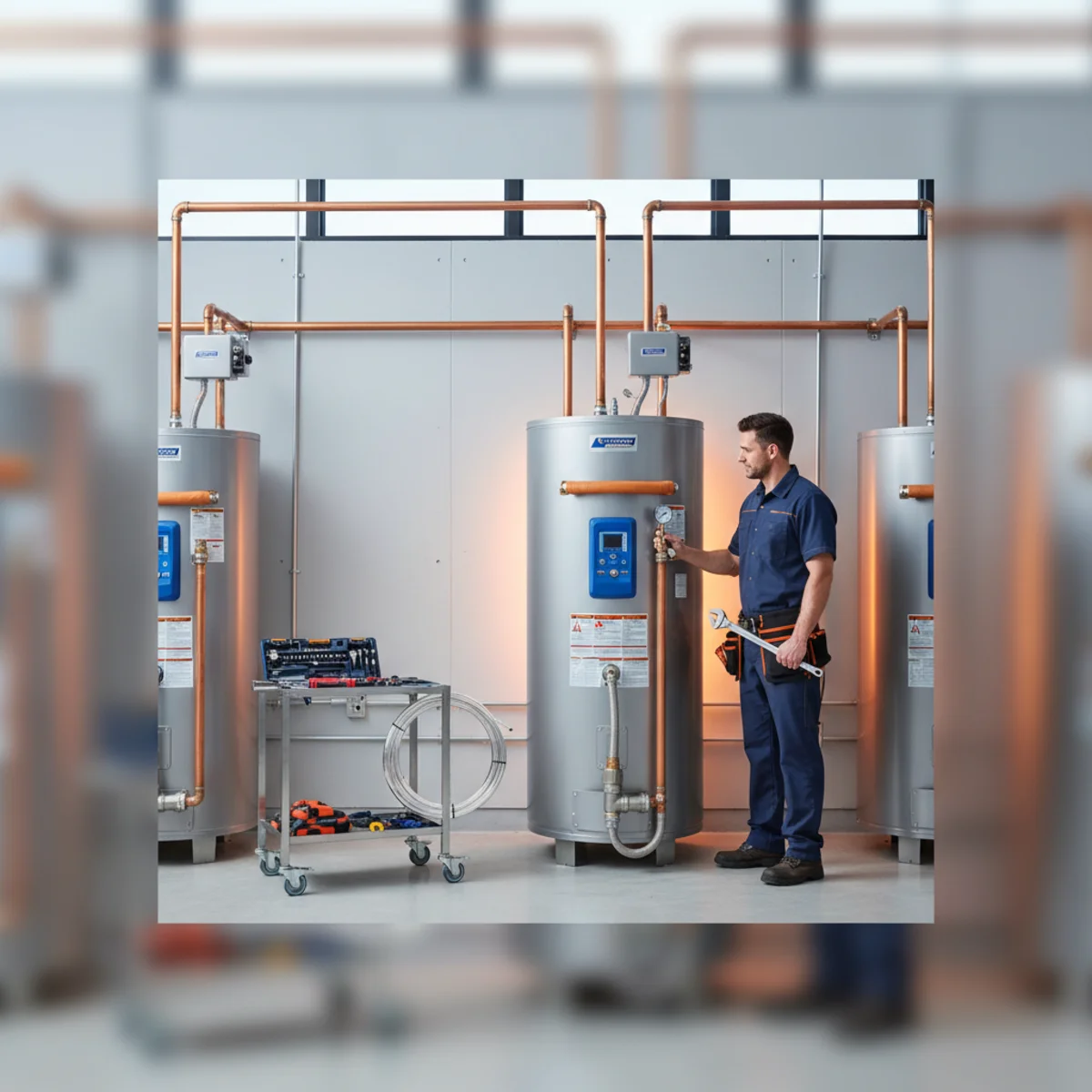
Commercial units also use heavier-gauge steel, commercial-grade anode rods, and in many cases, storage tanks designed for higher operating pressure. The venting is more robust — commercial gas units often require dedicated flue sizing that residential venting guidelines don't cover. And the service intervals are different: a commercial unit in a hard-water area often needs maintenance every 6 months, not annually.
Attempting to handle commercial demand with an oversized residential unit is a common mistake. The residential unit isn't designed for the duty cycle and will fail early, void its warranty, and potentially create a liability if it fails during business operation.
Sizing by Business Type
Commercial sizing starts with peak demand — the maximum gallons per hour your business needs at its busiest period — not just daily total. A restaurant in the dinner rush is a different calculation than the same restaurant during prep.
California plumbing code provides demand-based sizing tables for commercial applications. Your installer should be doing this calculation explicitly, not eyeballing it. If they're not asking about your peak usage times and fixture counts, ask why.
| Business Type | Key Demand Driver | Common Unit Type |
|---|---|---|
| Full-service restaurant | Commercial dishwasher + prep sinks | High-recovery storage or tankless commercial |
| Coffee shop / cafe | Espresso, hand-washing, small dishwasher | Mid-recovery storage or under-counter tankless |
| Hair salon / barbershop | Shampoo bowls — 2–3 gal/minute sustained | Storage unit sized per chair count |
| Auto detailing shop | Pressure washer + hand sinks | High-flow storage or on-demand commercial |
| Medical / dental office | Hand-washing sinks — high frequency, moderate volume | Storage or point-of-use units at each zone |
| Laundromat | Continuous fill at precise temperature | Large storage + booster heater |
Fuel Type: Gas vs. Electric for Commercial Applications
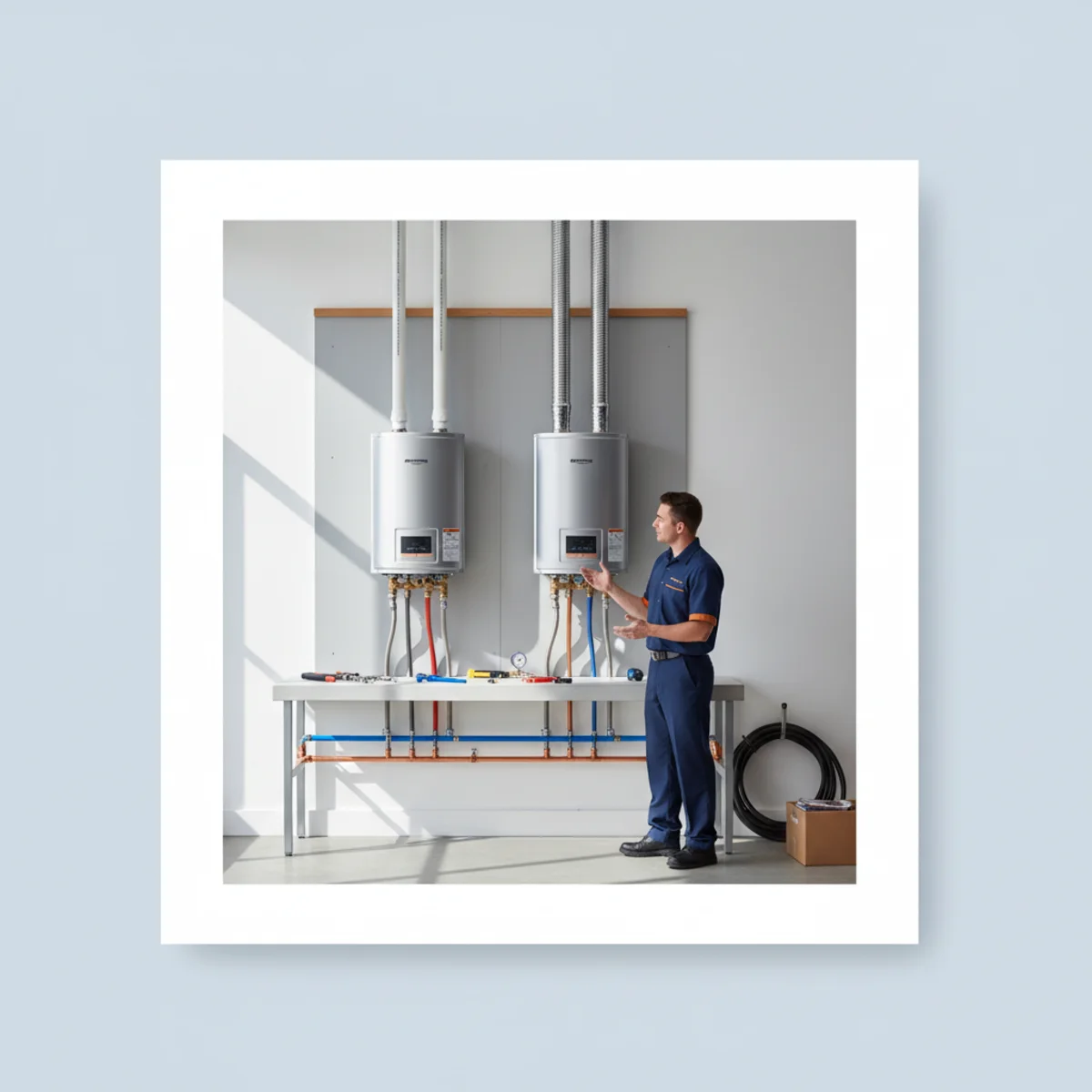
For most high-demand commercial applications in Rancho Cordova, natural gas is the dominant choice because of its recovery rate advantage. A commercial gas unit at 199,000 BTU input can recover water far faster than any single-phase electric unit can match. For businesses that need a large continuous volume of hot water — restaurants, laundromats, salons with multiple chairs — gas is usually the right call where gas service is available.
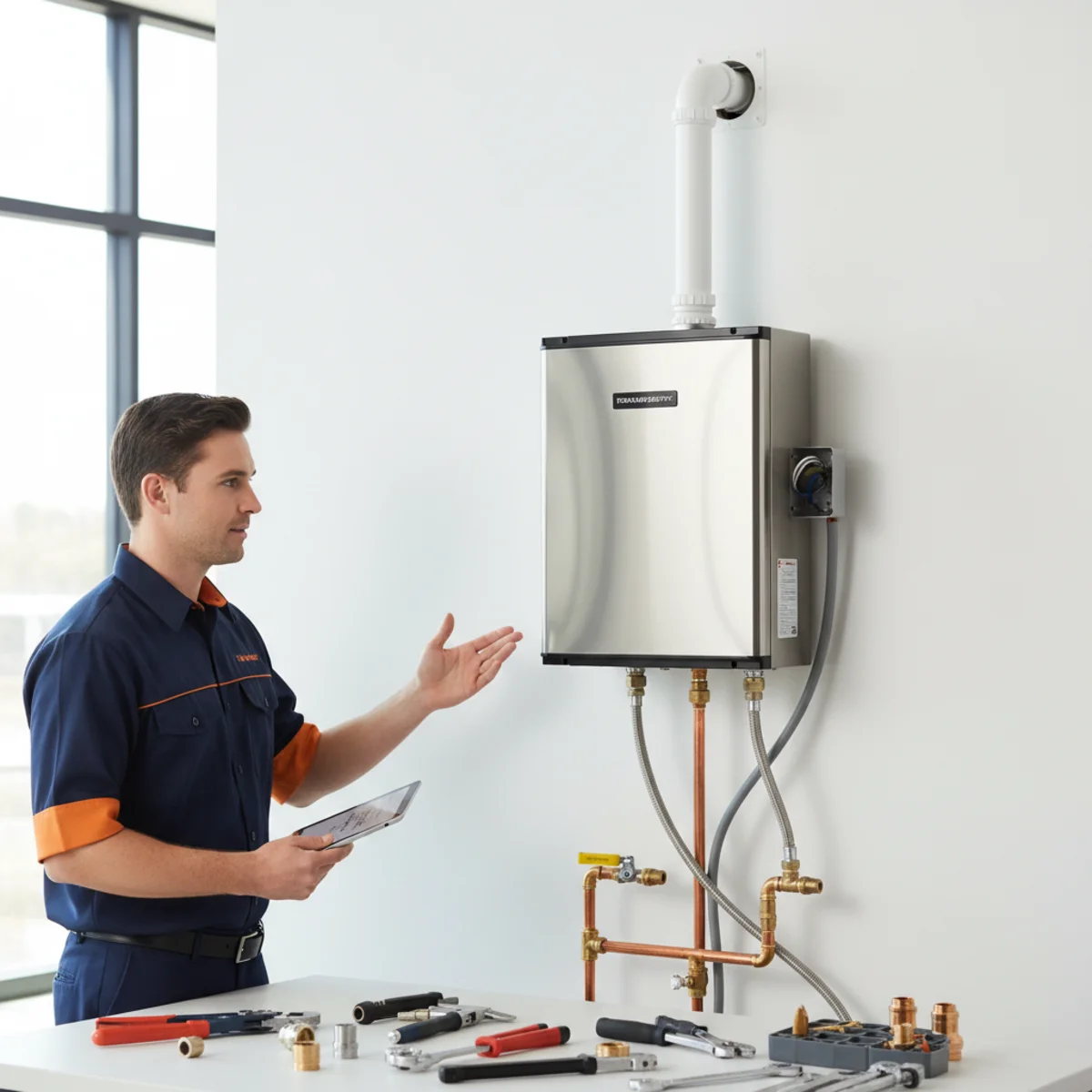
Electric commercial units make more sense in specific scenarios: where gas service isn't available or would require significant line extension, where the demand is moderate and intermittent (a small medical office with a few handwashing sinks), or where heat pump commercial units qualify for significant rebate offsets. SMUD and PG&E have run commercial rebate programs for heat pump water heaters — confirm current availability and requirements before purchasing.
Three-phase electric commercial units are another tier for very high-demand applications. These require three-phase electrical service, which many Rancho Cordova commercial buildings in older areas don't have. Confirm your service type before specifying an electric commercial unit.
Our commercial water heater installation service handles both gas and electric commercial applications — we'll assess your current utility service as part of the scoping process.
California Code Requirements for Commercial Installations
Commercial water heater installations in Sacramento County require a building permit in virtually all cases. Commercial work is inspected more rigorously than residential, and code compliance isn't optional — a failed inspection means the system can't be used until corrections are made.
Key California requirements that apply to commercial water heaters include: proper seismic restraint (commercial units often require engineered strapping), expansion tank on closed systems, T&P valve with discharge piping to a safe termination, combustion air requirements for gas units sized per BTU load, and venting sized per unit specifications. Commercial installations also need to comply with California Title 24 energy efficiency requirements, which affect unit selection.
Water temperature requirements for commercial use differ from residential. Restaurants typically need 140°F at the commercial dishwasher (sanitization temperature), while 110–120°F is appropriate at handwashing sinks. This often means a storage unit set at 140°F with tempering valves at handwashing locations, or a booster heater specifically for the dishwasher circuit.
Sacramento County permits, inspections, and California plumbing code education — we can walk you through what applies to your installation. These aren't fixed rules I can summarize completely here; specifics depend on your building type, unit BTU load, and fuel type.
Maintenance Is Different at Commercial Scale
Commercial water heaters in hard-water areas like Rancho Cordova need flushing every 6 months, not annually. The sediment accumulation rate with high-volume commercial use is significantly faster, and a sediment-laden commercial tank can fail in 4–5 years instead of the expected 10–15 years.
Anode rod inspection should happen annually in a commercial context. T&P valve testing should be part of every maintenance visit. Commercial units also benefit from water softener or descaling treatment in the supply line — the ROI on preventing scale in a commercial tank is much stronger than it is residentially.
Keep a service log. Sacramento County health inspections for food service businesses may include questions about water heater maintenance records. A documented history of proper servicing also matters for warranty claims.
For ongoing commercial service, our commercial water heater repair team handles emergency repairs and scheduled maintenance for small businesses throughout Rancho Cordova. Contact us to discuss a maintenance schedule appropriate for your business type.
- Flush the tank every 6 months — or more in high-use applications.
- Inspect anode rods annually; replace before full depletion.
- Test T&P valve at every maintenance visit.
- Check flue connections and combustion air intake on gas units.
- Keep a written service log for health inspection compliance.
- Consider a commercial water softener or descaling treatment upstream of the unit.
Talk to a Local Rancho Cordova Water Heater Pro
Whether you need a repair today or you're planning an upgrade, we'll give you a straight answer and an upfront estimate.
Frequently Asked Questions
Yes, virtually all commercial water heater installations and replacements require a building permit in Sacramento County. Commercial work is subject to inspection, and unpermitted commercial plumbing can create significant liability issues — particularly for food service businesses subject to health inspections.
With proper maintenance, a commercial storage water heater should last 10–15 years. In Rancho Cordova's hard water without a softener, and with high-demand commercial use, expect the lower end of that range if maintenance isn't regular. Commercial tankless units generally last longer — often 20+ years — but cost more to service.
It depends on your application. Commercial dishwashers require a final rinse temperature of 180°F at the machine (often achieved with a booster heater from a 140°F storage unit). Handwashing sinks should be tempered to 110°F or below. Health codes vary — verify the specific requirements for your business type with your local health department.
Not recommended, and in most cases not code-compliant for commercial applications. Residential units aren't rated for commercial duty cycles, and using one in a commercial setting typically voids the warranty. More importantly, a residential unit undersized for commercial demand will fail early and leave you without hot water during business hours.
Sizing is based on peak demand — the maximum gallons per hour needed during your busiest period, not just daily total. A proper sizing calculation accounts for fixture count, simultaneous use, temperature rise required, and usage patterns. This isn't something to estimate by gut feel. Call us with your business type, approximate fixture count, and operating hours and we'll work through the calculation with you.
Written by the Water Heater RC Pros team
Practical, local guidance from Rancho Cordova water-heater installers — written for homeowners and kept current with California code. Have a question about your unit? Call (201) 277-9344.