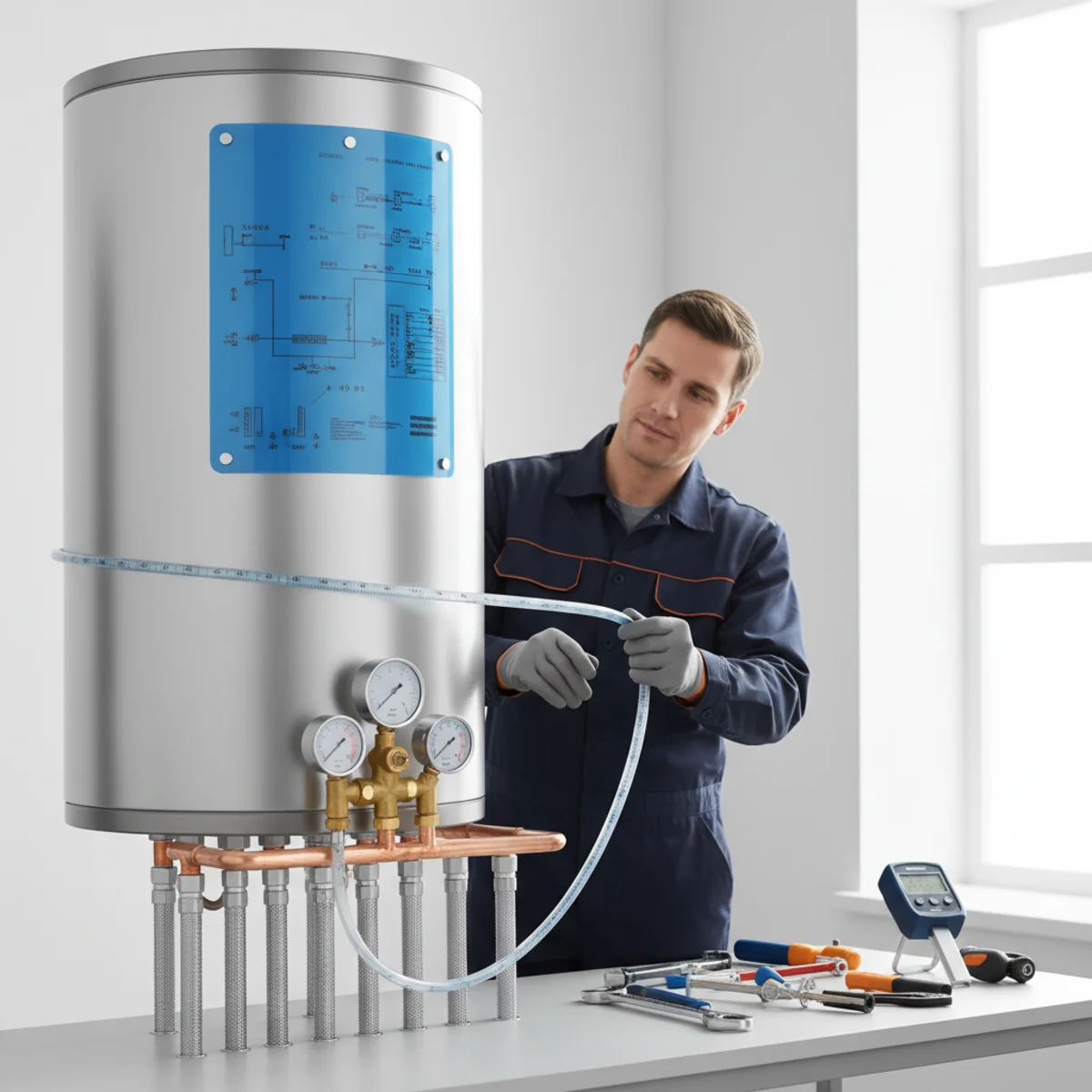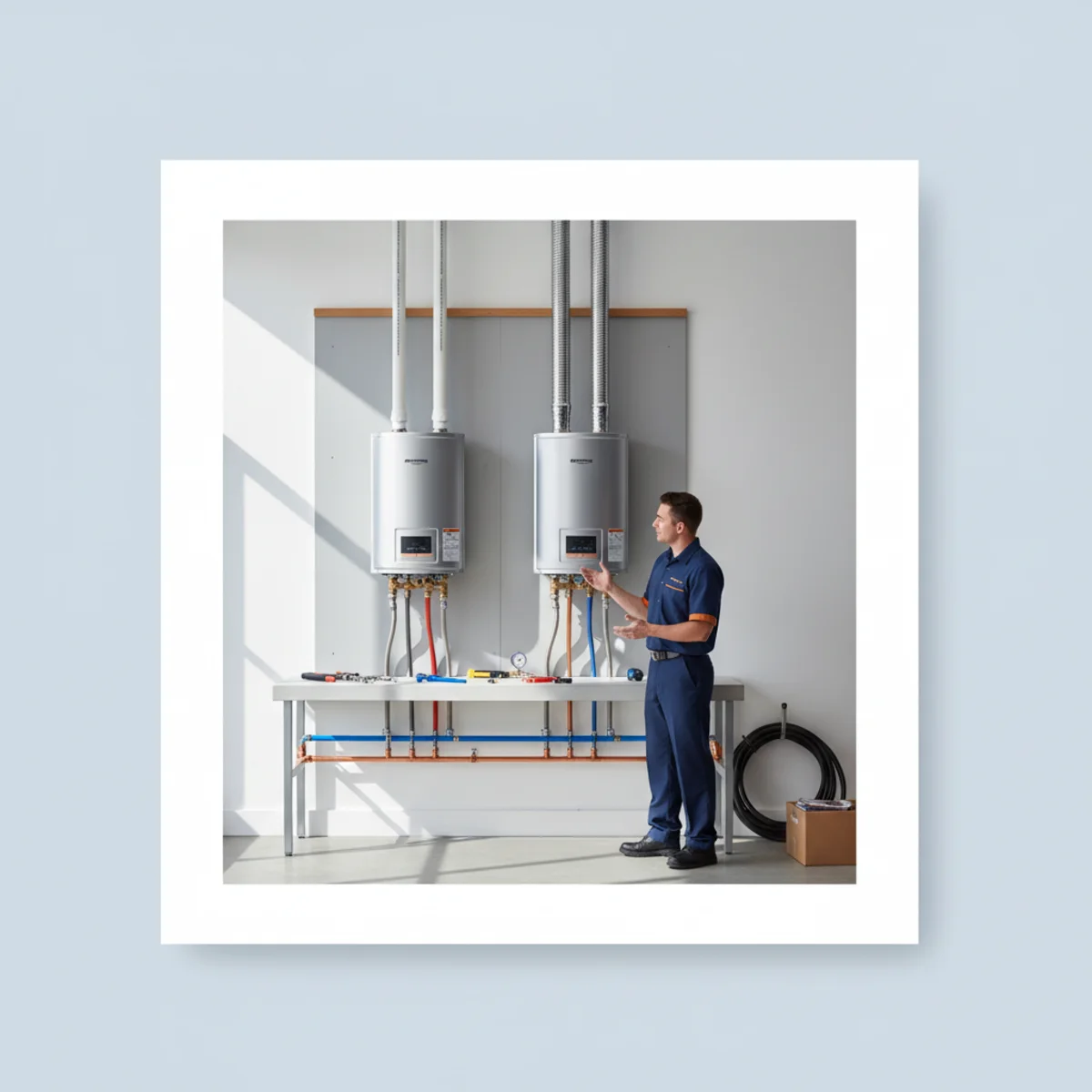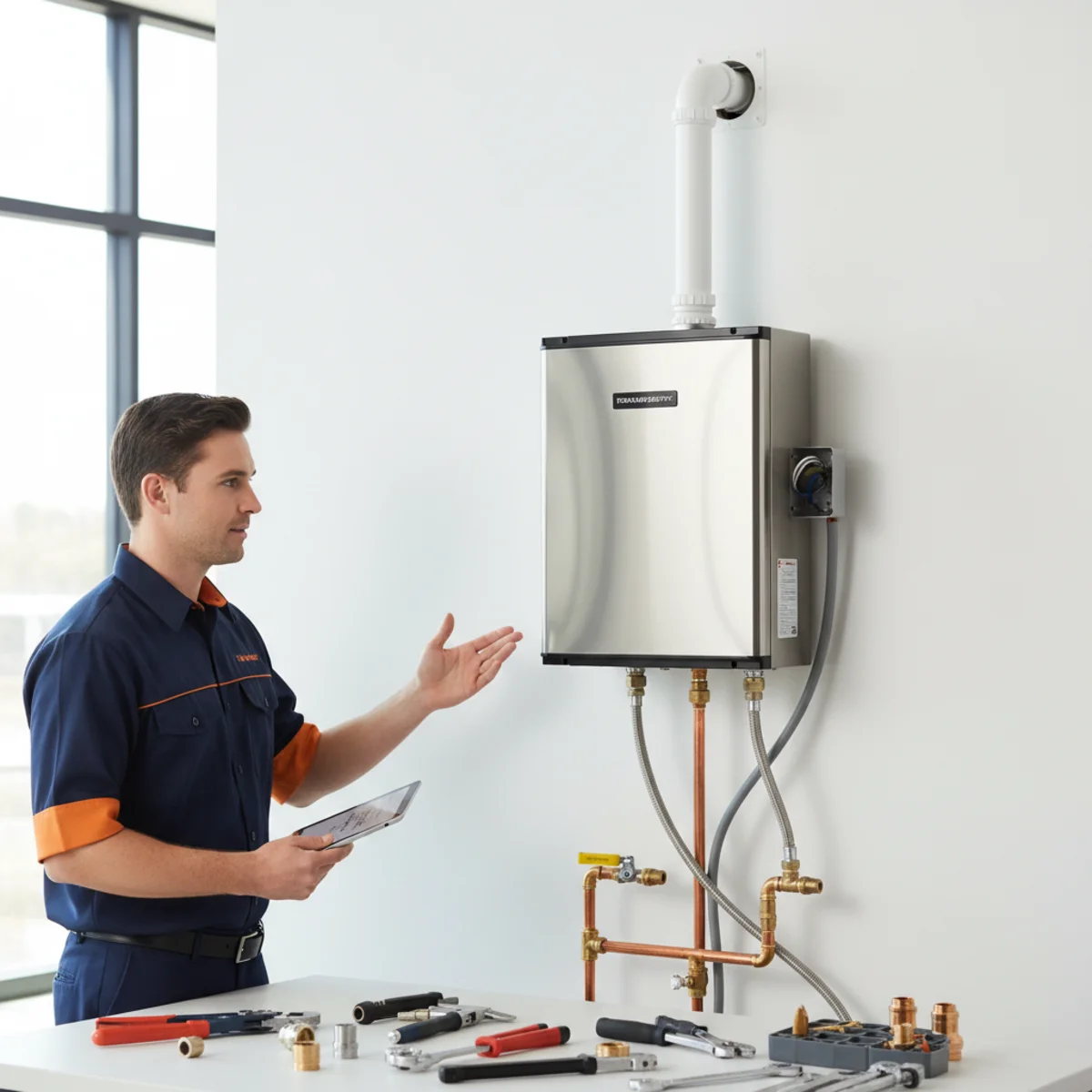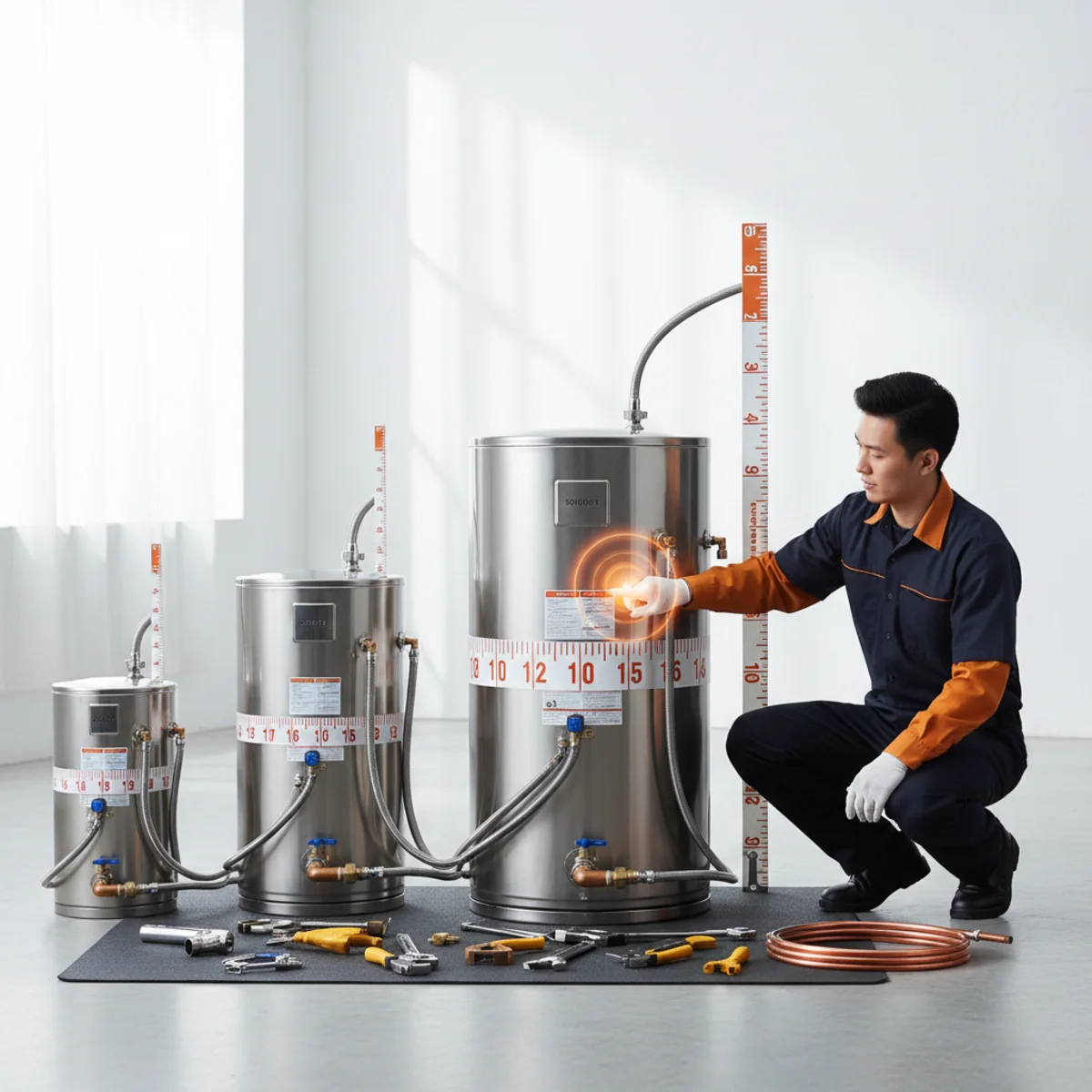
The single most common sizing mistake is replacing a unit with the exact same capacity without checking whether that size was ever right in the first place. Households grow, habits change, and the 40-gallon tank the previous owner installed 12 years ago may have been undersized from day one.
Getting the size right matters in both directions. Too small and you're the person who gets a cold shower when everyone else has already gone. Too large and you're paying to heat a standing reservoir of water that no one uses — a real cost in Rancho Cordova's warm-climate households where standby heat loss is higher in un-insulated garage utility rooms during summer.
The good news: water heater sizing has a simple, accurate framework. For tank units, it's the first-hour rating (FHR). For tankless, it's the flow rate in gallons per minute (GPM) at your incoming groundwater temperature. This guide walks through both, with a sizing table you can use immediately.
The Right Sizing Metric: First-Hour Rating and GPM
Tank capacity in gallons is not the right sizing metric by itself. A 40-gallon fast-recovery gas unit can deliver more hot water in the first hour than a 50-gallon slow-recovery electric unit. The number you should care about is the first-hour rating (FHR) — the total gallons of hot water the unit can supply in the first hour of operation starting from a full, hot tank. This accounts for both the stored capacity and the recovery rate.
The FHR is printed on the yellow EnergyGuide label on every new water heater. When comparing units, look at FHR, not just tank size. A 40-gallon gas unit might have an FHR of 80; a 40-gallon electric resistance unit might have an FHR of 63.
For tankless water heaters, there is no stored volume — the unit only heats water on demand. The relevant metric is flow rate in gallons per minute (GPM) at a given temperature rise. Rancho Cordova's incoming groundwater temperature averages roughly 60–65°F in winter. If you want 120°F output water, you need a unit rated for the required GPM at a 55–60°F temperature rise.
Need help deciding which type is right for your household? Our water heater installation team can walk you through the options, or see our tankless installation service for demand-based systems.
How to Calculate Your Peak Hour Demand
Peak hour demand is the maximum hot water your household uses during the busiest hour of the day — typically morning. Add up the typical uses that overlap during that hour. Standard usage estimates per activity are widely published by the Department of Energy.
- Shower: approximately 10 gallons per shower (8-minute average at 1.25 gpm).
- Bathtub: approximately 20 gallons per full fill.
- Shaving or hand wash at sink: 2 gallons per person.
- Dishwasher cycle running simultaneously: 6–14 gallons.
- Clothes washer (hot cycle running simultaneously): 7 gallons.
- Add a buffer of 10–15 gallons to your calculated peak demand to get your target FHR.
Sizing Table by Household
The table below gives recommended tank sizes, target FHRs, and minimum tankless GPM ratings for typical Rancho Cordova households. These are general guidelines — actual usage patterns vary significantly, and a household with a large soaking tub or multiple simultaneous showers should size up.
| Household Size | Tank Size (Gallons) | Target FHR (Gallons) | Tankless Min GPM (60 F rise) |
|---|---|---|---|
| 1–2 people | 30–40 gal | 50–60 gal | 5–6 GPM |
| 3–4 people | 40–50 gal | 70–80 gal | 6–8 GPM |
| 5–6 people | 50–65 gal | 80–100 gal | 8–10 GPM |
| 6+ or high demand | 65–80 gal (or dual tanks) | 100+ gal | 10+ GPM or multiple units |
Tank vs Tankless: Sizing Considerations
Tank water heaters are simpler to size: match the FHR to your peak demand. They're also more forgiving of demand spikes because the stored volume provides a buffer. The trade-off is standby heat loss — you pay to keep that volume hot 24 hours a day whether you use it or not.
Tankless units eliminate standby loss but require accurate GPM sizing. Undersizing a tankless unit is a real problem: the unit limits flow to maintain the target output temperature, meaning low-pressure or tepid water when multiple fixtures are running simultaneously. In Rancho Cordova's hard water, tankless heat exchangers need annual descaling to maintain rated flow — scale buildup reduces the effective GPM capacity over time.
For larger households (5+ people) with simultaneous high demand — multiple showers, dishwasher, and laundry running at once — a single residential tankless unit may not have sufficient GPM capacity. Two units in parallel, or a high-input commercial-grade unit, addresses this but adds installation complexity and cost.
Special Considerations for Rancho Cordova Homes
Garage installs are common in Rancho Cordova — which affects both tank and tankless sizing decisions. A 50-gallon tank in an un-insulated garage loses more heat to the ambient air during cold nights than the same unit in a conditioned space, slightly increasing standby costs. Adding a tank insulation blanket (rated for water heaters) reduces standby loss.
Hard water is the other local factor. Scale buildup reduces the effective capacity of tankless heat exchangers and the efficiency of tank heating elements over time. Budget annual descaling or flushing into your maintenance plan — it maintains rated performance and extends equipment life.
For a precise sizing recommendation for your home, contact us or visit our Rancho Cordova service area page. We'll review your current usage, household size, and existing infrastructure before recommending a unit.
Talk to a Local Rancho Cordova Water Heater Pro
Whether you need a repair today or you're planning an upgrade, we'll give you a straight answer and an upfront estimate.
Frequently Asked Questions
It depends on usage patterns. A 40-gallon gas unit with an FHR of around 75–80 gallons can handle a family of four with moderate demand. If you have multiple simultaneous showers or a large tub, a 50-gallon unit with a higher FHR is safer. Check the EnergyGuide label for FHR, not just the gallon sticker.
No. A 50-gallon electric tank with a low FHR may deliver less hot water in the first hour than a 40-gallon gas unit with a high FHR. Tank capacity matters, but recovery rate is what determines how much hot water you actually get during peak demand.
Calculate the maximum simultaneous flow rate you'll need (typically 2–4 fixtures running at once) and the required temperature rise. Incoming water in Rancho Cordova averages 60–65°F in winter and your target output is 120°F. For a family of four running two showers at once, look for a unit rated at minimum 7–8 GPM at a 55–60°F rise.
You pay for standby heat loss — the energy required to keep excess water hot. In California's higher-cost utility environment, an oversized tank in an un-insulated garage adds noticeably to annual operating costs. It's a real cost, not a trivial one.
Not necessarily. The distance from the heater to the farthest fixture affects wait time for hot water, not volume. If you're waiting a long time for hot water at an upstairs bathroom, a recirculation pump addresses the problem — sizing up the tank doesn't.
Written by the Water Heater RC Pros team
Practical, local guidance from Rancho Cordova water-heater installers — written for homeowners and kept current with California code. Have a question about your unit? Call (201) 277-9344.