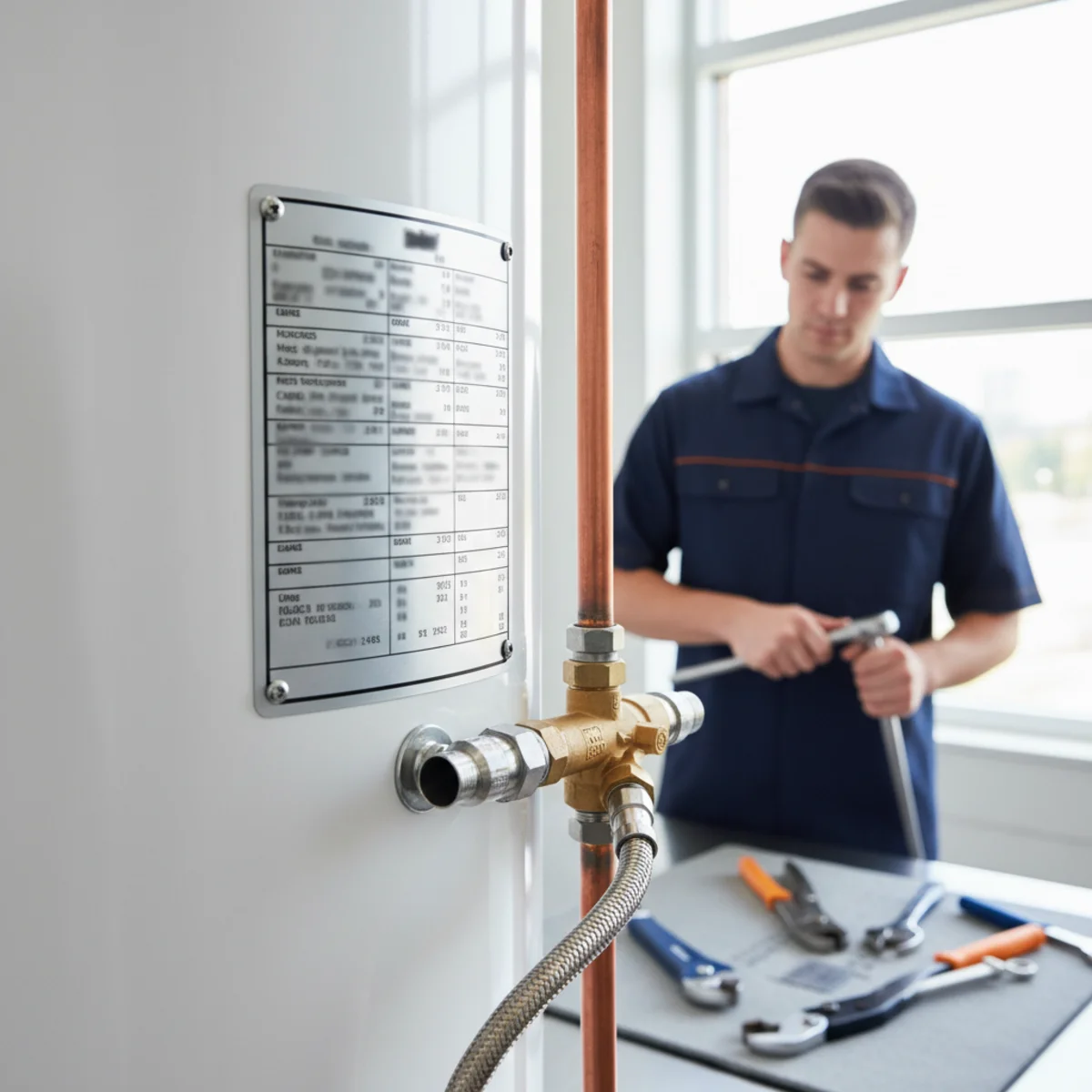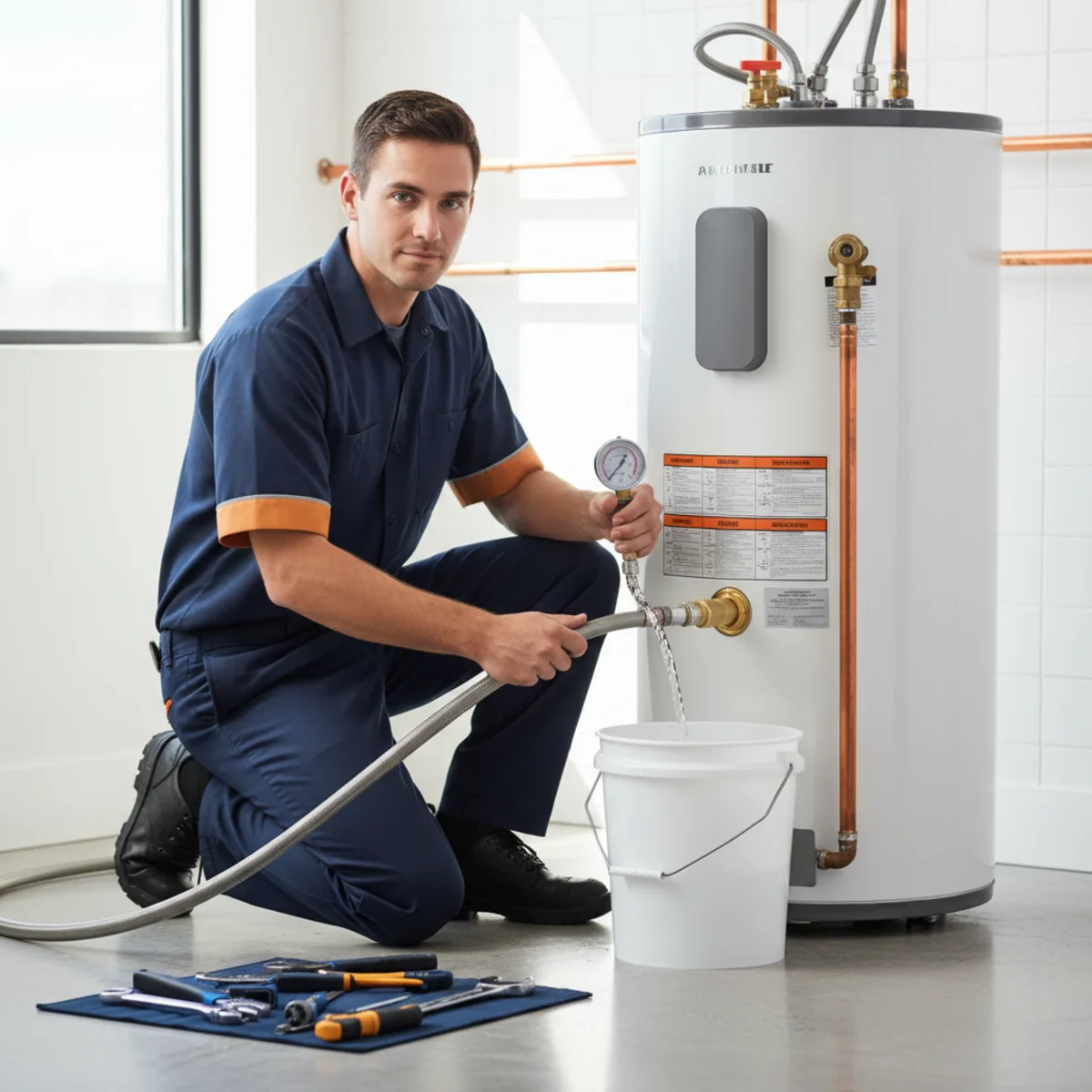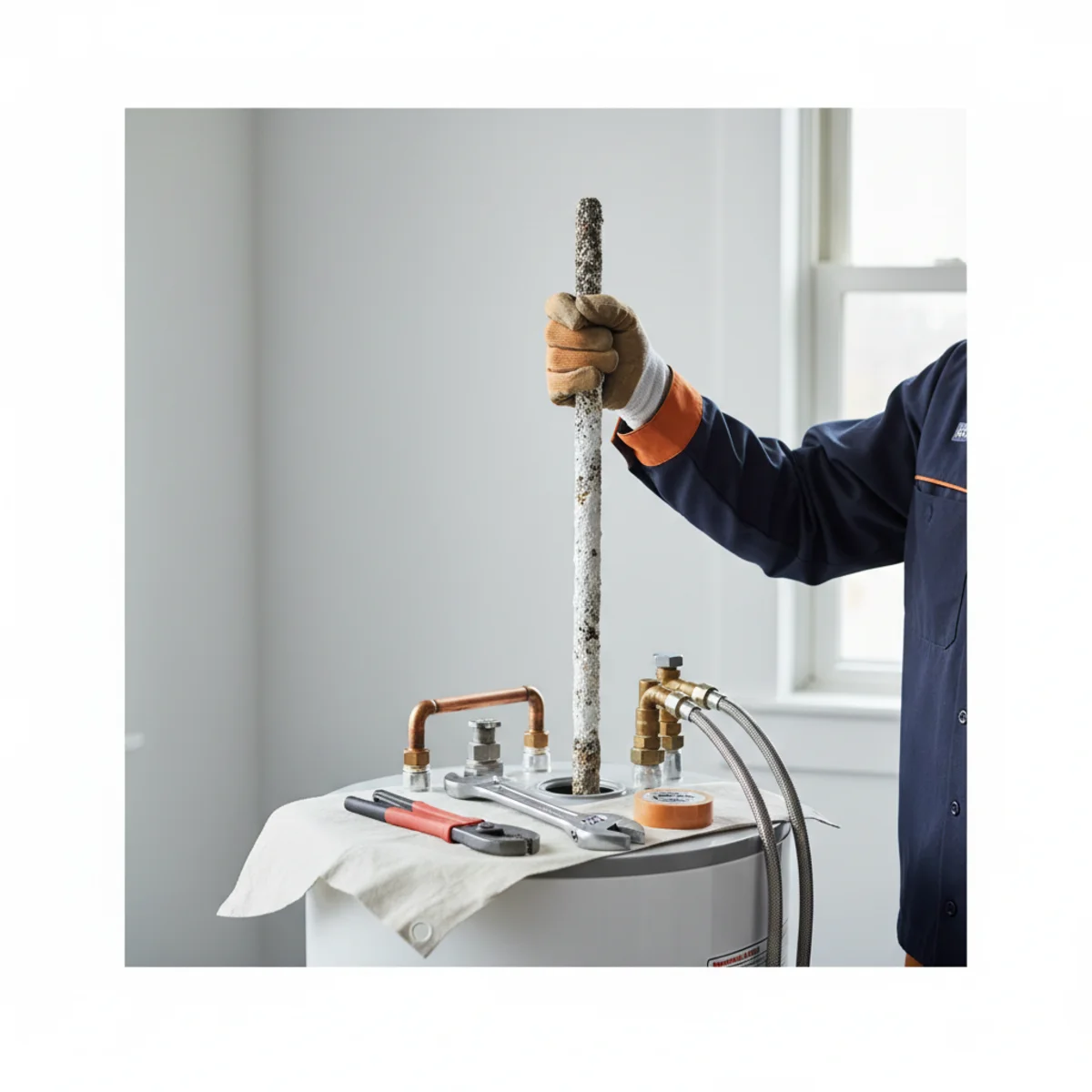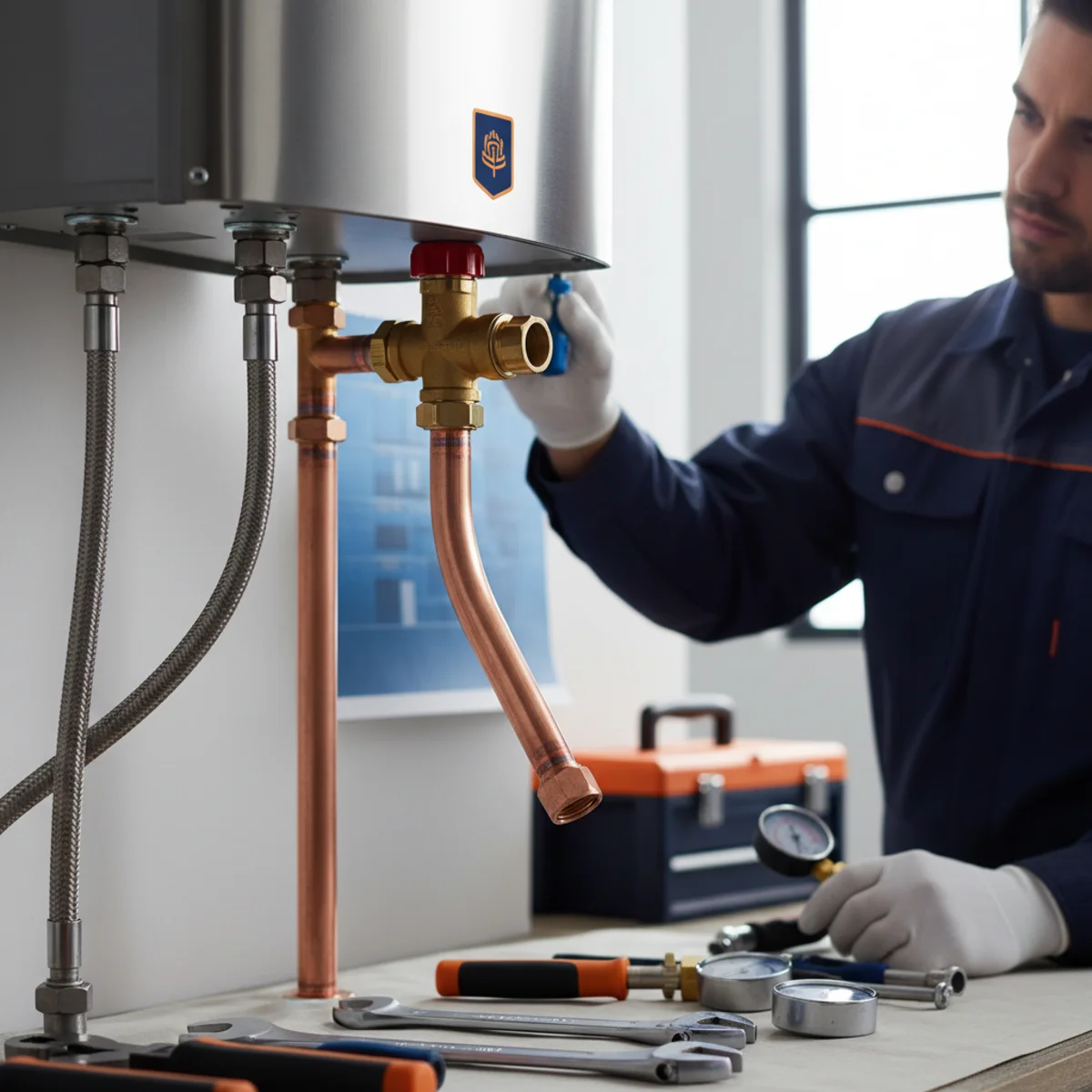
The temperature and pressure relief valve — called the T&P valve or TPR valve — is a small brass fitting on the side or top of your water heater tank. It's also the most important safety device on the unit. If your thermostat ever malfunctions and lets the water overheat, or if pressure builds beyond safe limits, the T&P valve opens automatically to release that energy before the tank ruptures.
A water heater without a functioning T&P valve isn't just non-compliant with California code — it's a genuine hazard. Overpressure failures in water heaters are rare but catastrophic when they occur, capable of launching a tank through a roof. This is not a component to ignore.
For Rancho Cordova homeowners, T&P valve maintenance matters in a specific way: California requires a dedicated discharge pipe that routes released water safely outside or to a drain. If yours is missing or incorrectly installed, it's a code violation worth fixing. Here's what you need to know.
How a T&P Valve Works
The T&P valve has two triggers: temperature and pressure. The temperature sensor trips at 210°F — just below boiling — and the pressure side trips at 150 PSI. Either condition alone is enough to open the valve. When it opens, hot water (or steam, in a severe event) vents out through the discharge pipe.
Normal residential water pressure runs 40–80 PSI. Normal operating temperature is 120–140°F. Both are well below the valve's trigger points, which is why a healthy T&P valve never activates during routine use.
If your T&P valve is dripping or discharging water regularly, that's not a faulty valve — it's a symptom. Either your water pressure is running high (over 80 PSI), your thermostat is running hot, or thermal expansion from a closed water system is pushing pressure up cyclically. Our water heater repair team can diagnose which issue is occurring.
California Code Requirements for T&P Discharge Pipes
California Plumbing Code requires that every T&P valve have a properly installed discharge pipe. The pipe must run full-size (same diameter as the valve outlet — typically 3/4"), remain unobstructed, terminate within 6 inches of the floor or over a drain, and slope downward with no upward turns that could trap discharge water.
The discharge pipe cannot terminate in a location where a person could be burned by a sudden release of steam or scalding water. Plastic or CPVC pipe is not permitted for the first 6 inches off the valve. Most installations use copper or galvanized steel at the valve connection, then transition.
Sacramento County inspectors look at T&P discharge pipe routing during water heater permit inspections. If your discharge pipe terminates into the wall cavity, terminates outside without proper clearance, or has been capped (never do this), it will fail inspection. Contact us for a shut-off valve or T&P pipe correction if yours doesn't meet code.
How to Test Your T&P Valve
T&P valves should be tested every 1–2 years. Testing is simple but hot water will discharge, so make sure the discharge pipe is routed to a drain or outside before you start.
Lift the test lever (the small flip tab on the valve) for 3–5 seconds, then release it. You should hear or see a burst of hot water discharge through the pipe, then the valve should reseat cleanly and stop flowing. If it doesn't discharge when you lift the lever, it may be stuck or corroded internally. If it discharges but doesn't stop when you release the lever, the valve seat is worn and the valve needs replacement.
Do not test a valve that hasn't been tested in many years without being prepared to replace it. Old valves sometimes fail to reseat after being opened for the first time in a decade. Have a replacement valve on hand, or call a plumber before testing.
- Confirm the discharge pipe is routed to a safe location before testing.
- Lift lever for 3–5 seconds — hot water should discharge, then stop.
- No discharge when lifted = seized valve; replace it.
- Continuous drip after releasing lever = worn seat; replace it.
- Replacement valves must match the BTU rating and pressure rating of the original.
When to Replace a T&P Valve
Most manufacturers recommend replacing T&P valves every 3–5 years regardless of apparent condition. At the 6-year mark, replacement is overdue for most units. Mineral buildup from Rancho Cordova's moderately hard water can cause the valve seat to corrode or fail to seal reliably even if the valve appears externally intact.
Replace the valve immediately if: it's leaking or dripping; it failed to open during a test; it opened during normal operation without an overpressure condition; or you can see corrosion, white mineral deposits, or rust on the valve body.
A replacement T&P valve is an inexpensive part — typically $15–$40 for the valve itself. The work is straightforward for a licensed plumber. Deferring it is not worth the risk.
| Symptom | Likely Cause | Action |
|---|---|---|
| Dripping intermittently | High line pressure or thermal expansion | Test pressure; add expansion tank if needed |
| Dripping constantly | Worn valve seat | Replace T&P valve |
| Won't open when tested | Mineral seizure | Replace T&P valve immediately |
| Opened on its own (no malfunction) | Pressure spike or thermostat issue | Inspect thermostat and pressure regulator |
| Valve is 5+ years old | End of service life | Replace proactively |
What We See in Rancho Cordova Homes
Two common T&P-related problems come up during service calls in the Rancho Cordova area. First, thermal expansion. Many homes here have a backflow preventer on the main water line, which creates a closed system. When water heats up and expands, that pressure has nowhere to go — so the T&P valve relieves it. The fix is a thermal expansion tank on the cold-water inlet, not a new T&P valve.
Second, deferred maintenance. We regularly find T&P valves that haven't been tested in 10 or more years, often with no discharge pipe or a pipe that terminates inside the wall. These are safety code issues Sacramento County takes seriously during permit inspections.
If you're not sure about the condition of your T&P valve, our water heater repair team can inspect it during a routine service visit. We serve homeowners throughout Rancho Cordova and the surrounding area. Contact us to schedule.
Talk to a Local Rancho Cordova Water Heater Pro
Whether you need a repair today or you're planning an upgrade, we'll give you a straight answer and an upfront estimate.
Frequently Asked Questions
A dripping T&P valve means pressure or temperature in the tank is regularly hitting the valve's trigger threshold — that's worth investigating. It could indicate high water pressure, a failing thermostat, or a thermal expansion problem. It's not normal and shouldn't be ignored. Call a plumber to diagnose the cause.
Never. Capping the discharge pipe eliminates the pressure relief pathway entirely — if the valve opens and can't discharge, pressure builds until something gives. Capping is illegal under California Plumbing Code and genuinely dangerous. Fix the underlying cause of the dripping instead.
We don't publish flat rates online because access, pipe routing, and parts vary. A T&P valve replacement is generally a modest repair — the valve itself is $15–$40, and the labor is typically less than an hour. Call (201) 277-9344 for a straight answer on your specific situation.
A straight valve swap is typically a repair, not a permit-required installation. However, if the discharge pipe needs correction or rerouting as part of the job, a permit may be required. We'll let you know what's needed for your specific situation.
The replacement valve must match the BTU rating of your water heater and have a pressure rating of 150 PSI. The correct part number is usually stamped on your existing valve or listed in the water heater manual. Don't upsize the pressure rating — the valve is designed to match the tank's safety threshold.
Written by the Water Heater RC Pros team
Practical, local guidance from Rancho Cordova water-heater installers — written for homeowners and kept current with California code. Have a question about your unit? Call (201) 277-9344.