Every homeowner replacing a water heater eventually asks: should I go tankless? It's a reasonable question. Tankless units run on-demand, last longer on paper, and sound like the obvious upgrade. But the right answer depends on your household, your home's existing infrastructure, and — in Rancho Cordova specifically — our hard water.
This isn't a sales pitch for either option. Both tank and tankless units work well in the right situation. What we want to do is give you the honest trade-offs so you can make a confident decision before you spend a dollar.
If you're already leaning one way and want to talk specifics, our tankless water heater installation team and our water heater installation team handle both — and we'll tell you straight which makes more sense for your home.
How each system works
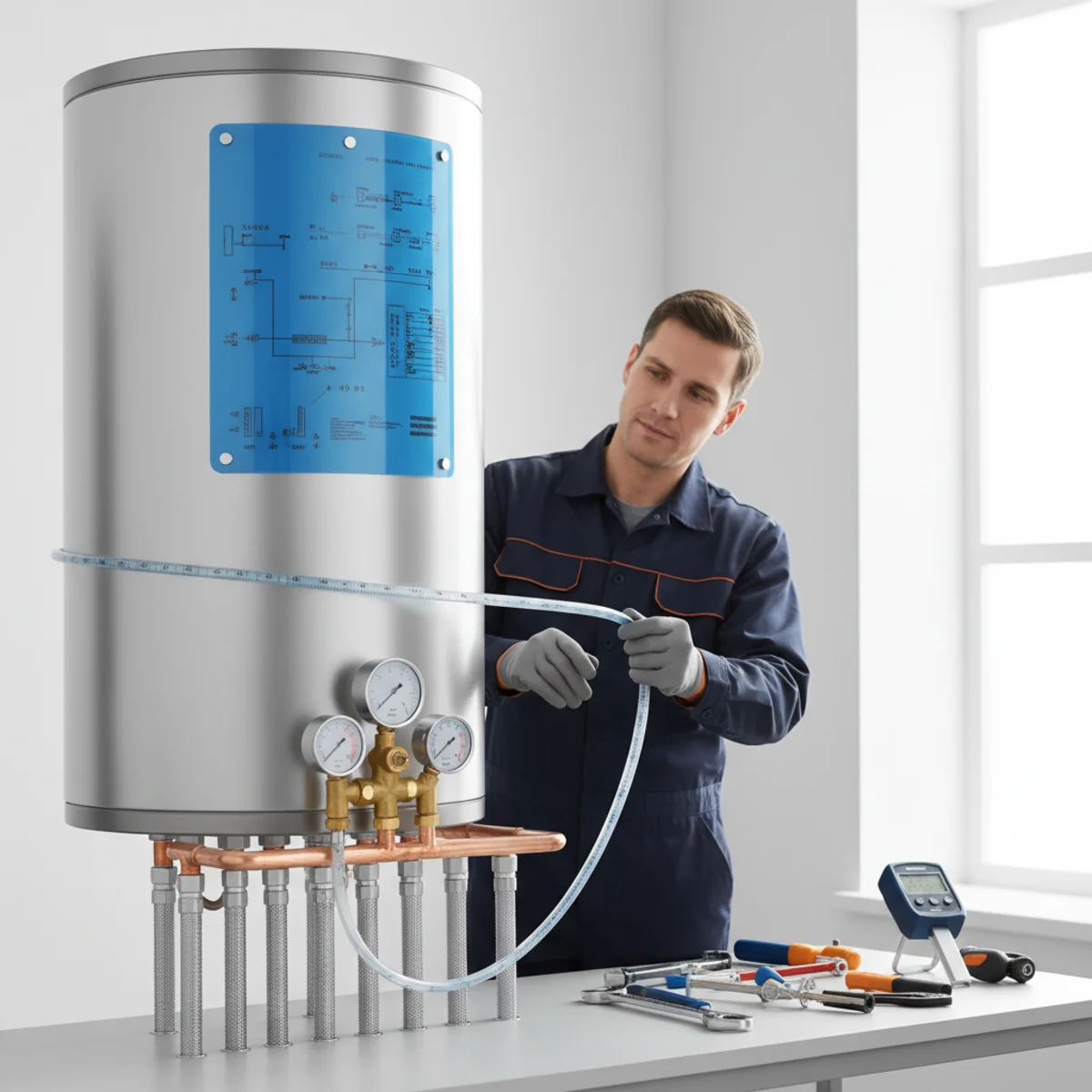
A storage tank heater maintains a reservoir of hot water — typically 40 to 75 gallons — at a set temperature around the clock. When you open a hot tap, preheated water flows out while the tank refills and reheats. It's simple, proven technology that's been in homes for over a century.
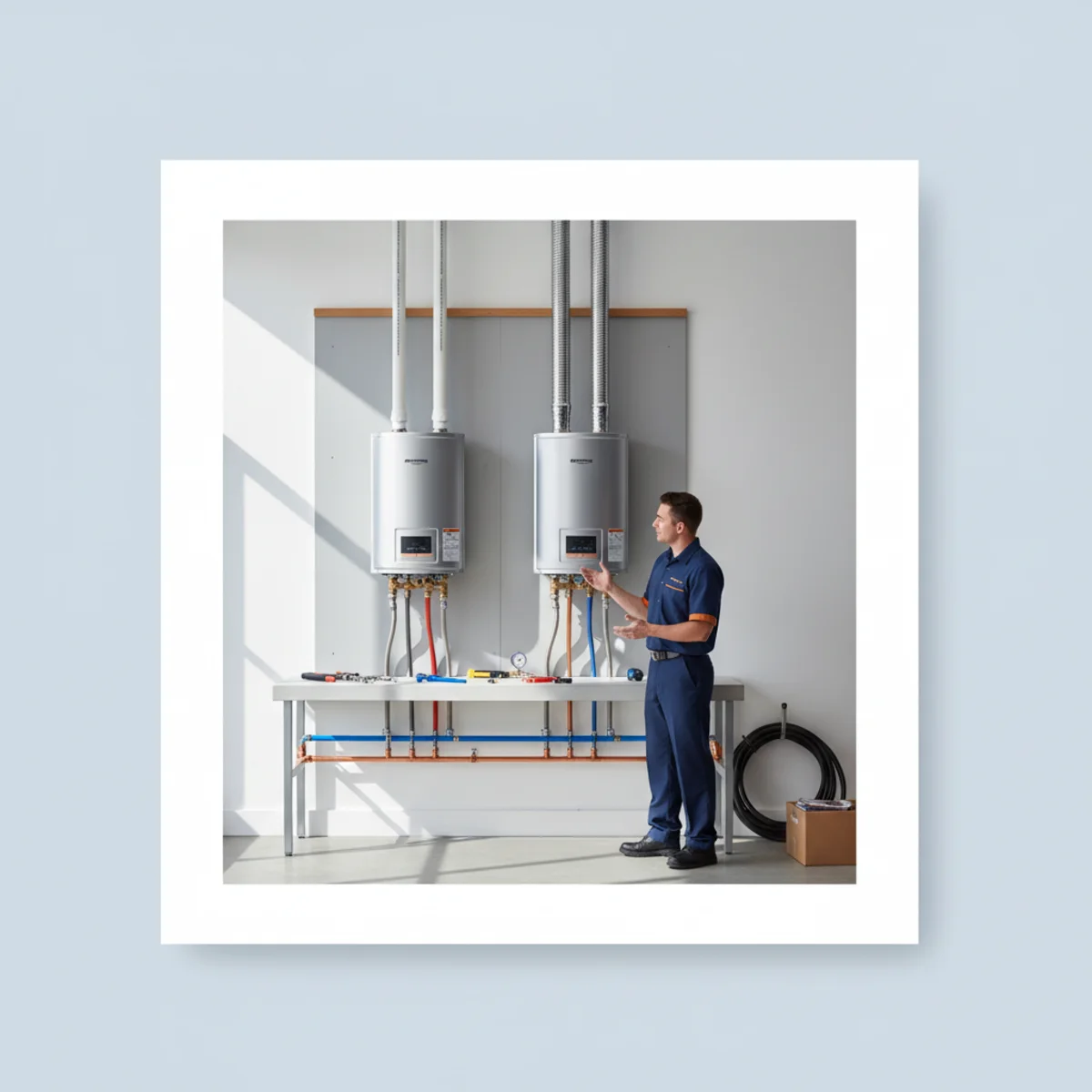
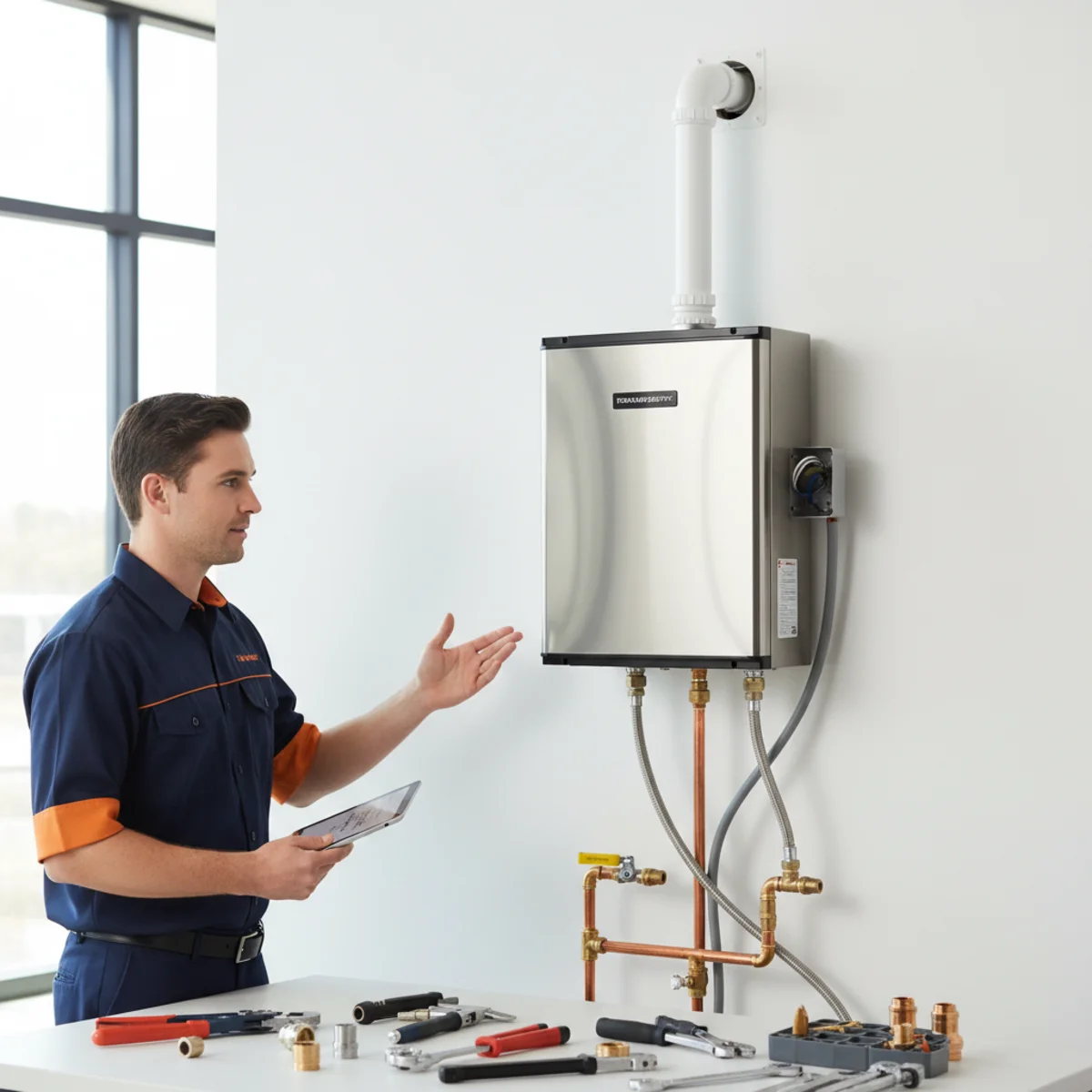
A tankless (on-demand) heater has no storage tank. Cold water flows through a heat exchanger — either gas-fired or electric — and exits hot on the other side. There's no standby reservoir, which eliminates the standby heat loss that tanks have. The trade-off is that a tankless unit must heat water fast enough to match your simultaneous demand.
Side-by-side comparison
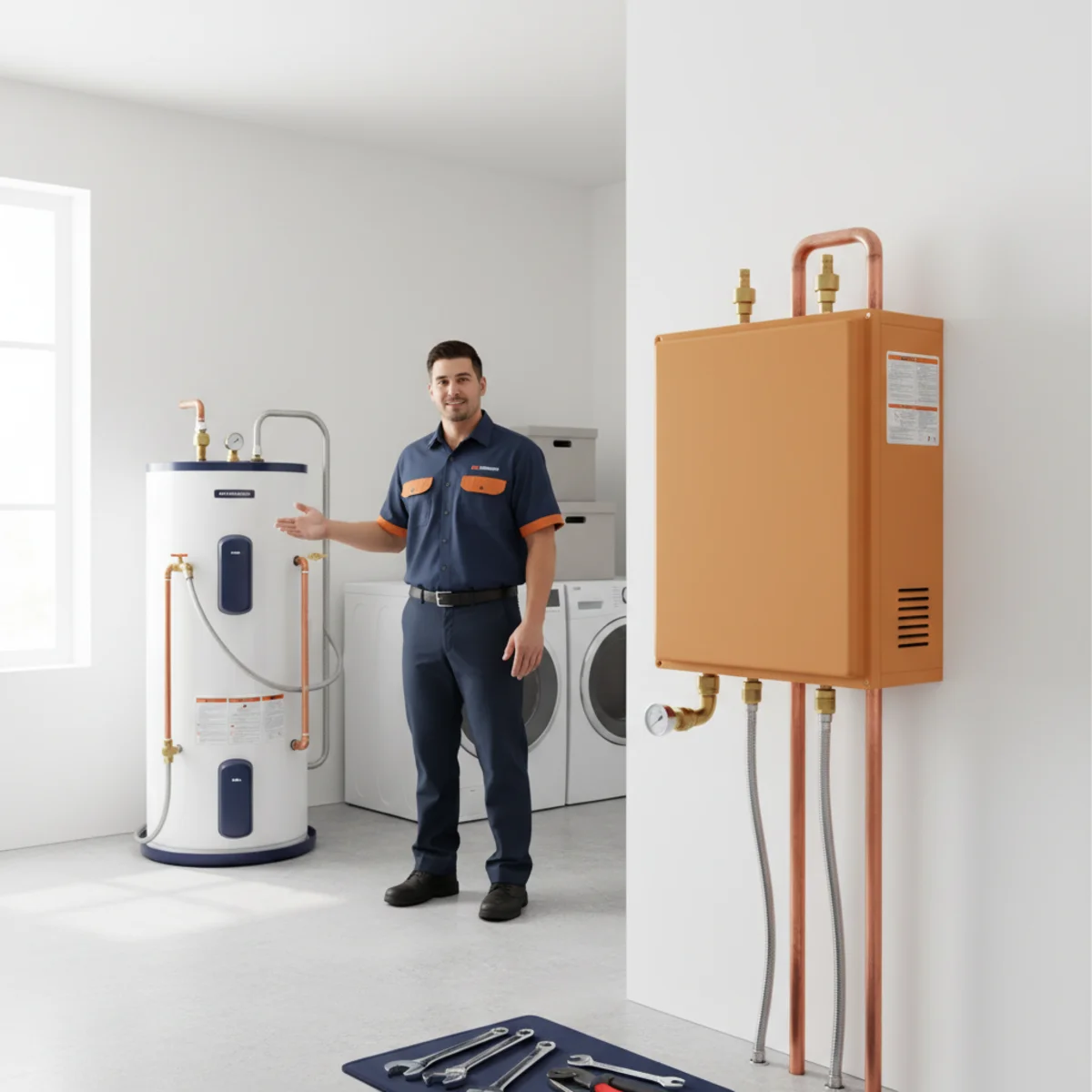
Here's how the two technologies compare across the factors that matter most to a Rancho Cordova homeowner.
| Factor | Storage Tank | Tankless (On-Demand) |
|---|---|---|
| Upfront cost | Lower — unit and installation are straightforward | Higher — unit costs more; gas units may need larger gas line and new venting |
| Energy use | Standby heat loss adds to energy bill; efficient modern units reduce this | No standby loss; more efficient over time, especially with high hot-water use |
| Hot water supply | Limited by tank size; can run out under heavy simultaneous demand | Continuous flow, but limited by flow rate (GPM) — may struggle with multiple simultaneous draws |
| Lifespan | 8–12 years in hard water; longer with regular flushing | 15–20 years potential, but hard water scale in the heat exchanger can shorten this without maintenance |
| Hard water impact | Sediment builds up on tank floor; annual flushing extends life | Scale builds on heat exchanger; descaling required — often annually in our water |
| Installation complexity | Like-for-like swaps are simple; permit still required in Sacramento County | May require gas line upsizing, new venting, or panel upgrade — adds cost and time |
| California code | Expansion tank, seismic strap, T&P venting required | Same code requirements; venting is typically Category III stainless — different from tank venting |
| Space | Requires floor space for tank (24"–26" diameter typical) | Wall-mounted, compact — ideal for small utility closets or garage walls |
| Rebates | High-efficiency gas or heat-pump tanks may qualify | High-efficiency tankless may qualify for SMUD/PG&E rebates or federal credits — confirm current availability |
The hard water factor in Rancho Cordova
Sacramento-area water is moderately hard. That mineral content affects both system types, but in different ways.
In a tank heater, calcium and magnesium settle on the tank floor as sediment. You'll hear a popping or rumbling noise when the burner heats through the sediment layer — that's wasted energy and accelerated corrosion. Annual flushing (draining several gallons through the drain valve) removes the loose sediment and extends tank life meaningfully.
In a tankless unit, scale forms inside the narrow passages of the heat exchanger. Because water flows through fast at high temperatures, mineral deposits build up faster than in a tank. Most manufacturers require descaling — running a citric acid solution through the heat exchanger — at least annually in hard-water regions. Skip it, and the flow rate drops, efficiency falls, and you'll hit a premature failure.
Neither system is immune to our water. Both require maintenance. The tankless unit's maintenance is slightly more involved but keeps it performing at spec.
When a tank heater makes more sense
A storage tank is the right call more often than the marketing suggests. If your household uses most of its hot water at predictable peak times — morning showers, evening dishes — a properly sized tank meets that demand without any complexity.
A tank also makes more sense when your existing gas line and venting are already sized for a tank unit. Converting to tankless adds cost that may take years to recover in energy savings.
- Budget is the primary concern and the payback period for tankless doesn't pencil out.
- You're replacing an existing tank and the infrastructure (gas line, venting) isn't set up for tankless.
- Your household has predictable, concentrated hot water demand rather than long continuous draws.
- You want a simpler system with fewer maintenance requirements.
When tankless makes more sense
Tankless shines in homes with high simultaneous demand — think a family running the dishwasher while two people shower — provided the unit is sized correctly for peak flow rate in gallons per minute (GPM).
It's also a strong choice for homeowners planning to stay long-term. The longer lifespan and lower operating cost over time can justify the higher installation cost on a 10-plus-year horizon.
Space-constrained homes benefit from the compact wall-mount footprint. And if you're already doing a gas line upgrade for another reason, that's a good time to size it for tankless while the walls are open.
- High and simultaneous hot water demand from multiple bathrooms.
- Long ownership horizon where lower operating costs have time to offset higher installation cost.
- Garage or utility-room space is limited and a wall-mount makes practical sense.
- You're committed to the annual descaling maintenance our hard water requires.
- Current SMUD/PG&E or federal rebates make the net cost competitive — confirm availability before you buy.
Making the call for your home
There's no universal right answer. The best choice depends on household size, current infrastructure, budget, and how long you plan to stay. What we'd discourage is going tankless because it sounds more modern, without accounting for the conversion cost and the maintenance commitment.
Our water heater installation and tankless installation teams serve the Rancho Cordova area and can walk you through which option makes sense given your actual setup. Get in touch and we'll give you a straight recommendation.
Talk to a Local Rancho Cordova Water Heater Pro
Whether you need a repair today or you're planning an upgrade, we'll give you a straight answer and an upfront estimate.
Frequently Asked Questions
Technically yes, but it's a significant project. Electric tankless units require a large dedicated circuit — often 240V at 150–200 amps total for whole-house units — which may require a panel upgrade. Gas tankless units are generally a simpler conversion for homes already on gas. Have an installer evaluate your panel before committing.
A properly sized tankless unit won't run out in the traditional sense, but it can be overwhelmed by simultaneous demand. If you're running two showers plus a dishwasher at the same time, an undersized unit will deliver lukewarm water rather than hot. Sizing for peak GPM demand is critical — don't rely on the manufacturer's headline GPM without accounting for inlet water temperature.
In the Sacramento area's moderately hard water, most manufacturers recommend annual descaling. Some homeowners pair their tankless unit with a whole-house water softener to extend the service interval. Skipping descaling is the most common reason for premature tankless failure.
The core requirements — seismic strapping, T&P valve, expansion tank on closed systems — apply to both. The main difference is venting. Gas tankless units use Category III stainless steel direct-vent flue systems, which are different from the Type B flue used on most atmospheric-vent tanks. Budget for new venting if you're converting.
Written by the Water Heater RC Pros team
Practical, local guidance from Rancho Cordova water-heater installers — written for homeowners and kept current with California code. Have a question about your unit? Call (201) 277-9344.