A water heater rarely dies without warning. The signs are usually there weeks or months before a failure — rust-colored water, a growing puddle on the floor, a burner that runs constantly. The problem is that most homeowners don't know what to watch for until they're already standing in cold water.
In Rancho Cordova, the Sacramento region's moderately hard water accelerates wear on water heaters. Sediment builds up faster, anode rods deplete sooner, and tanks in improperly maintained units can corrode from the inside out. That makes the warning signs here more urgent than national averages suggest.
Here are nine signs your water heater may be reaching the end of its useful life — and what each one means for the repair-vs-replace decision.
Sign 1: The unit is more than 10–12 years old
Most storage tank water heaters last 8 to 12 years in hard-water regions like ours. Some run longer with diligent maintenance — annual flushing, timely anode rod replacement — but after about a decade, the probability of failure starts climbing sharply.
You can find the manufacture date on the serial number label on the unit. The format varies by manufacturer, but many encode the year and month in the first characters of the serial. If you don't know your unit's age, that label is the fastest way to find out.
An older unit that's still functioning isn't necessarily wrong to keep running — but it changes the math on repair. Putting money into a 12-year-old tank to fix one problem often doesn't make economic sense when a newer unit would be more efficient and reliable.
Sign 2: Rusty or discolored hot water
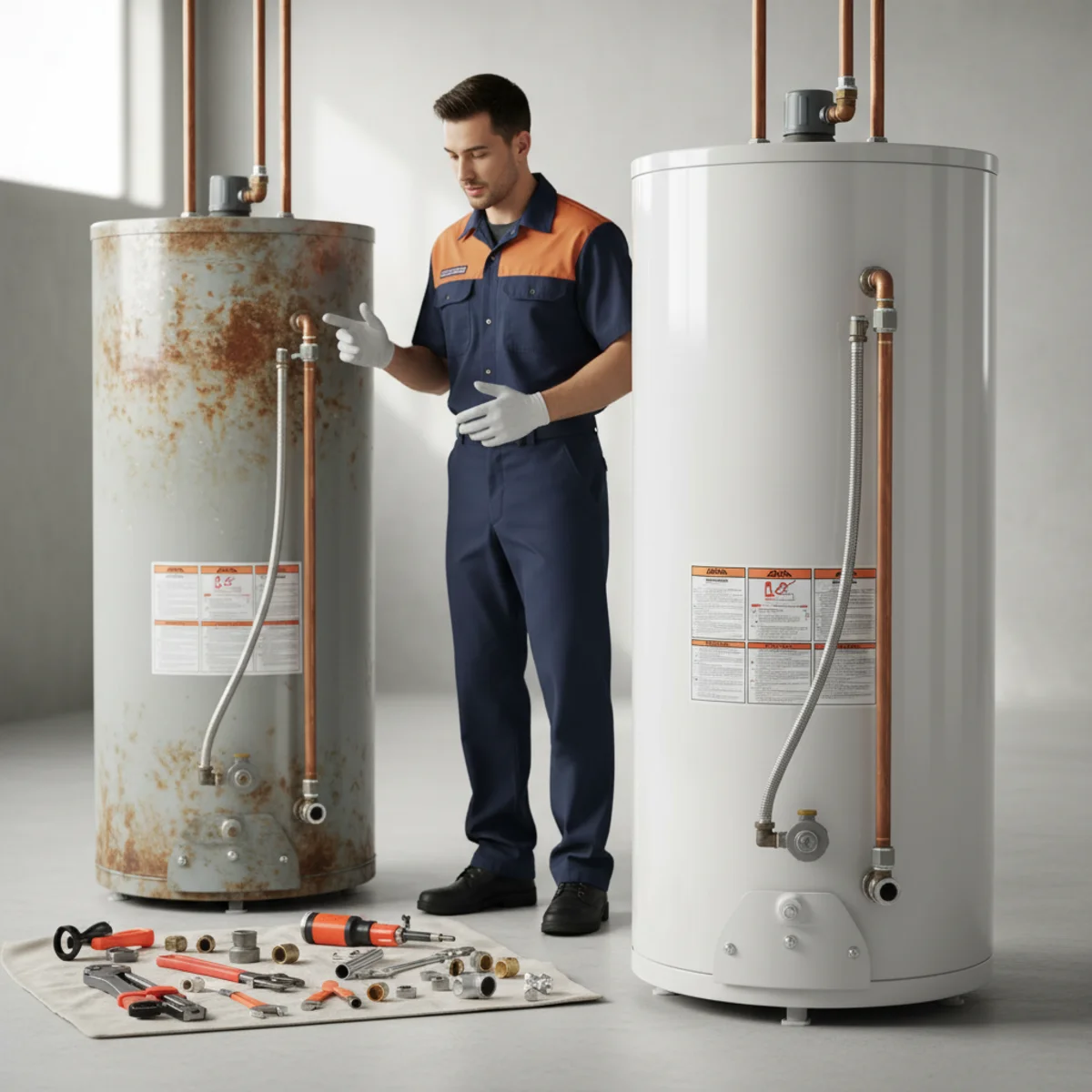
If the hot water coming from your taps looks orange, brown, or rusty — but cold water runs clear — the corrosion is coming from your water heater or the pipes attached to it.
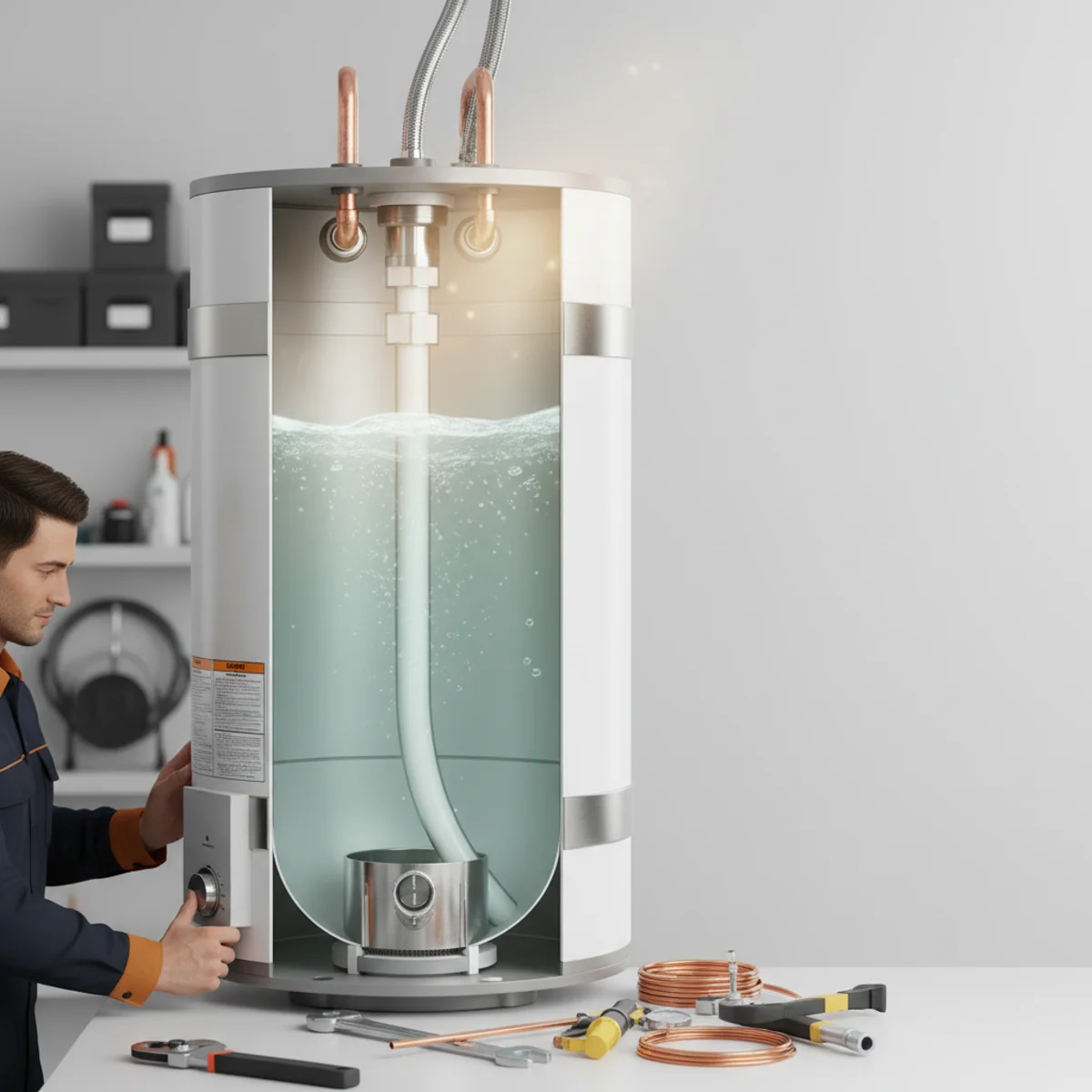
Inside a tank, the sacrificial anode rod is a magnesium or aluminum rod that corrodes in place of the steel tank lining. When the anode rod is fully depleted, the tank itself starts to rust. Rusty water from the hot side is often the first visible sign of internal corrosion.
A failed anode can sometimes be replaced to extend tank life — but only if the tank lining itself hasn't been compromised. If the discoloration is severe or accompanied by other warning signs, water heater replacement is usually the more reliable path.
Sign 3: Popping, rumbling, or banging noises
That rumbling or popping you hear when the burner fires is sediment. Over time, mineral deposits from hard water settle on the tank floor. When the burner heats through them, steam bubbles escape through the sediment layer — that's the sound.
Sediment buildup wastes energy (the burner works longer to heat through the layer), accelerates corrosion on the tank floor, and is a sign the unit hasn't been flushed regularly. In early stages, a thorough flush may quiet the noise. In later stages, the tank floor may already be compromised.
Our water heater repair team can assess whether flushing buys more time or whether replacement is the smarter move at this point.
Sign 4: Water pooling around the base
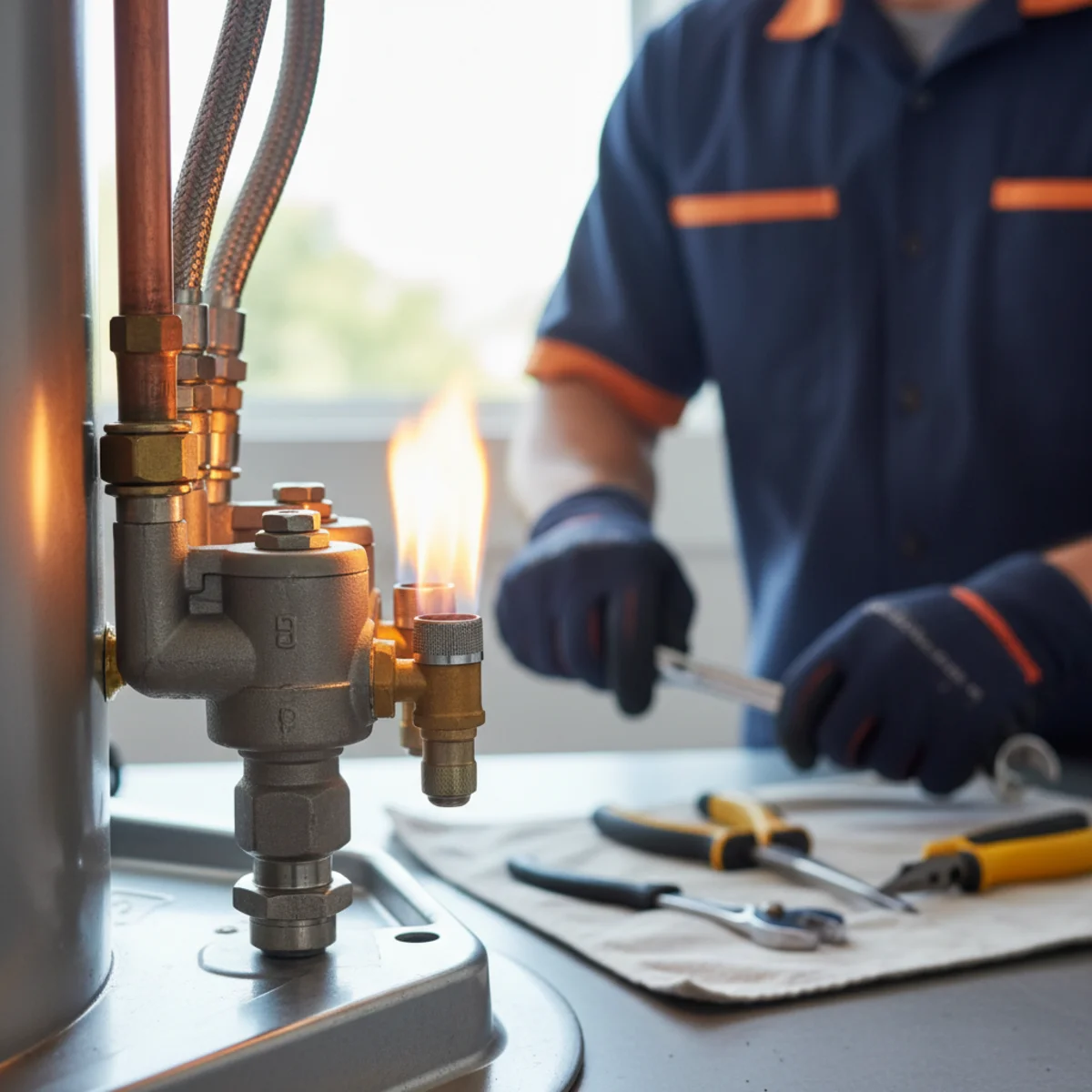
Any water around the base of the unit deserves immediate attention. Not all leaks mean replacement — a weeping T&P (temperature and pressure relief) valve, a loose drain valve, or a leaking connection fitting may be repairable. But a crack or seam leak in the tank itself is not.
Steel tanks expand slightly when heated and contract when cool. Over years of thermal cycling, small fractures can develop, particularly at the bottom seams or around corroded areas. These fractures often leak slowly at first and can progress to a flood.
When you see pooling water, shut off the cold water supply inlet and call for service. Don't ignore it, and don't assume it's just condensation — true condensation on a tank is light and evaporates quickly. A persistent puddle is a warning.
Signs 5–9: Five more indicators to watch
The first four signs are the most critical. These five are worth tracking because they often show up alongside the bigger warning signs, or precede them.
- Running out of hot water faster than you used to — if your household and habits haven't changed but the tank runs cold sooner, sediment has reduced the effective capacity.
- Water takes longer to reheat — a slower recovery time points to sediment insulation on the tank floor or a failing burner or element.
- Rising gas or electric bills without a change in use — as water heaters age and accumulate sediment, they burn more fuel to deliver the same hot water.
- Frequent repairs in the past two years — one repair in 12 years is normal; two or three in 18 months is a pattern that usually means replacement pencils out better.
- Visible exterior corrosion or rust streaks running down the side of the tank, especially near the top connections or the T&P valve port.
Repair or replace: how to decide
The general rule: if the unit is under 8 years old and the problem is limited to a component (anode rod, thermostat, element, valve), repair usually makes sense. If the unit is 10 or more years old, if you're seeing internal rust or a tank leak, or if the repair cost exceeds roughly half the cost of a new unit — replace.
In Rancho Cordova, the hard water math matters. A unit that's been regularly flushed and maintained can run well into its twelfth year. A unit that's had no maintenance in hard water often shows serious wear by year 8 or 9.
Not sure where yours stands? Our water heater replacement and repair teams serve Rancho Cordova and can give you an honest assessment. Contact us and we'll tell you straight whether a repair makes financial sense or whether you're better served by a new unit.
Talk to a Local Rancho Cordova Water Heater Pro
Whether you need a repair today or you're planning an upgrade, we'll give you a straight answer and an upfront estimate.
Frequently Asked Questions
Use caution. Rusty hot water indicates internal corrosion, which can progress to a tank failure. It's also a water quality concern. We'd recommend getting the unit inspected promptly rather than continuing to use it and hoping for the best.
At 15 years in a hard-water region, the risk of sudden failure is high. Even if it's still producing hot water, the tank may be close to the end of its structural integrity. Many homeowners in this situation choose to replace proactively — on their schedule — rather than deal with an emergency replacement and possible water damage.
It's not immediately dangerous in most cases, but it's a sign of sediment buildup that's reducing efficiency and accelerating tank wear. A flush may help if the tank is otherwise in good condition. If the noise started recently and the unit is older, have it inspected.
For standard tank replacements, same-day or next-day service is often possible. Reach out through our contact page and we'll give you an honest availability window.
Written by the Water Heater RC Pros team
Practical, local guidance from Rancho Cordova water-heater installers — written for homeowners and kept current with California code. Have a question about your unit? Call (201) 277-9344.