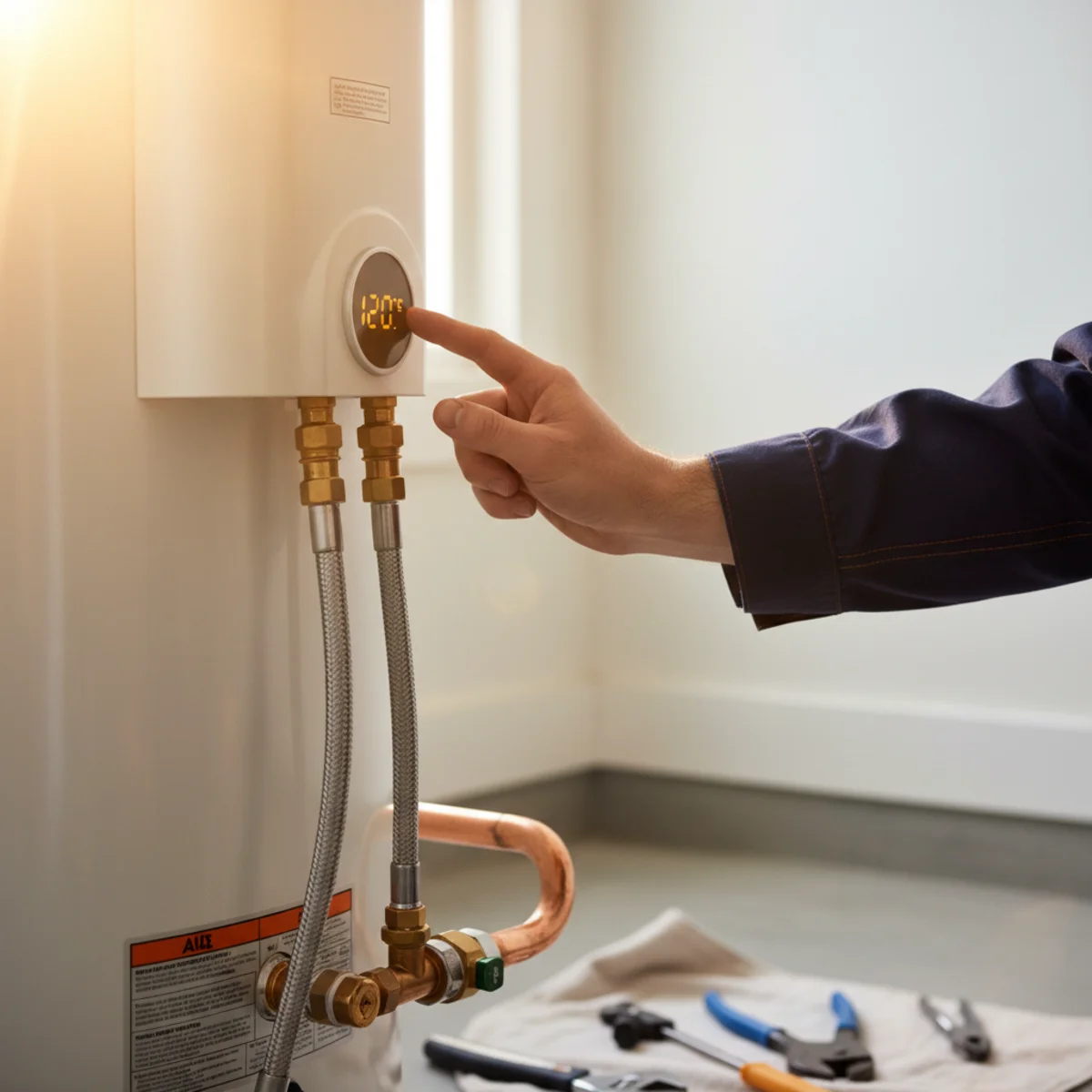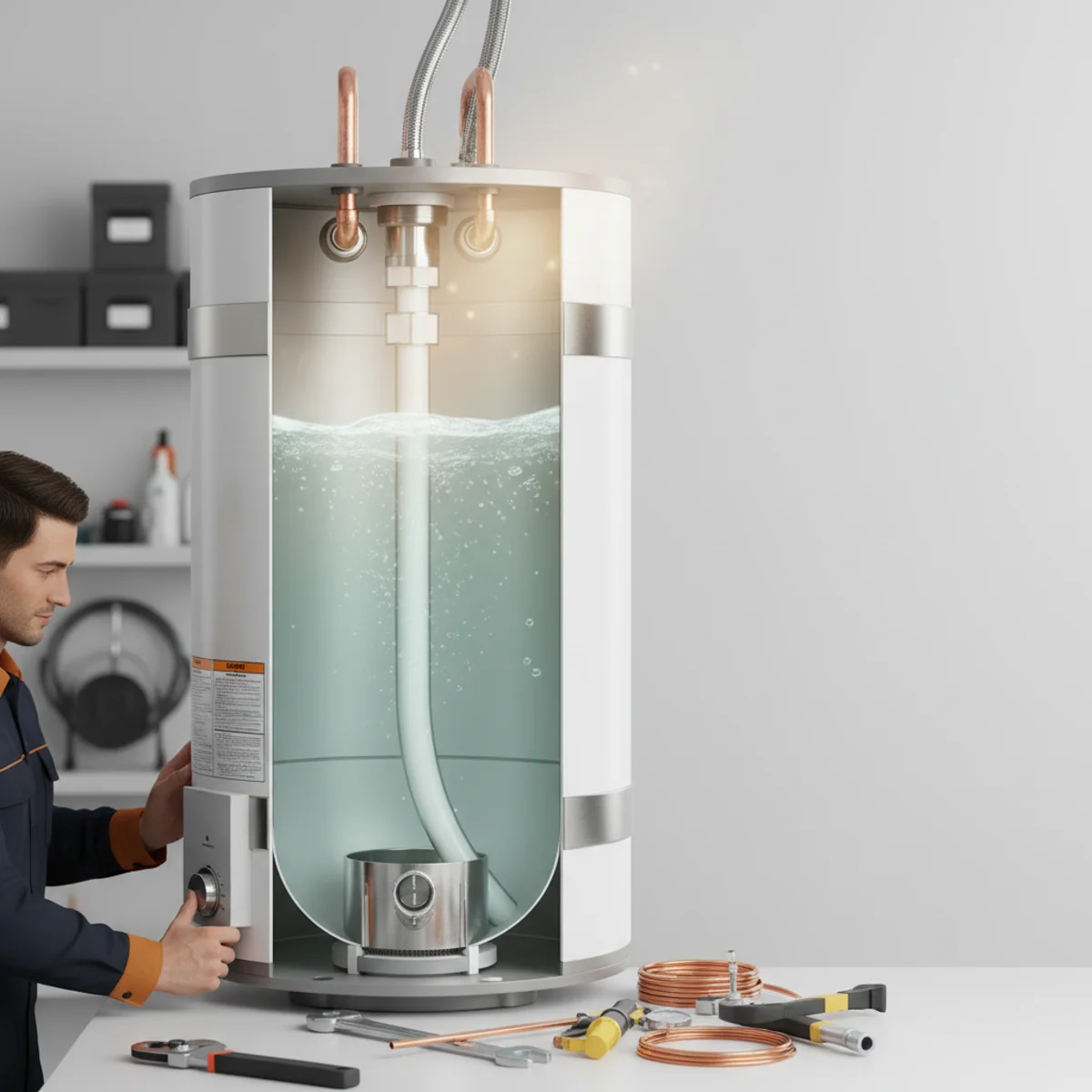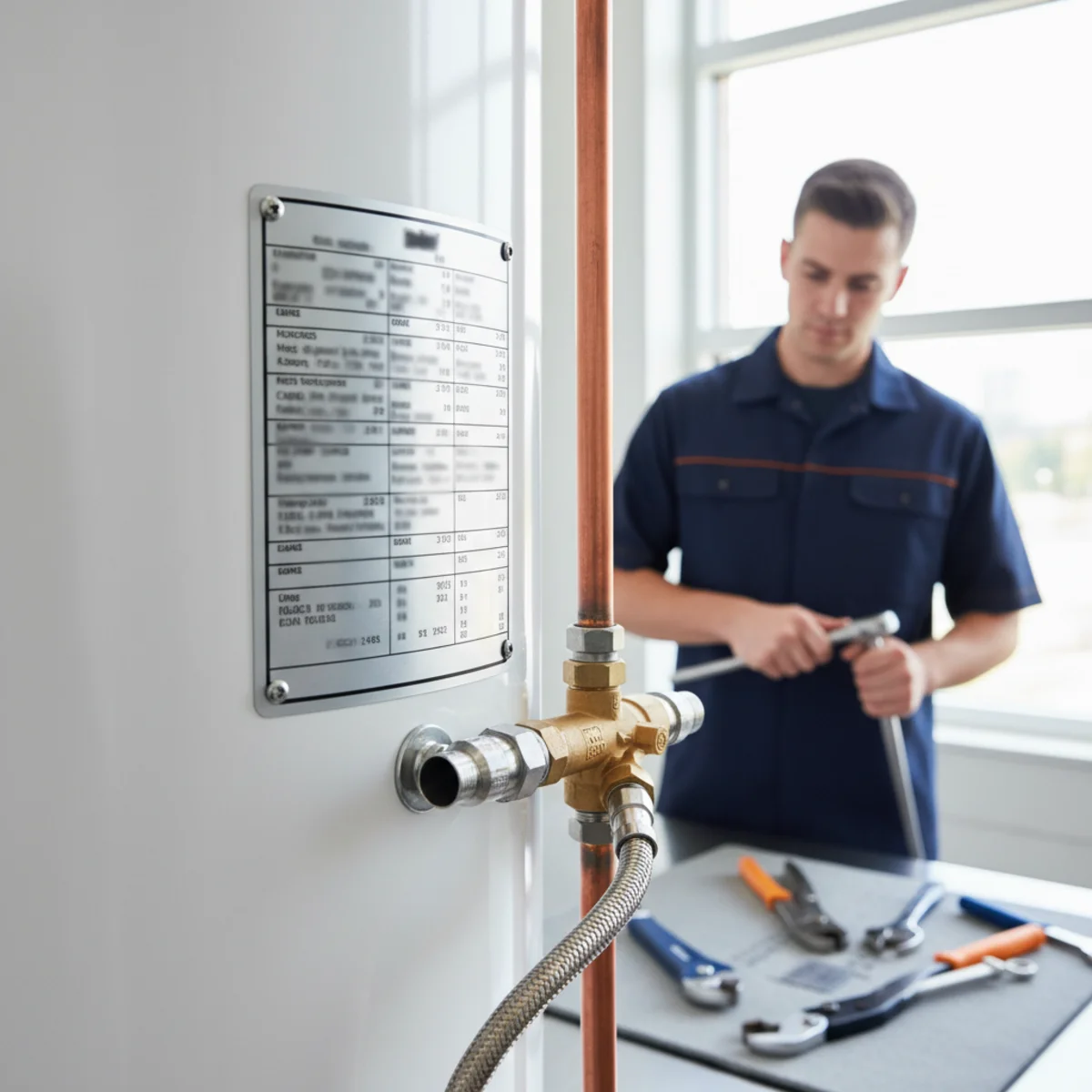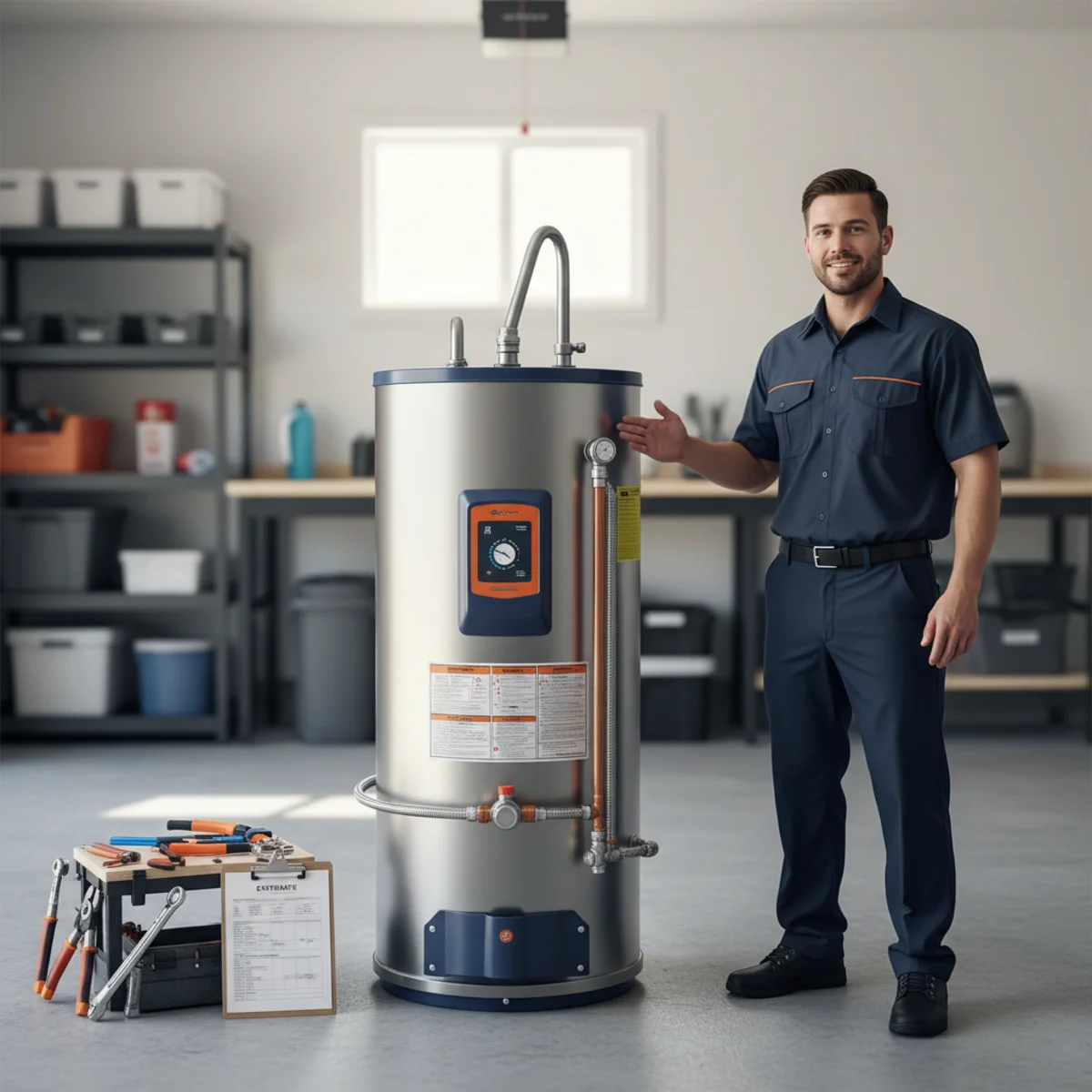
The most common question before a job is: "What's this going to cost me?" That's fair, and the honest answer is that no installer should quote a single fixed number without first looking at your home. Installation cost is driven by a handful of factors — some you control, some you don't.
In Rancho Cordova, California, a few local realities push costs in directions you won't see in national averages. Sacramento County requires a permit for most water heater swaps. California code mandates seismic strapping, an expansion tank on closed systems, and proper T&P (temperature and pressure relief) valve venting. And the hard water we get from the Sacramento region shortens equipment life, which can influence what size and type makes sense for your household.
This guide won't give you a fabricated price. Instead, it walks through every real cost driver so you can have a productive conversation with any installer — including us. Ready to move forward? Request an estimate and we'll give you a straight number for your specific situation.
The biggest cost driver: what you're replacing
A like-for-like tank replacement — same fuel source, same location, similar capacity — is the least expensive scenario. The installer reuses your existing gas line or electrical circuit, your existing venting run, and often the existing drain pan. Less labor, fewer parts.
Switching from a tank to a tankless unit (or vice versa) is a different story. Tankless gas units typically need a larger gas line and a new direct-vent exhaust run. Tankless electric units may require a panel upgrade if the existing service isn't large enough. Those conversions add both materials and time to the job.
Our water heater installation team handles both scenarios, but the scope — and therefore the cost — differs significantly.
Cost factors at a glance
Rather than quoting numbers that go stale, here's how each factor pushes the total up or down. Use this as a checklist before you call any installer.
| Cost Factor | Lower-Cost Scenario | Higher-Cost Scenario |
|---|---|---|
| Unit type | Standard storage tank, same capacity | Tankless or heat-pump unit |
| Fuel source | Like-for-like (gas stays gas, electric stays electric) | Fuel-source switch requiring new gas line or panel work |
| Location in home | Accessible utility room or garage with clearance | Tight crawlspace, closet, or second-floor mechanical room |
| Code upgrades required | Already has expansion tank, seismic strap, and correct venting | Expansion tank, new venting, seismic strap, or drain pan needed |
| Permit | Sacramento County permit included in quote | Expedited or complex permit processing |
| Old unit removal | Standard tank, easily hauled out | Oversized unit or awkward access requiring extra labor |
| Add-ons | Unit only | Recirculation pump, water softener, or related plumbing |
California code requirements that affect your bill
California has some of the most detailed residential water heater codes in the country. These aren't optional — a licensed installer must bring the installation up to current code, and Sacramento County inspectors verify this when they close a permit.
Thermal expansion is one of the biggest surprises for homeowners. If your home has a backflow preventer or pressure-reducing valve on the main supply line, water has nowhere to go when the tank heats up and expands. California requires an expansion tank in this situation. If you don't already have one, it's a mandatory add-on.
Seismic strapping is another California-specific requirement. All water heaters must be double-strapped to a wall stud or structural member to resist movement in an earthquake. If your current unit isn't strapped correctly, the replacement job includes fixing that.
Venting requirements for gas units have tightened over the years. Older Category I atmospheric-vent units may not meet current standards in some configurations. If your venting needs to be modified or replaced, that adds to the project cost. See our water heater replacement page for more on what a full swap typically involves.
Permits in Rancho Cordova and Sacramento County
Sacramento County requires a mechanical permit for water heater installation in most situations, including simple replacements. The permit triggers an inspection that confirms the installation meets current code — which protects you as the homeowner.
Some contractors skip permits to keep their prices lower. That's risky for you: an unpermitted installation can complicate insurance claims, create issues when you sell the home, and leave you without recourse if something goes wrong. Any quote you compare should clearly state whether the permit is included.
If you're in the Rancho Cordova area, we pull the permit as part of the job — it's not an optional add-on. Confirm the current Sacramento County fee schedule directly with the county building department, as fees change periodically.
Rebates and efficiency credits: what's available
SMUD and PG&E periodically offer rebates for high-efficiency water heaters — particularly heat-pump water heaters and high-efficiency gas units. Federal tax credits for qualifying equipment have also been available in recent years under the Inflation Reduction Act.
We encourage every homeowner to look into these programs before buying. The right unit at the right time can significantly reduce your net cost. However, rebate programs change, and we can't guarantee what's active when you read this. Confirm current offerings directly with SMUD (if you're in SMUD territory) or PG&E, and check IRS guidance on energy credits.
Have questions about what's currently available? Contact us — we stay current on local programs and can point you in the right direction.
Getting an accurate quote
An honest installer needs to see your current setup before quoting. That means knowing your fuel source, tank size, location, venting type, and whether you have an expansion tank. Photos often help — many jobs can be scoped remotely before a truck rolls out.
Be cautious of very low quotes that don't specify permit inclusion or code upgrades. The cheapest number upfront can easily become the most expensive job if a failed inspection or unpermitted work surfaces later.
Our water heater installation team gives flat, itemized quotes for Rancho Cordova homeowners. No surprise line items after the fact.
Talk to a Local Rancho Cordova Water Heater Pro
Whether you need a repair today or you're planning an upgrade, we'll give you a straight answer and an upfront estimate.
Frequently Asked Questions
Different installers include different things. A low quote may exclude the permit, the expansion tank, or proper code upgrades — all of which are legally required. When comparing quotes, verify each one includes the permit, all required code items, and haul-away of the old unit.
The unit price varies by brand and efficiency tier, but the labor and code-upgrade costs don't change much based on brand. A budget tank and a premium tank of the same type and size take roughly the same time to install.
Potentially yes, especially in SMUD territory where electricity rates and rebate programs can make the math work. Heat-pump units use significantly less energy than standard electric resistance heaters. But they need adequate clearance (at least 1,000 cubic feet of air space) and work best in unconditioned garages — common in Rancho Cordova. Confirm current rebate availability with SMUD before you buy.
Yes. The permit triggers an inspection that protects you. An unpermitted installation can cause problems with your homeowner's insurance and when selling the property. Any reputable installer includes the permit in their scope.
The fastest way is to call or use our contact form at /contact. Have your current unit's fuel type, approximate age, and location in the home ready. A photo of the unit and the venting helps us scope the job accurately.
Written by the Water Heater RC Pros team
Practical, local guidance from Rancho Cordova water-heater installers — written for homeowners and kept current with California code. Have a question about your unit? Call (201) 277-9344.