Water hardness is measured in grains per gallon (GPG) or milligrams per liter. Rancho Cordova's water, sourced largely from Sacramento County Municipal Water Services and blended surface and groundwater sources, typically runs between 14 and 20 GPG — well into the "very hard" category. For context, water above 10.5 GPG is classified as very hard by the Water Quality Association.
For your water heater, this isn't just a cosmetic problem. Hard water deposits calcium and magnesium carbonate — limescale — on every surface it contacts. Inside a tank water heater, that sediment accumulates on the tank bottom and on the heating elements. Inside a tankless unit, scale coats the heat exchanger. The result is reduced efficiency, reduced capacity, and a shortened service life — sometimes by half compared to what you'd get in a soft-water area.
The good news is that hard water damage is largely preventable and, if it's already happened, partially reversible. Here's what's actually going on in your water heater and what to do about it.
What Hard Water Does to a Tank Water Heater
The damage builds slowly and invisibly. As the water heater heats water, calcium carbonate precipitates out of solution and settles to the bottom of the tank. In the first year or two, this is a thin layer. By year five in hard water, it can be an inch or more thick. By year eight, it's not uncommon to pull out a tank and find 2–3 inches of rock-hard scale.
The burner on a gas water heater sits below the tank bottom. That layer of sediment acts as insulation between the burner flame and the water. The burner has to run longer to heat the same volume of water. The tank bottom, caught between the burner heat and the insulating sediment, gets hotter than it was designed to handle — the steel in that zone begins to fail faster.
On electric water heaters, the lower heating element is often submerged in sediment. It overheats, the element fails, and you lose hot water capacity until it's replaced. In hard water, lower element failure is one of the most common service calls we make in Rancho Cordova.
- Popping or rumbling noises during heating cycles: sediment is cracking as steam escapes from beneath it — a sound homeowners often mistake for a failing tank.
- Longer recovery time: the unit takes longer to reheat after demand.
- Higher gas or electric bills: more energy to heat through the insulating sediment.
- Shorter tank life: 8–10 years in hard water vs. 12–15 years in soft water.
What Hard Water Does to a Tankless Water Heater
Tankless units don't accumulate sediment the same way — there's no standing water and no tank bottom. But they have their own hard water vulnerability: the heat exchanger.
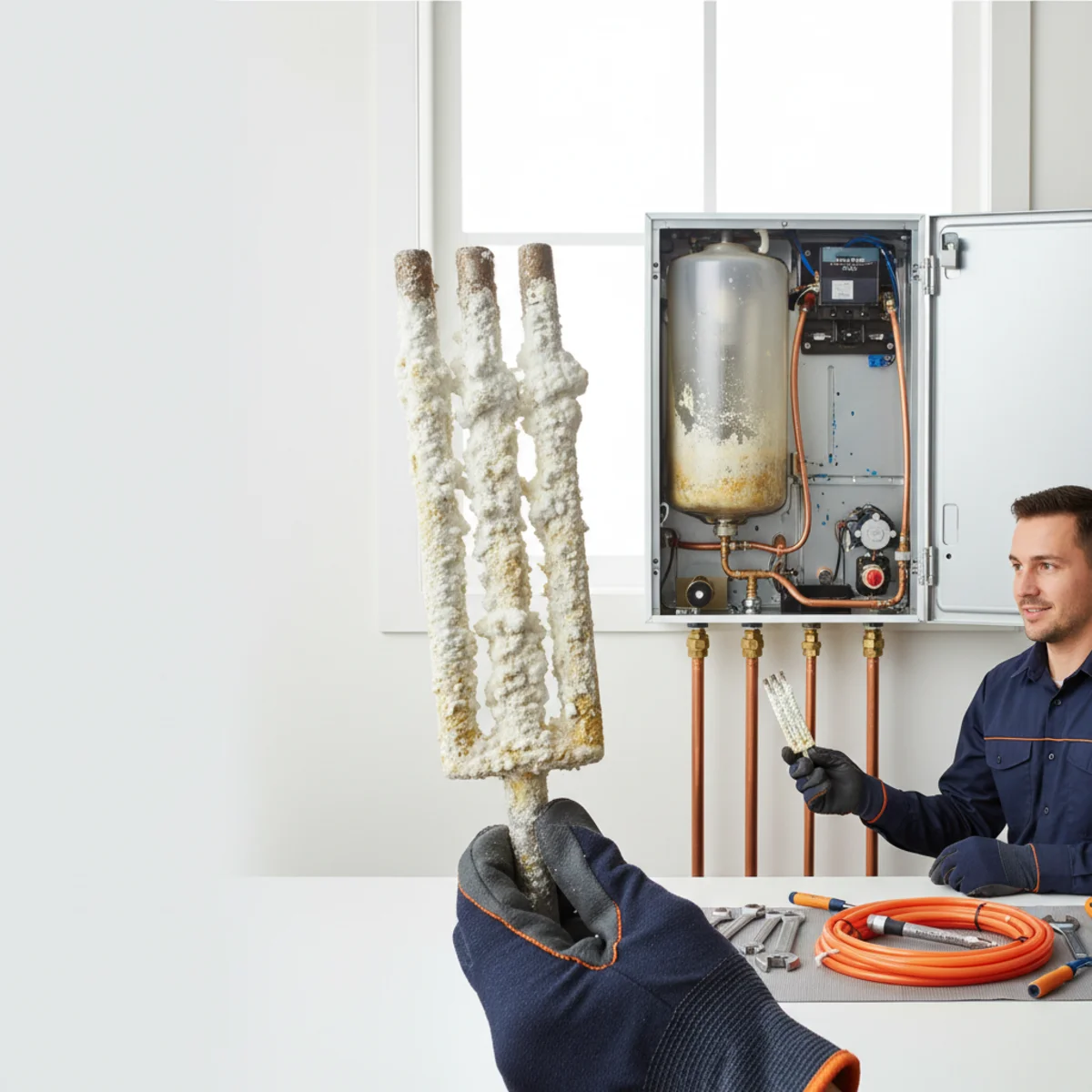
The heat exchanger in a tankless unit consists of a tight coil of copper or stainless tubing with very small internal diameter. As water flows through at high temperature, scale deposits on the inner walls of that tubing. Over time, the scale builds up, restricts flow, and reduces heat transfer efficiency. The unit has to work harder to achieve the same temperature rise. Flow sensors and temperature controls start reading incorrectly. Error codes become more frequent.
In Rancho Cordova's hard water, a tankless unit without annual descaling may need heat exchanger service or replacement within 5–7 years — significantly earlier than the 15–20 year lifespan a properly maintained unit can achieve in softer water.
Our water heater maintenance service includes descaling for tankless units using a circulating pump and food-grade descaling solution. It's straightforward and makes a noticeable difference in hot water output and energy use.
How to Fight Back: Flushing and Sediment Management
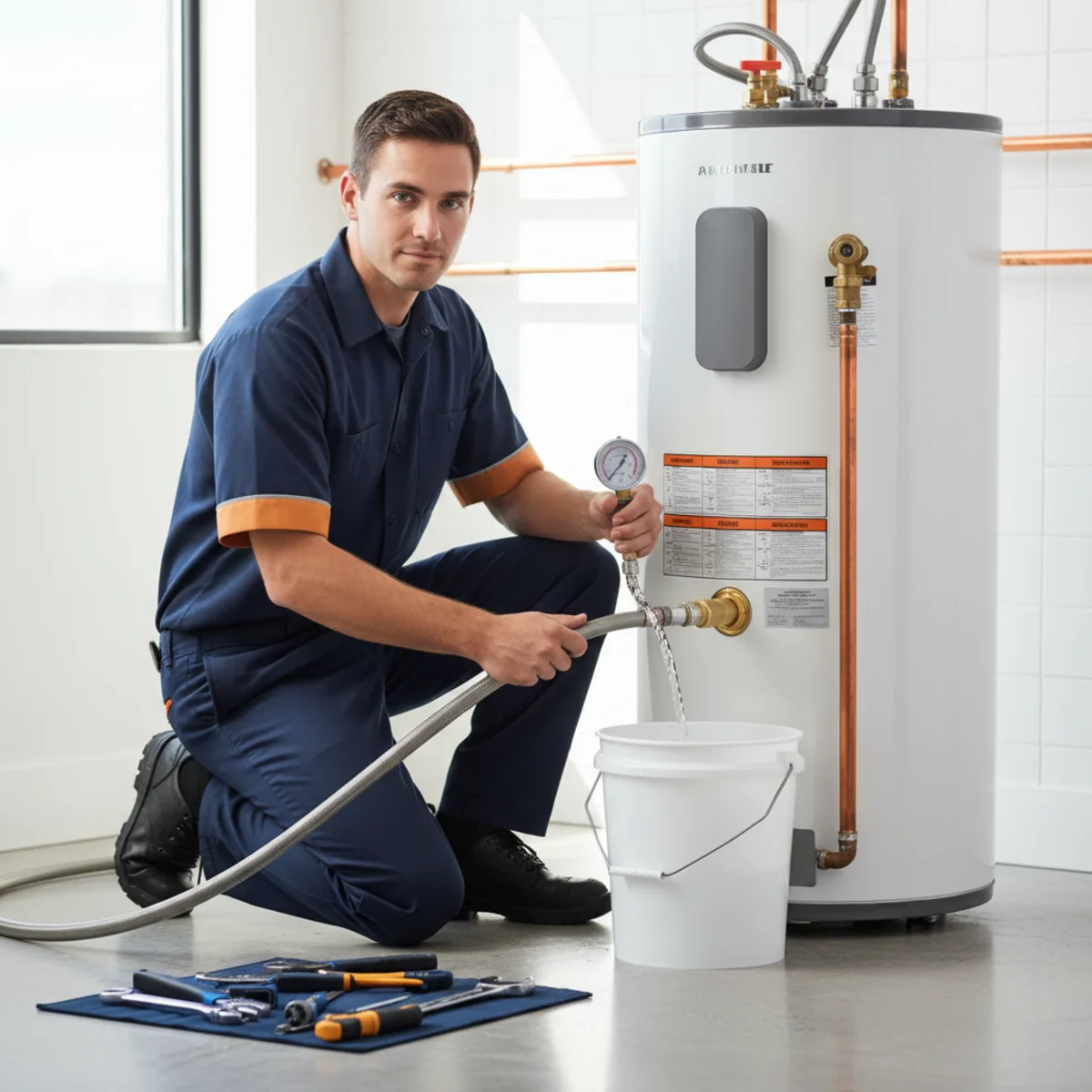
Annual sediment flushing is the single most effective maintenance task for a tank water heater in hard water. The process involves connecting a hose to the drain valve, opening it, and flushing the settled sediment out before it hardens. Done annually, it prevents the thick accumulation that causes real damage.
The caveat: if a tank hasn't been flushed in five or more years, the sediment may have calcified into a solid mass that won't flush out. At that point, flushing can actually loosen debris that clogs the drain valve. An experienced tech can assess whether flushing is still useful or whether the damage is already done.
- Annual flushing: connect a garden hose to the drain valve and flush until clear.
- Cold-water flush while heater is on: stirs up settled sediment before draining.
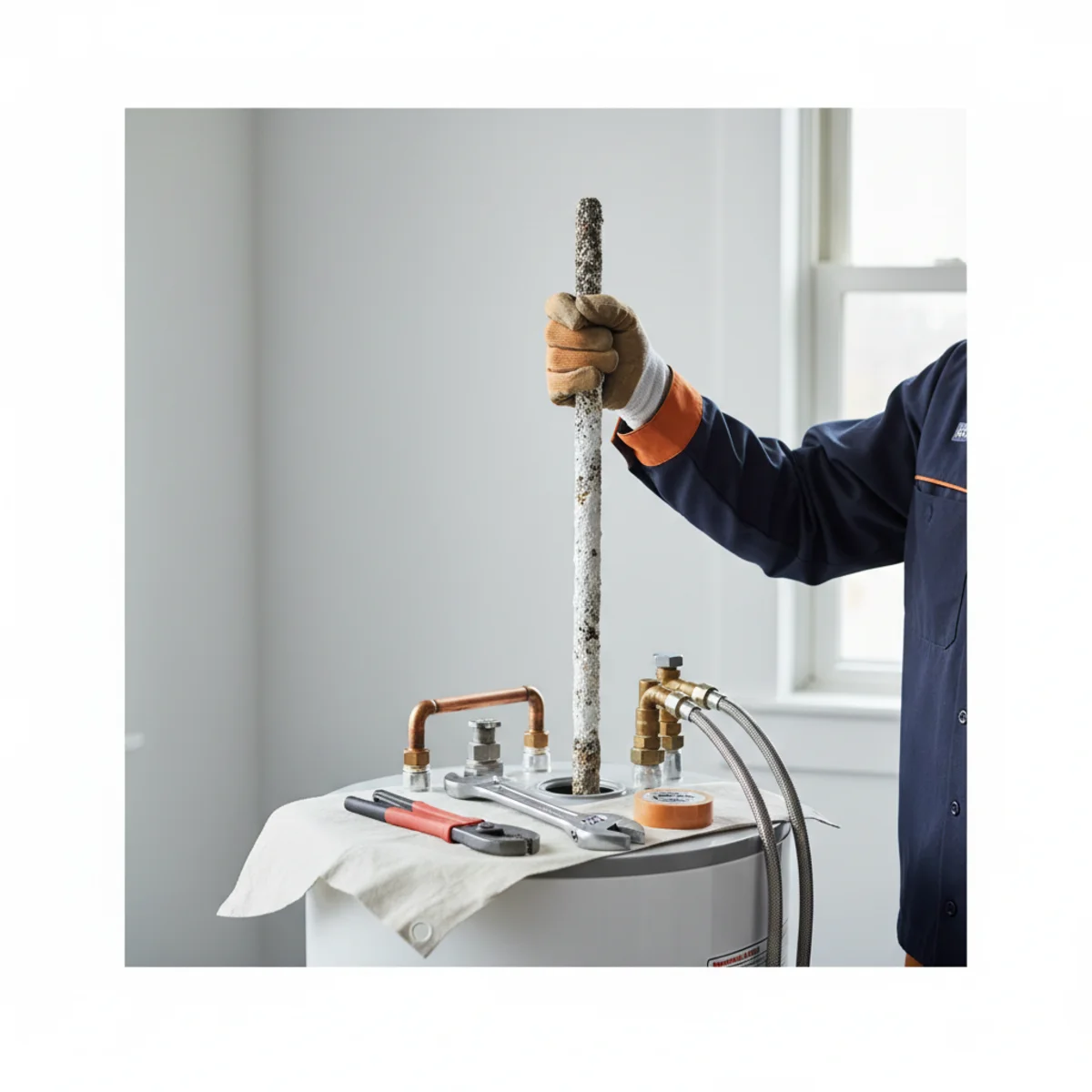
- Anode rod inspection: hard water accelerates anode depletion. Check every 3 years.
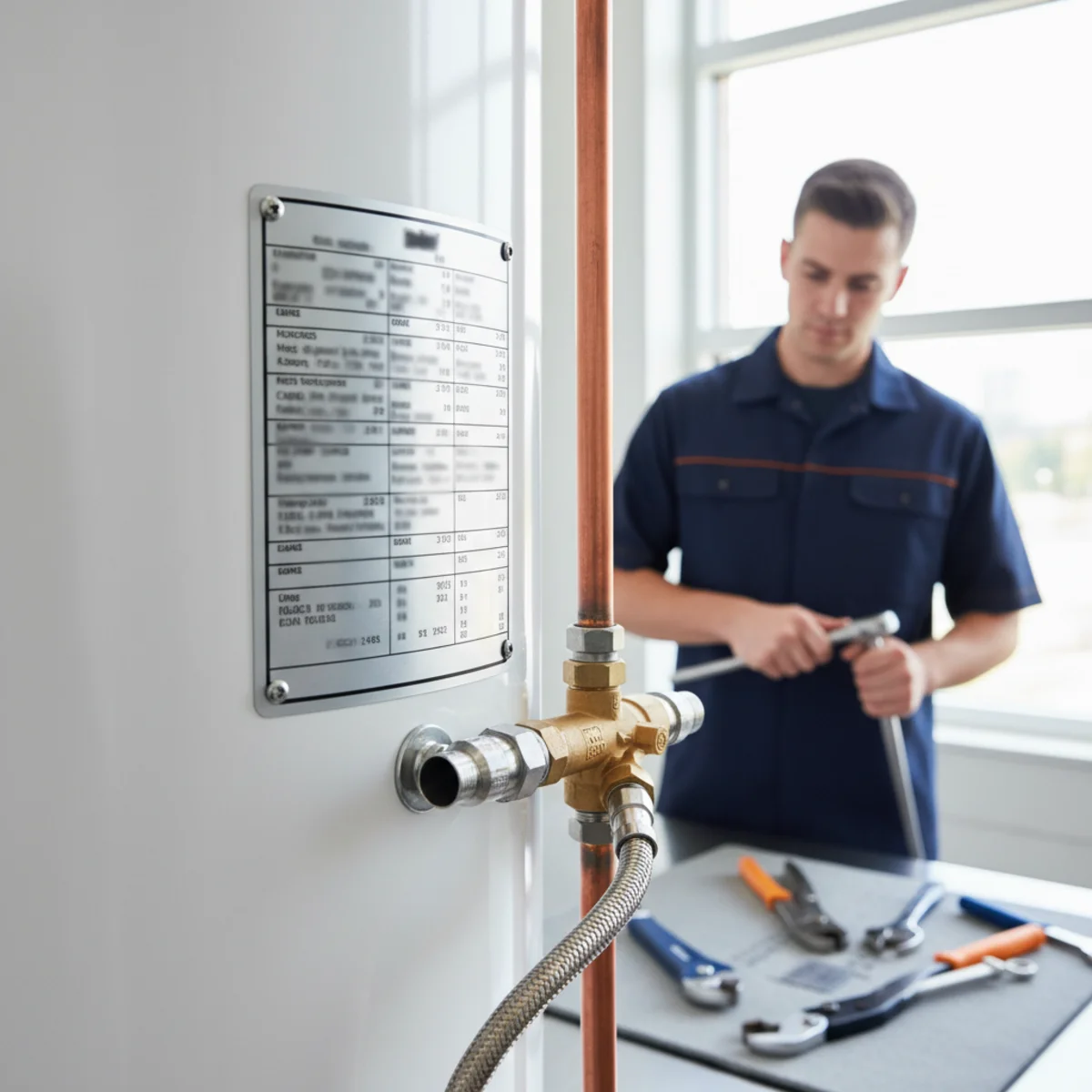
- T&P valve test: scale can foul the T&P seat over time. Test annually.
Water Softeners: The Long-Game Solution
A whole-house water softener addresses the problem at the source by exchanging the calcium and magnesium ions in the water with sodium ions before the water reaches any fixture or appliance. Softened water doesn't deposit scale. Your water heater, dishwasher, faucets, and showerheads all benefit.
The trade-offs are real and worth understanding. A traditional salt-based ion exchange softener requires salt refills every few weeks depending on usage and hardness. It uses a small amount of water for regeneration cycles. The sodium it adds to the water is a concern for some people on sodium-restricted diets (though the amount is small).
There's also a specific consideration for water heaters: softened water is more aggressive toward the sacrificial anode rod — the magnesium or aluminum rod that protects the tank interior from corrosion. In soft water, the anode depletes faster. If you install a softener, switch to a zinc-aluminum or powered anode rod and check it more frequently.
Our water softener installation service includes a water hardness test to confirm your actual levels and recommendations for the right system for your home's size and usage.
The Local Numbers: What Rancho Cordova Hardness Actually Means
Sacramento County Municipal Services publishes annual water quality reports. Rancho Cordova typically falls in the 240–345 mg/L range for total hardness (roughly 14–20 GPG depending on the season and source blend). This is classified as very hard — not the highest you'll find in California, but significantly above the 7 GPG threshold where most scale-related issues begin to manifest.
In practical terms: a 50-gallon tank water heater in Rancho Cordova with no maintenance will accumulate roughly 10–15 pounds of mineral scale over its first decade. That's dead weight on the burner, dead insulation on the tank bottom, and dead efficiency on every heating cycle.
Homes in areas like Gold River and the eastern parts of Rancho Cordova near the foothills sometimes see slightly harder water than the western portions near the Sacramento River influence zone. If you're not sure about your specific address, a $15 water hardness test kit from a home improvement store gives you a reliable number.
The bottom line: if you're in Rancho Cordova and you haven't maintained your water heater with hard water in mind, you're running behind. Schedule maintenance, check the anode rod, and consider a softener for long-term protection. Contact us to get started with a water heater tune-up or to discuss whether a softener makes sense for your home.
Hard Water Impact by Hardness Level
Here's how different hardness levels compare in terms of practical impact on tank water heater lifespan and maintenance frequency:
| Water hardness | GPG | Expected tank life | Flush frequency |
|---|---|---|---|
| Soft | 0–3.5 | 12–15 years | Every 2–3 years |
| Moderate | 3.5–7 | 11–13 years | Annually |
| Hard | 7–10.5 | 9–11 years | Annually or twice yearly |
| Very hard (Rancho Cordova typical) | 14–20 | 7–10 years | Annually — consider softener |
Talk to a Local Rancho Cordova Water Heater Pro
Whether you need a repair today or you're planning an upgrade, we'll give you a straight answer and an upfront estimate.
Frequently Asked Questions
Listen during heating cycles — a popping, crackling, or rumbling sound is the most common sign. Other indicators: longer recovery times, higher utility bills, or rusty-tinted hot water. A plumber can also check by flushing and inspecting what comes out.
If the sediment hasn't fully calcified, yes — flushing often reduces or eliminates the noise. If the scale has hardened into a solid layer, flushing may not fully remove it. Annual flushing prevents that point from being reached.
Most manufacturers don't void warranties for softened water, but the anode rod situation matters. Softened water depletes standard magnesium anodes faster. Use a zinc-aluminum or powered anode when on softened water and check it more frequently than the standard 3-year interval.
In Rancho Cordova's hardness range with no maintenance, expect 7–10 years vs. 12–15 in soft water areas. With annual flushing and anode rod maintenance, you can recover 2–4 years of that gap. A softener plus maintenance gets you close to the soft-water benchmark.
If the heat exchanger hasn't been permanently damaged by overheating from severe scale buildup, descaling restores a meaningful portion of original efficiency and capacity. A tech can assess the condition. If error codes persist after descaling, heat exchanger damage may be the culprit — at that point, repair vs. replace is worth evaluating.
Yes. We serve homeowners across Sacramento County, including Folsom, Elk Grove, and Citrus Heights. Hard water affects water heaters across the region — the same maintenance principles apply throughout Sacramento County.
Written by the Water Heater RC Pros team
Practical, local guidance from Rancho Cordova water-heater installers — written for homeowners and kept current with California code. Have a question about your unit? Call (201) 277-9344.