Running out of hot water is a daily friction point for large families — and it usually isn't because the water heater is broken. It's because it was never sized correctly for the number of people actually using it. A 40-gallon tank that worked fine for two people becomes inadequate the moment you add three teenagers.
In Rancho Cordova, where summer temperatures push households toward longer showers and more frequent laundry cycles, the demand gap grows even more pronounced. Our hard water also works against you: sediment builds up faster in undersized tanks that run at full capacity all day, shortening the unit's life.
This guide covers the sizing math, the real trade-offs between tank and tankless systems, and what most large families in the Sacramento area end up choosing — and why.
How to Size a Water Heater for a Large Household
The key number isn't tank gallons — it's the first-hour rating (FHR). FHR measures how many gallons of hot water the unit can deliver in the first hour of use, starting from a full tank. It's printed on the EnergyGuide label of every new water heater.
The Department of Energy's rule of thumb: add up peak-hour usage. A shower uses roughly 10 gallons, a dishwasher 6, a clothes washer 7, and a bathroom sink about 2. A family of five with a morning routine of three showers, a load of laundry, and breakfast dishes can easily need 50–65 gallons in the first hour.
| Household size | Estimated peak-hour demand | Minimum FHR target |
|---|---|---|
| 2–3 people | 30–40 gallons | 40 gallons |
| 4 people | 40–55 gallons | 55 gallons |
| 5 people | 55–70 gallons | 70 gallons |
| 6+ people | 70–90+ gallons | 80–90 gallons |
| 5+ people, high use | 80–100+ gallons | Consider tankless or dual-unit |
Tank Water Heaters: Still the Right Answer for Many Families
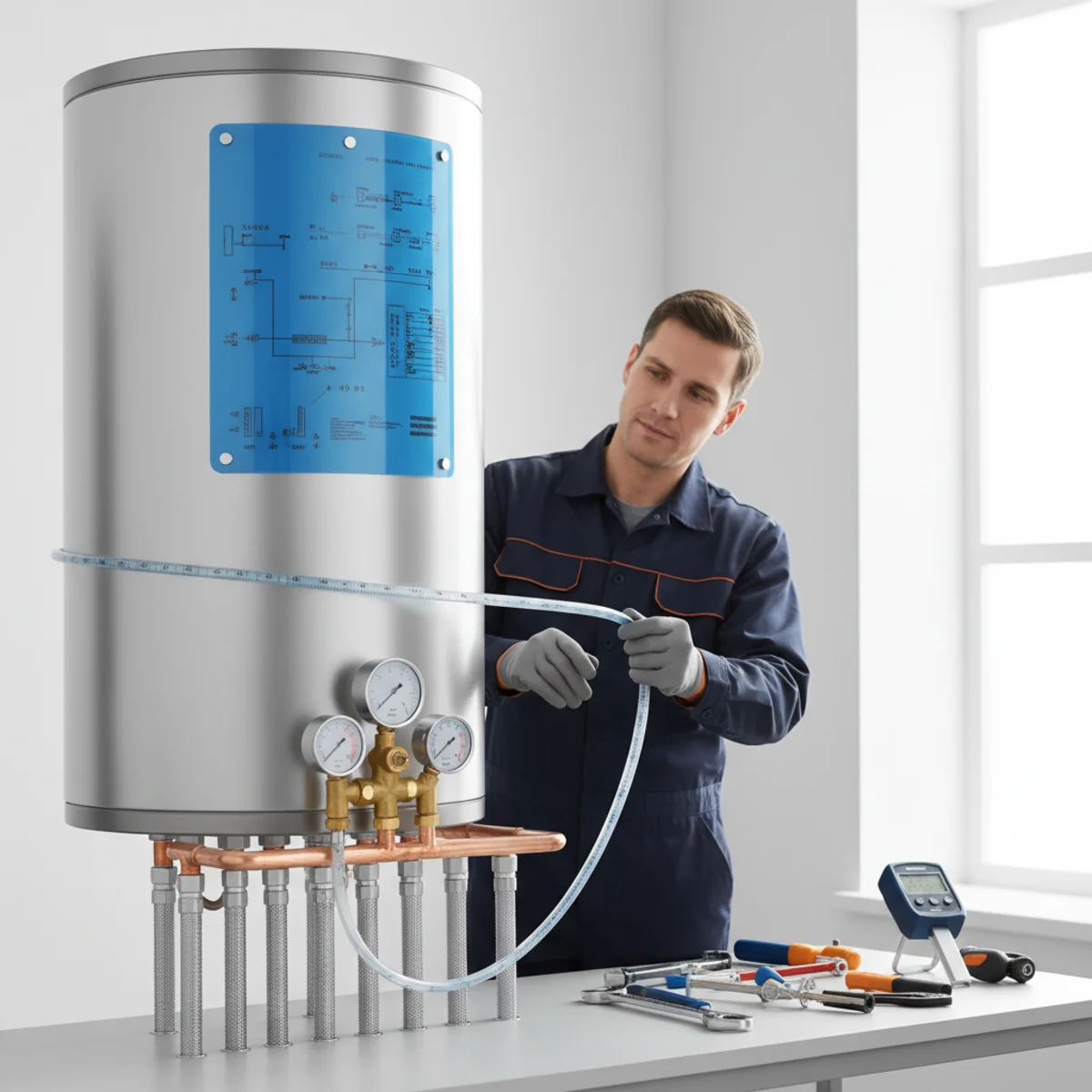
A high-capacity gas tank water heater — 50 to 75 gallons — remains the most straightforward solution for most large families. They're less expensive to install than tankless systems, they work during power outages (gas models), and they're easy to service.
The trade-off is standby loss. The tank keeps water hot around the clock, so you're paying to heat water that may not be used for hours. In a large household that uses hot water all day, this matters less than it would in a two-person home. Our water heater installation team can walk you through the current ENERGY STAR options if efficiency is a priority.
- 50-gallon gas tank: good starting point for 4–5 people.
- 75-gallon gas tank: solid choice for 5–6+ people, or households with large soaking tubs.
- Heat pump water heater (50–80 gal): excellent efficiency in Rancho Cordova's climate, but needs 700–1,000 sq ft of unconditioned air space. Our warm summers make heat pump performance even better here.
- Short recovery time matters: look for a high BTU input rating (gas) or a high watt-density element (electric). A 40,000 BTU burner recovers faster than a 32,000 BTU unit.
Tankless Water Heaters: Unlimited Hot Water, Real Trade-Offs
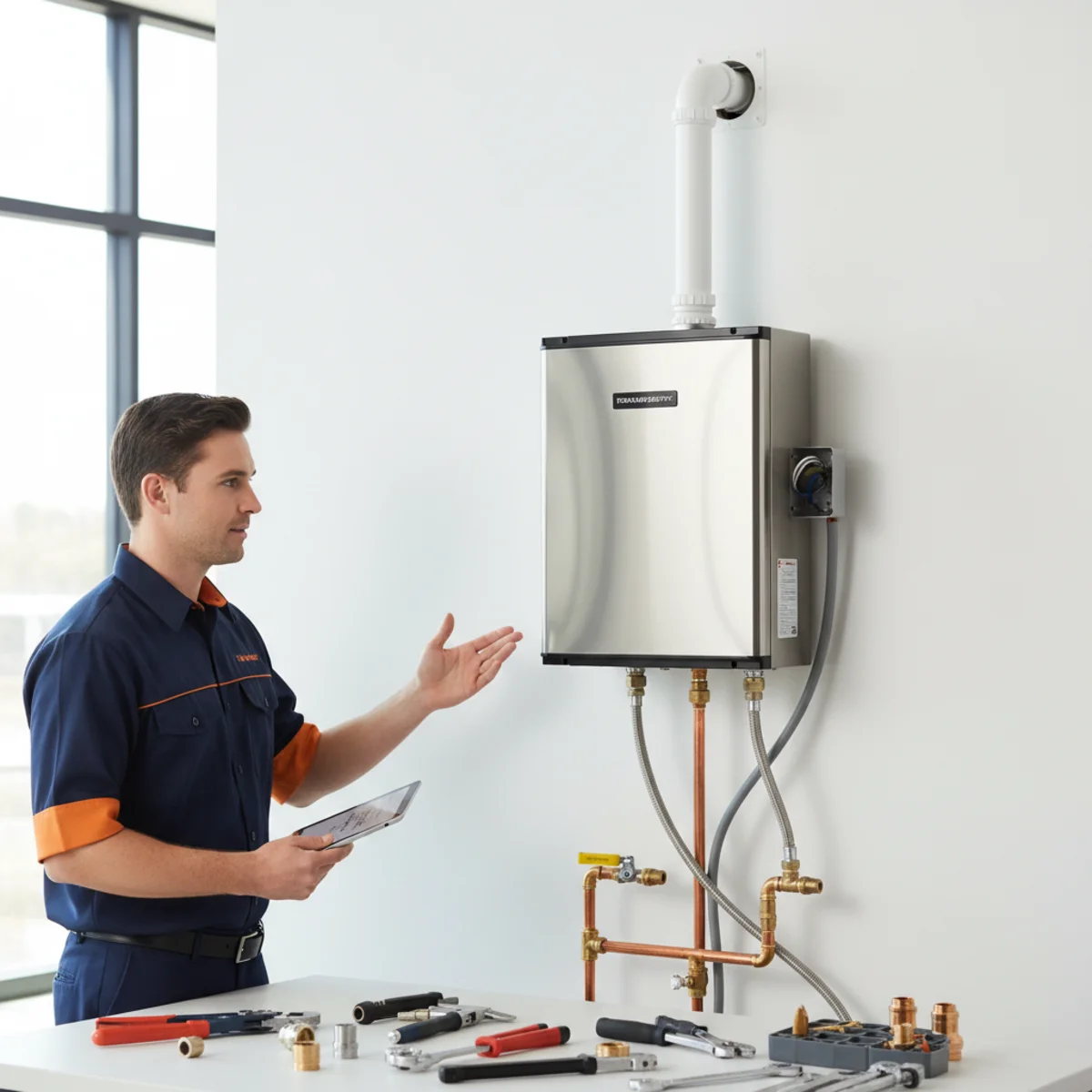
A whole-house tankless unit heats water on demand rather than storing it, so you never technically "run out" — as long as the unit can keep up with simultaneous demand. That last part is the catch.
Flow rate is the limiting factor. A tankless unit rated at 8–9 gallons per minute (GPM) can handle two showers running at once, but struggles if a third starts or the dishwasher kicks on. In Rancho Cordova, incoming groundwater can run around 60–65°F in winter, which reduces the temperature rise a tankless unit can achieve at a given flow rate.
For large families with staggered schedules — adults leave before the kids, so showers don't stack up — tankless works well. For families where everyone gets ready at the same time, a high-capacity tank or a tankless unit paired with a small buffer tank is often the better fit. See our tankless water heater installation page for specifics on sizing.
- Single whole-house gas tankless: 8–11 GPM is the practical range for large family use.
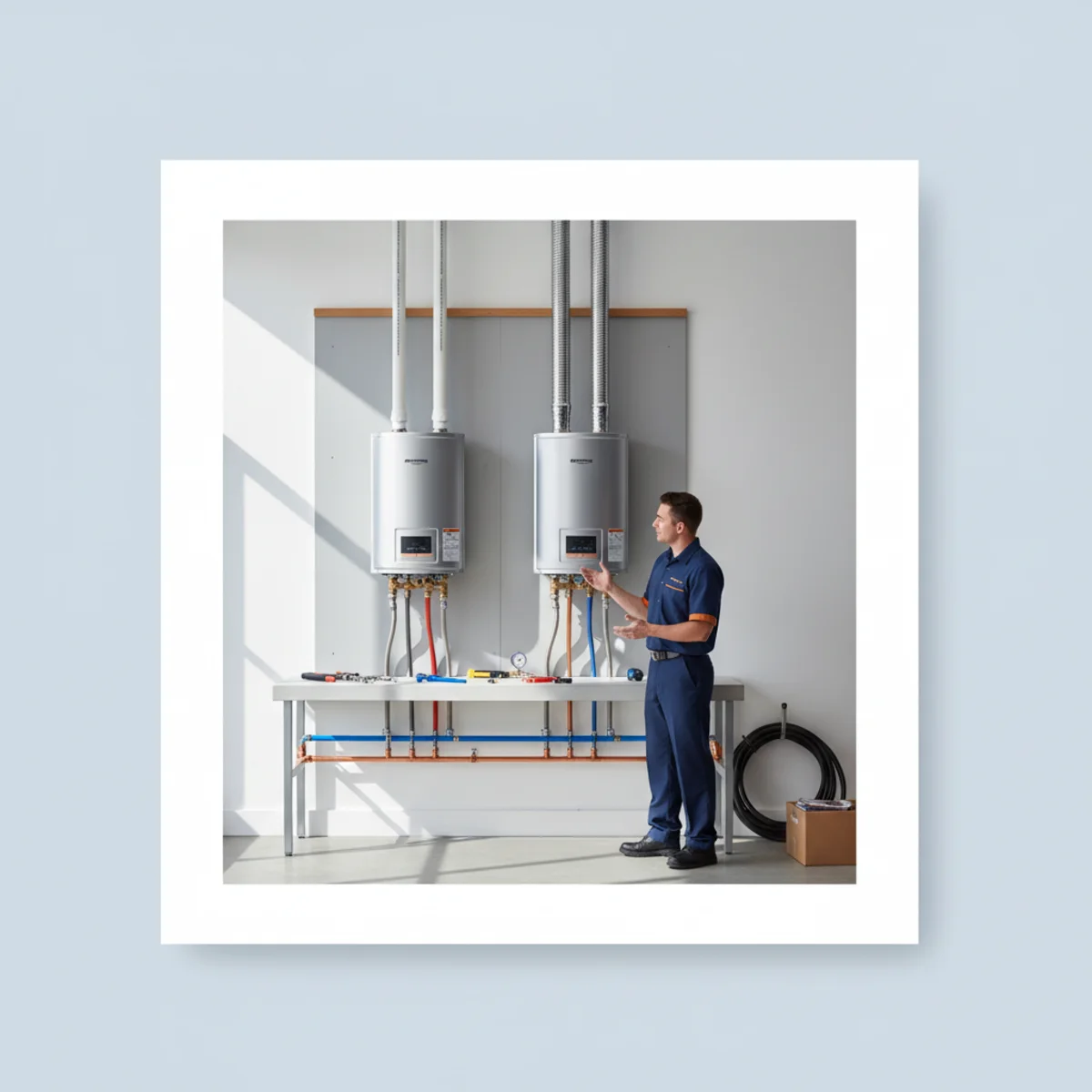
- Multiple tankless units: two smaller units in parallel doubles your flow-rate capacity.
- Point-of-use tankless units at distant fixtures: good supplement, not a full solution.
- Gas vs. electric tankless: gas is more practical for whole-house use; electric whole-house units require significant panel upgrades.
Tank vs. Tankless: Side-by-Side for Large Families
Neither system is universally better. The right call depends on your peak demand pattern, your existing gas and electrical infrastructure, and your budget for both installation and ongoing energy costs.
| Factor | High-capacity tank | Whole-house tankless |
|---|---|---|
| Upfront cost | Lower (unit + standard install) | Higher (unit + possible gas line/venting upgrade) |
| Simultaneous demand | Limited by FHR, then wait for recovery | Limited by GPM flow rate |
| Energy use | Standby loss adds to monthly cost | No standby loss; more efficient overall |
| Power outage | Gas tank works; electric tank doesn't | Gas tankless needs power for controls |
| Hard water impact | Sediment buildup in tank | Scale buildup in heat exchanger |
| Lifespan | 8–12 years (hard water) | 15–20 years with maintenance |
Local Considerations for Rancho Cordova Homes
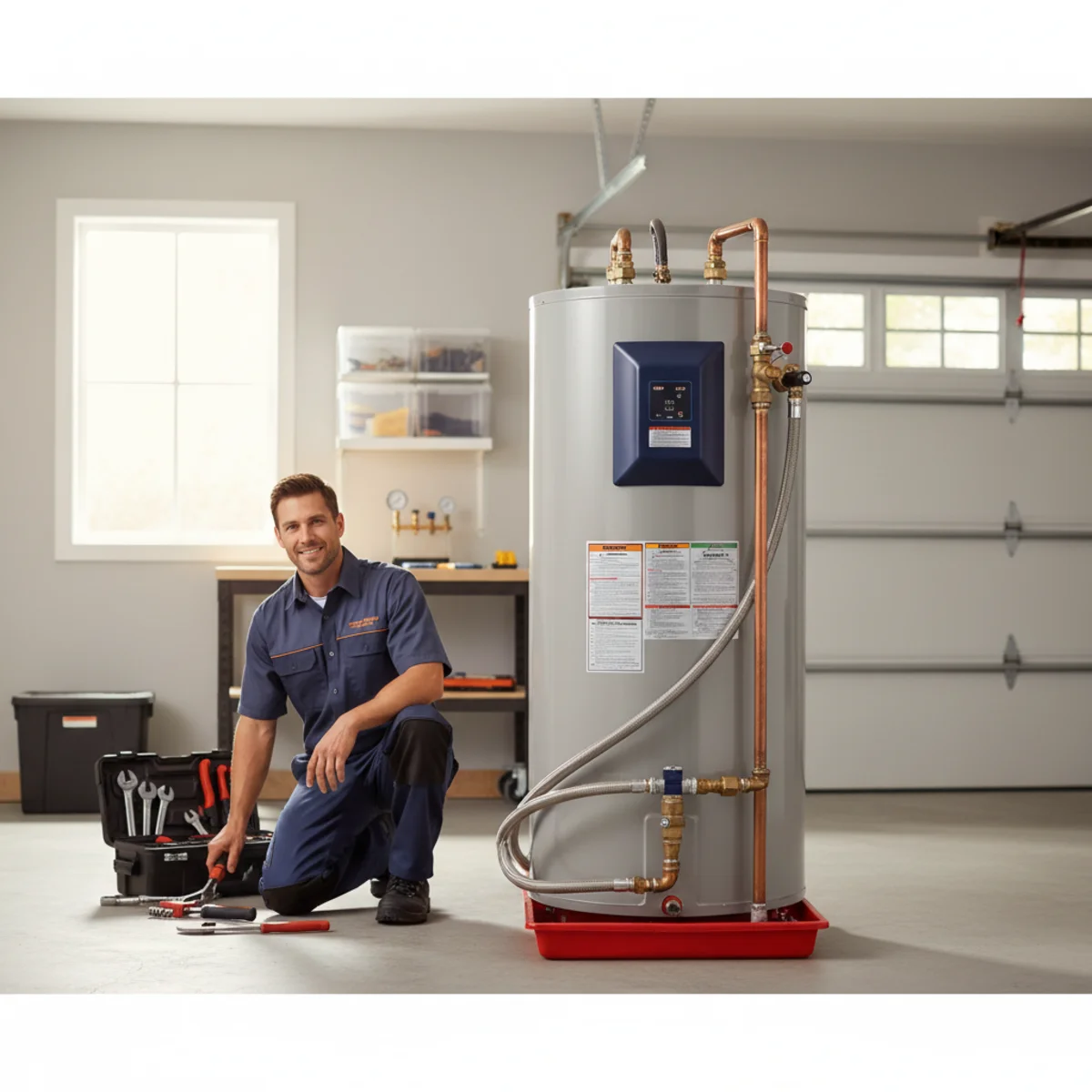
Garage installations — the norm in most Rancho Cordova homes — give you more flexibility on unit size than a closet install. A 75-gallon tank fits comfortably in a standard two-car garage, and a tankless unit mounted on the exterior wall keeps the footprint minimal.
SMUD and PG&E periodically offer rebates for heat pump water heaters and high-efficiency gas units. Rebate programs change, so confirm current details before you buy — but they're worth checking because the savings can be meaningful on a premium unit.
Sacramento County requires a permit for any new water heater installation. When we replace a unit in the Rancho Cordova area, we pull the permit and schedule the inspection so you don't have to. If you're planning a major capacity upgrade, reach out for an estimate — we'll give you an honest picture of what your current gas line and venting can support before you commit to a unit.
Talk to a Local Rancho Cordova Water Heater Pro
Whether you need a repair today or you're planning an upgrade, we'll give you a straight answer and an upfront estimate.
Frequently Asked Questions
A family of six with typical morning routines needs a first-hour rating of at least 80–90 gallons. That's usually a 75-gallon gas tank or a high-output tankless unit rated at 10+ GPM. The exact answer depends on whether your peak demand stacks (everyone showers at once) or staggers.
It depends on your usage pattern. If your family's hot water demand stacks heavily in the morning, a high-capacity tank may actually outperform a single tankless unit. Tankless shines when demand is frequent but spread across the day. We're happy to look at your situation specifically.
Yes. Two water heaters plumbed in series or parallel is a practical solution for high-demand households. It can be less disruptive than upgrading to tankless if your current infrastructure isn't set up for it.
We don't publish fixed prices online because installation costs vary by access, venting, and code requirements. Generally the unit itself costs more, and a larger tank may require a higher-BTU burner. Call us for a specific quote.
Yes, noticeably so. Rancho Cordova's hard water deposits sediment faster than softer water would. Annual flushing and anode rod checks significantly extend lifespan. A water softener helps too, though it changes the chemistry the anode rod is designed for — ask about the right anode for softened water.
Written by the Water Heater RC Pros team
Practical, local guidance from Rancho Cordova water-heater installers — written for homeowners and kept current with California code. Have a question about your unit? Call (201) 277-9344.